Attempting Destruction but Creating History in G. W. Pabst’s ‘The Three Penny Opera’
By John VandevertWith the publication of Ross Benjamin’ translation of Daniel Kehlmann’s fictionalized story of Austrian filmmaker, Georg Wilhelm Pabst (1886-1967), The Director (2023/2025), preceded by German filmmaker Werner Herzog’s translated memoire, Every Man for Himself and God Against All (2022/2023), it’s fascinating to see how the opera-film relationship can be incredibly heterogeneous. While for Herzog, “when the whole world is transformed into music the result is opera,” with his proximity to opera being both almost-composer, director, multimodal artist, and lover, Pabst’s connection to opera is altogether more complicated. With his first opera-adjacent cinematic work began in 1922 under German director Carl Froelich (1875-1953) with the Verdi-adapted silent film, Luise Millerin, by the time sound film emerged and normalized by the mid 1920s, Pabst had already integrated such technology into his opera-film interests. In this Opera Meets Film, we’ll explore one of opera cinema’s first-wave projects of the sound film era (late 1920s to 1940s), namely his 1931 adaptation of Bertolt Brecht and Kurt Weil’s groundbreaking, The Threepenny Opera (1928).
During these summer months, we’ve looked at particular moments in opera film’s development which have been more or less overlooked but deserve attention. In June, ‘The Dickson Experimental Sound Film (or TDESF) was examined because of the underevaluated role French comic opera played in the start of sound film. As we now understand, Robert Planquette’s opera, Les cloches de Corneville (1877), ironically the opera which greatly hindered the premiere of Sergei Prokofiev’s ballet, Chout (1921), was featured via a filmed solo violin arrangement which formed TDESF. In July, we next examined pre-Revolutionary Russian opera cinema via Vasili Goncharev and his silent-film adaptation of the iconic Pushkin/Tchaikovsky story, Eugene Onegin (1911). As we now know, there are three notable adaptations of the story for cinema, but it really began with Goncharev’s work which occurred within a milieu where film adaptations of operatic stories were generally commonplace. These two moments in opera cinema history are rich in details that the contemporary opera cinephile ought to know. We’ve previously examined many such moments like the many faces of Wagner in opera cinema and Maria Callas’ elongated cinematic legacy. With this month’s article, we now conclude our summer excursion into unknown areas of opera cinema history but trust me, there is so much more out there to learn!
From An Opera to A Film
First things first, Bertolt Brecht and Kurt Weil were originally part of Pabst’s project, but their contribution soured rather quickly when Brecht’s conditional agreement to draft the film’s script was broken. He insisted nothing could be altered, terms Pabst was unwilling to honor, and while Weil stayed on, Brecht and Weil collectively sued Tobis Films, the German side of the film’s production, for copyright but ultimately failed. Only two years later, the film was banned from German showing in 1933 and attemptively destroyed, only to be rediscovered in 1960. It’s more effective, however, to see the film in larger cultural-historical contexts, namely a part of the tail-end of the Weimar Republic’s Golden Age and a part of the final phase of its existence prior to the rise of the Nazi Party and the Third Reich.
As was recorded in Arelene Croce‘s mordant review of Pabst’s film in 1960, Brecht’s anticapitalist messaging, with the overturning of classes a particularly pungent affront to the day’s hierarchical systematizing of human value and labour, was only superficially translated. What Brecht’s excusal caused was the Brechtian theory of Brecht’s work to remain aloof from the film. In other words, if the world of Brecht is to appear on the screen, cinematic equivalents of Brecht’s own “endistancement” techniques must be created.” What Croce observed was the all-too-familiar problem plaguing most cinematic adaptations of operatic material, and that is the loss of the original’s true intentions, and with Brecht, his entire artistic vision was alienation, collapsed distance, critical engagement with life, and praxis through the so-called, ‘Lehrstücke.’ As she continues, “He [Pabst] seems always to be trying to tug the film back to the social reality the play sprang from, and sometimes, with [Set designer Andrei] Andreiev modifying and bewitching that reality, he succeeds astonishingly.” Yet, a truly Brechtian film Pabst did not make, “film-as-film experiments…expose the mechanism of cinema in ways destructive to audience understanding.” Thus, what was Pabst trying to accomplish?
It’s helpful to trace the development of Pabst’s film. As Judith Weimers notes, the Berlin film company, Nero-Film, acquired the rights to the play, with the stipulation that Brecht and Weil had to be part of the production, thus explaining their involvement. Ironically, Brecht’s participation was financially motivated, and the soured start only got worse as unlike stage plays, the filming went ahead regardless of Brecht’s creative-ideological development in the late 1920s amidst the birth of his ‘Lehrstücke’ practice, and political reorientation. Brecht’s failed lawsuit against Nero-Film rested on the fact that he signed a binding contract. In response, Brecht published the pamphlet, ‘The Threepenny Lawsuit: A Sociological Experiment’ (Der Dreigroschenprozess) where he castigated the capitalist system which allowed his work to be stolen and exploited by Pabst and Nero-Film. How this was done was through a Marxist praxis of art which exposed the inherent inability of Bourgeois conceptions of art to inspire world development.
In Anthony Squiers eyes, “Changes in the mode of production create new material conditions. Art, then, depicts these new conditions and relationships.” The interested can find the essay in full online, but the gist is Brecht tells a long narrative of a fictitious artist going to court to defend his intellectual property rights of his art, only to find out profit is protected, with his role revealed as the slavish cog in the faceless, voracious, and apathetic movements of capital. To Brecht, “The cinema needs art,” he concludes by stating, “It is not right that cinema needs art,” prefaced by an extensive destruction of the Bourgeois pollution of art, “Almost everything we see on screen today is ‘art’.” He follows this with,
He [the director] does not know what art is supposed to be…In the domain of art he has the reasoning power of an oyster, nothing more in the domain of technology…He has the reputation of a tasteful arranger, it is said: he ‘understands something about art’! As if one could understand something about art without understanding something about reality! And here the apparatus together with the subject matter functions as reality.
Brecht finishes his robust treatise by, effectively, arguing the “sociological experiment” (i.e., a new conception of art which exposes “social antagonisms without resolving them”) must involve the courts, and they must aid in the creation of this movement. Thus, “to comprehend the sociological experiment is to ‘find a handle’ on reality.” With this in mind, we can speculate on why Brecht was so angry at Pabst for his cinematic treatment of his opera. Instead of creating the vehicle for “collective thinking processes,” Pabst created a beautiful but decadent, pacified, and bruskly Bourgeois attenuation of The Threepenny Opera, scrapping everything that made the work Brechtian in both form and content. It’s worth giving Pabst the benefit of the doubt, however, as the problems started not with him per se but Nero-Film and the sympathetic, capitalist-oriented legal system which enabled Pabst and his ilk. For deeper answers into what Pabst was trying to accomplish, side-stepping the film’s lawsuit phase, let’s look deeper at the discontinuities and details.
As Weimers notes, Pabst himself embraced the fact his cinematic version had little ontological (or formal) relations to its operatic material. In Pabst’s words, according to a 1930 interview with Reichsfilmblatt (1922-35), “You see, ideally, the Threepenny Opera as a sound film should have nothing in common with the theatre.” This reveals a great deal on the reasons why Brecht held such penetrative animosity towards the entire production. What Pabst created has been generically dubbed a, “gangster comedy,” or what Weimers calls, “an elevated reality,” and Pabst himself argued for the supremacy of the visual which, self-evidently, is diametrically antagonistic to Brecht’s endistancement technique via his Lehrstücke approach. Later reviewers called the film a,”Millionenfilm,” meaning a film which costs millions to make and is publicly exposed to millions, and with this nominal coup de grâce, we can begin to understand why this film was so loathed. It failed on every front, with Pabst culpable in the sullying of the Brechtian project. If a saving grace exists, it’s identifiable in Lee Atwell’s biography where he confirms something powerful, “in the framework of an industrial, commercial medium—backed by powerful, conservative finance—social and political views…of a revolutionary nature, were necessarily disguised and subdued.” As culpable as Pabst was, he too was but a cog in the capitalist machine.
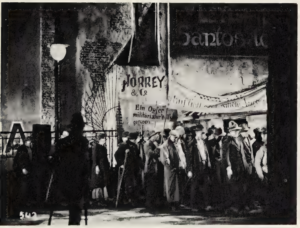
-
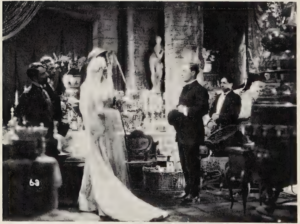
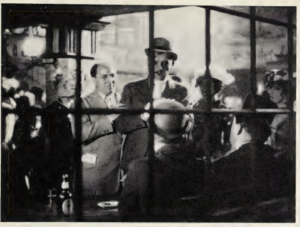
- Scenes from Die Dreigroschenoper. See Atwell (1977), 88 and 93.
From Banned to Recovered
We’ve confirmed that Pabst’s 1931 film was, more or less, a feckless, genre-transplanted, recreation of the Brechtian vision. But what is still unclear is how the film went from banned and nearly destroyed to recovered and archived. I wish to start the investigation with an extended quote from Atwell which provides some much needed clarity on the topic. While Pabst may have misunderstood, willfully or not, the Brechtian creative imperative, this doesn’t mean he was ignorant to other critical topics, top of the list being sexuality, femininity, and workers as scholars have acknowledged. But given the climate, Atwell notes how these themes were sullied by establishment influence,
[…] yet the most telling clue to their original subversive-ness lies in the distortion and mutilation of many of Pabst’s films over the years by censors, often totally reversing their meaning and impact. Fortunately, the most important of these have been reconstructed during the past two decades from partial existing prints, and if they sometimes resemble fragments of antique statuary, faded and far removed from the luster of the original, flashes of inventiveness and candor remain for the appreciative eye.
Pabst later moved to France, starting his French period (1933-1941), but the riff between Pabst and Brecht rested on the lynchpin of aesthetic preference and purpose, “His [Pabst’s] strain of humanism and love of detailed mise-en-scene could not mesh well with the pithy schematics and dry, critical tone of Brecht.” For Pabst, the Brechtian story was more about human relations, and strengthening of solidarity among the labouring class in times of Marxian class struggle, and in defiance of the ongoing capitalist desecration of ground-up collectivism through the repurposing of melodramatic practice. This is key towards understanding why the film was originally banned and nearly destroyed by the Nazis. One is inclined to remember Die Ausstellung “Entartete Kunst” was held in 1937, but even before then, radical parties within the interregnum of WWI and II were primed and ready to exploit sound film technology.
The Filmprufstelle (Film Review Office) officially banned the film in 1933, this despite the film’s success abroad. One year after, the Reich Office for Educational Films (Reichsstelle für den Unterrichtsfilm) was created, and from 1933 to 1934, not only was the Reich Chamber of Film (Reichsfilmkammer), one chamber of the Reich Chamber of Culture (Reichskulturkammer), established, but so was the Reich Ministry of Public Enlightenment and Propaganda (Reichsministerium für Volksaufklärung und Propaganda, or RMVP), of which the Reichsfilmdramaturg sat within.
This is important to note as what it shows is the complicated institutionalization of the cinematic arts within (now Nazi) Germany, and inconceivability of acting autonomously, nevermind counterculturally. As David Welch noted, this centralization was offputting, and to quell fears, and centralize finances, the Filmkreditbank was established. This occurred, however, within a climate of what was called, coordination (Gleichschaltung), and this left no industry untouched, “on 9 February 1933, at the German Cinema Owners’ annual conference, the Nazi elements demanded that their leader [Adolf] Engl should be elected to the Association’s board.” The Nazification of film began in 1933, and naturally, Pabst’s films were among the first targets. In 1932, National Film Studios (Landesfilmstellen) were established to help disseminate films throughout the country, and in 1933 alone, 114 films were produced, among them, Hitlerjunge Quex and the failure, S.A.-Mann Brand. Long story short, by the end of WWII, cinema was a dead fish in the waters of the Nazi regime, with a measly six films being produced (among them, Kolberg), although by the 1930s, the decay of control over cinema was showing in the banning of negative criticism by Goebbels in November, 1936.
A particularly strange choice of financed film was The Life and Loves of Tschaikovsky, produced by Carl Froelich in 1939, the same year the opera-theme film, Opera Ball, was produced by Hungarian director, Géza von Bolváry. That name, Froelich, should be remembered as he was Pabst’s motivating catalyst to seriously pursue cinema, beginning as actor and assistant producer in Im Banne der Krolle (1921) to full assistant the year after. This connection, as Atwell argues, was actually an unshakable impediment to his career as, “while Froelich’s work was technically good, it remained mediocre and blatantly commercial through his long career. Pabst was aware of this and though he wanted to break away from established convention, all of his silent films reflect to some extent the oversimplification and broad manner that he learned in theater and film.” Interestingly, of Pabst’s Nazi works during his German period (1941-44), two films stand out as proof of he post-Froelich capabilities when given space to fly, namely Paracelsus (1943) and the political, The Last Ten Days of Hitler (1955). The only other Nazi-era film financed during this era was, The Comedians (1941). It should be noted Pabst was never a Nazi and never shared any sympathies for their ideology, dedicating his film, Der Prozess (1947), to a dramatized adaptation of late-19th century anti-Semitic slander and brutality as told in, Prozess auf Leben und Tod, by Rudolf Brunngraber based on the real-life events of the Tiszaeszlár affair (1882-83).
The film’s recovery began in 1960 thanks to the archival work of American film distributor, Thomas Brandon (1908-82), alongside the Museum of Modern Art, or MoMA. Details are notoriously scant, but what can be gleaned, Brandon went on a European search to recompose the parts of Pabst’s film, accomplishing the task in 1960. What is unknown is how he did this, more details on the labours involved, and who exactly aided Brandon. Nonetheless, despite its controversial distance from Brecht, Pabst’s film is a key insight into the world of Socialist European opera cinema.
Watch