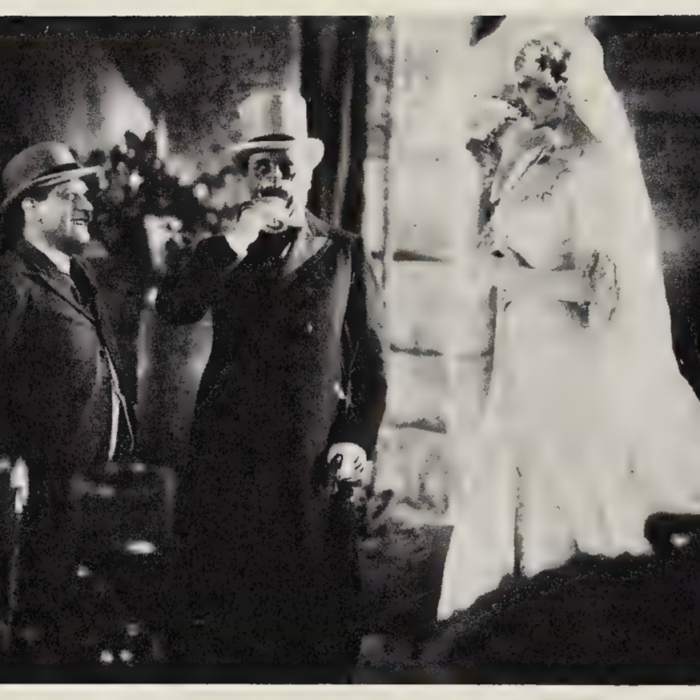
Opera Meets Film: Detailing Pre-Revolutionary Russian Opera Cinema in Vasili Goncharev’s ‘Eugene Onegin’

In the West, Richard Wagner’s music is by far the most utilized music in cinematic practice. From the Ring Cycle in satirical contexts, avant-garde metafiction, and even {…}

The Necessity of Remembering in Daniel Sonenberg’s ‘The Summer King’

Photo Credit: David Bachman/Pittsburgh Opera In these uncertain times, where rights are being systematically upended, questioned, destablized, and generally violated, art provides opportunities to reflect on the stories, legacies, and tribulations of those who came before. During these summer months, we will look at three operas that epitomize this very dynamic, namely the ways opera creates space to think about {…}

Opera Meets Film: Then A New World Began In William Dickson’s ‘The Dickson Experimental Sound Film’ (1894)

For the last five months, we reversed course and explored operas based on films, and we now know that it sometimes produces mixed results, whilst at other times, it strips the {…}

A Whole Universe – Joe Davies on Performing Mahler’s ‘Symphony No. 8’ With the Leamington Sinfonia Orchestra

(Photo: Chris Tribble) “Try to imagine the whole universe beginning to ring and resound. There are no longer human voices, but planets and suns revolving” wrote Gustav Mahler, commenting on his 8th Symphony. On 16th May, the majestic, (if not suitably astronomical), Coventry Cathedral hosted a remarkable and rarely performed work that received a rapturous reception at its cessation, much {…}

Opera Meets Film: Duplicitous Love Behind Enemy lines in Hans Gefors’ ‘Notorious’

Joining the ranks of other screen-to-stage operatic adaptations, Swedish composer Hans Gefors and his eighth opera, “Notorious,” can be considered a contemporary {…}

An Opera in Poems – American Opera Projects Brings Benjamin Franklin & ‘The Post Office’ to NYC

(Photo Credit: Sarah Peet) In 1753, a 47-year-old Philadelphia writer, editor, scientist and inventor was given a new title by his London overlords. The British Crown named Benjamin Franklin “Deputy Postmaster for the Colonies,” a position he’d sought, and financially lobbied toward, for a couple of years. The gig offered a way to spread publications and patronage. Multiple family members {…}