Q & A: Stage Director Fabio Ceresa on Directing ‘Il pomo d’oro’ at This Summer’s Innsbruck Festival
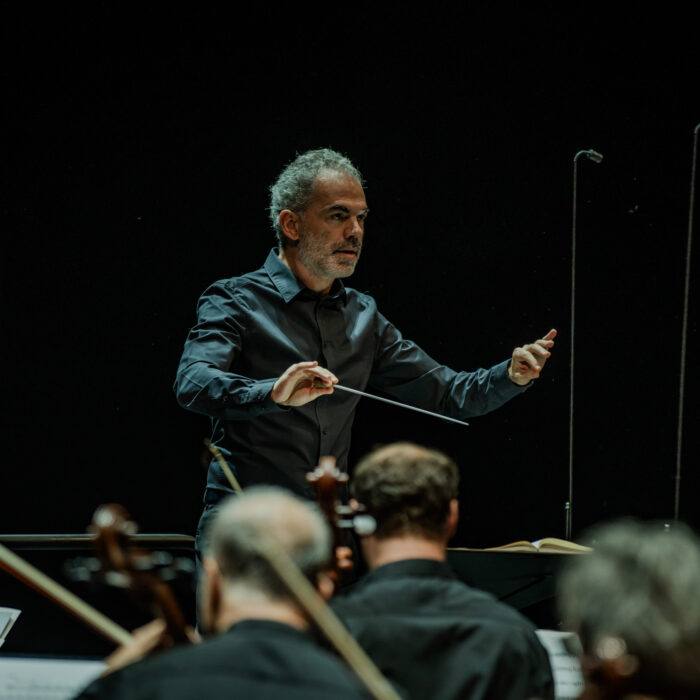
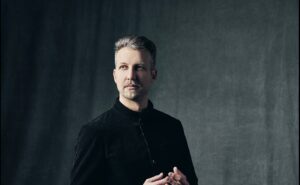
By Alan Neilson(Photo: Fabio Ceresa)
One of the highlights of this summer’s Innsbruck Early Music Festival will undoubtedly be a fully staged production of Antonio Cesti’s opera from 1668, “Il pomo d’oro,” to a libretto by Francesco Sbarra. Written for the Austrian Empress, Margaret Theresa’s 17th birthday in a specially constructed outdoor theater in Vienna, it has been described as the empire’s ‘most lavish artistic event of the century.’ Spread over five acts with an extended prologue that lasts over eight hours, requiring an enormous cast to cover over 50 roles, a chorus and many supernumeraries, 23 sets, and an enlarged orchestra, it is perhaps unsurprising that the premiere was performed over a two-day period.
Following its original performances, the opera then had to wait until the baroque revival of the late 20th century for further productions. Even today, fully staged performances are a rare event, no doubt because of the sheer scale of the enterprise and the enormous costs involved. Moreover, the loss of the music for Acts three and five has surely added to the problem.
This production for the Innsbruck Early Music Festival will be overseen by its musical director, Ottavio Dantone, who has recomposed the lost music for Acts three and five, and its stage director, Fabio Ceresa, who is certainly going to have his work cut out managing such a huge cast with its many scenes over such a long time period.
To find out more about how he is going to tackle this complex project, OperaWire met up with Ceresa for what turned out to be an illuminating interview.
OperaWire: What is your approach to directing a baroque opera, and does it differ from your approach to directing opera in general?
Fabio Ceresa: Firstly, I would like to say that we have to differentiate between baroque opera of the 17th century and baroque opera of the 18th century. They are very different. With the operas of Händel and Vivaldi, and even the young Mozart, you have alternating recitatives and arias and, sometimes if you are very lucky, a duet. The division is not only musical but also in their purpose: the action lives in the recitatives and the arias are all about contemplation. It would be possible to remove all the arias, leaving only the recitatives, and enjoy the plot as if it were a play. On the other hand, if you listened just to the arias, you would not understand anything, as most of the time they are not even connected to the narrative. In my production of Vivaldi’s “Bajazet,” for La Fenice, for example, I was asked to make sense of an uninteresting plot, which only exists as a pretext for the arias, so I treated them as independent pieces. And we had a lot of fun bringing each aria to life, whether that was rage, love or melancholia, by trying to turn it into a picture to reflect the mood of the aria, rather than trying to make the audience empathize with a plot and characters that are very weak. It was an experiment that I am very proud of. When you go to see a long opera such as “Die Walküre,” you don’t fall asleep, because the characters are very well developed within a strong plot and it makes it possible to care about what is happening to them. The text of some 18th century baroque operas, however, can be tiring, so the audiences do not really care about the story, in which case we fall back upon the aria.
With a 17th century opera by Monteverdi or Cesti the difference between the recitative and the aria is not so clear and is actually closer to an opera by Puccini than by Händel. You could not easily remove the arias from the plot, as they are more closely integrated into the drama. Each aria can be likened to a diamond in a crown, rather than just one pearl among many in a necklace. The opera is much closer to a play and, therefore, my approach is more similar to that of a director of a play. In many ways the operas of the 17th century are closer to contemporary operas than to other periods. I have just recently finished directing Verdi’s “Macbeth,” and it has such a weak libretto, that it would have been difficult to stage it well without focusing primarily on the music.
I am in a constant discussion with myself every time I do a new production. I want to evolve, and by this I don’t mean that I want to improve; rather I want to move forward. Directing is always something that excites me.
OW: You are about to direct a production of Cesti’s “Il pomo d’oro” at the Innsbruck Early Music Festival. It is a long opera and will be performed in two parts over two days, which is very unusual for a baroque opera. How long is the running time of the opera?
FC: We think it will be around six to seven hours. But we don’t view it as being divided into two parts but as a single performance with a very long break! Remember that the opera was a big social event in 17th century opera. Imagine if you dressed up for a wedding and had bought the happy couple a gift, only to be told after two hours that it was finished. How would you feel? Disappointed to say the least. You would probably have expected to be pushed out at two or three o’clock in the morning. Well, in the 17th century, the opera was a big social occasion, and likewise it was not abnormal for an opera to take place over many hours.
OW: What is the basic plot of the opera?
FC: There are two threads that run through the opera. The main narrative is about a war among the gods and how it impacts humans. “Il pomo d’oro” translates to “the golden apple,” and Paris is asked to choose the most beautiful between Aphrodite, Hera and Athena. He gave it to Aphrodite, which the other two goddesses refuse to accept, and which precipitates the Trojan War. Sbarra, the librettist, however, altered the location to an unnamed place, so we don’t know for certain if it is set at the time of the Trojan War. The gods split into two groups, and the fallout creates chaos for the humans. However, everything is eventually resolved, and in the final Act a celebration takes place for the gods and humans, in which “the golden apple” is presented to the Austrian empress.
The second thread is a subplot that weaves its way through the opera. It is a very intimate plot; it is what we call in Italy a “living room tragedy.” It is the story of Paris’ ex-lover, the nymph Oenone, who has fallen in love with a shepherd and they play out their romance over the five acts, ending with their happy union. They are joined in their fun and games by Filaura, who provides a comic element, and by Momus, whose role is to break the fourth wall. He is a sort of commentator who badmouths everyone and everything to the audience.
I have also chosen to develop a third theme. Actually, it is only the prologue, which is used to glorify Austria and its empire. The various regions of the Holy Roman Empire are personified as characters who attend a party hosted by the Glory of Austria. The guests are the regions of the empire, such as Bohemia, Italy and the other regions, including America. The god of marriage, Hymen, is also present. I thought that it was just too interesting not to make the most of it. As the opera is about “il pomo d’oro,” which is to be given to the most beautiful goddess, I thought it would be fun to stage it as a beauty pageant between Miss Italia and two other regions with Miss Austria as the reigning queen, who is stepping down, with Hymen as the host with a microphone. The contestants present themselves with smiling faces, but by the end they are all fighting for the crown. It is the same idea as the fighting between the goddesses in the opera. And I link this to the very end of the opera itself so that the crown, that is “the golden apple,” is given to Miss Europe rather than the empress, so that it becomes a union between all those involved in the fighting.
Also at the beginning of the second evening, we have an interesting sort of prologue It is a scene in which the god of the wind, Aeolus, meets the four winds on the island of Stromboli, whom I represent as four tyrants. They are well-known figures such as the North Korean dictator, a South American drug cartel, and so on. At the top is Aeolus, who will be Donald Trump, who blows the winds of war around the world.
OW: How are you going to present the opera? Will it be in a contemporary setting?
FC: The costumes are contemporary to suggest to the audience that the story is happening in the present. The gods, however, will be dressed in the fanciest baroque clothes you can imagine; the gods are completely out of touch with the world! A phrase by Roberto Calasso struck me: “The same thing that is a mystery for the man, for Venus is nothing but a toy,” and so I have Mars playing with a tank. The gods are presented as extreme, so Venus is not just beautiful, she is the most beautiful, and Jupiter is not just jealous, he is jealousy itself. Everything in the world of the gods is magnified. It is impossible to play the gods as serious characters; they have to be caricatures to work properly.
Therefore, when we move from the world of the gods to the world of humans, we move from a colorful carousel of madness to a hyperrealistic world with hardly any color at all. The sad reality of being human is, therefore, laid out clearly, which I emphasized through this clash of aesthetics.
OW: From what you have described, it sounds like the production will be a lot of fun to watch?
FC: Absolutely it will! But we also want to present the moving, serious elements, but to do this successfully, we have to play up the comic elements to create a chiaroscuro effect.
OW: Did the presentation of the opera in two parts over two days create any problems?
FC: No, not really. It would be possible to watch either part as a single piece without losing too much. It is a chance to enjoy wonderful music with an interesting staging. It does not really have a strong story with a traditional start, middle and ending, although I shall attempt to present it in that way. We are a long way from the libretti of Metastasio. You won’t be sitting in the audience desperate to know how situations will be resolved.
We have taken the decision to end the second Act, which brings the first evening to an end, with a very moving duet in which a general, who is going off to war, is saying goodbye to his wife, who wishes to come with him. However, they are not well-known characters, and the audience will have had little opportunity to develop an emotional involvement with them. It will be like two strangers talking. Remember that there are about 50 characters involved in the opera, so it is difficult to connect with most of them.
OW: The music for Acts three and five have been lost, and therefore Music Director Ottavio Dantone has written them anew. Have you heard the new music yet?
FC: Yes. Ottavio has kindly made a recording on the piano, so I am able to listen to it. I need to study this to understand the orchestral colors of the piece, but this will not be too difficult, as the music is supporting the text, from which I shall be able to gain a lot of the necessary information. Of course, I will have to be adaptable with my approach.
His new music is sympathetic to Cesti’s music from Acts one, two and three. He focuses on creating the right expression for the singers, rather than seeking to produce the right notes.
OW: Is the audience going to find this opera a challenge?
FC: When the opera was first performed over 300 years ago, the audience went to see “Il pomo d’oro” in order to have a good party. The nobles would take their waiters with them so they could dine and have eye dance with a beautiful lady in a box close by. He could close the curtains of the box for a bit of privacy and quickly open them for an aria they want to hear. They engaged with the opera in a completely different way to a modern audience.
Opera has now become a collective ritual in which we celebrate ourselves in what we see. We don’t go to have fun. We go for self-improvement and to see our reflections in the mirror and to correct our thoughts. We leave thinking about who we are and who we want to become. It is important for the audience to take this spoonful of important medicine. My aim is, therefore, to make it agreeable for the audience by coating it in sugar. Going to the opera is a life-saving experience, but it must not be presented as a punishment. We are allowed to enjoy it!
OW: How do you feel about directing this opera?
FC: When they first asked me to direct Cesti’s “Il pomo d’oro,” I said, “Stop right there! I know everything about this opera.” I knew exactly what I was going to do with it! If I were a musical director, I would definitely include it in the schedule for the season.
I don’t know if I am the best director that they could have chosen, but I am sure that they could not have chosen someone more passionate about it. I will throw my heart into this project because nobody could love it more than me!