Q & A: Polish Baritone Artur Ruciński on Count di Luna & How Opera is a Bridge to Humanity
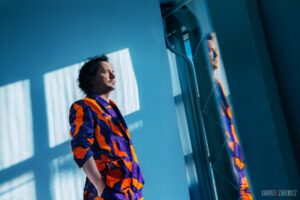
By Galina Altman(Photo: Karpati & Zarewicz)
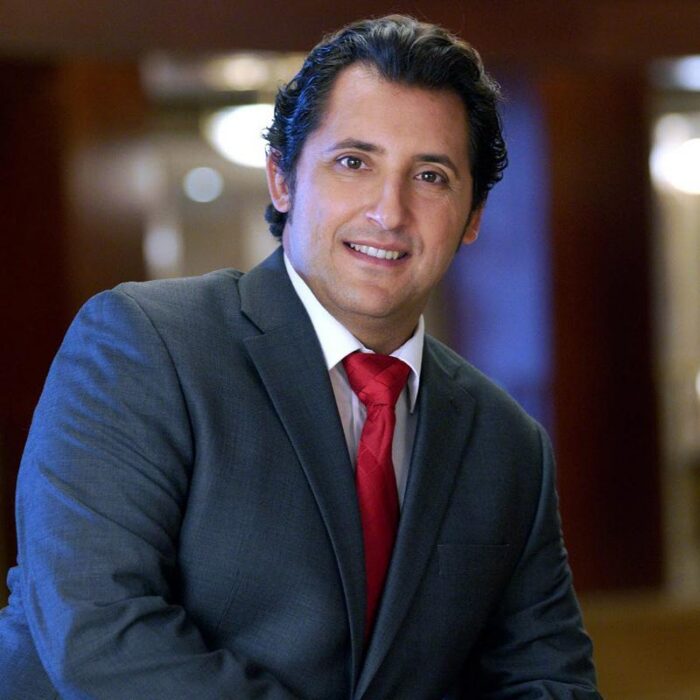
Polish baritone Artur Ruciński is one of those artists for whom opera has never been merely a display of vocal mastery. For more than 25 years, he has built an extensive Verdi repertoire, returning to its great roles with fresh eyes each time.
In Madrid, where Ruciński is performing Count di Luna in Giuseppe Verdi’s “Il Trovatore” in Francisco Negrin’s production, OperaWire spoke with him about the human nature of operatic characters, contemporary stagecraft, the boundary between acting and singing, artistic maturity, and why certain roles must wait for their time.
OperaWire: In theater, they say that when playing a villain, one must search for where he is good. Count di Luna commits terrible things, but he acts out of a blind, agonizing love for Leonora and a devastating family trauma. Do you sympathize with him as a human being? Have you found something in his character that you could personally justify?
Artur Ruciński: Of course. Count di Luna is not a bad person. He is an aristocrat. He is a soldier. He is the commander of an army. And he is a man of great elegance and nobility. Because Leonora has rejected his love, he is torn between love and a hurricane of hatred–and that is why he has decided to take revenge on Manrico. Francisco Negrin’s production is a story about people trapped by the past, by unlived memory, and by the desire for revenge.
Negrin moves far away from the folkloric image of the opera. He is much more focused on the emotional lives of the characters. On our stage, there is a dark, almost cinematic atmosphere–one that allows us to express our emotions more deeply, including through the words themselves, which matter enormously in Verdi’s masterpieces, where the characters are so profoundly human. And when you ask whether I can find something of myself on the dark side–well, we all have both sides. The question is simply which situation in life we find ourselves in. So I can easily understand the Count’s feelings for Leonora and his hatred for Manrico.
There is also a strange premonition the Count carries–a sense that he somehow knows his enemy, even though they did not grow up together. This is not only love and hatred. There is a blood bond between the two brothers, and that tension runs between them throughout. Many times Manrico had the opportunity to kill the Count, including in a duel, and he never did–because Manrico as an artist, as a troubadour raised outside the aristocracy, perhaps possesses a sensitivity and an empathy toward human life in general and toward this man in particular.
The production is exceptionally theatrical and it is a great pleasure to be part of it because you can concentrate on the vivid emotional lives of the characters. I have found Count di Luna to be not an evil man–simply one who shows his true emotions and is sincere in both his love and his hatred. His love for Leonora he expresses in one of his most beautiful arias, “Il balen del suo sorriso” and it is there that we see his sensitivity and his true soul. But his pride has been wounded, and he wants revenge, because he cannot accept that the woman he loves so deeply will go either to his rival or to a convent.
OW: You have been singing Count di Luna for many years, on stages all over the world. Do you remember how you first saw the character and how has your relationship with him changed? What personal experience or life lessons have helped you bring a deeper maturity to the role here in Madrid?
AR: I would say my sense of him was roughly the same from the very beginning. My debut in the role was in Vienna, many years ago in one of the finest productions of my life, which was later staged with Placido Domingo and Anna Netrebko in Berlin. It was quite a modern production with very vivid characters, magnificent costumes, and the feeling of a dark fairy-tale horror story–a genuinely interesting vision. But from the very start I was trying to find the human side of the character and to show the audience, through music and words, both sides of him: the greed, the hatred, the desire for revenge–and the truly sensitive soul, the heart, the enormous love for Leonora.
Every time I sing “Il Trovatore,” and I have sung it more than 130 times, I discover new things in this remarkable music, especially when I have the opportunity to work with great conductors. Nicola Luisotti and I had never done “Il Trovatore” together before, but we have worked together many times for more than 16 years. He is a true master. Rehearsing here in Madrid, I have found with him several details that reveal the Count’s character through the music. There are small notes that dramatically shift the emotional color of a phrase and it is an enormous pleasure to keep discovering something new when you sing Verdi. My voice is ideally suited to this music. That is why I now specialize in it and in bel canto. It brings me great joy and real growth. I develop my voice, and at the same time I develop as an artist.
OW: Have you read the play by Antonio García Gutiérrez that served as the basis for “Il Trovatore?” In your view, what is the difference between the character as Gutiérrez wrote him and the character as Verdi created him?
AR: Oh, what a question.
Honestly, I do not think about it in quite that way. Of course, when I prepare a new role, I always try to read the original source. I need to understand the story, the context, to know where everything comes from and which elements made it into the libretto.
But for me, the most important thing is the music.
I try to understand what Verdi wanted to say through the music, what emotions he wanted to convey. With Verdi you must, above all else, follow his remarkable score because everything is already inside it. Of course you must understand what you are singing; the words are enormously important in his works. But the combination of drama, text, and the incredible beauty of the music–that is the whole. And what matters most to me is to create a real human being on stage, to show all the dimensions of a character and all his emotions, rather than searching for differences between the literary figure and the operatic hero. Whatever production we are part of, the essential thing is to tell a story about people and to show the relationships between them.
Sometimes we compare and analyze too much.
OW: Pushkin’s “Onegin” and Tchaikovsky’s “Onegin” are completely different characters, because the two works are so fundamentally different.
AR: But when we work on an opera, our task is to tell the story that lives inside the music and the libretto.
And now, with so many different directorial visions, and with directors coming from dramatic theater, from cinema, from opera itself–things can be very different, and that can be genuinely interesting. We are not obliged every time to set the story in the precise period in which it takes place. We can open up new meanings. But the connection to the music always comes first.
We also know very well that Verdi, working under the constraints of censorship, was always trying to speak to his contemporaries about the events and processes that moved him, including political ones, as in “Nabucco,” and in his other masterpieces as well. The struggle for Italian freedom touched him deeply–that much is clear.
OW: So you are open to contemporary stagings?
AR: Of course. I have no objection to modern productions, as long as they are logical and not made simply to shock people, or to prove that the audience fails to grasp the director’s vision. But everything that happens on stage is the director’s responsibility.
OW: Do you ask directors what they are planning before you agree?
AR: Always. If there is an intelligent answer, and the director is trying to find a new way to show the connections or the emotions between the characters–I am open to that. It simply has to be logical. It cannot be completely severed from the original idea and it cannot go against the music. We are musicians, we are singers and what we must offer is not acting alone because if you want magnificent acting, you can go to the dramatic theater. I’m trying to work with them as well as possible, trying to find the best resolutions, emotions, my personality in their artistic ideas. That’s important for me. In opera, we need to combine magnificent acting and magnificent singing, while honoring the old school of bel canto and showing, with full respect for the Verdian repertoire, what it truly takes to be a Verdian singer.
If you follow the composer, whoever that may be–Verdi, Puccini, Mozart, Bellini, Rossini, Donizetti, Wagner–you must be genuinely engaged and deeply immersed in the music, technically as well. Then you are real, and people believe you. But if not, audiences need to feel in their hearts the value of the musical art that composers embedded in the score. And that cannot be faked.
OW: Which brings me to acting specifically. We have spoken a great deal about voice and music, and we all admire your remarkable singing. But many directors today demand an almost extreme level of physical and dramatic commitment on the operatic stage–Dmitri Tcherniakov, for instance, or Christof Loy. Is acting becoming more important than singing for them?
AR: I don’t know whether it is more or less important. I think the two should not be ranked against each other. They must exist together.
No one wants to watch a singer who stands on stage like a post, simply displaying vocal technique and a beautiful timbre. But balance is essential. And a director cannot forget that there are moments when a singer simply needs to breathe.
We now have new possibilities: cinema broadcasts, streaming platforms, close-ups on screens. These allow us to reveal characters more deeply, to show more through the face and through small details. But singers must always be in a position that allows them to support the voice. We already do far more on stage than would ever have been possible in the past, and that is wonderful, but music must not become the antagonist of the story. Music is a partner. And sometimes it seems we forget that.
We can build remarkable worlds on stage, use new technologies, spectacular sets, lighting, and costumes. But all of it must serve the music, otherwise we risk ending up with a musical performance full of actors who happen to sing, rather than true operatic singers. I am one of those who fights for a deep respect for opera. Singing actors, even striking and talented ones, but without the skills of an operatic singer, with voices not suited to this repertoire, should never touch the works of Verdi or the bel canto tradition. It should simply not be permitted. Verdi demands a singular level of mastery.
People come to the theater with certain expectations, and they should not have to watch a singer struggling because the role is too heavy, or technically beyond what they can deliver. This is why the intendants of opera houses must be genuinely equipped to choose the right singers for the right repertoire.
Today, I see many young singers performing everything from baroque to contemporary music, all at once, all mixed together. I have been in this business for more than 25 years and from the very beginning I had a strong voice. But when I was very young, in my early twenties, I was already receiving offers to sing powerful dramatic roles–Puccini, for example. I said no. I will do that when I feel ready, both vocally and mentally. Because for these roles you need a certain maturity of craft and of person.
Even with an outstanding vocal instrument, you cannot truly be Rigoletto or Simon Boccanegra in your early twenties. You can sing the notes beautifully, but what do you know of life? What do you know of what it means to be a father? What can you actually show? For me, what matters is to show the full human being, not only excellent technique, and for that, vocal gifts must be combined with emotion and with the maturity of a person.
This year, at fifty, I am finally making my debut as Rigoletto–a role I have never sung before, though it was offered to me many times. I told myself: I will sing Rigoletto, Simon Boccanegra, Macbeth, and Iago when I am older, when I feel I have grown into the character. And so it has been.
I have sung around 15 different Verdi roles, some of them far less known and far more rarely performed than his most celebrated operas. But now, after all of that experience, I feel this repertoire naturally, and I can inhabit a role not only vocally, but as a character, as a human being. Our voices grow and develop alongside us, alongside our experience, our bodies, and our lives. We change. And when you feel truly ready, you can make something that is genuinely a masterpiece. I am glad that in many theaters that is now how I am received, because audiences feel that I have lived inside these roles for a long time. And in a sense, I have been preparing for them my entire life.
For me, the most important thing is quality. I do not believe I must sing every role written for a baritone. I have always wanted to focus on what suits my voice perfectly, and on what I can develop until the very end of my career. And I do it for the audience, not for myself.
OW: Are there roles you have outgrown, or simply would not return to?
AR: Yes. I decided not to return to Ford in “Falstaff,” though it is a very fine role. I have sung it so many times that the character no longer interests me. It has exhausted itself for me. I am moving forward and I will never touch the Wagner repertoire. It is profoundly beautiful music, but I do not speak German and it is simply not mine.
Beyond that, I try to keep a balance between my career and what you might call a real life. I have a wonderful family, two sons, a beautiful and remarkable wife, and they need me too. I simply cannot spend all my free time preparing ten new roles, because then I would have no life at all.
There are people who do not carry this kind of responsibility–who have chosen not to have children, or who do not need a family–and I can only admire how completely they dedicate themselves to the art. If they are happy, I wish them everything wonderful. But I am different. I want to live in balance. I want to have people with whom I can share my success and my time. If I see that both the audience and my family are moved by what I do–that is my greatest success. My family is as much my achievement as my career.
OW: I know young singers for whom this balance is not really a choice–it is simply what the industry demands. Production after production, always visible, always available. Is it genuinely hard for young opera professionals today?
AR: I think it is very hard to build a real relationship once you have established a large international career. I always tell my students: try to find your person before you start traveling the world. Because afterward, it becomes very difficult. How do you find someone willing to give up their own life, their own work, to travel with you, to never be apart for long? For my wife, none of this has been easy.
We have been together for 26 years. She is herself a wonderful artist and has been running a cultural center in our neighborhood for over a year now. We have two boys, and the entire household rests on her. But we built a strong marriage before my career truly began. Because of her support, I can both work and remain a human being. After two weeks away from my family, I want to quit. Not being there for my sons at the important moments of their lives–that is an enormous price.
I often ask myself when enough is enough. That is why I turn down many offers. What is the point of having a family if I am only ever available to audiences and to theaters? That is not a real life. Though it is a beautiful life, and I have been fortunate. I have no reason to complain about a profession where I am among the small number of people in the world whose schedule is full for the next three or four years.
The stage is jealous, as we say. But building a life with another person matters just as much. And it is possible. You need a little luck, a great deal of work, and the ability to keep your balance. If you are too greedy, if you want to swallow everything the world has to offer, you may find yourself choking.
So I will never sacrifice my family for my career. My wife and I started from nothing and built everything together, as most people do. And I think that is a good thing because you feel the value of partnership, and you understand how hard you have to work to build something real.
We try to teach our children the same. Our older boy is just moving into secondary school. It seems he already knows what he wants to do–he has goals, and that matters.
OW: Any chance he wants to become a singer?
AR: I don’t think so, though who knows! Parents should open doors, but we would never push our children. For now, my sons say: “No, we will not be singers, because we see what this life costs our father.” There it is.
So, never stop developing your talent and your craft, but try not to live only for yourself. Try to live for your family, and for others. It is beautiful to create music, to create art, but nothing in life comes free.
OW: What do you believe opera communicates to today’s audiences? And what is this production of “Il Trovatore” at Teatro Real trying to say?
AR: I think it is all about us. The story in “Il Trovatore” is about people who are rejected by other people. But if you allow yourself to be consumed by the desire for revenge, it will destroy you. Even if you come to someone with true love, you are not owed a yes in return, because the heart is not your slave. Least of all someone else’s. If you cannot find forgiveness, for yourself and for others, it will lead you to tragedy. That is why, perhaps now more than ever, we must fight for peace and for love. These are not empty words.
We will never have paradise on earth as long as human nature contains the need to possess more than one deserves, to be more powerful, to control everyone and everything. There will always be those who want to prove how much more important they are than others. And even when they have enough, they want more–not to share, but to accumulate. It is the struggle between good and evil, and it does not cease. The story of “Il Trovatore” is firmly connected to our time, and we can easily find ourselves inside it.
Through this beautiful music, we are meant to feel, to see, and to think about what will happen to us and to our families if we do not learn to forgive. I think that is the message.
OW: I believe that if more people attended the opera, they would think more deeply. They would encounter different characters, different human stories, different consequences of different choices.
AR: Opera and art all together represent the most beautiful of worlds–a place where you can forget your own troubles and simply absorb the beauty of the music and become something better. That is why it matters so much that a production gives people genuine emotions–not only happiness, not only comedy, because life is not only that. Sometimes we are happy, sometimes we weep, sometimes we live through tragedy–all of this is part of our lives.
But art must always leave a sense of light. When I watch a drama, I do not want to leave the theater feeling angry or frustrated because I could not understand what was happening on stage, or because everything was made without beauty. The world is already harsh and ugly enough because of people who kill one another. That is why the theater must be a place where a person can stop, breathe and feel beauty and peace.
OW: Thank you so much. Madrid loves you deeply.
AR: And I love Madrid. I love Spain. Perhaps in retirement I will live partly in my beloved Poland and partly in Spain, where I also feel completely at home because of the people I have met here. I have so many friends in Spain, and I feel such warmth from the audience every time I perform here. And when I feel that joy, it gives me energy for future projects, and for life itself–no matter how much I have given on the stage.
OW: Spain today is such a multicultural environment–so many nationalities, languages, traditions. It is wonderful when a country is oriented toward openness and collaboration.
AR: Yes, absolutely. But if any beautiful country, Spain included, begins to build walls, and if its regions begin to compete or fight among themselves, it will lead everyone to tragedy. And this is precisely what the story of Count di Luna and Manrico shows us: the moment you convince yourself that you have the right to decide who lives and who falls under whose control–that is the path to certain destruction.
Let us talk to one another. Let us collaborate. Even when we are different–let us accept that. We have different cultures and different ways of being. But we are human beings, and we must support one another.
And let us remember that people from countries less fortunate than your own are also human beings. We must be together. Because otherwise, for example, Russia–which is now at war against Ukraine and Western Europe and wants to prove that its ideology is superior–can destroy the bonds of the European Union. When we are together, we are stronger. And if we allow that foundation to be destroyed, we will have another war of total annihilation. We must not forget that. We also see how many of the Russian people themselves are suffering under Putin’s leadership. They had to leave their own country because they do not agree with the war that their country is waging.
If you are possessed by the past, trapped in it with supposedly good intentions but consumed by hatred and the desire for revenge–then you are lost. And that is our situation now, perfectly reflected in Verdi’s opera. Is it not?
Everything depends on us, and on the choices we make.