Q & A: Serge Dorny on Taking Presidency of Opera Europa, The Future of Opera & Anna Netrebko’s Return to Bayerische Staatsoper
By David Salazar(© Geoffroy Schied)
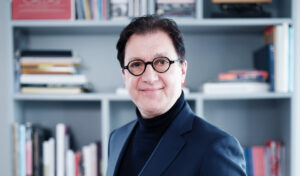
Serge Dorny is one of the most powerful men in opera.
Beginning his career as a dramaturge under Gerard Mortier at Théâtre de la Monnaie in Brussels, he would eventually become Artistic Director of several major institutions before climbing to some of the most prestigious positions in the industry. He led as General Director of Opéra National de Lyon from 2003-2021 and then took over the coveted position of the Bayerische Staatsoper’s General Director.
Now his impact on the opera world is about to expand as he takes on the role of President of Opera Europa, the leading service organization for professional opera companies and opera festivals throughout Europe.
OperaWire spoke to Dorny about his new position and his view for the future of opera throughout Europe.
OperaWire: What led to you taking on this position to lead Opera Europa?
Serge Dorny: I have always believed strongly in the importance of collective cultural structures. Opera houses are rooted in their own cities, histories and artistic identities, but they also need frameworks in which experiences, ideas and responsibilities can be shared across borders. Opera Europa plays precisely that role.
This relationship with the organization is not new for me. During my time at the Opéra de Lyon, I was already involved in it as a member of its board, and I have followed its development over many years. When I was appointed as General Director to the Bayerische Staatsoper, my priority was quite naturally to devote myself fully to this institution, to understand it in depth and to engage with its particular history, structure and audience. That required a very focused commitment.
After several years in Munich, and with the experience I have gained across different cultural environments, in Belgium, the UK, France and now Germany, I felt that the moment was right to contribute again at a broader level. I have worked in very different systems: festivals, stagione houses and now a repertoire theatre; in different funding models; and within distinct institutional cultures. Being able to place that experience at the service of the wider operatic sector is both a responsibility and a natural continuation of my path.
This role also emerged from a clear encouragement within Opera Europa itself, which I received with a strong sense of responsibility.
What led me to accept the presidency is the possibility of contributing to a larger conversation at a time when opera is facing important questions, artistic renewal, the development of new audiences, the place of young artists, financial pressures, the balance between tradition and innovation, and more broadly the role of culture in a changing society. These are not questions that any one institution can address alone.
Throughout my career, whether in festivals or in opera houses, I have been interested in creating frameworks in which artistic exchange can flourish. In that sense, accepting this role felt like a natural extension of that work, a way to contribute to a stronger collective dynamic across the sector, while continuing my full commitment to the Bayerische Staatsoper, and to reinforce dialogue, cooperation and shared ambition across borders.
What drives me in this profession more generally is the conviction that opera is more than a succession of productions and performances. It is part of the way a society lives with itself. A theatre is, in a sense, close to the idea of a piazza, a place where people gather, where different perspectives meet, where emotions are shared and where reflection becomes possible.
In a time when the conditions for living together are becoming more demanding, such spaces are not self-evident. They need to be sustained and strengthened.
That is also why I believe it is important to engage at a European level. From Munich, one can develop a strong artistic identity within a specific context. But many of the questions we face today, artistic, social and structural, go beyond any single institution. They require exchange, cooperation and, in some cases, a shared voice.
I believe Opera Europa has an important role to play in continuing to amplify that collective strength, while fully respecting the diversity and independence of each institution. It can help make the sector more visible and more clearly heard, both in dialogue with policymakers and within society more broadly. It can also encourage a stronger shared reflection on how opera positions itself today, how it reaches new audiences, and how it communicates its artistic, cultural and educational contribution.
These are questions that can only be developed in dialogue with the members, but I do see them as an important part of the organisation’s continuing evolution.
Accepting the presidency of Opera Europa is therefore, for me, both an honour and a responsibility, a personal commitment as well as a collective one: a way to contribute to a much wider ecosystem, and to help ensure that opera remains a living, relevant and meaningful art form in today’s world.
OW: How do you view the state of opera in Europe and how do you hope to develop it as the head of Opera Europa?
SD: Opera in Europe remains extraordinarily rich. It has deep roots, remarkable institutions, exceptional artists and audiences that remain deeply committed. At the same time, it is clearly at a moment of transition.
There are significant challenges. Economic pressure has increased sharply in recent years. Production costs have risen considerably. Public funding is under strain in many countries. Audience habits have changed since the pandemic. And like all cultural institutions, opera must continue to justify its place in public life, not defensively, but with confidence, imagination and ambition.
Yet I see this moment not only as a challenge, but also as an opportunity. Opera brings together a unique combination of artistic practices, music, theatre, text, visual imagination and craftsmanship, within a shared live experience. It is not only about what happens on stage, but about what happens between people in the room.
In increasingly fragmented societies, that collective experience has a particular value. It creates a space where individuals come together, even briefly, around something they do not experience alone. That dimension of shared attention and reflection is, I think, more important today than we sometimes realise.
Opera Europa has an important role to play in this context, but not as a closed or inward-looking structure. Of course, it is rooted in Europe, with its specific institutional models and traditions, but it must also remain outward-looking. Opera today is an international ecosystem, and developments in other parts of the world, whether in artistic practice, audience engagement, digital formats or new production models, are equally important to observe and understand.
Within that perspective, my hope for Opera Europa is to contribute to strengthening several things very concretely: advocacy, collaboration and transmission. It can act as a collective voice for the sector in discussions around cultural policy and public funding. It can strengthen knowledge-sharing and professional exchange between institutions. It can encourage co-productions and partnerships that make artistic ambition more sustainable. It can support training and the development of the next generation of artists and arts professionals. And it can help opera houses think together about shared challenges such as sustainability, digital transformation and changing audience expectations.
At the same time, it should remain a platform that connects Europe to an even more international landscape, allowing ideas, artists and practices to circulate beyond geographical boundaries.
More broadly, I believe that opera, and the performing arts in general, represent an important kind of democratic resource. They create a shared space where people come together, listen, reflect and experience something collectively. In societies that are becoming more fragmented or polarized, that kind of shared experience is not self-evident. It needs to be maintained and renewed. Cultural institutions have a role to play in sustaining that space, not by giving answers, but by creating the conditions for reflection, dialogue and imagination.
For me, opera must remain anchored in its heritage, but it must also be open — open to new audiences, to more diverse repertoires, to younger generations of artists, and to the realities of contemporary society. Opera Europa can help create that framework, not only within Europe, but in dialogue with the wider world.
OW: How does this vision align with your work at Bayerische Staatsoper and how will Opera Europa influence it?
SD: The two roles are closely connected, but they operate on different levels.
At the Bayerische Staatsoper, the work is very concrete and rooted in the daily life of the institution: building a repertoire, working with artists, developing the ensemble and the Opernstudio, engaging with audiences, and shaping the identity of the house over time. It is a place where ideas are tested in practice, within a specific cultural, institutional and social context.
Opera Europa functions at another level. It is a platform where institutions can exchange experiences, compare approaches and address questions that are shared across the sector, from artistic collaboration and co-productions to the circulation of artists, training, sustainability and audience engagement.
It also plays an important role as a representative body for the sector, helping to make visible the value of opera in society and enabling dialogue with policymakers and cultural stakeholders at a European level.
What is particularly valuable is the relationship between these two perspectives. The experience in Munich provides a concrete basis for engaging in broader discussions, while the exchange within Opera Europa offers insight into how other institutions are responding to similar challenges.
This dialogue is enriching. It allows one to question assumptions, identify new approaches and develop collaborations that extend beyond a single institution.
At the same time, my primary responsibility remains the Bayerische Staatsoper. This role does not dilute that commitment, it strengthens it by bringing additional perspective and connections.
I see the two roles as complementary: one grounded in the reality of a house, the other offering a comprehensive view of the ecosystem in which it operates.
OW: As head of Bayerische Staatsoper, how has your vision changed since the time you took over? What kind of progress have you witnessed?
When I arrived in Munich, the immediate challenge was reconstruction after the pandemic. A repertoire house depends on continuity and daily practice. After such a long interruption, the first task was to restore rhythm, confidence and collective precision.
The initial phase was therefore both stabilizing and opening: rebuilding the institution and its relationship with audiences, while developing new directions, expanding the repertoire, introducing new theatrical languages, strengthening the ensemble and the Opernstudio, and creating formats such as Septemberfest and Ja, Mai.
Septemberfest opens the house at the beginning of the season in a more accessible and welcoming way, allowing audiences to encounter the Bayerische Staatsoper as a living community. Ja, Mai is our festival for contemporary music theatre, offering space for new works and experimental forms.
Artistically, the house has broadened its horizons: more twentieth-century repertoire, a stronger baroque trajectory, and a wider diversity of stage directors. This expansion enriches rather than weakens tradition.
Socially, rebuilding the relationship with audiences has been essential. Since the beginning of the 2025–26 season, attendance has reached around 99% for opera and 100% for ballet, with record earned revenue. This reflects a strong level of trust between the house and its public.
Financially, we benefit from solid public support, but we have also strengthened our own resources. Sponsorship revenue has increased substantially in recent years and has almost doubled, and income from ticket sales, co-productions and other earned revenue has also developed very positively. The Munich Opera Festival alone generates around 20 to 25% of annual box-office revenue.
At the same time, production costs have risen sharply, and structural challenges remain. We have moved from a phase of reconstruction to one of longer-term development, shaping an artistic ecosystem that is ambitious, sustainable and open to the future.
OW: Among the major stories emerging from the Bayerische Staatsoper’s 2026-27 season is the return of Anna Netrebko for the first time since Russia’s invasion of Ukraine. Why was this the right moment to invite Anna Netrebko back to Munich?
SD: The Bayerische Staatsoper has, since the beginning of the Russian war of aggression against Ukraine, positioned itself clearly, publicly and institutionally in support of Ukraine. That stance is unchanged and not open to ambiguity. February 2022 was a turning point, and we suspended our collaboration with Anna Netrebko at that time. But this was never conceived as an irreversible judgement.
Since then, the situation has evolved. Anna Netrebko has not performed in Russia since 2022, and she has publicly distanced herself from the war. She has also acknowledged that earlier statements were mistakes.
For me, cultural responsibility does not mean freezing positions indefinitely. It means examining developments carefully and making responsible decisions on that basis. In that context, a collaboration within a clear framework of values is neither a contradiction nor a sign of inconsistency. It reflects a differentiated and responsible position.