Q & A: Dawn Carroll on Mary Cardwell Dawson, Mystery Manor, & ‘If the Walls Could Talk’
By Jennifer E. PyronDawn Carroll is dedicated to helping revitalize the legacy of opera pioneer Mary Cardwell Dawson and helping preserve the historic National Negro Opera House (Mystery Manor) in Pittsburgh. Her mission ties into broader themes of historic preservation, mentorship, and education, inspiring future generations through music and educational initiatives – continuing Dawson’s legacy.
Carroll, a stone designer and co-founder of the Over My Shoulder foundation with singer Patti Austin, unexpectedly encountered the dilapidated former home of Dawson while searching for antique theaters to save. She felt a “supernatural” connection to the project, recognizing Dawson as an amazing, largely forgotten role model.
OperaWire visits more with Carroll to learn about Dawson’s life and how to support a legacy that must be preserved and shared with future generations to come.
OperaWire: What drew you to learn more about Mystery Manor, where Mary started the National Negro Opera Company (NNOC) of Pittsburgh in 1941?
Dawn Carroll: There’s something mystical about this project. While learning this history I also learned a lot about myself. I thought I was going to help save a house but the house kinda saved me. I was going through a huge career change and I kept asking myself, “how am I going to ‘rebrand’ at this old age?” I realized if Mary Cardwell Dawson could do it with so many odds against her, this should be simple for me to do. Mary became a powerful mentor to me.
The project happened because I have this little nonprofit with the singer Patti Austin called Over My Shoulder. We got involved helping with the 100th birthday celebration of the Cabot Performing Arts Center in Beverly, Massachusetts. My friend, designer Jean Verbridge, was behind the renovation effort and Patti and I were eager to help. Patti did a concert to help raise more funds to finish the restoration and here we fell madly in love with antique theaters. Our foundation seeks unique ways to fuse music, mentoring, and design together. Patti wanted to do a tour to help save these architectural gems. We were both really excited. She went to Russia to do a concert and I went home to research. As I googled, this house just kept showing up on my screen. I kept deleting it thinking, “I’m not looking for a house. I’m looking for a theater.” But the house kept appearing, like it was trying to tell me something. And then, holy cow, Mary Cardwell Dawson chimed in and I became obsessed. When I found this story… correction, when this story found me… hardly anyone knew about Mary: she was lost in time. I called Patti who is also a human encyclopedia on music history: she had not heard of Mary either. The remarkable thing is, Patti’s parent’s probably hung out in this house with Mary because they had Pittsburgh ties at the same time – Patti’s father was a popular and brilliant session musician, and this was where every musical legend hung out.
OW: I enjoy how you talk about Mary Cardwell Dawson’s story guiding you to make the connections. Tell me more about this. What inspires you most about May’s Historic Preservation Month?
DC: I am a perfect storm when it comes to Historic Preservation. As a designer, I love architecture. As a storyteller, I always wonder about these old places and listen for walls to talk. I am devastated that history is being erased and important places are being demolished. Learning Mary’s story helped empower me to do something. It gave me a new purpose, and May’s Preservation Month is the perfect opportunity to get loud about it. This project is about Mystery Manor and it has something for everyone: sports history, car history, Black history, music history, opera history, women’s history. It has the unique ability to unite us all, which we really need right now. It’s a story about survival because this house refuses to die, it fights for its life every day. I call it the house that inhaled hate and exhaled love. I think this house knows we need it more than ever right now, and that keeps it hanging on. Once you know this beautiful story it casts a spell, the antique pulse you feel is pure and unconditional love. Mystery Manor is a place of hope and we need hope.
But for me, the real hero is the current owner, Jonnet Solomon. Jonnet and her friend Ms. White bought this house 25 years ago and have been trying to save it. They are the reason someone like myself knows anything about Mary Cardwell Dawson and Mystery Manor. Ms. White sadly passed on years ago, so Jonnet has been trying to save this place on her own. But Mystery Manor remains extremely vulnerable and needs help – the work is far from done. There is nothing easy about restoration. A project this size can break your heart and wipe you out. Many of us hardly survive a bathroom remodel when you think about it!
I understand construction, I work with amazing designers and contractors, so I believed we could roll up our sleeves and put a roof on the house and stop the water from destroying what was left of the home. I want to film the restoration. So I wrote a poem as a part of my marketing pitch. The poem was about saving Mary’s history and saving the decaying house. I knew there were many people out there who could help if they knew the story – I did my best to tell the stories. My entire project is to help raise awareness and find people passionate about saving old places and inspire others to get involved. If you save the house, you save the history!
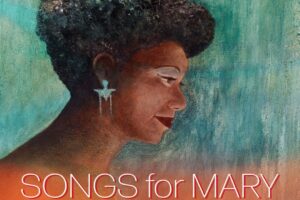
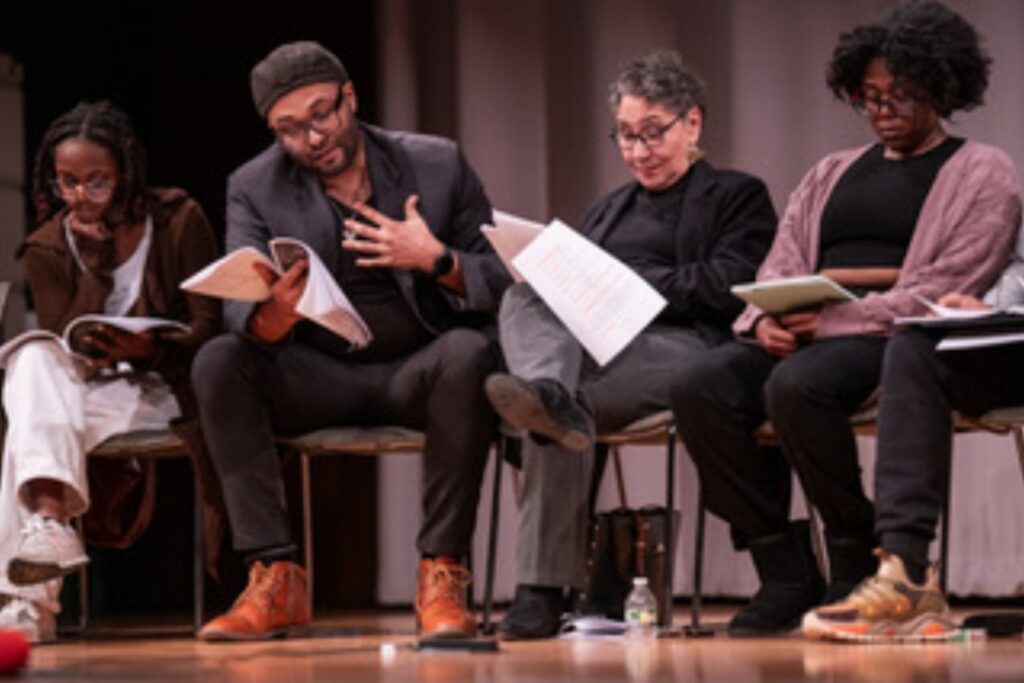
This led me on a magical musical journey to tell the stories of each person who spent time at Mystery Manor – my poem created my soundtrack called “Songs For Mary,” which I then turned into a musical called “If the Walls Could Talk.” It’s a show about the importance of Mystery Manor’s preservation. The show had its first public reading and I am still basking in the joy of kind press, standing ovations, and cheers.
Nothing prepared me for the feeling of bringing Mary back home to the New England Conservatory. My good friend Iris Marcus volunteered to do the artwork/portrait for the album cover.
We agreed that the original painting should have a forever home. We donated Mary’s portrait to the New England Conservatory here in Boston. Mary got her professional start here. So this is also a Boston History story. Connecting with New England Conservatory, bringing Mary home… it still gets me choked up! Mary was an icon, a mentor and someone we should never forget. She was the first lady of Black Opera and it means so much to me that students will learn more about her and be inspired by her unstoppable power and unbreakable spirit. I want the students to think about Mary while pursuing their dreams. In the 1940s she fearlessly negotiated contracts for fair wages for Black performers with union guys. She produced world class operas, she found and secured top talent. I mean, how did she find world class talent in the 1940s? There was no fax machine, no email, and few people were going to help her. But she produced these operas and got her shows onto the stage. I think it’s fair to say she risked her life doing all this considering the time. This is a story about never giving up.
The 1940s didn’t give many career opportunities for woman, and a Black woman’s obstacles only quadrupled. It’s not easy to do these things even today – I am trying hard to get my show on stages and it’s 2026. How the heck did she do it back then? And that question pops into my head all day long and it’s how I finished the album and created the musical. I just start to think, if Mary opened her eyes today and saw me, whining about how hard it is, and she saw the condition of the world today and how hate has consumed us… what would she say or think? What would that sound like, look like, feel like, after everything she did to try to further us? If she saw the condition of Mystery Manor and its history I think it would rip her heart out. Mary is a hero. She believed in dreams and Mystery Manor made the dreams happen. We have got to save this place.
OW: Who owned Mystery Manor and how did it get its name?
DC: Mystery Manor was owned by the first Black millionaire of Pittsburgh, Woogie Harris. He let Mary start her music school here, then she started the opera company, the National Negro Opera Company. The house got its name because you never knew who would show up to sing and dance the night away. Every famous musician and sports celebrity came by because there were few options. It didn’t matter how famous you were, if you were not white, a safe and legal place after dark was hard to find. I am working on the Woogie Harris song right now. It is fascinating to learn about him. Woogie had a Duesenberg car called J209, which was the engine number – this car was also lost. I didn’t even know what a Duesenberg car was when I started, so I researched more and then I spent years trying to find Woogie’s car for my show. In the show, it’s a heartbreaking moment when we, in the year 2026 have to tell them, in the 1940s, what has happened since they passed. We have to tell Woogie and Mary that everything they worked for, owned, cared for, and all their history is gone. I learned that Jay Leno is a collector of Duesenbergs. Through friends, I chased him down hoping he had J209… He did not. But I left it in the script because it’s one of my favorite parts.
We are able to piece this story together because of Woogie’s brother, Teenie, who photographed everything. In the music track I have the sound of his camera snapping away like paparazzi. The Stahls Auto museum and Auburn Cord Duesenberg museum made this lost piece of history come together. They heard I was searching for J209 and the story about the owner of the car. Saving Mystery Manor connected the dots: it preserved a car story as well. This is the glorious mystery of Mystery Manor. It connects us.
Mystery Manor has taught me so much. It reconnected me at 63 to my 10 year old self who dreamed of writing a musical. The education I have received from this project has been unreal. Enter Tchaikovsky! So I am a rock and roller, but for 40 years I have been in love with a lost Tchaikovsky piece. I have tried to insert this music in so many projects but it was never right. This project gave me the chance to finally use it! In the show I made this music the voice of Mary and the spirit of Mystery Manor. I hope your readers will forgive me, but it also has a little hip-hop vibe, since the show combines the 1940s with the current day and the lead character in our show, “MB Rhymes,” is a rapper. I figured that, as an educator, Mary would find hip-hop fascinating.
MB Rhymes is actually a real person from Houston named Michael Berry. Michael helped write and shape the lead song, “If the Walls Could Talk,” and our Joe Lewis Song, “Rise.” Michael does not have secure housing and is yet so determined to help save this house! I know Mary and Woogie would help Michael succeed. He would have a stable home with them at Mystery Manor if they were alive today. And here is another lesson: we need to do more to help other people. It was a beautiful moment, seeing Michael write two amazing songs. He has always inspired me, which is why I made him the lead character in the show. It was amazing having him at the reading and watching real actors play him.
OW: Tell me how you started Over My Shoulder Foundation, a non-profit co-founded with Grammy award-winning singer Patti Austin.
DC: I was living in Los Angeles, working with Patti Austin and her manager Barry Orms. We were involved in several different musical acts, but Barry gave me the best job ever: I got to run around Hollywood and come back and tell him what’s cool and hip and what we should invest in. Barry wanted to create something that brought people together in an educational way. At the time, nobody was using the word “mentoring.” One day, when I didn’t get home the night before – I think I have Guns N’ Roses to blame – I came crawling through the door. Patti had a big interview and I was not prepared. The journalist came in and really didn’t want to talk music, she wanted to know about mentoring. This was before the internet. And I was like, what is mentoring? I was freaked out and thought I would be sacked. I was supposed to be her PR liaison – it was my job to be prepared and I was not. Patti launched right into the most beautiful story. Yes, she had talent, talent nurtured by her dad who was a well-known musician, but she became famous fast and young. She explained to this writer that her success was because of her mentors, who included Dinah Washington, Ray Charles, and Quincy Jones. She had a team of mentors that helped her understand the music business, how to protect your health and voice when working and traveling 24/7.
I was blown away that there were people out there like that, so I decided right then and there to collect mentors. As a young person, it was beautiful to hear somebody who was so successful gracefully hand over all that success. Long story short, years later, Barry and Patti began working with a young artist named Lianna, they were struggling with finding the right music for her. The songs were too risqué or too childish. To me, the answer was simple: write Patti’s story about mentoring. I wrote the musical memoir about Patti and her mentors called “Over My Shoulder” as a duet for Patti to sing with Lianna. Lyrically its an honest exchange of wisdom. When we debuted the song, it was at a really cool event called Power Girls. Patti and Lianna sang the song and we saw the audience embrace the message in real time. We saw entire families, young and old, connect. Later, a dazzling lady named Dr. Johnnetta B. Cole informed us that this song was our rent for life. We agreed, so we started the foundation.
OW: Can you tell me more about future generations and how you’re discovering what works when mentoring?
DC: This project needs to live in the school system so that the history doesn’t get lost again. Mary was an educator, so this is super important to me. I had a magical moment with a group of third graders just outside of Boston fell in love with this story and became instant historic preservation activists. One of the songs on the album was written as the last song of the musical. It’s called “Who’s Gonna Save the World?” I had this vision of kids and their families leaving the show inspired to change the world. I wanted them to kick open doors with fists in the air and say, “I’m gonna save the world.” I wanted to hear them chant, “I’m the next Mary Cardwell Dawson.” One of my friend’s daughters came to the record release party and I gave her the album. Later, I got a text from her mom saying how much her daughter liked the music. I’m like, “But what’s her favorite song?” She goes, “Who’s Gonna Save the World?” I jumped up and down with joy. This is how I ended up in front of her entire class, which was a tad terrifying because I’m thinking, “How am I going to get a bunch of third graders interested in an old house that’s falling down and an opera legend that is lost in time?”
I was afraid that they were gonna throw paper airplanes at me and kick me out of the room. But when I arrived, they knew more about this project than I did. They had researched it like crazy. And they raised all their hands with questions and suggestions. And I’ll never forget this one little girl who raised her hand to express how upset she was that the world forgot Mary Cardwell Dawson. She looked like a little Mary, elegant and eager to right wrongs. The kids got it. I was so energized that I promised to come back and asked if they would create their own art about this project. They could write poems, create album covers and speak about any of the people who spent time in the house. When I came back they each had professional presentations on what mattered to them the most about this history. It was stunning.
OW: I also enjoyed reading about Denyce Graves talking about Mary Cardwell Dawson’s legacy. What more can I tell my readers about your musical, “If the Walls Could Talk?” What do you hope for next?
DC: You are talking about Sandra Seaton’s “Passion of Mary Cardwell Dawson” that starred Denyce! I am really ashamed to admit this, but I still have not seen this production yet. I want to see it and meet every Mary Cardwell Dawson fan. I won’t lie, helping save Mystery Manor consumes every free minute. The house is still very vulnerable and I pray my project can help. So I am working on the edits to the script because, the reading was just a reading! It had no stage movement or music and it was two hours long. I have to carve lots out of the pages in the current script to make room and time for acting and music. I am eager to find the right team to help take the project to the next stage and next chapter. My hope is that the entire project lives in the education sector. I would love to see more readings in school systems and that this project can help raise enough funds for a sustainable plan for Mystery Manor. Once this project is done I want to do more of these – I have a sea shanty structure here in Boston that is dying to sing its story.
So, if you like opera, fast cars, history, Roberto Clemente, Joe Lewis, Cab Calloway, Lena Horne, and beautiful homes – come get involved with this show. Have us come to your school’s stages and clubs so we can raise awareness on the importance of Historic Preservation. Oh and please download the “Songs For Mary” album on all streaming services. Join our mailing list at www.songsformary.com and follow us on instagram at “Songs4Mary” to learn more about the house.
Categories
Interviews
Stories you may also like…
Q & A: Composer Hana Ajiashvili on Her Azrieli Award-Winning ‘Riddle,’ Finding Inspiration in Color & Music’s Omnipresence in Her Life
In Less Than Five Minutes, Get To Know Stage Director MariaLuisa Bafunno