Q & A: Cathedral Choral Society of Washington’s Steven Fox on Creating the Ensemble’s ‘Sound’
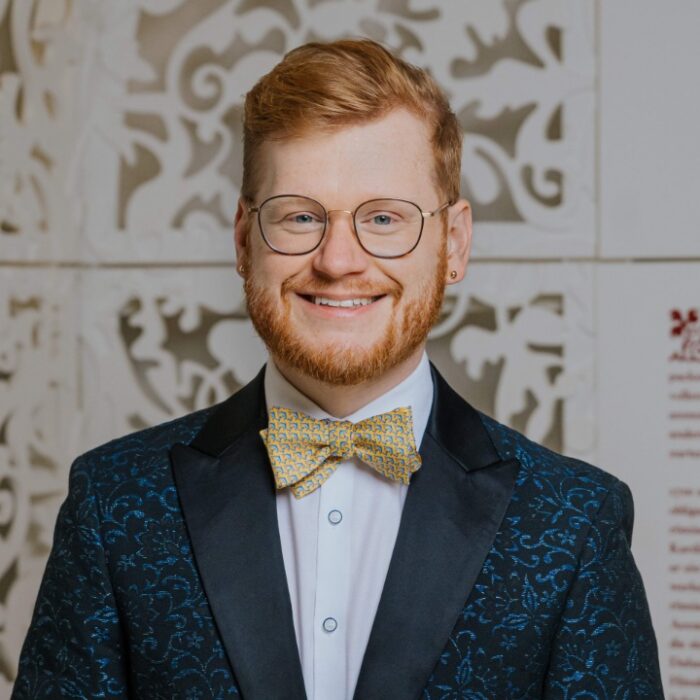
By Arnold SaltzmanSince he took over the job eight years ago, Steven Fox, Music Director of Cathedral Choral Society (CCS) has done his utmost to transform the organization’s direction.
To that end, Fox’s initiatives have included expanding the repertory, creating programs to improve the skill set of its members, and offering up new opportunities to deepen connections with the audience.
“I am lucky to have jumped on this musical train that was started by Paul Calloway and built to even higher levels of excellence under Reilly Lewis,” Fox, who is also Artistic Director of the The Clarion Choir & The Clarion Orchestra in New York, and cover conductor at the New York Philharmonic, told OperaWire in a recent interview about the organization’s development. “But I am always looking for ways to improve the chorus. I am always thinking about our sound, and how our singers can produce the best possible concert.”
The conductor spoke with OperaWire recently in advance of the Oct. 19th, 2025 performance of Mozart’s Requiem.
OperaWire: The Cathedral Choral Society had been searching for a director, and you’ve been director now in your eighth year. How did you find the Chorus when you arrived, and what were your immediate plans for it?
Steven Fox: I remember when I came down for my audition with Cathedral Choral Society. I knew that I wanted to be the music director for this group because I loved the sound they made. And hearing them sing in the Washington National Cathedral was something very special. When I began as Music Director, there were a number of pieces that I wanted to perform with Cathedral Choral Society, many of which we have gotten to perform in my first seven seasons.
CCS is a symphonic chorus whose repertoire focuses on large-scale choral-orchestral oratorios. Some of the works I dreamed of doing with CCS were oratorios by Beethoven, Vaughan Williams, Poulenc, Berlioz, and new works by rising American composers. I am grateful for the repertoire we have been able to mount in these last few years, and in particular, the new works we have premiered by Reena Esmail, Augusta Read Thomas, Stanley Thurston and Lisa Bielawa.
Last season was a particular highlight, when we had the chance to perform and record the Mass in D by Dame Ethel Smyth, a work from the turn of the 20th century that I feel deserves to be much better known and a regular part of the choral canon.
OW: How would you describe the Arc of your vision for the CCS from those early days and into the future?
SF: My goals for the group have evolved since I began here some years ago. Coming in, I had definite ideas of what I wanted to program with the group. But working in the National Cathedral with a very thoughtful and inspiring group of colleagues got me to expand my idea of programming. My colleagues inspired me to think in a grander and more ambitious way – that what we do at CCS is viewed by choruses all over the nation. Therefore, we should illuminate the breadth and dynamism of different American traditions and new voices in the Classical music world.
OW: How are you working to develop the Chorus? What are the requirements for membership in CCS?
SF: The group has developed a signature sound over the years, which I am so proud of. I am lucky to have jumped on this musical train that was started by Paul Calloway and built to even higher levels of excellence under Reilly Lewis. But I am always looking for ways to improve the chorus. I am always thinking about our sound, and how our singers can produce the best possible concert.
Currently, I am focused on our ability to learn and perform more challenging repertoire, and on our ability to get to a higher level of music making earlier in the rehearsal process. So, we are now about to start offering music theory and sight-reading lessons to the chorus members, in an effort to build these skill levels amongst our singers. CCS is an auditioned chorus, and it is quite competitive to get into this group. Most of our singers tend to have a background in choral singing and sang in school or in university. Our group is avocational, though we also have a small complement of professional singers that perform with us, many of whom are part of the professional Cathedral Choir at Washington National Cathedral.
OW: Is there an ideal number for membership?
SF: I like us to have about 125 singers on stage. This allows us to balance well with a full orchestra, but it is also not so large as to make the sound murky or to lose CCS’s distinctive sound qualities.
OW: How did you decide on Mozart’s Requiem as a feature for this season’s program?
SF: The Mozart Requiem is one of the most beloved works in the choral repertoire. To me it is one that I keep coming back to. Each time one comes back to it, one discovers new aspects of its brilliance. As Mozart’s final work, the Requiem gives us a small glimpse of where this composer would have taken music if he had lived longer. The Requiem has a depth and dramatic quality that we don’t see often in his other works.
Mozart also focused on opera in his later years, and the Requiem therefore also has an operatic quality that we don’t hear in his earlier Masses. As we also see in Brahms’ and Verdi’s settings, the haunting Requiem text, particularly that of the Sequence, inspires some of the finest music from these great composers.
OW: What drew you to conducting? Is your background singing itself, or choral singing technique as a conductor?
SF: I started singing from a very young age. And then I studied the saxophone, playing in the band in school, as well as the guitar and, later, the piano. Singing in the Glee Club in high school, I had a teacher who was very inspiring and gave me the idea to start conducting. I was blessed with other great teachers in college and graduate school who encouraged me to go further.
OW: For those who are not familiar with CCS outside the DMV region, can you give a brief history of the organization?
SF: CCS was formed during World War II, when a group of singers gathered together to sing Verdi’s Requiem for solace following the attack on Pearl Harbor. To this day, CCS remains a community of extraordinary individuals who come together each week for the comfort and joy of making music together. CCS is not only the oldest chorus in Washington, DC, but it has become one of the leading symphonic choruses in the nation.
OW: Is your goal to reach audiences beyond DC? And lastly, what is your focus, in this national venue, sometimes referred to as an ecumenical Cathedral, in addition to music?
SF: We have released two new recordings in recent years and also began live streaming our concerts during the pandemic. These two avenues, I believe, have broadened our reach outside of Washington and even internationally. Washington National Cathedral is a spiritual and cultural center. We feel lucky to give our concerts there. But we also know it is a place that people enjoy coming to hear music under the beautiful vaulted ceilings and illuminated stained glass windows.
OW: Many arts organizations speak about audience development. Have you seen any change in attendance and support?
SF: Coming out of the pandemic, our in-person attendance has been very good. The diversity of our audience has been steadily growing as a result of our outreach to underserved communities. We know that this has not been the case for many organizations in Classical music, and we feel blessed to perform in a venue that has such a magnetism and is a draw for music lovers.