Q & A: Artistic Director Christoph von Bernuth on the Multi-Faceted Identity of the Karlsruhe Handel Festival
By Mengguang Huang(Photo: Arno Kohlem)
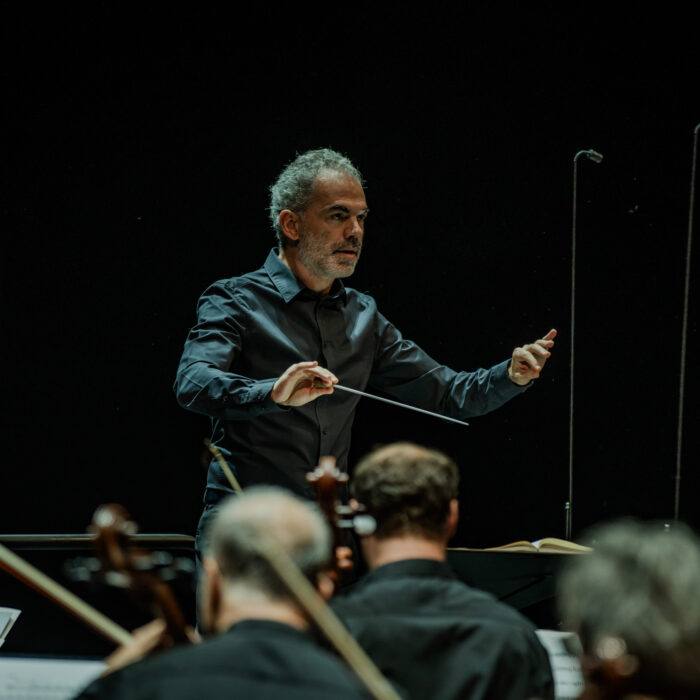
Christoph von Bernuth is the Opera Director and Artistic Director of the International Handel Festival at Badisches Staatstheater Karlsruhe. With nearly 19 years at the Innsbruck Early Music Festival alongside René Jacobs, he is a leading expert in Baroque opera productions. Formerly Deputy General Director at Oldenburg, he is also an accomplished director, known for staging works ranging from Purcell to Korngold.
Recently OperaWire had the opportunity to discuss more with him regarding the artistic vision behind the festival curation.
OperaWire: After your tenure in Innsbruck and Oldenburg, what specifically drew you to lead the International Handel Festival in Karlsruhe?
Christoph von Bernuth: I have been here for a year and a half now. Coming here not only to serve as the Opera Director for the theatre but also to take over and continue refining the Handel Festival has been an immense honour for me.
In fact, my journey began much earlier. I worked for the Innsbruck Early Music Festival (Innsbrucker Festwochen der Alten Musik) for nearly 19 years, 15 of which were spent working alongside René Jacobs. So, I am very familiar with the Baroque world. And now, I can be here with my old friends and the finest musicians and ensembles from the Baroque world. For example, the Deutsche Händel-Solisten—this is our Baroque orchestra specially formed for the Handel festival in Karlsruhe–and many of them have been cultivating their craft here for over 30 years. It’s truly wonderful.
OW: It sounds like a reunion of old friends.
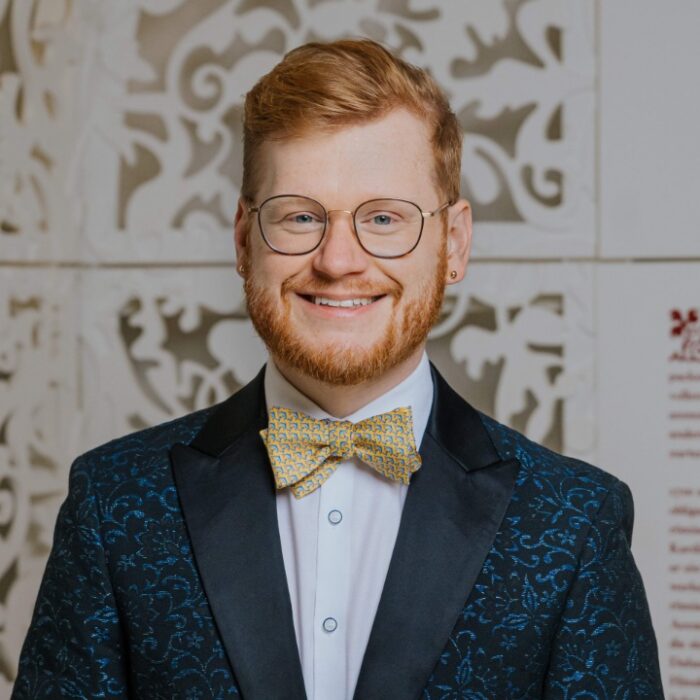
CVB: Yes, but it is not just a reunion. Of course, it must be a fusion. So, we try to present the top masters in this field while simultaneously discovering and nurturing a new generation of talent. For instance, the first Farinelli International Singing Competition for Countertenors (Farinelli-Wettbewerb für Countertenöre) we held last year—we discovered many very promising and talented young singers. Take the winner, for example; he is from Honduras, named Dennis Orellana. He was only 23 when he won the final, and this was a massive step for his career.
OW: Speaking of Germany, there are actually three very famous Handel Festivals : Halle, Göttingen, and Karlsruhe. How do you view Karlsruhe’s position among them? I don’t want to call it “competition,” but in this industry…
CVB: Yes, I know. But every festival has its unique standpoint. I believe this is a matter of tradition—in two years, we will celebrate the 50th anniversary of our festival. So, I don’t want to make too many comparisons. We all love Handel, and we try to find different ways to present Handel’s work.
Karlsruhe’s unique approach currently is: we look for a quote from the production currently in the works—a line that resonates with us. For this year, we selected a sentence from the libretto of “Tamerlano” and built the entire Handel Festival around that tone. This is also the approach we plan to maintain in the future—delving deep into the main production and unearthing the core themes of the work.
OW: So these specific sentences predefined the theme of this year’s festival and even influenced the choice of directors and artists?
CVB: Yes, absolutely. When we discuss concert programs, we tell the musical leaders or conductors that we wish them to create a program that echoes this topic and is built around it.
This year’s topic concerns “Liberation” and ”standing up against tyranny.” Consequently, you can find forms of expression related to this in almost every concert and every activity we held this year. Take our opening concert, for example; we tried to contrast contemporary music with Baroque music in the same performance. It’s not just about what is going on in the real world, but more about the “liberation of music”—exploring how contemporary music utilizes Baroque themes and sets them free.
OW: In fact, we noticed that you have also integrated some installation art and other cross-disciplinary musical concepts. What has been your curatorial intention?
CVB: That installation piece is called “The Cage,” created by the artist Fahar Al-Salih. He built a massive installation using many wooden cages, about 500 of them. This perfectly embodied the effect we wanted to achieve: making freedom and restriction physically perceivable. After the end of the installation, people can purchase these cages for charitable purposes. We hope that after buying them, no one will actually lock birds inside—that shouldn’t be the ultimate goal. But if people are willing to buy them, the proceeds will be donated as a fund to institutions in need of support.
OW: Returning to the audience topic, do you have a portrait of the current Handel Festival audience? Are you seeing a shift in the age structure or a broadening of the demographic in recent years?
CVB: It depends to some extent on the specific concert or opera content. For some concerts, many young people come to visit. For example, Maayan Licht—he is like a rock star. Even before he starts singing, and just walks onto the stage, the audience starts screaming, just like at a rock concert. He has a very large crowd of followers and is a perfect example of the new generation of singers and audiences. The best part is that through him, the older and newer generations of audiences are linked together.
Generally speaking, people who come to see the opera are usually of an older age. But I must say, we are called the “International Handel Festival” and our audience is indeed very international. We also staged French Baroque works, such as this year’s “Les Boréades” by Rameau. This was very effective because Karlsruhe is very close to France, and many French audiences come over. Meanwhile, many participating artists also go to see these French works or the performances of their colleagues; this interaction between the public and the artists is a great side effect.
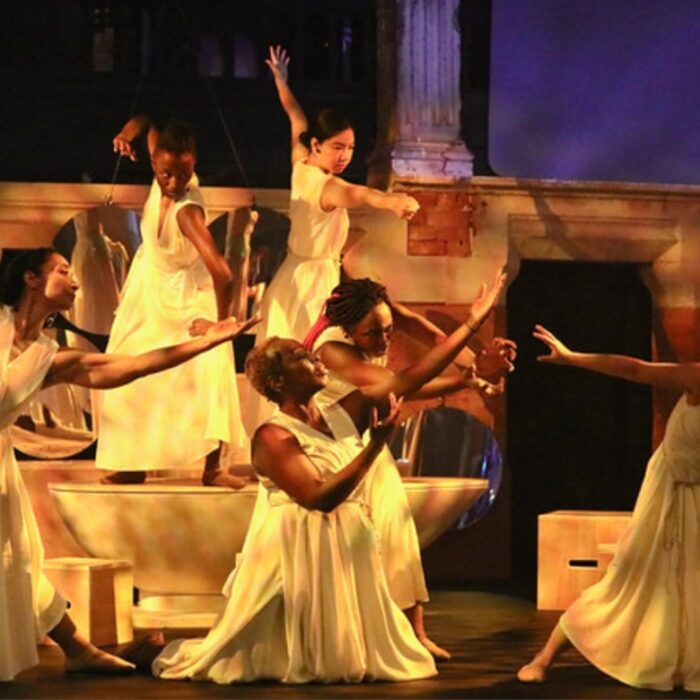
OW: Regarding this year’s core production, “Tamerlano”—when it was touring as a concert version last year, was it already decided that it would be performed here as a staged version in 2026?
CVB: Yes. This means the orchestra had already performed it many times before arriving in Karlsruhe. This is not only financially advantageous, but because the orchestra has rehearsed many times and is very familiar with the work, I believe the final musical result reached a peak. Furthermore, three of the singers who participated in the tour were also hired for Karlsruhe, so their understanding of the work is very deep.
OW: We noticed that, compared to last year, half of the vocal cast for this year’s “Tamerlano” has changed.
CVB: One of the singers had a scheduling conflict. And from the very beginning, I very much wanted Christophe Dumaux to play the role of Tamerlano. When you see his performance on stage, you will understand why I say this—he is not only a gifted singer but also one of the finest actors on stage.
Additionally, there was a major soprano role. We, so and this was not just my personal decision, believed that for a grand theatre of this size, a different type of singer would be more suitable. Because the theatre space is immense, we needed a singer with more power and stronger projection. The previous singer had a very beautiful voice, but we were concerned that her voice would not have enough projection in this massive space.
OW: By inviting René Jacobs to the festival, what do you think is the greatest impact that can be achieved artistically?
CVB: He is one of the top Maestros in the field of Baroque music. His understanding of this type of music and this work, as well as the depth of his scholar research into the piece, is staggering. I think the desk work he does before formal rehearsals begin is unique.
He brought the Freiburger Barockorchester, which is one of the top orchestras in Germany. Since he and these musicians have worked together for decades, their collaboration is incredible. If you see the high degree of discipline and coordination during their rehearsals, it is truly astonishing.
Jacobs seeks the most accurate musical expression for every single word. This gives his performances an incomparable intensity. He pours all the experience he has accumulated over the years into this—it is simply magic. Every singer who has worked with him describes him as amazing. Because he is not only proficient in music but also understands the historical background, the composer’s life, and even the situation of every singer at the original premiere. In terms of being historically informed, his research goes extremely deep; it is never superficial.
OW: We are sorry that the festival couldn’t hold the second Farinelli Competition this year, but it’s great to see you trying to introduce post-WWII contemporary music into a countertenor competition. What is your main motivation for doing this?
CVB: I want to show that the vocal range of a countertenor is far broader than what the public perceives. Countertenors have existed for hundreds of years, and in our era, modern composers frequently write music for them. For example, we are rehearsing Benjamin Britten’s “A Midsummer Night’s Dream.” Although it is not a brand-new work, it belongs to the 20th century and is definitely not Baroque. Countertenor core repertoire starts with coloratura arias like those of Handel, but it does not stop there. Meanwhile, we will explore further in the coming years. Just as Bruno de Sá mentioned in one of his interviews, he hopes that soprano countertenors can play not only male roles but also female roles. Of course, not all countertenors can sing in the soprano range, but if they can, why not let them sing female roles?
I agree with what Bruno said: for us, it is normal for women to cross-dress as male characters, but we don’t seem ready to accept men singing female roles. Why is that? This is a very interesting subject.
OW: So you want to challenge these stereotypes.
CVB: Yes. I can give you an example: tonight we have a concert version performance of “Atalanta.” Last year’s competition winner, Dennis Orellana, plays Meleagro. That is a core role, but there is the role of Irene in the play sung by a woman with mezzo/alto voice. If you close your eyes, you simply cannot distinguish who is the male voice and who is the female voice.
OW: Perhaps next season you could try doing a complete blind listening test?
CVB: That would be very interesting—letting everyone guess based solely on the voice.
OW: We know that you previously put a lot of effort into Innsbruck and initiated the Cesti Competition (International Singing Competition for Baroque Opera Pietro Antonio Cesti) there. Would you consider creating a similar artistic incubator here in Karlsruhe?
CVB: Certainly. The Cesti Competition achieved incredible success. When Alessandro De Marchi and I co-founded this project in 2010, I never expected such a response.
Since I came to Karlsruhe, I have been thinking: why not have the young people we discover in the competition perform staged productions together? Of course, it is difficult to sustain a staged production using only countertenors—though some have tried, it is generally not recommended. Our goal is to make this festival a showcase platform, not only for ourselves but also for people like Dennis or e.g. last year’s runner-up, Rémy Brès-Feuillet, who have received numerous Baroque performance invitations since then.
OW: The next question might be a bit annoying. We know this is a difficult time for cultural funding. What is the financial situation of this festival?
CVB: You’re right; the Sword of Damocles of the budget hangs over all our heads. But this festival in Karlsruhe is too important for the theatre and the city; we will never give it up. And I must also say, the total budget for the festival is actually not very high. In other words, our box office revenue is just enough. If we cancel the festival, it wouldn’t save much money, but instead, it would cause a huge loss of reputation, of international audience and attention. So far, the festival is still primarily funded by public finance, along with the Karlsruhe Handel Society (Händel-Gesellschaft Karlsruhe e.V.)—the latter have contributed a lot. Although the amount is not massive, in many ways, the festival would struggle without them.
OW: We noticed a massive renovation project going on next door. After it is completed, what impact do you foresee the infrastructure will have on the festival?
CVB: It’s hard to say in great detail now, but we are not returning to an old building, but rather to a more powerful new environment. The rehearsal halls and festival rooms will be fantastic; we will have new studios and new orchestra rehearsal rooms. Although the current equipment still works, it is quite outdated. The technical possibilities of the future will be much better than they are now. Of course, we already have a great big stage and can do a lot. Who knows what technology will look like in 10 years?
OW: The festival will also be held in different locations across the city, right?
CVB: Yes, we hope to bring the festival into the city. We are already doing so—holding concerts in different churches and performing in libraries. We will continue to look for new spaces in the city, not only to attract audiences to the theatre but also to actively spread into the city so the audience can experience new venues, hoping this will attract different demographics, such as young people or people who have not had much encounter with Baroque music so far. Unfortunately, Karlsruhe is not like Berlin or Hamburg, where such cool spaces can be found everywhere.
OW: One last question: do you have plans for co-productions with other opera houses or festivals?
CVB: Yes, we are very happy to be collaborating with the Bayreuth Baroque Opera Festival next year; that is already confirmed. For 2027 and 2028, I am also currently in talks with another theatre for a co-production, but it is still too early to disclose.
(Special thanks to Barbara Schöneberger for her invaluable contribution to this interview.)