Q & A: Selene Zanetti on Liù, Teatro alla Scala & Jackie Chan’s New ‘Turandot’ Production
By Francisco SalazarItalian Soprano Selene Zanetti is a rising star in the opera world having conquered many of the worlds opera houses including the Teatro La Fenice, Deutsche Oper Berlin, Teatro San Carlo, Hamburg State Opera, Bayerische Staatsoper, and Wiener Staatsoper.
This season, she continued her ascension making her debut at the crown jewel of all Italian theaters, the Teatro alla Scala. Zanetti brought her acclaimed portrayal of Liù in “Turandot,” a role that she has performed at the Tokyo Opera and Bayerische Staatsoper. She is also set to perform the role in a new production by Jackie Chan.
OperaWire spoke to Zanetti about her La Scala debut and why the role of Liù was the perfect one to debut in the legendary house.
OperaWire: Tell me about making your debut at the Teatro alla Scala. What was the experience like for you especially as an Italian soprano?
Selene Zanetti: Making my debut at Teatro alla Scala was one of the most emotional and meaningful moments of my career. For any opera singer, La Scala represents excellence and tradition, but for an Italian soprano it carries an even deeper significance because it is part of our cultural identity. Walking onto that stage for the first time, I felt an enormous sense of responsibility, but also gratitude and excitement. It is a theater where history lives in every corner, and you can truly feel the presence of the great artists who performed there before you.
OW: Why was Liù the perfect role for this debut and how did the audience respond?
SZ: Liù was the perfect role for my debut because she combines lyricism, fragility, and emotional intensity in a very authentic way. She is a character who speaks directly to the heart, and I felt immediately connected to her sincerity and humanity. The audience responded with incredible warmth and generosity. I could feel their emotional involvement, especially during her final scenes, and that connection with the public made the experience unforgettable for me.
OW: Tell me about working on this Davide Livermore production and how did it help your interpretation of the role?
SZ: Working on this production by Davide Livermore gave me a lot of inspiration. His production presents a very cinematic and modern vision, but always with great respect for the music and the psychology of the characters. Through his work, he inspired me to explore Liù not only as a victim, but also as a strong and courageous young woman. His direction helped me discover new emotional colors in the role and made my interpretation more layered and personal.
OW: Now you are working with Jackie Chan. Tell me about the experience of working with this legend?
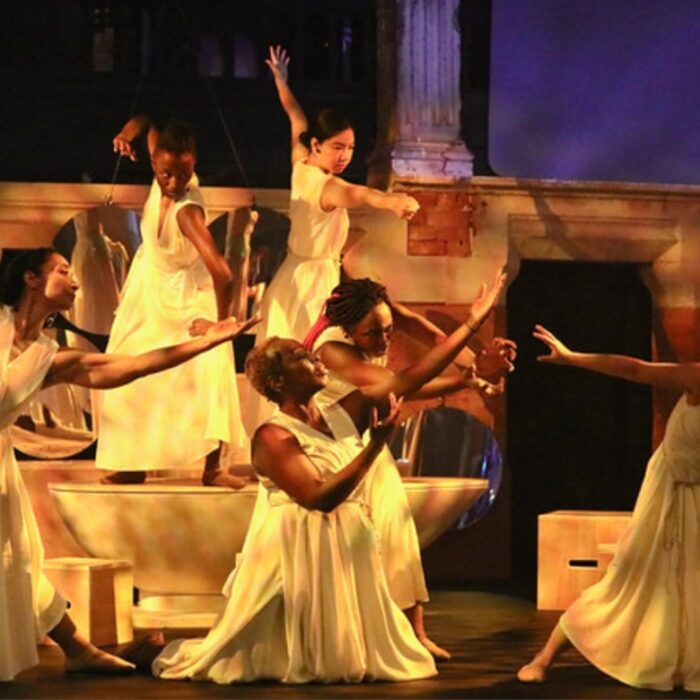
SZ: Working on a production directed by Jackie Chan has been a truly extraordinary experience. He is a global legend, but at the same time he is incredibly humble, disciplined, and generous. In his production, you can truly feel his contagious energy, as well as his passion and precision in every detail. Being able to take part in a project led by someone of his stature has been both exciting and enriching, on a human level as well as an artistic one.
OW: What cultural insights is he bringing, and what have you learned from him?
SZ: He brings a deep understanding of Chinese culture, especially the philosophy and discipline behind kung fu. For him, kung fu is not only about movement or action, but also about balance, respect, patience, and inner strength. Watching him work, I learned how important discipline and dedication are in every form of art. He also shared fascinating insights about the connection between physical expression and storytelling, which inspired me as a performer. I learned a great deal from observing his work ethic and his attention to detail. In addition, he offered valuable perspectives on the cultural roots behind Turandot, which gave me a broader understanding of the opera and its atmosphere.
OW: What makes Liù the a role that you love to sing? Tell me about singing these two famed arias and how different are they?
SZ: Liù is a role I love because everything she expresses comes from pure emotion. Her music is intimate, sincere, and incredibly touching. The two arias, “Signore, ascolta” and “Tu che di gel sei cinta,” are very different emotionally and vocally. The first is tender and lyrical, full of youthful hope and vulnerability, while the second is more dramatic and transcendent, almost like a spiritual farewell. Singing them requires different vocal colors and emotional states, and that contrast is one of the reasons the role is so rewarding.
OW: Many times Liù steals the show. Why do you that happens?
SZ: I think Liù often steals the show because she is the emotional heart of Turandot. While the other characters can seem larger than life or symbolic, Liù feels deeply human and relatable. Her love is unconditional and selfless, and audiences connect immediately with that sincerity. Puccini also gave her some of the most beautiful and heartfelt music in the opera, which makes her unforgettable.
OW: How does Liù compare to other roles you do and how does it differ from other Puccini roles you sing?
SZ: Liù is different from many other Puccini heroines because her strength is quiet and internal. Characters like Tosca or Manon are more dramatic and extroverted, while Liù communicates through simplicity and tenderness. Vocally, the role requires a great deal of control, delicacy, and legato singing. Compared to other roles I perform, Liù demands a very intimate emotional approach, where even the smallest nuance can have a huge impact.
OW: This fall you are doing Nedda in “Pagliacci.” Tell me about your interpretation of this role and why do you love singing it? What is your favorite part of the role?
SZ: This fall I will sing Nedda in “Pagliacci,” and I am very excited because she is such a complex and passionate character. My interpretation focuses on her desire for freedom and her refusal to accept a life without love or dignity. Singing Nedda combines lyrical beauty with dramatic intensity. One of my favorite moments is the great aria “Stridono lassù,” because it reveals her dreams, her longing for escape, and her poetic side before the tragedy unfolds. It will also be my role debut, and I am truly looking forward to it.
OW: What are some of your dream roles in the future?
SZ: I have many dream roles that I would love to explore in the future. Among the Puccini heroines, I would love to sing Floria Tosca in “Tosca.” I am also very attracted to Wagnerian roles such as Elisabeth in “Tannhäuser” and Elsa in “Lohengrin.” At the same time, I believe that every role arrives at the right moment in an artist’s life, so I am excited to continue growing and discovering new characters along the way.