Q & A: Artistic Director Alexander Steinbeis on the 40th Anniversary of Kissinger Sommer
By Mengguang Huang(Photo Credit: Hanna Becker)
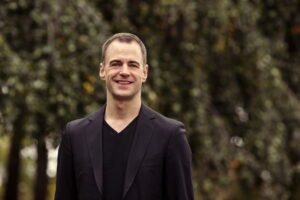
Alexander Steinbeis assumed the artistic directorship of the Kissinger Sommer festival, succeeding Kari Kahl-Wolfsjäger and Tilman Schlömp, in April 2021. Previously, he served for 13 years as managing director of the Deutsches Symphonie-Orchester Berlin. In this role, he was responsible for the overall artistic planning, the introduction of numerous innovative concert formats, and worked closely with conductors such as Kent Nagano, Ingo Metzmacher, Tugan Sokhiev, and Robin Ticciati. From 1999 to 2005 he was assistant artistic administrator of the Boston Symphony Orchestra. Steinbeis grew up in Upper Bavaria and Great Britain. Recently OperaWire had the opportunity to talk with him regarding the forthcoming 40th edition of Kissinger Sommer.
OperaWire: The festival was founded 40 years ago during a challenging era. Today, as we look around, the world remains turbulent. What do you hope the festival offers most to the city, the artists, and the audience?
Alexander Steinbeis: Indeed, the festival’s origins were rooted in a complex geopolitical reality. Being situated on the border of West Germany, overshadowed by the Iron Curtain, Bad Kissingen faced significant structural and economic challenges. The decision to launch the festival with financial support from the Federal Government was a strategic move to revitalize the region. Of course today’s challenges are of a different nature but I am pleased to say that the festival is thriving. We are committed to bringing high-caliber performers and innovative formats to the city every summer. For us, it’s about more than just hosting concerts; it’s about creating a space where world-class artistry can surpass previous boundaries and offer something truly exceptional to our audience.
OW: This year’s theme is “Mazel Tov.” Could you tell us more about this choice?
AS: “Mazel Tov” serves as a special motto for our 40th anniversary: it is a celebratory toast to our milestone, but more importantly, it is a profound reflection on the Jewish legacy that once defined Bad Kissingen. Until 1942, this city was home to one of Bavaria’s most vibrant Jewish communities… We aim to bring the immense diversity of “Mosaic culture” back to the sensory experience of our audience. Choosing “Mazel Tov” today is also a conscious message. In a time where we witness a distressing rise in antisemitism, we believe a cultural festival must do more than just entertain. It must act as a guardian of memory, looking back at history and recognizing Jewish contribution as part of local identity.
OW: Managing a festival is different to running a symphony orchestra (like the DSO Berlin). Where has the biggest shift in your artistic and managerial mindset occurred?
AS: The fundamental difference lies in the rhythm and the scope of engagement. Running a top league orchestra involves long-term stewardship of musicians, conductors, and a loyal subscriber base, following a structured cycle from September to June. In contrast, a festival takes place in a concentrated timeframe which grants a broader audience and, crucially, more curatorial freedom to explore unconventional possibilities. After almost 14 deeply rewarding years with the DSO, I felt that for any institution or individual to remain artistically inspired, change is essential. At Kissinger Sommer, my mindset has shifted from maintaining a seasonal narrative to creating an intensive, immersive experience.
OW: After fourteen years at the DSO, was there something you had hoped to realise there that circumstances never quite allowed?
AS: I am proud of everything we managed to achieve during my time with the DSO. The Berlin orchestral scene is of course a fiercely competitive one and the DSO always held a very special place in this tricky but also inspiring environment. Kissinger Sommer allows me to interact and work with a wider variety of artists and ensembles. I would not rank one above the other; it’s just a different kind of challenge.
OW: What are your primary considerations when inviting specific orchestras and soloists to this festival?
AS: On one hand, we maintain deep, enduring relationships, with our loyal friends like the Czech Philharmonic Orchestra, the Bamberger Symphoniker, and the BBC Symphony Orchestra as regular fixtures… It is a true privilege to welcome conductors of the highest caliber — Manfred Honeck, Jakub Hrůša, Joana Mallwitz, Kent Nagano, and Sir Simon Rattle — back to our podiums year after year. The second, equally vital part of my consideration is fostering the next generation. Our festival must be a platform for discovery.
OW: Your 2026 jubilee program spans a wide variety of different vocal concerts. Can you tell us more about this curation choice?
AS: At the heart of our vocal programming this year is, of course, Cecilia Bartoli. We are thrilled to welcome her back after a ten-year break. She has curated three distinct, exclusive programs that showcase the full spectrum of her artistry: an opening Baroque Gala, a Lied recital, and a crowning semi-staged production of Gluck’s “Orfeo ed Euridice.” These performances will offer a close-up experience of her legendary vocal nuances that you simply cannot
get in larger opera houses. Our vocal curation is deeply intertwined with our “Mazel Tov” anniversary theme. We wanted to celebrate the immense Jewish contribution to the music that shaped Bad Kissingen. This includes our Opera and Operetta Gala, featuring soprano Vera-Lotte Boecker and tenor Daniel Behle with the Münchner Rundfunkorchester. The program will feature arias and duets by composers who themselves visited Bad Kissingen.
We’ve also exploring the realm of storytelling and cabaret. This year, Katharine Mehrling and Tilmar Kuhn present a poignant musical portrait of Werner Richard Heymann through his unforgettable melodies and autobiographical readings. To capture the biting wit and soulful melancholy we have Meret Becker dedicating her performance to the chanson icon Barbara, and Sharon Brauner with The Toy Goys will bring passionate Yiddish evergreens to life. What’s more, for our grand 40th-anniversary finale, Sir Simon Rattle leads the Symphonieorchester des Bayerischen Rundfunks (BRSO) and over 500 singers from 12 different choruses in a monumental open-air performance of “Carmina Burana” at the newly renovated Turnierplatz.
OW: A program of this complexity must be an enormous undertaking. Did the preparation involve a team of specialists?
AS: Curation on this scale is indeed a complex puzzle that takes years of meticulous preparation. I don’t have any formal colaborators but of course I bounce ideas around with colleagues, artists, and agents. It’s all one big puzzle and I love to see it come together year after year.
OW: Which aspect of Cecilia Bartoli’s artistic persona do you find most resonant with the spirit of Kissinger Sommer?
AS: It has been a decade since Cecilia last graced our stage, yet she remains a cherished presence in our city with a profoundly loyal following. For us, her resonance with Kissinger Sommer lies in her rare combination of intellectual rigor and generosity. She is an exceptionally intelligent singer who possesses an unparalleled mastery over her voice, but she is also keen on giving 150 percent of herself in every performance. She will be welcomed in our Max-Littmann-Saal. With its warm cherry wood paneling, the hall offers a level of intimacy that acts as a magnifying glass for her artistry.
OW:Cecilia Bartoli’s Baroque Gala and “Orfeo ed Euridice” have both been part of her program repertoire for several seasons — how do you respond to the suggestion that a festival celebrating its 40th anniversary deserves something a little fresher from its headline artist?
AS: Cecilia Bartoli is one of the most important singers of several generations. I will happily hear her in any repertoire and was delighted when she came up with these three special programs which she hasn’t yet performed in Bad Kissingen. I think we can look forward to them very much.
OW: Does Kissinger Sommer have plans to introduce composers-in-residence or new commissions in the coming years?
AS: For over 20 years, Kissinger Sommer has actively championed contemporary creation through our LiederWerkstatt, which this year explores Jewish influences in song. Alongside masterpieces by Mahler and Schoenberg, we feature six newly commissioned works performed by a quartet of vocal soloists. This is absolutely unique.
OW: What is the current profile of your audience?
AS: Historically, our focus on Central and Eastern Europe was primarily an artistic and diplomatic bridge rather than a reflection of our visitor demographics. Today, our audience is a balanced “triad.” Roughly one-third are loyal locals from Bad Kissingen and the region, another third travel from within a 90-minute drive, and the final third are guests from all over Germany and abroad. These visitors are drawn by our UNESCO World Spa City status — a rare, sophisticated combination of world-class music, historic architecture, and the restorative heritage of our fine mineral waters.
OW: What do you want a festival-goer to feel or understand after spending a week at Kissinger Sommer?
AS: My aspirations are both grounded and ambitious: I want to serve this UNESCO-listed city by drawing a vibrant, diverse audience, ensuring our festival remains a vital mirror of 21st-century society. We aren’t here to simply curate the familiar; we aim to challenge our listeners and remain unafraid of artistic risk.
OW: And finally — of everything you have programmed this year, which single concert are you most personally proud of, and which one are you most anxious to see how audiences will respond to?
AS: We should talk again after the festival. Coming up with a season with over 80 events over almost six weeks is a tremendous undertaking and every single concert counts. I am proud but I also have great respect for our open-air extravaganza with Orff’s “Carmina Burana” with Sir Simon Rattle and the BRSO on July 12.