Q & A: Robin Norton-Hale on Filming ‘La Boheme’ & Her Upcoming Projects
By Mike Hardy
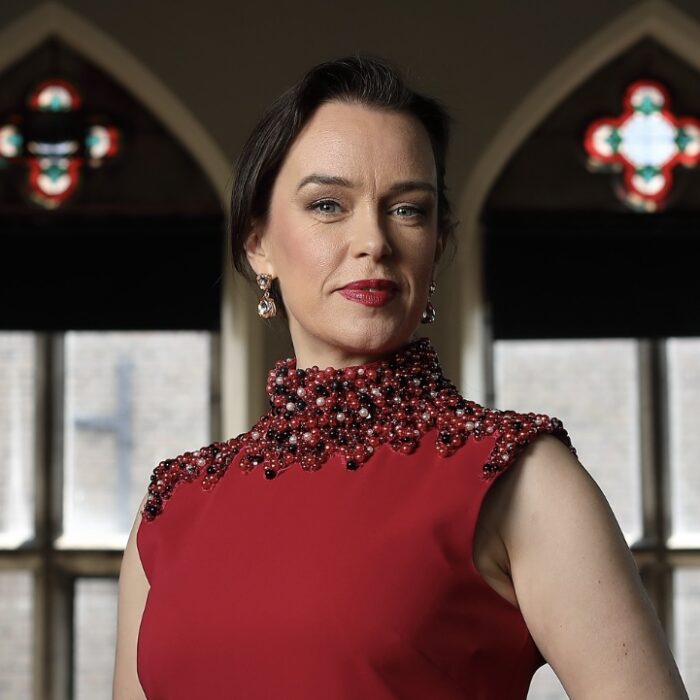
Robin Norton-Hale is a multi-award-winning freelance writer and director for theatre, opera and film, currently based between London and Sheffield. She is the Artistic Director and CEO of English Touring Opera and an executive coach. She was the founding Artistic Director and Chief Executive of OperaUpClose, an award-winning opera company with a focus on inventive new English-language productions of classic operas, and premieres of new chamber operas. She is the director of the recently released and widely acclaimed “La Boheme” movie, set in current day London.
OperaWire caught up with Robin at her Sheffield office.
OperaWire: Hello Robin, and thank you for speaking with me. One of the things that I loved about your film, “La Boheme,” was the seemingly natural way in which the actors appeared to so accurately mime to the soundtrack, and then I embarrassingly later discovered that they WERE actually singing live and so had to amend my review, so I must apologize for that oversight.
Robin Norton-Hale: No need to apologize.
OW: Was that your intention or decision to have the artists sing live in the film? That must be an unprecedented thing in motion picture operas.
RNH: Yeah, well, I don’t know about that. I don’t want to make any claims for it being unprecedented without knowing the history, because I’m sure someone will pop up and go, no, no, we already did that! I felt that the thing about the original, the stage production on which the film was based, one of the reasons it worked so well and was so popular was its sort of authenticity, and people really loved that.
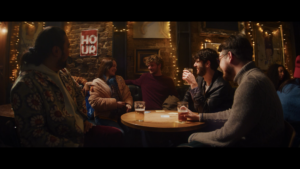
I know ‘authenticity’ is an overused word now isn’t it, but one of the factors that helped that is having the singers in it, when we first did it in the Cock Tavern Pub in Kilburn, they were in their early 20s. One of the issues with “La Boheme” is if it is in a big opera house with the full Puccini orchestra, is that the singers performing are almost certainly not going to be anywhere near the age that the characters in it are meant to be. Very occasionally you get someone whose voice develops in that way at that age, but it doesn’t usually happen. So, because we were doing it originally in a tiny room above the pub with a piano, it was moving and enjoyable for the audience because they were looking at people who reminded them of their own kids, or their brother and their mates. And that was also why it was in English, for that immediacy.
What I really didn’t want to lose in transferring it to film was that immediacy and I felt that having it dubbed would lose that. And also it just always looks crap, I think. (laughing)
OW: It does, I agree. When I think of Domingo in the film version of “Madama Butterfly,” or Pavarotti in “Rigoletto,” and of course, Rolando Villazón and Anna Netrebko in beautiful cinematic looking “La Bohème.” Miming just looks so unnatural, and it does detract, I think, significantly.
RNH: Exactly that, yes.
OW: Of course, your original stage production was Olivier award-winning. Did you think at that time: “You know what, this might make a good film” or how much further down the line did you think, “you know I would love to make a movie?”
RNH: Actually, we were approached by Finite Films, who is the production company behind this. They were the ones who approached us with the idea of making it into a film. They saw it when it was at Soho Theatre in 2010. And we filmed it at the end of 2023, and then obviously released in early 2026.
So, it’s been a long gestation. I mean, I think opera on film is interesting and challenging, the reason being that one of the things about opera is it is inherently unrealistic. You know, partly because people are singing instead of talking. Before I worked in opera a lot, it would take me, I don’t know, like 15 minutes into watching an opera to sort of tune in and to accept that the singing was the equivalent of speaking in a play. Now I do it straight away because I’m so used to it.
One of the wonderful things about opera is that you can get so much additional depth or information from the music… a character can be saying one thing, but the orchestra is telling you that what they really mean is something else, and so you have all these layers. But I think the reason why “La Boheme,” in particular, works on film is because it is in the Verismo style, you know, realism; as much as opera does realism anyway, and film is an inherently more realistic medium. By which I mean, obviously, you sometimes have surrealist films, but mostly, it’s pretty realistic, because the camera (and the person behind it) tells you where to look, which is different from theatre.
In the theatre you’re looking at the whole picture, the audience are free to look anywhere they like on the stage. So as a director, you need to manage the whole picture and you need to manage getting the audience to look at the thing you want them to look at, but you can’t necessarily control that. Whereas in film, as the director, you have more control. You only show the viewer the thing you want them to see.
So, while it’s quite a different medium, obviously, I think partly why “La Boheme” works on screen is the type of opera it is. It’s about a group of ordinary people. And it is through-written; there’s no repetition. It’s kind of written like a play or like a TV script, if you like. Even the arias… you know where they start and finish, but they come out of the conversation that’s just happened. It’s very different from Mozart, say, or much earlier operas like Handel.
OW: Clearly, audially the film is a huge achievement, and I can’t imagine that it was easy. I mean, I can understand managing to navigate around the difficulties of recording live vocals on the interior shots, but there’s quite a bit of singing out in the open also, in parks for example. I can’t imagine that was an easy process for the conductor or the singers. How did you manage to pull it all off?
RNH: In a way, it was completely bonkers, really, because I’d never directed a film before. And initially, when we first talked about the project, I said, “Well, obviously, you’ll need to get a film specialist in.” But then the more we talked about it and the more I thought, because I know this opera so well, and I know how I think this story needs to be told, both myself and the production company decided that actually, it would be easier for me to learn the film bit and surround me with people who knew film, rather than try to do it the other way around.
How we recorded the audio was that Alice, the conductor, went into a recording studio with the singers and orchestra and they were recorded on separate tracks, and Alice was filmed conducting. Then on set, we played back the orchestra track, and the film of Alice conducting, and she had to conduct along to her filmed self, so that the live vocal recording of the singers was exactly in time with the orchestral recording. We also had to find places on set where Alice’s baton-waving wouldn’t be in the shot, which included a whole day of her conducting from within a chimney, sitting in the grate.
And in terms of recording outside, there were additional factors of wind and rain and traffic noise of course, which complicated things (but again, does make it sound more real). Luckily Londoners are so used to bizarre things going on, and especially used to ignoring them, that mostly people on London Fields or outside the pub didn’t give these people singing romantic opera at the top of their lungs a second look, or hurried past being careful not to make eye contact!
OW: Did you play a part in the casting at all? I only ask because I thought the artists were an inspired choice, particularly Matthew McKinney as Rodolfo.
RNH: Oh, totally. Yes, and Matthew is a superstar. He’s really special. I’d not actually worked with him before the film, I now have again on stage because I love working with him. He had played a relatively small role in English Touring Opera’s production of “Lucrezia Borgia.” He played an assassin, with only a few lines. I’d also heard him in audition, and I knew he had a lovely voice. But his acting in this tiny role was just so extraordinary. When he was on stage, not the centre of attention, he was just so physically present and in the character. So, we got him in to sing for “Boheme.” I think we cast it in early 2023, and obviously, he’s still very young. So his voice is developing all the time. When we cast it was like, well, this might be a bit of a leap vocally, but actually, because of the film being so up close, and he’s such a good actor, he’s the right age, so it just felt right. Also, obviously, he’s not having to sing it in the same way that you would sing it in a massive opera house over a 70-piece orchestra.
But he was brilliant. And after we filmed it, he then won the Ferrier Award. And then his voice has developed and developed. He’s about to be in “Angels Bone,” which English National Opera are doing in Manchester. So I think his career is really taking off.
I also think Lucy Hall, who plays Mimì, is an extraordinary singer and actor as well.
OW: Just touching on what you said about being able to show the audience what you want them to see in film, better than in the theatre; I thought it was a great piece of directing to have Musetta and Marcello as the more predominant characters in the third act. Traditionally, their little spat is almost comedic and takes place in the background to Rodolfo and Mimì singing about staying together until the spring, but here they were actually the more central figures. When Musetta storms off and is crying, whilst lighting her cigarette, I thought this was unusually moving and a touch of brilliance.
RNH: Oh, thank you. But I think, you know, when you look at the extent of what else Musetta does in the opera, she’s the one who finds Mimì at the end and brings her to Rodolfo. She’s the one who’s actively looking for Mimì and the one who goes out to sell things to get medicine and gloves for her hands. I think because she arrives and has this big showpiece aria, “Quando m’en vo;” it’s obviously such an amazing tune however it’s done, and we did it with her climbing on the tables in the pub. It’s always done in a sort of showpiece kind of way, but I do think, actually, that the depth of her character is sometimes a bit underappreciated.
I really wanted to sort of establish that there’s something very male about the perspective of the opera. Rodolfo’s story, if you like. In a way, it’s about male friendship as much as anything else. People think of it as a very romantic opera, right? Because it’s got amazing romantic music, and Mimì dies, and Mimì and Rodolfo have these amazing arias and duets. But actually, in a way, the central relationship, I think, is between Rodolfo and Marcello. And I kind of always felt, and from the moment I first put it on in 2009 in the pub, that actually this is about a group of boys, really, very young men. And in my head they’ve known each other since school, they’ve grown up together, they’ve got that kind of shared language and shared history.
But then with Musetta and Mimì, they’re very different people. Their characters have an emotional maturity which the four boys don’t have, and I wanted to show that.
OW: I know you’ve worked on a number of operas, translating them into English. It’s always been my opinion that, particularly with Italian opera, I find it loses something when it’s sung in a different language, other than Italian. Is that something you’re ever conscious of when you do your translations?
RNH: Oh, I mean, yeah, translating is really hard. I’m not a fluent Italian speaker. I understand some Italian, if you’ve been around opera a lot, opera Italian is, a lot of the time, not actually that extensive. You could probably learn all the opera Italian and still not be able to have a conversation in Italy! I would never attempt to translate an Italian poem or novel or something; I’m not a linguist in that sense. The skill is establishing what English phrase is going to best fit the music, that is going to be singable, is going to have the right vowels on the right note, is going to have the right emphasis, all of that. And also, to tread the line between not being so prosaic that it sounds like the words are too plodding or everyday to be sung. But also, I do think because it is Verismo, and I was setting it in modern times, it also needs to be not too high language, not too much poetry. I was conscious of not getting too seduced by the beauty of the music into being very poetic, because it also has to be believable; these characters are actually saying these things to each other.
So, do I think it loses something when translating to English? I think it gains more. I really do. I really passionately believe in opera in English for English speaking audiences. Because I think the proportion of the audience who are going to be fluent in Italian is tiny. And so, because I’m a storyteller, what I want is for people to have that story with as little barrier between them and the story that we’re trying to tell as possible. And if you’re reading subtitles or surtitles, then you do lose some of that. And I think losing maybe a little bit of the beauty of the phrase, I would much rather do that, because opera isn’t just the music and it isn’t just about beautiful phrases, you know? These composers are telling stories. And that’s why sometimes it’s okay for a singer to make an ugly sound, because if the character is feeling ugly at that point, if they’re feeling rage or grief, I think it’s acceptable. Within reason of course, it depends on which bit they’re singing.
I’m not saying in the middle of “O Suave Fanciulla” they should make an ugly sound, but it’s storytelling, it’s theatre. So yeah, I really believe that. And I also know, because we’ve done lots of audience surveys at English Touring Opera, that the thing that comes up again and again in our surveys, that stops people from trying opera is, “I’m really worried I’m not going to understand it and I’m going to feel stupid.” And so, the language is a massive barrier.
So, I’m afraid that for all the opera aficionados who say, “Oh, it’s just not the same if it’s not in the original language.” I’m like, yeah, but there’s a larger group of people who are telling me, “I would try opera if you removed that barrier and that fear for me.”
OW: I know you’ve directed plays and now, obviously, a film. How did opera come into your life, and did you ever sing yourself?
RNH: I sang but never professionally. I sang in choirs, I sang at school and I learned various musical instruments. I’m not at a professional musician standard by any stretch of the imagination, but I play piano, I play saxophone, I can read a score. I know how a phrase should sound sung.
So, yes, I have that musical background. I studied music up to a certain point. But how I came to opera? I went to opera as a kid. My dad really loves music, all types of music, including classical music and opera. And he used to take me to the English National Opera. So, I always saw opera in English for years before I saw opera in its original language. I guess that’s definitely part of how much I came to enjoy it. As a child, I probably went to the opera for the first time when I was, I don’t know, nine or ten. And my dad would explain the story to me first.
I grew up seeing a lot of Jonathan Miller’s famous productions at English National Opera. So, for example, the mafioso “Rigoletto,” set in Little Italy, the kind of reinterpretation you see and you think, “This makes complete sense.” It’s rooted in the opera, and it doesn’t detract at all from the relationships and the tragedy. If anything it made it, I felt, more effective…more affecting. So that’s how I first encountered opera.
And then I studied English at university and, wanting to write, did a post-grad journalism qualification. But the bits and pieces of journalism I was able to pick up were not very creative, and so my first proper full-time job was as Marketing and Press Officer at English Touring Opera, using my journalism training but sort of from the other side of the table, getting journalists to come and see ETO’s shows. Meanwhile, I increasingly fell in love with theatre. In my early twenties I was going to the theatre at least once a week, taking advantage of all the under 26 deals and standby tickets. So I did the marketing job for a few years and then moved into assistant directing. And because of my time at English Touring Opera and the connections I’d made, the assisting was mainly in opera, while I was directing, and often producing, my own fringe theatre shows. And then those strands come together in fringe opera with “La Boheme” in a room above a pub.
Fringe opera didn’t really exist as much as a concept then, although there’s a lot more of it now. So there was a novelty factor: I can bring my pint from the bar in to an opera?! And because I’d been a press officer, I invited the journalists who I’d used to invite to English Touring Opera, and most of them came and reviewed this tiny, grubby “Boheme” really well. And then it sort of took on a life of its own. So, that’s how I came to it.
OW: Tell me some more about English Touring Opera. I’m aware that you’ve visited, extensively, many places within the U.K.
RNH: I was marketing officer at English Touring Opera back in the early 2000s then I went off and had a freelance directing career and then, well I mean I’m just so fortunate in my job. I am now Artistic Director and Chief Executive of English Touring Opera and have been for the last three years. It really and truly is such a genuine privilege. We travel all over England, from down to Truro in the southwest, right down into Cornwall… Chester in the northwest, northeast, we go to Durham, Darlington, York.
We’re in the process of moving our base to Sheffield, so that our office base is in Sheffield rather than London. I think when we were first set up in 1979, it was kind of a given that this national company would have its base in London. But it actually makes a lot of sense and really reflects the ethos of the company that our base should be in the middle of the country. We do perform in London, we perform at the amazing Hackney Empire, which is just such a brilliant theatre for opera. And we go all over England, touring with an orchestra of up to 30 players. The main limiting factor of where we can go is the size of the orchestra pit. Obviously, it costs money to tour people around so there’s that too, but we really try to bring opera to every corner of the country, even if that sometimes means having the percussion in the trap room or the harpist in a box overlooking the stage.
At the moment in spring 2026 we’ve got “Pagliacci” and we’ve got Gilbert and Sullivan, the “Gondoliers,” both brilliant productions. “Pagliacci” is a relatively contemporary, almost industrial setting, and “Gondoliers” is this riotous, mischievous sort-of-but-not-completely 18th century setting. And they’re both in English.
When I started at ETO, we didn’t always perform in English, that is something that increasingly we’re moving towards doing for all the reasons I’ve said and I feel ideologically committed to it. Particularly for comedy, I think it really does make a big difference if the punchline lands in the moment it’s meant to land. And for so many of these composers, they expected their operas to be translated into the language of the audience. So I feel like there’s a really strong historical justification for it as well. But for me, it’s about bringing the art form to as many people as possible.
So as I say, we’re doing “Pagliacci” and “Gondoliers” at the moment, then in the autumn, we’re going to be doing Gluck’s “Orpheus and Eurydice” with a live orchestra also encompassing newly composed electronics by Leo Grant, and we’re going to be doing a double bill of a short Elena Langer opera called “Ariadne,” preceding Purcell’s “Dido and Aeneas.” So, really covering the whole spectrum. Last season I directed Britten’s “The Rape of Lucretia,” which I just think is an extraordinary piece. So it’s not all just the big hit, household name operas.
OW: What would be your dream directorial role, and do you have more plans to commit something to film?
RNH: At the moment we don’t have any filming plans. But what’s been really lovely about this “Boheme” is… I mean, honestly, I was a bit worried that maybe it wouldn’t work for people who loved film and hadn’t seen opera, and it wouldn’t work for people who loved opera. But actually, so far, the responses have been really positive from both groups of those people, which has been really great. I did a Q&A screening in Crouch End and there was a woman at the end who wanted to ask a question but couldn’t ask it because she was so moved that she was still crying 10 minutes after it finished. And then another woman put her hand up and said: “I’ve never been to an opera. I was nervous about going to see a live opera. So, I thought this felt like a sort of gentler way in for me, and it really spoke to me. And I just really felt like I knew these characters and I was really moved by it, and now I’m going to go and see lots more opera. So, you know, that’s just wonderful.
What film am I going to do next? Honestly I would love to direct a film that isn’t an opera. As you know, I love opera. But having kind of learned some of the possibilities now, and as I was saying at the beginning, it was such a mad sort of thing to do as a first film, with the pre-recorded orchestra and live singing and so on, I would love to take some of what I’ve learned and the possibilities of film as a medium to a project without live singing and a conductor having to hide in a chimney! I would really love to adapt and direct Yael van der Wouden’s novel “The Safekeep,” but I expect someone has already optioned that. The pacing and the tension and the seductiveness of it would make an amazing film.
Stories you may also like…
Q & A: Composer Paola Prestini on ‘Sensorium Ex’ & VisionIntoArt’s ‘Make Make Innovation Festival’
Q & A: Azrieli Commission for Canadian Music Laureate Nicholas Denton Protsack on Creating Ecologically-Minded Music