Q & A: Baritone Roderick Williams On His Forthcoming Recital At The Music At Paxton Festival & Woking With The Innovative Composer Michel van der Aa
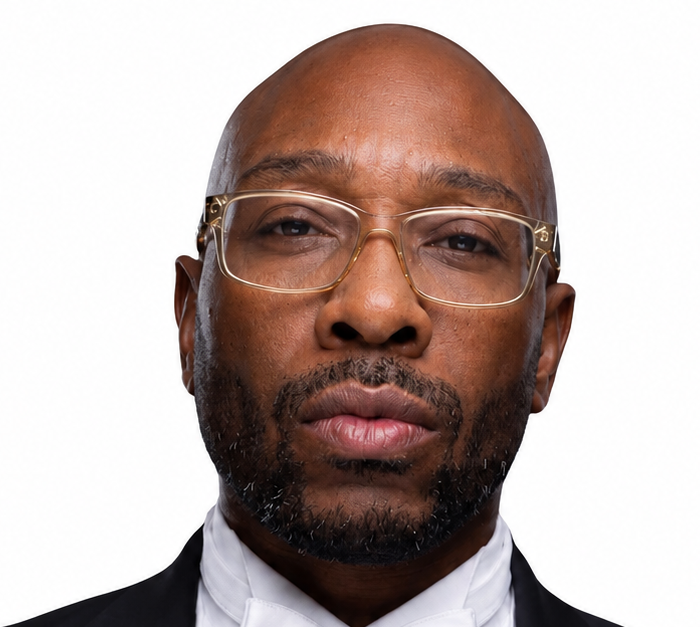
By Alan Neilson(Photo: Theo Williams)
In July, Paxton House will host the 2026 edition of its festival dedicated to chamber music in all its forms, including solo recitals and small ensembles of instrumental and vocal music from the classical repertoire spanning across the centuries. Yet it is far more than a specialist classical music festival; there are also many cross-over events, including folk music. Now in its twentieth year, the festival has been able to attract high-quality performers on a consistent basis, a tradition that continues this summer with concerts by the pianist Angela Hewitt, the Dunedin Consort, the pianist Steven Osborne and the guitarist Samrat Majumder, among many others.
Whilst in Amsterdam, OperaWire had the fortune to meet up with baritone Roderick Williams, one of the headline events at this summer’s Music at Paxton Festival, who just happened to be appearing in Michele Van der Aa’s new opera “Theory of Flames” at the city’s Opera Forward Festival. It thus proved an ideal opportunity for an interview.
The conversation began by focusing on van der Aa’s unique compositional style and what it was like working with him.
OperaWire: Last evening I saw you in the role of the Cameraman in Michele van der Aa’s new opera “Theory of Flames.” To say the least, Van der Aa is an imaginative and innovative composer. What are your thoughts on his approach to creating opera?
Roderick Williams: This is the 20th anniversary of my first collaboration with Michele; I first met him when I sang in his then-new opera “After Life.” I remember that when I was emailed about the part, I asked who would be directing and was told that it would be van der Aa. My first thought was, ‘Uh oh, this could be awkward.’ I knew very little about him at this point.
As it turned out, it was never going to be a problem. Michel has an incredible background in many disciplines, including composing, directing, writing libretti, making films and sound engineering. He has an incredibly innovative approach towards opera, so much so that he has to push the boundaries of the available technologies to their limits and even beyond. In “After Life,” for example, I had to sing a quartet with myself, which meant he had to integrate three recorded images of myself with my life performance.
OW: In “Theory of Flames,” a similar process of combining recorded and live ensemble singing has been employed. How did van der Aa go about achieving this effect?
RW: A film crew had been working on the piece months before I became involved with the production. When the singers were given the score, we had no idea of what was happening in certain scenes; the score contained hundreds of bars of rests because these parts are all on film. Michele would talk us through what was going to happen, but we still had no concrete knowledge of what this would actually entail. Michele was the only person who knew how everything fitted together. The filmed scenes of Julia Bullock in the role of the Scientist had been shot almost a year earlier, and she had no idea what the rest of the score was going to contain, as Michele had not written it. As no changes to the film score were possible, everything had to be written around it. It was like writing the letter scene in “Eugen Onegin” first and then going forwards and backwards to write the rest of the opera.
What was amazing for me was watching Mary Bevan and Aphrodite Patoulidou singing duets with Julia. It really looked as if she was reacting to them in real time. The fact her parts had been recorded before the other singers had even seen their parts was unbelievable. The chemistry between them was amazing.
The sound mixing team is crucial for Michele’s operas, even more so than for miked performances of standard operas. If you have ever watched a performance in which the singers have been miked, then you know that they sound as if they are singing through the speakers and not from the stage, and it can be quite frustrating. Michele cannot tolerate this, so he and his extraordinary team had to devise ways to overcome the problem so that the component parts of the sound are integrated into a whole.
OW: Do you find van der Aa’s approach to be a successful one?
RW: Yes. It is a very different way of telling a story. If you stopped people in the street and asked them if they go to the opera, I expect maybe 1 in 100 will say yes, but if you asked them if they watch Netflix, then almost everyone would say yes. Yet there is nothing in van der Aa’s music or the narrative he conveys on the screens that would surprise them. It’s a soundtrack that tells a story. When you watch something on Netflix, you are focused on what you are seeing and the music is there to enhance the narrative; it is a means to an end. Michele has created a hybrid of this. He has live music with a band playing their socks off to make sure the music fits with the live singers and the screened film track.
He and his team develop the technology to fit the specifics of the drama. In his opera “The Sunken Garden,” for example, he has three people singing live, and they are joined by 3D images of two more singers for a quintet. The audience is left thinking: are they just an image or are they real? It was the same in ‘Theory of Flames,” in which the choir suddenly appears in the fire. It is difficult to discern if it is real or an image. He loves to push at boundaries and challenge people’s perceptions. In “Upload,” for example, Julia Bullock was live, and I was filmed at the side of the stage, and my image was projected in various sizes onto screens. It is an example of how Michele loves to play with reality. What is it that is real, and what does that actually mean?
OW: Is Michele more interested in the technology or the art?
RW: Obviously, it is both. I think it must be frustrating being Michele. He has these amazing ideas and stories that he wishes to bring to the stage, such as uploading consciousness into a machine, but is then faced with the problems of conveying them. How can he integrate a soundtrack with live music that is able to breathe with the conductor, rather than the conductor following the soundtrack?
Everything he does is done to promote his artistic vision.
OW: Is it possible to direct a Van der Aa opera without him as the director? Only he really understands how all the component parts are supposed to fit together. Is it possible to direct a Van der Aa opera without him as the director?
RW: Conventional composers write an opera and the company takes it away and does with it what they want. I don’t know if there are any productions of Michele’s operas that he has not directed himself. It probably does rely on him to put it on stage; he is the only person who knows the mechanics of the piece. He is more Wagnerian than Wagner! He has a total vision of the complete work. I have no idea what the work would be if you removed Michele from the directorial process. I just cannot conceive of a company taking one of his works and then bringing in another director.
OW: Van der Aa’s innovative use of technology is one of the things that makes his works interesting. What happens when technology has moved so far forward that it makes his works look like a Punch and Judy show? Will his operas become obsolete?
RW: To a certain extent, his operas are rooted in the technology he has available to him. However, today, we use 21st-century technology to stage operas written over 400 years ago. Monteverdi may not recognize today’s sets and costumes or interpretations, but as soon as he heard the music he would know exactly what was happening. And who knows what new technologies will exist in the future and how they could be used by directors of the future to bring van der Aa’s works alive. Also, there is no reason why directors of the future could not go back in time and reuse the old technologies and present his operas from a historically informed perspective.
____________________________________________
The interview then turned to his forthcoming recital at Paxton House this summer and his commitment to art song.
OW: How did you become involved with the Music At Paxton Festival and what do you like about it?
RW: When I lived in London, I used to live a few roads away from Angus Smith. We used to sing together in a choir. When he became the artistic director of the Music At Paxton Festival, he invited me to do a recital and a masterclass.
Paxton House is a beautiful Scottish country house, lying on the River Tweed, just on the border with England. It has a smallish hall with big portraits on its walls that is perfect for small-scale events such as vocal recitals and chamber music concerts. I love its size; the audience is fairly small and this allows for an intimate connection to develop.
The first time that I sang at Paxton was in 2022, just after the COVID restrictions had been lifted. I am really pleased to have the opportunity of singing there again.
OW: You mentioned that the venue for the recital is fairly small. It is not as unusual as it should be for singers in small venues to fail to take into account the power of their own voices. Are you consciously aware of adapting your voice to the size of the venue?
RW: To be honest it is instinctive. I cannot hear my own voice from a distance; I can only rely on someone telling me. I tend to aim my voice at the people sitting at the back of the room. Fortunately, I have never had anyone say to me that I am too loud. I used to be a classroom music teacher, and to survive, you need to develop an instinct for the room, and I think this has helped me in this respect.
OW: What is it you like about doing recitals?
RW: I like variety and the fact that it offers something different from opera.
Also, I like that I have more artistic control over what I am doing; normally, it is just me and the pianist that decide the program. With opera, I have the director and conductor bringing their own ideas and insights and taking many of the decisions, which, of course, makes sense for an event of that nature. But I appreciate the opportunity presented by recitals to be able to fashion my performance in my own way.
OW: The title of the recital you will be giving is entitled “From the Forest of Dean to the Appalachians.” How did you devise the program?
RW: This recital is based on something I am doing for Three Choir Festival in Gloucester next year. They asked me if would sing “Six Songs to Dymock Poets” composed by Douglas Weiland. At the time I didn’t know the songs nor did I know Douglas, but, of course, I was happy to oblige. I looked at the songs and decided that rather than shoehorning them into a recital, I would base the concert around them. So I thought I would fill the first half of the recital with songs with texts by the Dymock poets, such as Ina Boyle and Herbet Howells. This amounted to almost 40 minutes of music. Then I had to think about the second half of the recital.
The last of Douglas’ six songs is a poem by the American poet Robert Frost, which I found a little odd given that the others were all English. However, they had actually brought him into their circle, so, I would build the second part around British composers who had looked to the United States for their inspiration. There were a lot of settings of Walt Whitman by composers such as Stanford and Vaughan Williams. I also found some Arthur Bliss songs with lyrics by two American female poets. And it was through my research that I realized that Vaughan Williams did not just collect folk songs from the UK but also from further afield, including the Appalachians and New England.
OW: The village of Dymock is close to the Forest of Dean, so it is understandable that they were influenced by the forest, which is presumably why the title of the recital includes its name. Why does the title specifically mention the ‘Appalachians?‘ Are all the American pieces from the Appalachians?
RW: No, they aren’t. I was involved in a project for AO records to record Vaughan Williams’ folk songs, and there are acres and acres of them – some good, some bad, and some downright ugly. I found a couple that I really liked and so filed them away for later use, which included the two Appalachian folk songs that I will be singing in the recital. They sound very much like English folk songs; there is not a particularly American lilt to them. This is not particularly surprising, as the emigrants from the British Isles took the songs with them when they left, and this is what Vaughan Williams managed to collect. I will finish the recital with these two songs, and this is why the Appalachians are included in the title; it is not because all the American texts have connections with the Appalachians.
OW: You performed and recorded many art songs that have their origins in folk music. Do you like folk music?
RW: I wouldn’t say no, but if you asked me if I would seek out folk music or attend a folk festival, then no, I wouldn’t, in the same way I wouldn’t go to musicals like “Hamilton.” This is because I have only limited time on the planet and I want to concentrate on the things that I specialize in.
OW: When you perform art song versions of folk songs, do you recognize that something may be lost in the process?
RW: Absolutely! It is the same with jazz songs. When you decide to transpose them into art songs, you lose the spontaneity and improvisation. When you take anything from another field and then present it on a stage in a suit, you change it; at a folk festival, for example, there is plenty of beer, which is missing in a theater. It does amuse me that the people, like Britten, Vaughan Williams, Holst and Stanford, did it by writing very lovely piano accompaniments and putting them on a stage. It then becomes a fixed composition, and this is very different from a folk song, which changes with the person singing it. I recall being asked to write down a folk song for a Zulu singer who wanted to copyright the piece: every time he repeated the song or a line of a song, it changed. So in a way the very act of writing it down undermines the actual spirit of the song.
OW: So would you say that when you perform art song versions of folk ballads, you are actually corrupting or manicuring the pieces?
RW: Manicuring them definitely! This is partly done to make them acceptable to the audience. One of Vaughan Williams’ most famous compositions is “Linden Lea,” to a poem by William Barnes, from which he made a lot of money. It sounds like a folksong, but it isn’t what was written. I discovered that Barnes’ actual poem was in the original Dorset dialect and that it had been tidied up. It contains vowels with two dots over them, which I presume means that they must be pronounced more broadly. The sense of place and belonging are transmitted in the dialect itself and, to an extent, this has been lost in the process of tidying it up.
I have actually recorded the song in both the Dorset dialect and the tidied-up version, and they are different: the intent feels very different.
The idea that Vaughan Williams was trying to preserve something yet had to alter it to do so is quite strange. It amuses me to think that the publishers possibly said to Vaughan Williams, ‘We can’t possibly publish it like this.’ Also, I wonder what Barnes must have thought about it all.
OW: So, what are the benefits of singing art song versions of folk music?
RW: They offer us a connection with our past, with our identity and lost ways of life. They contain short stories, some of which are warnings, such as of milkmaids, who need to be very careful when a local squire comes a-courting. Most of all, however, they include beautiful words and melodies, many of which may well have been lost if they had not been preserved as art songs.
OW: You are also holding a workshop. Is this something you enjoy?
RW: Many audience members like to see how things are made. They like to see under the bonnet, so to speak, and I like to work in this sort of environment. I used to be a teacher, and teaching young singers is something I still enjoy. I also learn a lot from them; it gives me a chance to explore my own thoughts on what art song is all about and to check that we are all on the same page. It is a very niche market, and we must use every opportunity to remain relevant and so stop it from dying out.
The students mainly come from The Royal Conservatoire of Scotland in Glasgow, but there are also one or two from further afield. They sing a song and I offer them my feedback and advice about their performance, but not their technique. You can’t listen to someone sing one song and then start mucking about with their vocal technique: it can be dangerous thing to do and can go very wrong. I also like to encourage the audience to offer their opinions. It is definitely not like the old school when a famous singer came in and tore strips off the young singers. I am there to help them and offer advice. I want them to leave the class feeling better than when they arrived. Remember I might be working with them five years down the line!