Monteverdi Festival Cremona 2026 Review: Le Nozze di Teti e Peleo
World Premiere in Modern Times on the 350th Anniversary of Francesco Cavalli’s Death
By Jennifer E. Pyron(Photo: Antonio Dimondo)
Monteverdi Festival Cremona featured Francesco Cavalli’s “Le Nozze di Teti e Peleo” with libretto by Orazio Persiani as a world premiere in modern times: a major experiment in textual reconstruction and innovative staging at Teatro Ponchielli on June 19, 2026.
Cavalli was one of Monteverdi’s favorite students. He was a Venetian composer, organist, and singer of the early Baroque period who succeeded Monteverdi as the leading opera composer of the 17th century. “Le Nozze di Teti e Peleo” (The Wedding of Thetis and Peleus), debuted in Venice’s Teatro San Cassiano in 1639 and was his first opera. He established his reputation with this work, subsequently writing approximately 42 operas. His most notable works include “Giasone” (1649), “La Calisto” (1651) and “L’Ormindo” (1644).
Monteverdi Festival’s revival featured transcription by Angela Romagnoli (Department of Musicology and Cultural Heritage, University of Pavia, Cremona campus) from the manuscript Biblioteca Nazionale Marciana It.IV,365(=9889), with musical reconstruction by concertmaster and harpsichordist Antonio Greco and the directorial contribution of Chiara D’Anna from Turin.
Singers included winners and participants of the Cavalli and Monteverdi Competition 2025: Valentina Ferrarese as Teti; Ferran Albrich as Peleo; Danilo Pastore as Discordia and Meleagro; Matteo Straffi as Mercurio and Eaco; Angelo Testori as Marte, Momo, and Minos; Alessandro Ravasio as Giove and Nereo; Giacomo Pieracci as Sileno, Plutone, and Tritone; Jorge Navarro Colorado as Paride and Tempo; Mara Gaudenzi as Giunone and Fama; Marzia Marzo as Venere and Tesifone; Benedetta Zanotto as Pallade; Matteo Laconi as Bacco; Maximiliano Danta as Himeneo; Gaia Ammaturo as Megera and Mergellina; Alessandro Simonato as Aletto; Marcello Zinzani as Radamanto; and Arrigo Liverani Minzoni as Chirone.
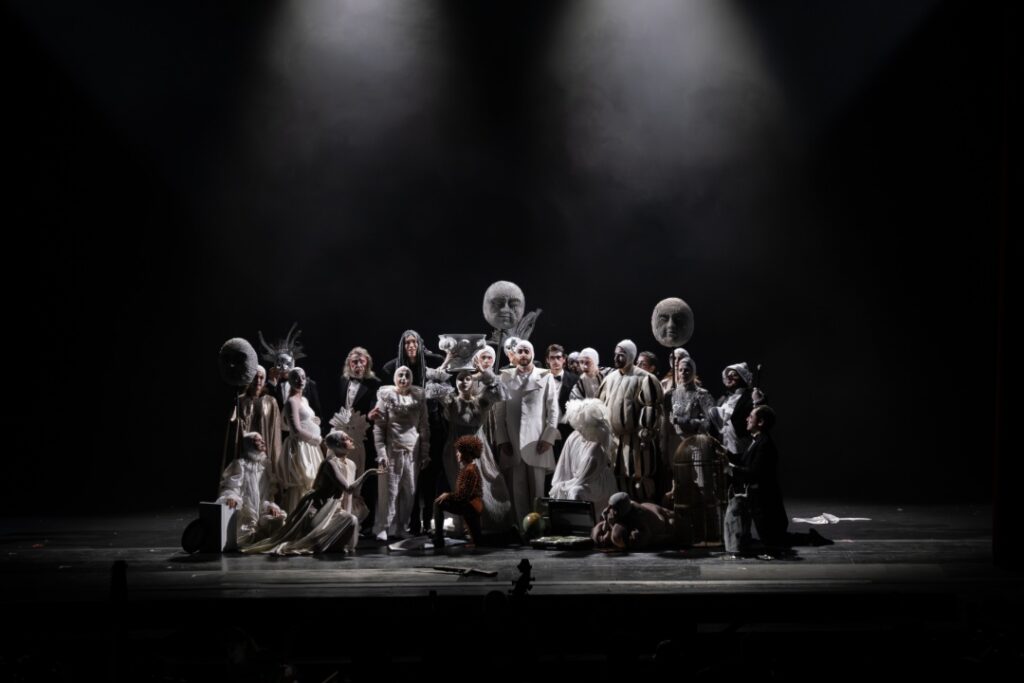
The production also included Director Petra Deidda, with set and costumes by Valentina Volpi, lighting by Oscar Frosio, and Choir Master Diego Maccagnola with the Orchestra and Choir Cremona Antiqua.
(Photo: Antonio Dimondo)
Production Details
The overall production was a very thorough examination and presentation of Cavalli’s opera. The amount of time and effort it took to revive and remaster this work was evident. This was a festival highlight for anyone interested in seeing a 387-year-old opera come back to life and the audience filled the entire Teatro Ponchielli hall. A couple next to me who were visiting from Germany had spontaneously decided to see the opera while in Cremona and were elated with the show, describing it as magical.
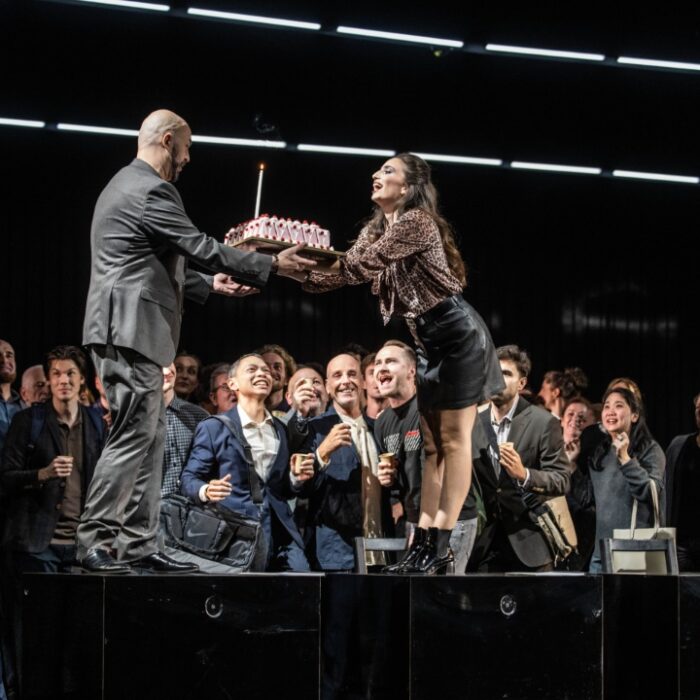
The choreography and pace of the opera allowed for stand-out musical moments, though the length of the work itself was extensive. This combination somewhat prevented the opera’s libretto from speaking for itself, while the use of the entire theater by the singers was a bit confusing due to the uncertainty of character placement.
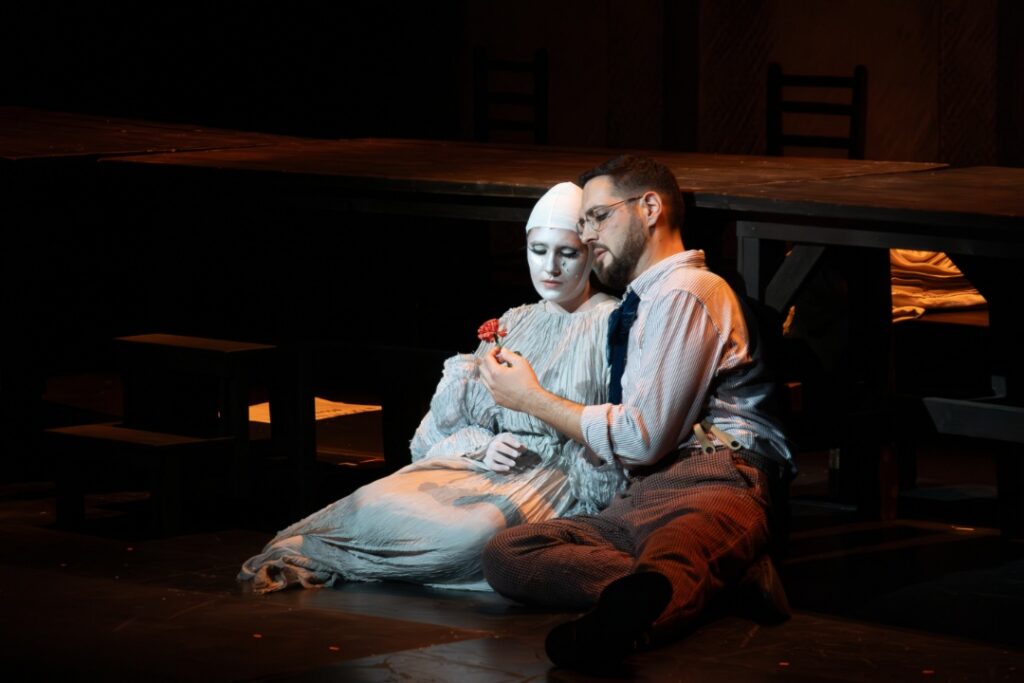
The opera begins with Fame and Time disputing who has greater power over the destiny of men. The nymph Thetis and the warrior Peleus were front and center when it came to this dispute playing out, while through the workings of Discord and Hymen all would be decided based on fate.
(Photo: Antonio Dimondo)
In total there were three Acts filled with symbolism, mythology, and the never-ending quest of processing human emotions and relationships through an operatic lens. Nothing was lacking from the in-depth experiment of this revival, but there were still some moments that remained unclear from an audience member’s perspective.
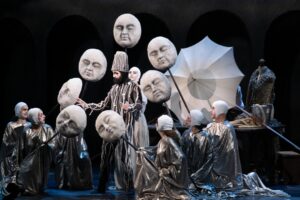
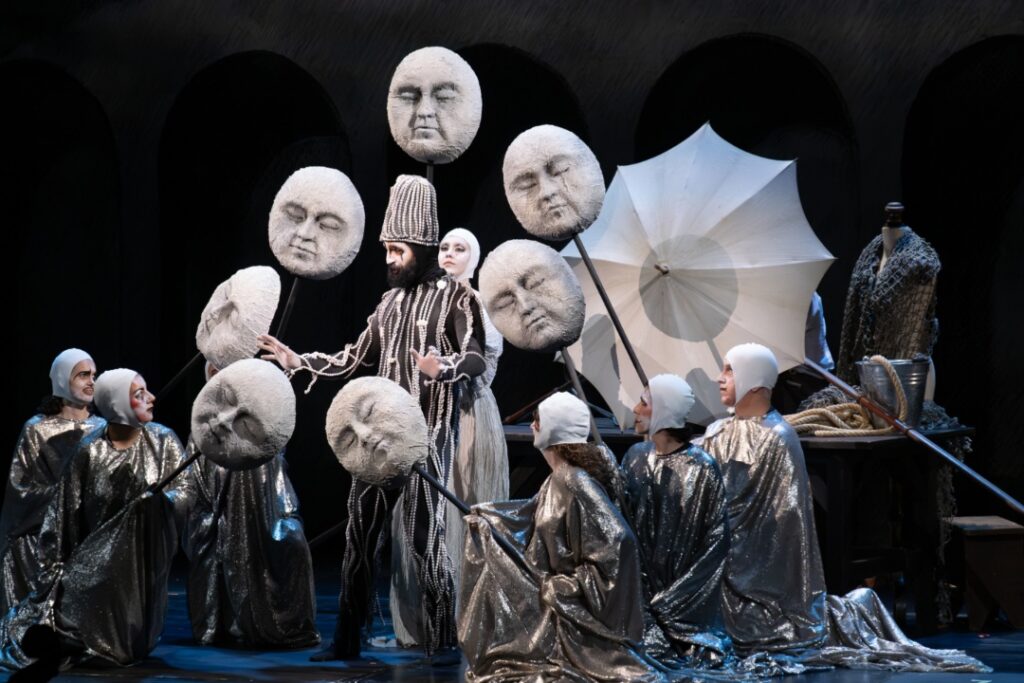
The costumes were eye-catching and beautifully surreal. The floating faces on rods were a standout, with the pitch black curtain and stage as the backdrop. In this setting the beadwork of the black bodysuit and the silvery capes of singers created a dreamlike atmosphere through which one could float.
(Photo: Antonio Dimondo)
Cast and Musical Highlights
The camaraderie of the singer’s cohort was outstanding and the genuine excitement for their roles was refreshing. It was thrilling to see tenor Testori, countertenor Danta, and mezzo-soprano Gaudenzi perform. OperaWire reviewed their Cesti competition performances in 2024 at the Innsbruck Early Music Festival.
Members of the Coro Cremona Antiqua included sopranos Tea Irene Galli and Gaia Ammaturo, mezzo-sopranos Cristina Greco and Isabella Di Pietro, countertenor Alessandro Simonato, basses Ufuk Halil Aslan, Marcello Zinzani, Arrigo Liverani Minzoni, and Riccardo Dernini, tenors Simon Dognimin Kone, Carlo Prampolini, and Jaime Andrés Canto Navarro, and Nymphs and Cupids performed by Gaia Ammaturo, Cristina Greco, and Isabella di Pietro. The choir played an active role in this production and their ability to memorize their choreography and placement in the theater was notable. There was never a dull moment in this work: everything was presented so as never to be forgotten again.