Bayerische Staatsoper 2025-26 Review: Rusalka
By Francis Muzzu(Photo: Geoffroy Schied)
Martin Kušej’s 2010 production of “Rusalka” at the Bayerische Staatsoper has become a modern classic. It made a star of Kristine Opolais and in one way took the torch from David Pountney’s 1986 production at ENO, which revolutionized our view of Dvořák’s opera. Out went the traditional fairy tale and in came a psychoanalytic exploration of a young girl’s journey into burgeoning womanhood, sexuality and self-awareness.
Production Details
The Munich production makes for a bleak but absorbing evening: it is aggressively challenging and sixteen years later still packs a shocking punch. Kušej abandons any Romantic notions of a water nymph falling in love with a prince and presents us with a stark story based on the horrendous Fritzl case: in 2008 it was discovered that an Austrian man, Joseph Fritzl, had imprisoned his daughter Elisabeth for twenty four years in a purpose-built cellar in his home. During that time he repeatedly raped Elisabeth, who bore seven children. One died, three lived with their mother in captivity and three were brought up upstairs into the family home – Fritzl apparently managed to hoodwink his wife, saying that Elisabeth had run away to join a cult and abandoned her children.
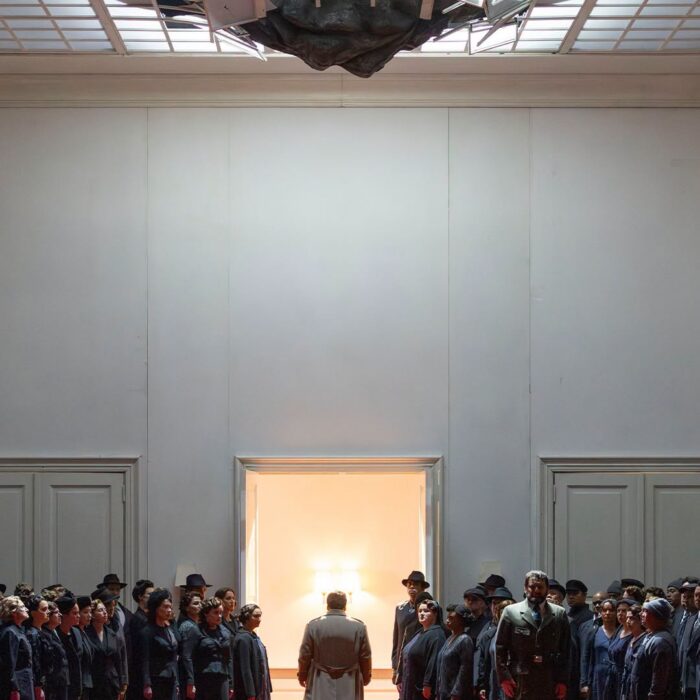
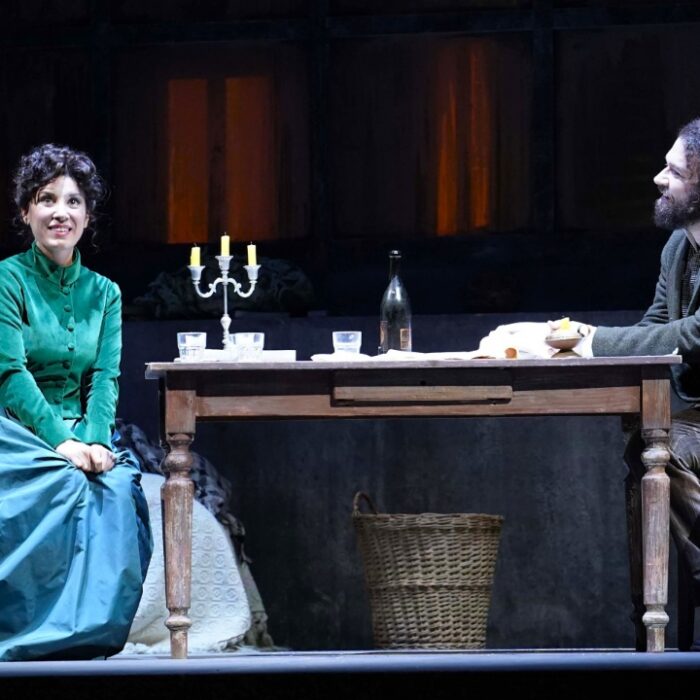
So, the staging starts with a contemporary setting of a man and wife at home, the backdrop is an idyllic Alpine view. An unhappy marriage is implied and it already creates a sense of threatening unease. The stage then rises to reveal the waterlogged cellar below where the secret family is imprisoned, a group of young women and smaller children, presumably theirs. It doesn’t take a stretch of the imagination to realize that the man upstairs is the Vodnik, Rusalka’s father, who in the traditional story oversees the lake; his wife is Ježibaba, a witch, and the young women in the cellar are Rusalka and her fellow nymphs; or, in this staging, the father, wife and daughters in this twisted relationship.
My first question was should Kušej use such a distressing case (especially since the participants are all still alive) to stage an opera? My verdict ultimately is yes, though with some reservations. The production is sincere and doesn’t seem sensational for the sake of it. And what is the purpose of an art form, specifically opera in this case, if it can’t explore, reflect and illuminate an aspect of humanity, no matter how abhorrent we will find it? After all, a classic such as “Carmen” depicts equally appalling violence against women and is viewed with equanimity – it is even a “fun” night out at the opera, something you might take your grandmother to see for a treat. What price is violence? My particular reservation is that I write this as a man, and if I were female I might take a different perspective; I cannot know.
Secondly, a more practical question: how does Kušej fit the existing opera into his directorial framework? With great care, I soon realized. The stage directions are followed with specificity. In the first scene the Vodnik sings of capturing girls to drag them down into his world. He tells the nymphs they can change places with his wife and they reply that she might not like it. And he refers to the girls running, as indeed they do to escape his attentions. Rusalka, obviously traumatized and almost beyond functioning, sings her song to the moon to a lit globe, soon smashed. Such precision continues throughout and at no point did I feel I was watching Dvořák’s “Rusalka” being shoehorned into Kušej’s.
Symbolism abounds, not least the numerous references to water, with Rusalka ultimately resorting to a large fish tank for safety, almost an emotional recharge, and later the Prince gravitates to it in his attempt to heal himself. The final scene, unflinchingly lit, showed the rescued girls suffering from hypoarousal, each marooned on a metal bed and waiting for….what? In Rusalka’s case, not revenge, but catharsis.
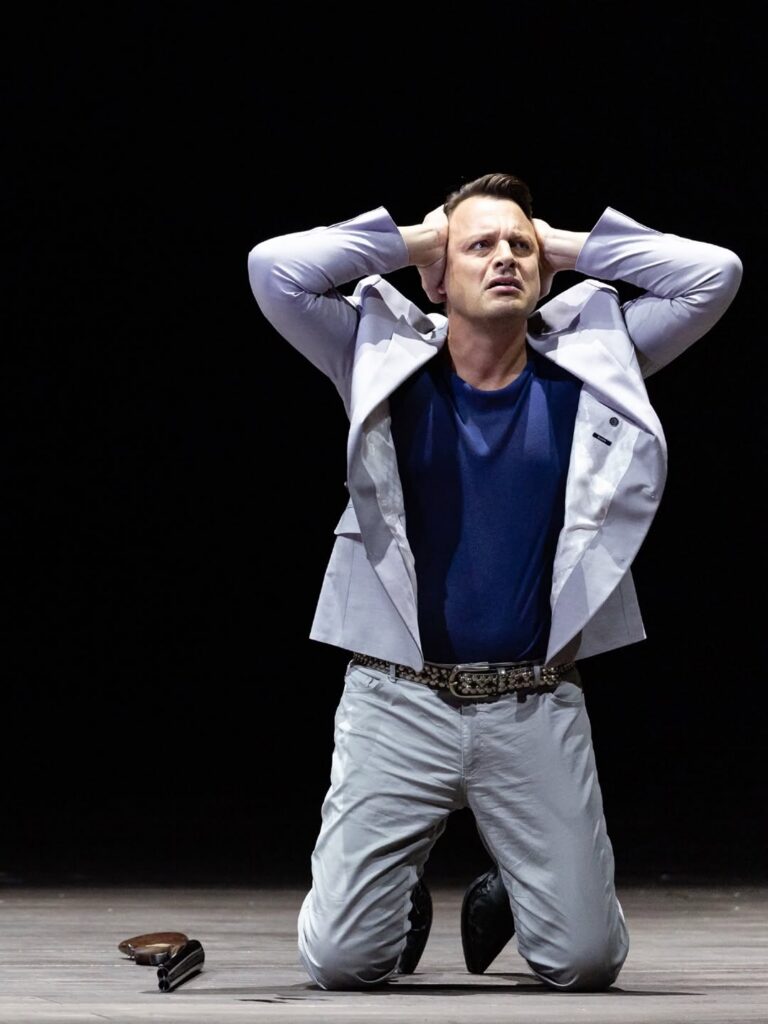
Geoffroy Schied
Musical & Cast Details
The Staatsoper’s General Music Director designate, Petr Popelka, led a magnificent reading of the score, played superbly by the orchestra. Popelka brought out the luscious string-drenched orchestration whilst also allowing its dramatic jagged edges, and his tempi were astute. One cavil – at times he seemed to abandon his singers and concentrate on the noise from the pit which could become overwhelming. The acoustic in the theatre is generous, and if not careful, a conductor can swamp the stage, and a few times this happened – not least at the end of Act one when the Prince’s ecstatic outpouring went for little.
Malin Byström’s performance in the title role was magnificent. I cannot believe how her soprano has changed over the last 10 years – from what I disliked as a constricted lyric voice, (I thought it an occluded sound), to a thrilling and forthright spinto with great focus and volume. She has always been an exciting stage presence, but here she was nothing short of sensational and the audience responded in kind at the end as she stood alone in the spotlight, a spine-tingling moment. From the dead-behind-the-eyes girl in the cellar to the young woman in love to the tragic husk of a human who remained at the conclusion, Byström nailed every emotion. And all while pouring out the most thrilling tone. I was awed by her.
Pavel Černoch’s Prince matched her in intensity if not quite vocally. He is a superb actor, his tenor keen and true if not quite cutting enough for the largest moments. In their duets, he and Byström hit the emotional heights. All overwhelming.
Jamie Barton was Ježibaba, a troubled woman who’s hit the bottle. She caught the conflicted element of the character – knowing but pretending to be ignorant, self pitying yet forthright and confused. Should we despise her or pity her, ambivalence is all. Barton has a great chest register, used with happy abandon, and she was as equally confident as her voice rose above the stave.
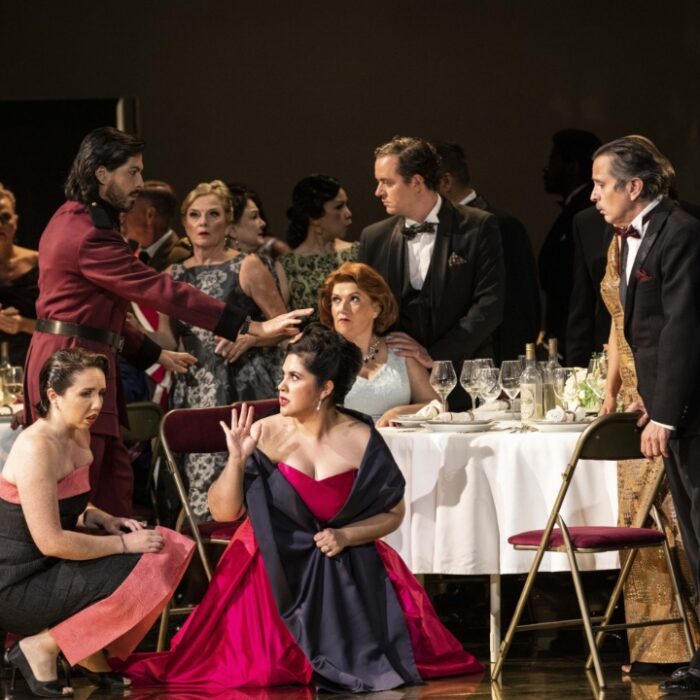
Christof Fischesser’s Vodnik was suitably repulsive, also sorry for himself whilst inflicting immeasurable pain upon others. His bass rumbled perfectly, his Act three aria beautifully limned. The Gamekeeper and Kitchen Boy – Tansel Akzeybek and Meg Brilleslyper – were affective and enacted their own mirror story of abuse. The Foreign Princess of Elena Guseva used her scything soprano to great effect, relishing her Morticia Addams styling, slinky to the last.
All in all, a revival worthy of its Festival showing, a truly thrilling performance.