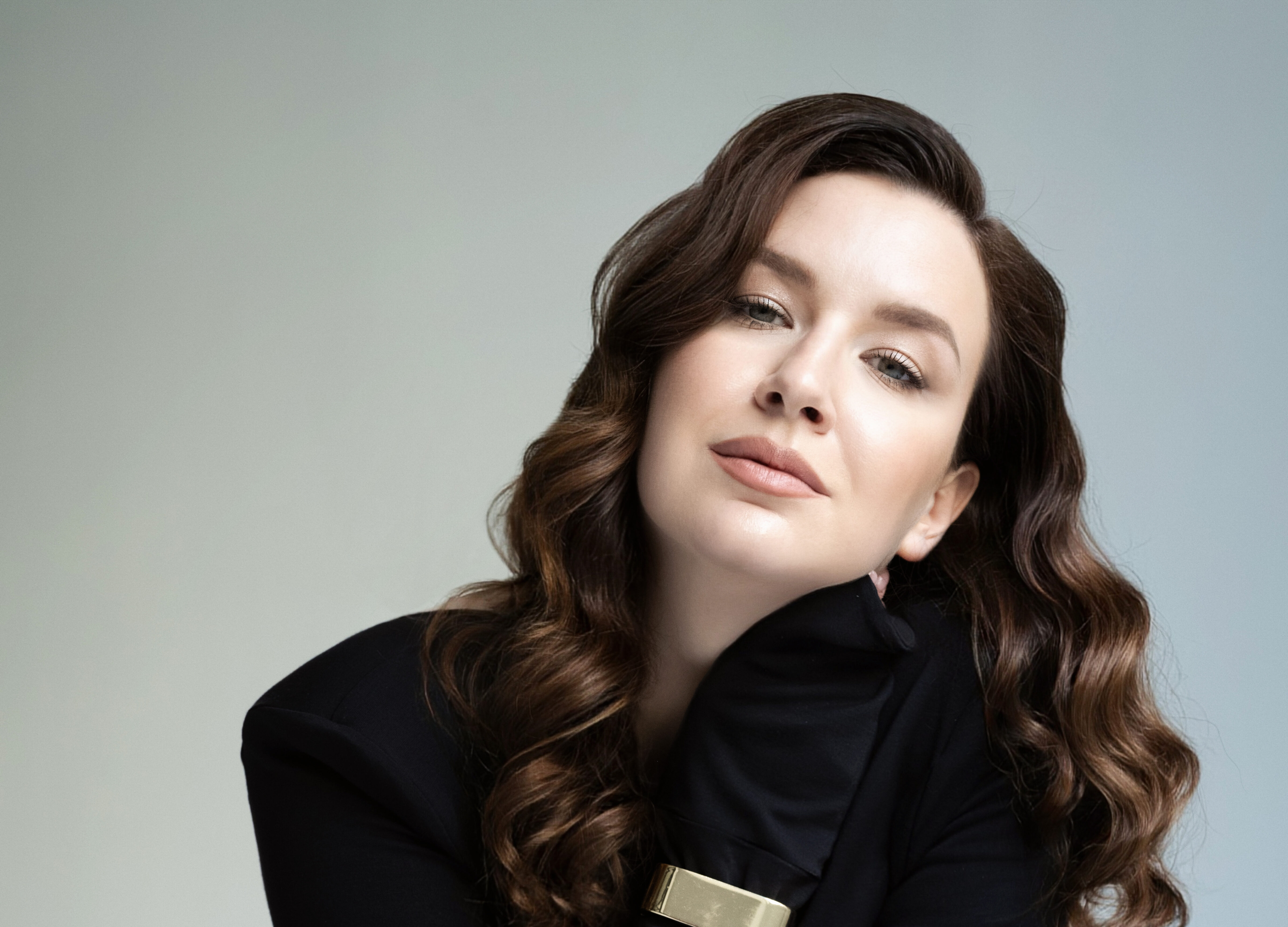
A Rescue Mission – General Director Maria Todaro on Rebuilding Florida Grand Opera
By David SalazarIn 2014, Florida Grand Opera accumulated a $19.4 million deficit. The company was in chaos, warning that the cancelation of its 2015-16 season in Broward County could be imminent if the organization was unable to secure $400,000.
The future of the organization, which was founded in 1941, was uncertain and insecure. Fortunately an anonymous donor pitched in to erase the company’s debt and stave off any dire consequences. Recovery seemed imminent.
But while the company had staved off financial crisis, the issues that had created it were far from gone. Soon enough, they would rear their ugly head again.
Many of the people who had helped build the organization throughout the 20th century were gone. Whoever was left had mismanaged the situation or simply came along to put out fires. Trust within the community had been lost and with it, the financial muscle to keep it going.
The future of Florida Grand Opera was at its absolute lowest point. The dark night of the soul had set in. The future never looked bleaker.
A Rescue Mission
Growing up, Maria Todaro was in constant contact with opera legends: John Vickers, Alfredo Kraus and Pablo Elvira. Her parents, tenor Jose Todaro and Brazilian mezzo Maria-Helena de Oliveira, were opera stars themselves.
“Opera is in my blood,” she told OperaWire in a recent interview. “My husband is a singer. My Parents were singers. My uncle was a singer. I was a singer. My dog is a singer,” she said.
Naturally, Todaro wanted to pursue music. First she was a pianist because she couldn’t be a singer at the age of six. Then she was a conductor. And then, she went to study law (Todaro noted that she failed out of law school) and political science.
“Finally my dad let me do singing because he said, ‘You have to do all those things before you sing, because it’s hard,'” she noted. She performed as a mezzo before moving into stage directing, founded the production company Arteodor, and co-founded the Phoenicia Festival of the Voice (now known as the Hudson Valley International Festival of the Voice). When COVID hit, she was at the forefront of finding ways to keep live performance alive, instituting a drive-in performance structure for the festival.
But following the pandemic, Todaro was intent on settling down in Florida and in 2023, her family settled in Naples.
“Literally a month after I moved to Naples, I heard that there was a vacancy, a vacancy with this company that I have always admired,” she noted. The company in question? The Florida Grand Opera.
The company had been in search of a general director as it sorted out its new direction. Todaro wanted to help as an interim so she wrote a letter and the company said yes.
“The reason they say yes is because one of the board directors had come to my festival and saw what I can do,” Todaro said. “They were intrigued to see if I could bring a little bit of fresh blood to the company.”
She quickly realized that this was more than just a transition.
“It was a rescue mission.”
An 85-Year-Old Startup
Not only were the company’s finances in disarray, but something more vital had been lost. Trust. It’s a word that Todaro used throughout the conversation, noting that people, whether it be those running the company or the community itself, had little of it left for Florida Grand Opera.
“The people that had stuck around in hopes of seeing the company improve were hurt,” Todaro noted. “They saw the decline and they got discouraged.”
Just like in 2014, the first order of business was to wipe out the outstanding debt and then rebuild from there. And as with that previous circumstance, help came.
“Tina Vidal-Duart and her husband Carlos Duart gave us a huge injection of $4 million,” she revealed. “It’s like being in the ICU and getting resuscitation. That’s what they did with their donation.”
But even that was not going to repair the damage done. Continuing with the health metaphor, Todaro added, “let’s say we stabilized the patient in that at least they can breathe by themselves.” But of course, the most important way to get it up and running was to restore trust. The first trust restored had to be “the product we’re putting on stage.”
Of course, in the opera world, any product is costly. But Todaro’s vision was for the organization to return to a period when it was one of the most renowned in the United States. She needed the board to be on board with the budget. And that meant, increasing the budget.
“We cannot compromise the quality and singers need to be paid,” she noted. “It’s a transformative art form and it costs. The community deserves to know that we respect their time and give them the best possible performances.”
To off-set the increased costs for productions, Todaro leaned into savings elsewhere. The company’s offices were moved to a less costly location and the company itself leaned on the work of 11 people for this rebuild. Todaro noted that her assistant and her shared an office.
“Not only am I saving in square footage, but I am creating efficiency. My assistant is in the office with me, listening to what I say on my calls so she can anticipate what I need before I even ask for it,” Todaro noted, adding that interconnectivity between the team was essential.
When the board comes into her office, Todaro rolls out foldable plastic tables and seats for them.
“Not only do we not need expensive conference tables, but being flexible is important,” she added regarding this choice. “There’s been a necessary effort and transparency in everything we do. You know what’s going on with the money, what’s going on with the people. We operate a lot like a startup. An 85-year-old startup,” she said.
In the early stages of the rebuild, Todaro’s team was relatively new. She revealed that most of the people had arrived on the scene just weeks or months before she was official brought on. The financial hardships had scared away the more experienced team members.
But some stuck around, harboring hope for the company. And it was those veterans on whom Todaro relied on most. Among those was Gary Herman, director of audience services, who had been with the company for 33 years.
“He has the most gentle touch, the most human gentle touch that you can even imagine,” Todaro enthused. “I’m not exaggerating. He knows everybody. He knows every single one of our audience members. And it matters. It is a very important thing. He has been the bridge between the transitions, between the difficulties. He’s been there for the company, keeping the flame alive as much as he could. He’s the person that, when you call the company, he is the one answering the phone,” she said.
Another essential member of the team was Marco Franceschi, who was in charge of IT with the company for over 15 years at the time and had been given little financial support to modernize the organization’s technology.
“We had one of those rooms that you only see in a 1960s movie,” she described, noting old computers that could barely run modern software. “It was ridiculous. We had to go to the cloud very quickly.”
Finally, Todaro notes that Lucy Spieler an expert in tesstitura management, was another member of the team who was of great support during the rebuild.
Everyone else on that initial team had joined a few months before.
Growth
Todaro’s immediate priority was to get the company running and to put on the best performances possible. While a music director is undeniably essential to this vision, Todaro felt that they could manage for a time with different conductors for different productions.
“I was more inclined to hire a director of development immediately than a music director,” Todaro admitted. But then a supporter presented her to Pablo Mielgo, a Spanish conductor who had worked under some of the finest conductors of recent memory and some of opera’s biggest stars, including Nadine Sierra, Juan Diego Flórez, Pretty Yende, Sondra Radvanovsky, and Anna Netrebko. He also launched several festivals, including the Festival España-Venezuela and the International Music Festival of Madrid.
“When you meet the man and his passion for this industry and his knowledge and his business acumen,” Todaro narrated, “it just flipped everything in my priorities. I knew that i needed him by side.”
The announcement was made to the world on May 7, 2025 and in adding Mielgo to the team, Todaro moved ever closer to delivering the kind of operatic experience she envisioned when she took over as Interim in 2023 and then officially one year later.
The 2025-26 season, the first fully under Todaro’s vision, already points the way toward where the company aims to go long-term. The Richard Tucker Music Foundation hosted its 50th anniversary gala not at Carnegie Hall where it customarily has in recent history, but in Miami. Productions of “Silent Night” and “Die Fledermaus” bookended the closing and opening months of 2025 and 2026, respectively. But the season’s crowning production might be “Turandot,” starring legendary superstars Roberto Alagna and Aleksandra Kurzak, with the Polish diva singing her first-ever interpretations of the title heroine. The second cast of the production also stars renowned soprano Jennifer Rowley.
These are the kinds of casts that Florida Grand Opera could aspire to in its legendary past, but hadn’t really seen much of in recent decades.
“We feel that the community here is starting to understand that they have a historical jewel on their hands,” Todaro continued. “They’re starting to rediscover actually what Florida Grand Opera used to be.”
Moreover, she noted that the company itself is undergoing a rediscovery of the community as well, noting that Miami is the perfect destination to cultivate opera.
“The people that come to Miami are always looking for a good experience,” she noted. “We’re not inventing culture here, but we are experiencing a serious renaissance, and that goes well with the branding that the city wants to see. Instead of just being the place where people come on spring break, the city wants to brand itself as giving people a distinguished, elegant, and elevated experience. We fit the bill when it comes to that.”
Collaborations with fashion brands such as Cartier, Valentino, Balmain, McQueen, and Tiffany are of utmost important to the company as it seeks to further cement its place in the city’s cultural landscape.
“Miami is in the middle of a very big shift where now all those developers and all the people that are investing a lot of money here want to keep the people around. So they’re looking to invest in culture and we’re making a case here that if you want to align with the city like New York, Vienna, Paris, London, Chicago, San Francisco, you need what represents the heartbeat of a city. And that heartbeat is this opera house,” said Todaro.
Confidence in the Future
While Todaro has endeavored to pull Florida Grand Opera from the brink, there’s no denying that its recent history has been cyclical. Moreover, the opera industry as a whole is undergoing many harsh truths thanks not only to challenging market conditions worldwide and with the recent government cuts to the NEA. These days, major operatic mammoths, like The Metropolitan Opera, regrettably make more headlines for their financial troubles than for their artistic merits. And everywhere you read, opera is labeled as a dying art form and a relic and everyone that writes a book about it is attempting to make arguments for saving it. Not to mention how new technologies, most notably AI, continues to transform the entire world and humanity itself.
Todaro understands the challenges ahead but she maintains her positivity and hope. In fact, she believes that opera is very much at the forefront of that future.
“I think that in five years, we’re gonna become the most important thing for society,” Todaro emphasized, noting that new technology is a passion of hers. “And while we are in the age of AI, I believe that people have to learn to become human again. And what makes people feel the most human is their emotions. And what makes you feel? Art. And when you look at what is the art form that encompasses all the other art forms, it’s opera.”