Teatro Real de Madrid 2025-26 Review: Il Trovatore
By Mauricio Villa(Credit: Javier del Real)
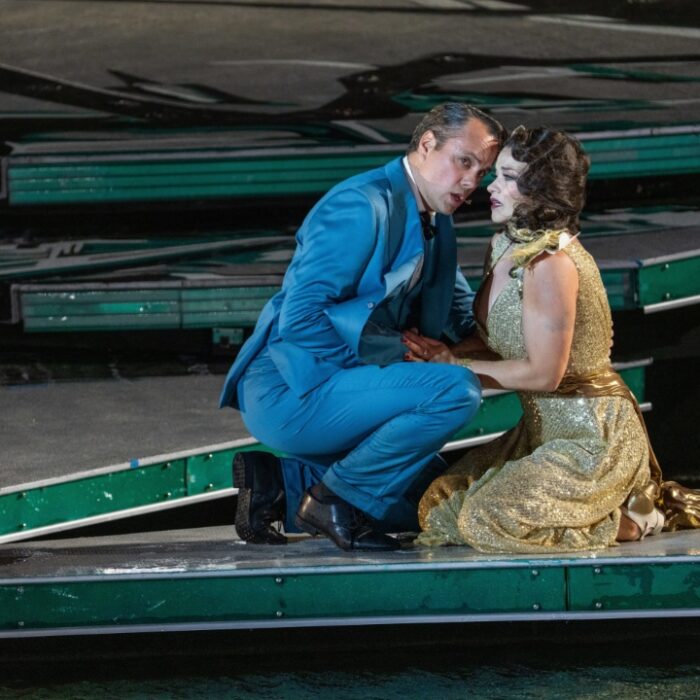
To close out its run of “Il Trovatore,” the Teatro Real de Madrid presented a cast featuring Saioa Hernández, Celso Albelo and Artur Ruciński (Marina Rebeka was originally scheduled but cancelled).
Celso Albelo who took charge of the title role has an exceptional, unique voice. High voices are lighter and smaller, their middle range is usually weak but with an extensive high register. While heavier voices are potent, with a solid middle register but with a limited high range. Albelo’s voice since the beginning of his career had the timbre and volume of a lyric tenor with an impossible high range up to high F. What is more, tenors often use head voice or mixed voice for the highest notes (usually from high B natural upwards). But Albelo’s exceptional instrument plus his technique allowed him to sing throughout all his tessitura with chest resonance which made his high notes incredibly powerful and sonorous. He has a voice which increases in volume as he rises up. Very few singers in the history of opera have managed to sing stratospheric high notes using chest resonance.
Albelo’s career has been focused on lirico-leggiero roles and bel canto for over twenty years, but lately he has incorporated lyric roles in such operas as “La bohème,” “Werther,” “Un ballo in maschera” or “Trovatore.”
Manrico’s role was written for a lirico spinto tenor. It demands a powerful, strong, and dark voice in the middle register, not rising higher than A natural with the exception of a single B flat in the trio which is an option oppure. But tradition has added high B flats everywhere and the infamous two high Cs of “Di quella pira,” which are usually sung in a lowered key. Because of Albelo’s extreme facility for high notes, and after having sung for years the principal tenor role of “William Tell,” where the aria and cabaletta, “O muto asil del pianto… Corriam, voliam,” have seven written high Cs and an eighth optional final one in “All’armi” (just the same words and note which concluded Manrico’s famous cabaletta). I knew that his aria and cabaletta from act three, “Ah, sì, ben mio… Di quella pira,” was going to be a piece a cake for him. And I wasn’t wrong: it was brilliant, lyrical and sweet for the aria, and powerful and aggressive for the cabaletta (which he obviously sang in the original key, delivering two brilliant ringing high Cs). The recitative and aria were a lesson in bel canto, with a continuous contrast of forte/mezza voce/and pianissimo. Albelo is famous for his breathtaking diminuendo, soaring pianissimi (which he can deliver even in very high notes), singing the long legato lines with sweetness and delicacy, delivering an effortless and beautiful B flat in “e solo in ciel precederti.” His interpretation of “Di quella pira” was just perfect. He easily emitted Verdi’s demands of power, volume and rage.
What is astonishing is that a voice with such a high register, that has sung the hardest roles of bel canto, has a resonant, projected and secured middle register which is where the tenor has to sing most of the night. And that this doesn’t compromise his high notes is outstanding. After a beautiful and lyric off-stage (although it sounded as if he were singing right to your ear) first aria, “Deserto sulla terra,” with the first top ringing high B flat of the night, he sang an ardent confrontation with the baritone and coronated the end of the trio with the soprano with an exciting high D flat. The long scene with Azucena in Act two was emotional. The tenor used his vast palette of colors to transmit the emotional journey he goes through in this scene: from love of his mother, to doubts, confusion, determination and finally rage, keeping his voice strong and projected and navigating comfortably between A flats and A naturals. His short intervention at the end of Act two was thrilling and exciting. His off-stage “Miserere” was another lesson of smooth and sweet singing, reflecting his sorrow for losing Leonora because he is condemned to death. His final scene was another display of how he uses vocal color and dynamics to create a strong vocal characterization of the character and all the different feelings and contrast he goes through with Azucena and Leonora.
More Cast Highlights
Saioa Hernández gave another impressive interpretation. Her dramatic, dark, big voice, and her fraseo and immaculate coloratura, paired with her legato singing complemented her dedication to the role. She kept the high standards she set in the previous show.
The Count di Luna was portrayed by one of the greatest baritones nowadays, Artur Ruciński. It is a relatively short role but one of Verdi’s hardest due to its extreme high tessitura. The highest written note is a high G, which should be manageable for a baritone, but the tessitura navigates constantly between E and high F sharp which is a hard register to sing constantly. High tessitura is not a problem for Ruciński. He sang “Nessun dorma” in a concert, delivering a secure high B natural, a note completely out of the baritone’s vocal range. He sang the Terzetto in the first Act with fury and determination, delivering strong sustained high F sharps.
His big moment came in the second Act during his aria and cabaletta, “Il balen del suo sorriso…Per me ora fatale,” with one of the most beautiful baritone arias that Verdi has written. There is something that makes Ruciński unique – his extraordinary breath technique. I always say that he breathes in at the wings and breathes out when he gets back to his dressing room after the show. He sang five bars of his extremely slow and legato aria in a single breath (while other singers usually breathe at least three times) creating a breathtaking soaring fluidity and legato. He can sing huge, long lines in one breath while doing dynamics, singing in mezza voce, pianissimo, crescendo/decrescendo and even high notes. He delivered three strong secure high Gs. He interpolated one during the recitative, “Leonora è mia,” and sang the subsequent difficult cabaletta with passion, making it sound easy when the tessitura is extremely high and the orchestra is playing forte. He sang effortlessly and with vocal power the line “s’oppone all’amor mio,” which requires phrasing in high Fs and G flats. His short duet with Leonora in the fourth Act kept the same demands: high tessitura and passionate ardent singing in forte, and Ruciński defended the piece as well as he had been singing the whole night. Despite his beautiful warm round timbre, his way of singing made him stand out. Very few singers have such refined technique and artistry.
Azucena was performed by the mezzo soprano Ksenia Dudnikova, imprinting her singing with extreme dramatism (which is adequate for the part) and combining chest resonance for the lower range with powerful high notes, like her first B flat in “mio figlio avea bruciato! Ah!” or the final “sei vendicata, o madre.” But she skipped the written high C, as most singers do, in “spremi dal cor.”
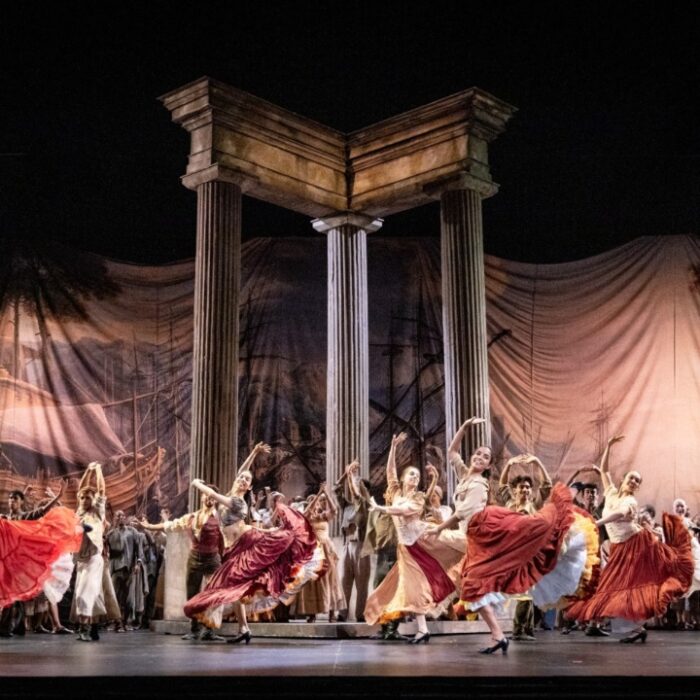
The conductor Nicola Luisotti and the Coro y Orquesta Titular del Teatro Real de Madrid sounded as good and brilliant as in their previous performances.
The last performance of “Il Trovatore” at Teatro Real de Madrid presented a magical and excellent cast with the extraordinary voices of Celso Albelo, Saioa Hernández and Artur Ruciński, turning out to be one of the best opera performances of this season.