Theatro Municipal do Rio de Janeiro 2026 Review: Salvator Rosa (Cast B)
By João Marcos Copertino(Photo: Daniel Ebendinger)
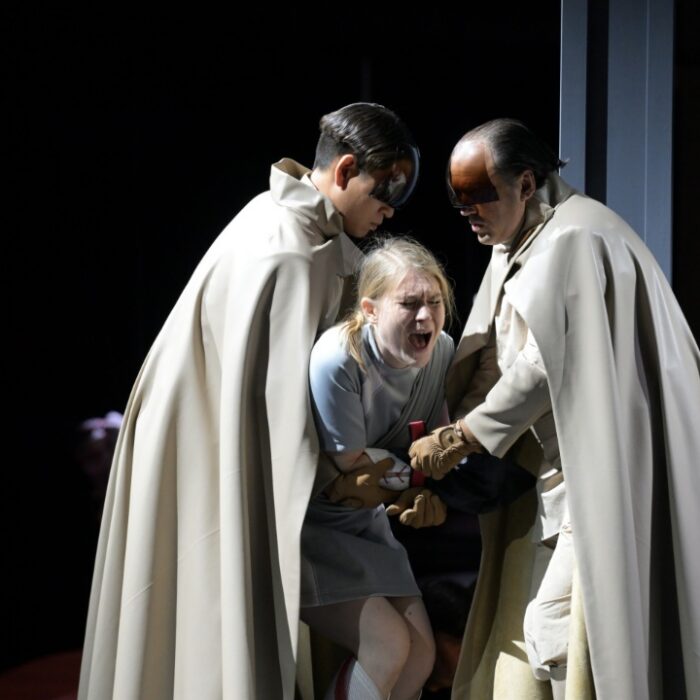
The second cast of “Salvator Rosa” presented a slightly different take on the opera, often trying to find a certain form of introspection. It is not an easy thing. “Salvator” is a Melodrama with a capital “M;” the illusion of interiority seems to challenge the genre, which seeks to make everything explicit and visible. In any case, the attempt to do so often leads to more gains than losses: it elevates the drama and the music. The major problem, however, is the voices. In most cases, the maximum on offer was correctness. Singing correctly can work in some repertoire, but in Gomes’ opera there needs to be a certain opulence of vocal instruments.
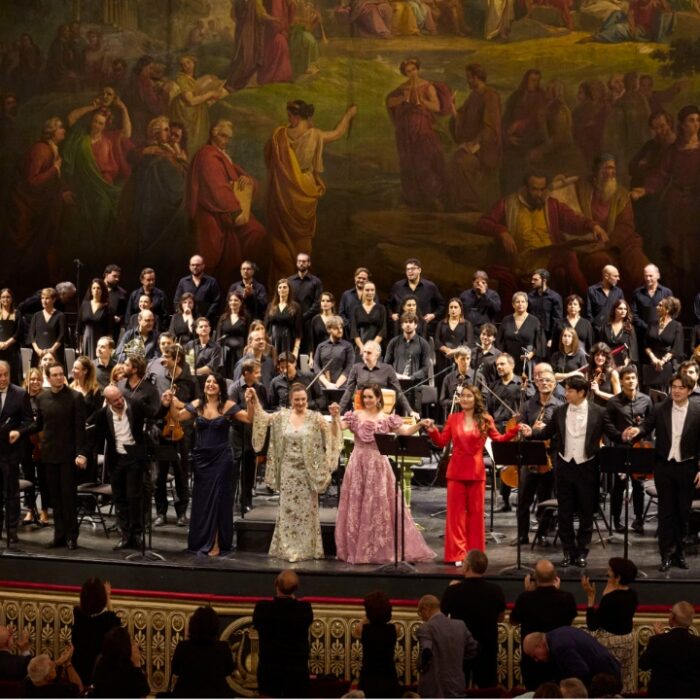
As is common practice in Brazil, the opera was performed with two casts. The first was noticeably superior to the second, especially in the smaller roles; nevertheless, I found both performances enjoyable. Also following Brazilian custom, most of the singers are tenured members of either the Rio de Janeiro or the São Paulo Municipal Opera chorus.
One of the great advantages of working with what might be called a provincial cast is that the singers share an almost familial relationship with their audience. It is therefore difficult not to feel a certain affection for—and to cheer on—artists who have accompanied their local audiences through such a wide range of repertoire over the years.
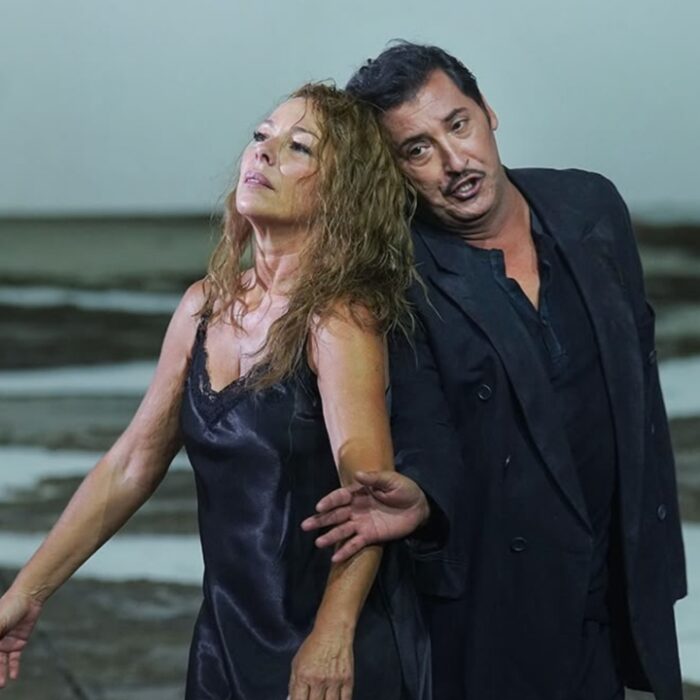
The second cast’s Salvator, Enrique Bravo, looked as though he had stepped out of a Neapolitan painting, but he sang with too much “sforzato” intensity for his own good throughout much of the evening, often compromising the shape of his phrases. His voice also developed an unpleasant vibrato whenever he sustained forte notes.
Perhaps the most impressively sung role of the evening was Masaniello. Johnny França approached the role viscerally, fully embodying the character’s anguish in the dramatic third Act. A very tall man, he possessed that unmistakable baritone stage charisma and endured an entire performance with a wardrobe malfunction while maintaining remarkable composure.
The role of the Duch of Arcos contains what may be one of the opera’s greatest highlights: the aria “Di sposo.” Savio Sperandio‘s acting was as melodramatic as a silent film, making excellent use of his remarkably expressive eyes. In some moments—especially in the larger ensemble scenes—it worked perfectly well. After all, there is a theatrical advantage when the villain in a melodrama both sounds and looks villainous and mischievous.
By the end of the performance, it became evident that Isabella must have been the most difficult role to cast. On the one hand, it demands a highly skilled spinto or dramatic soprano, both vocally and dramatically. Much of the opera’s success—especially in its final two Acts—depends almost entirely on Isabella’s ability to carry the performance. On the other hand, it is also true that her romanza, “Volate, o libere,” though beautiful, is far from the evening’s most immediately memorable musical number, while presenting the kinds of challenges that Gomes frequently imposes on his heroines in “Fosca,” “Lo Schiavo,” and “Maria Tudor:” a declamatory vocal style, extended passages in the middle and lower registers, and the need to project through a dense orchestral texture.
I was glad to see soprano Marianna Lima as Isabella. Lima brought a different set of qualities to the role. Her voice had a slightly darker color, something rather uncommon among contemporary Brazilian sopranos. She was also capable of conveying a certain shyness on stage that was unexpectedly appealing, as though she were not an operatic character at all. By the end of the performance, however, she seemed to lack stamina, and her sound often became unfocused, frequently disappearing into its own vibrato. More than once, she proved no match for the orchestra’s heavy texture.
The most frequently performed aria from “Salvator Rosa” is Gennariello’s “Mia Piccirella.” Although written for a light soprano, it is often remembered because of Enrico Caruso’s famous recording. In practice, however, the role calls for a singer in the mold of “Un Ballo in Maschera’s” Oscar. Despite the misguided gestural characterization of the part, Maria Gerk acquitted herself well. Gerk impressed with the ease and brilliance of her uppermost register.
I regret to say, however, that—especially in the second cast—the supporting roles were less consistently successful. Even so, none of these performances compromised the production in any significant way.
When dealing with a rarely performed yet immensely demanding work, such as Gomes’ opera, there is genuine pleasure in seeing it undertaken, especially when everyone involved approaches it with such earnest commitment. If anything, this production makes a compelling case for more frequent performances of Gomes’ music, fostering greater familiarity with these works while allowing dedicated performers to grow into the many musical demands of the score.
By the end of the evening, I found myself genuinely moved. It was gratifying to hear Gomes’ music performed with full orchestral richness, free from the nonsensical piano reductions that so often diminish its effect. More importantly, one hopes that the conversation surrounding Gomes’ legacy will gradually shift away from his biographical curiosities and toward a deeper appreciation of his music itself. I would even venture to say that, if we actually listen to Gomes—and try to understand his operas on their own melodramatic terms—“Salvator Rosa” reveals itself to be a genuinely remarkable work. For that, I am deeply grateful to have attended Rio’s production.