Teatro alla Scala 2025-26 Review: Pelléas et Mélisande
By Bernardo Gaitan(Photo: Monika Rittershaus / La Scala)
“Opera sings too much” provocatively declared a barely thirty-year-old Claude Debussy shortly before revolutionizing the concept of lyric theater in France with what would become his only operatic work: “Pelléas et Mélisande.” A work built upon silences, allusions, and a circular sense of time: a fable situated outside reality. The result was not what many had expected, as often happens with masterpieces, misunderstood in their own time. Contemporary critics responded harshly, and composition teachers forbade their students from studying Debussy, since he shattered all the rules established by the rigorous traditions of Massenet and Gounod only a few decades earlier. Philosopher and musicologist Vladimir Jankélévitch provocatively claimed that Debussy’s music “makes no sense” though therein precisely lies its essence: a music that seems to move in every possible direction.
Fortunately, with the passage of time, the work has gradually secured a stable place in the repertoire of some of the world’s leading opera houses.
The relationship between “Pelléas et Mélisande” and Teatro alla Scala is not extensive, but it is certainly intense. In 1908, under the baton of Arturo Toscanini, the work received its Italian premiere there, and throughout the twentieth century it was staged only occasionally, though always entrusted to major conductors such as Victor de Sabata (1948 and 1953), Herbert von Karajan (1962), Claudio Abbado (1986), and Georges Prêtre (1973, 1977 and 2005). After more than two decades away from the Milanese stage, the return of “Pelléas et Mélisande” in 2026, in a new production, proved an undeniable success.
(Photo: Monika Rittershaus / La Scala)
Romeo Castellucci’s Production Details
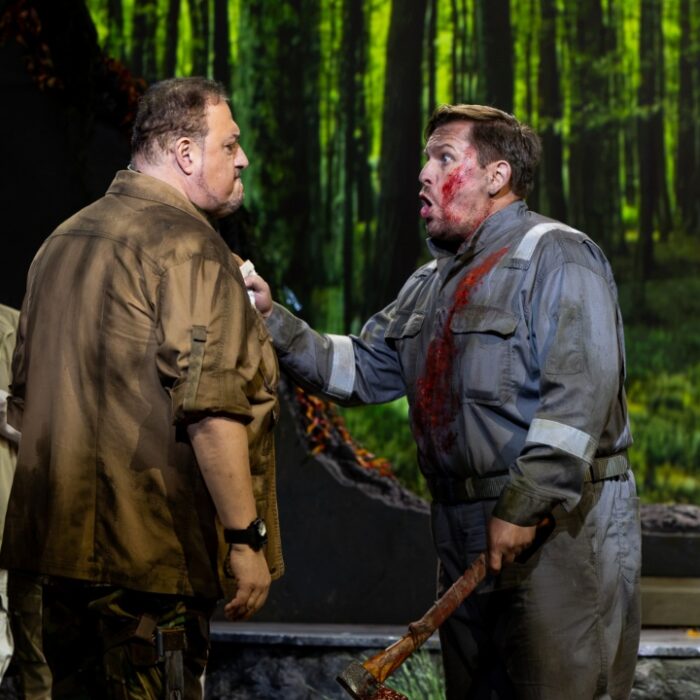
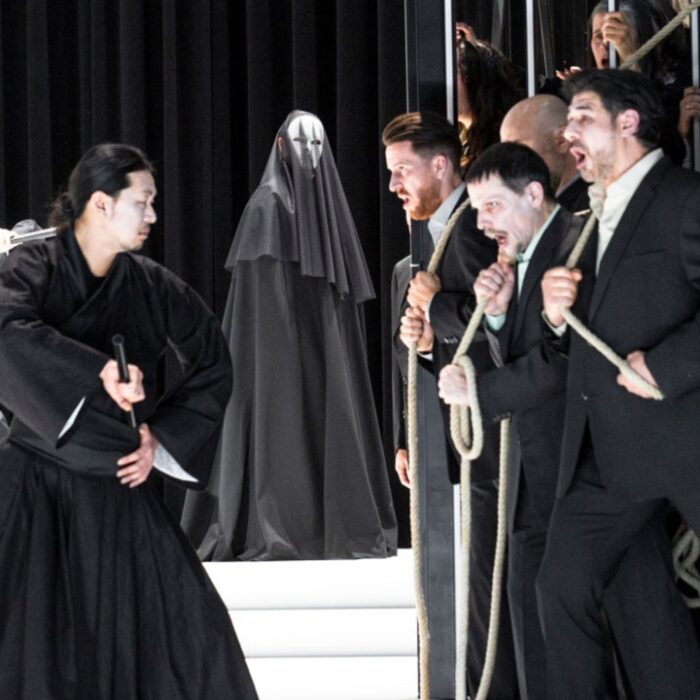
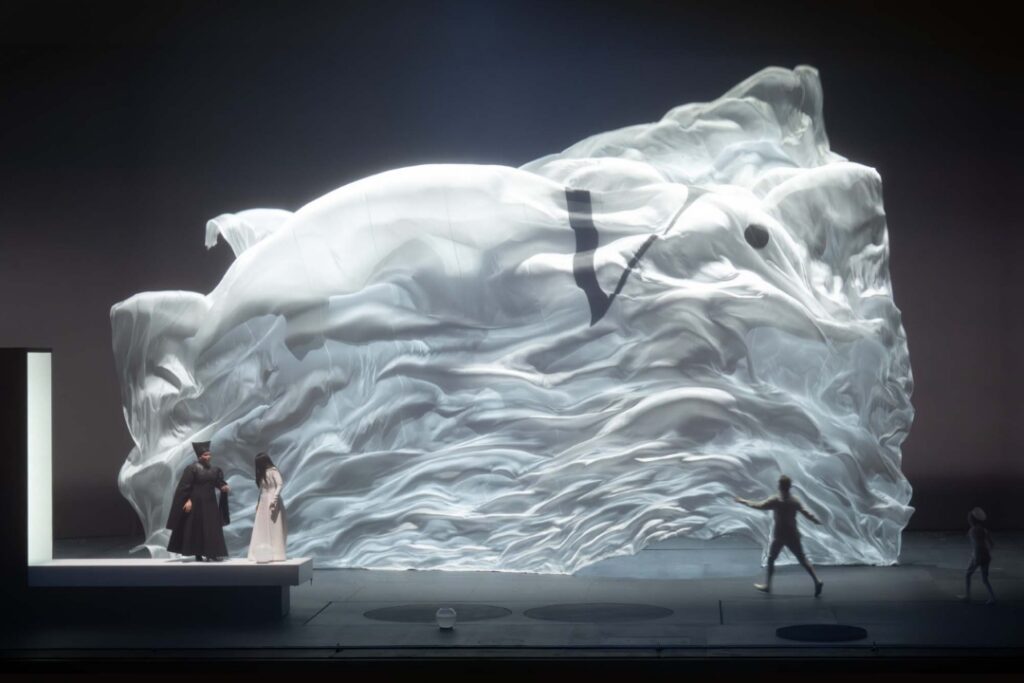
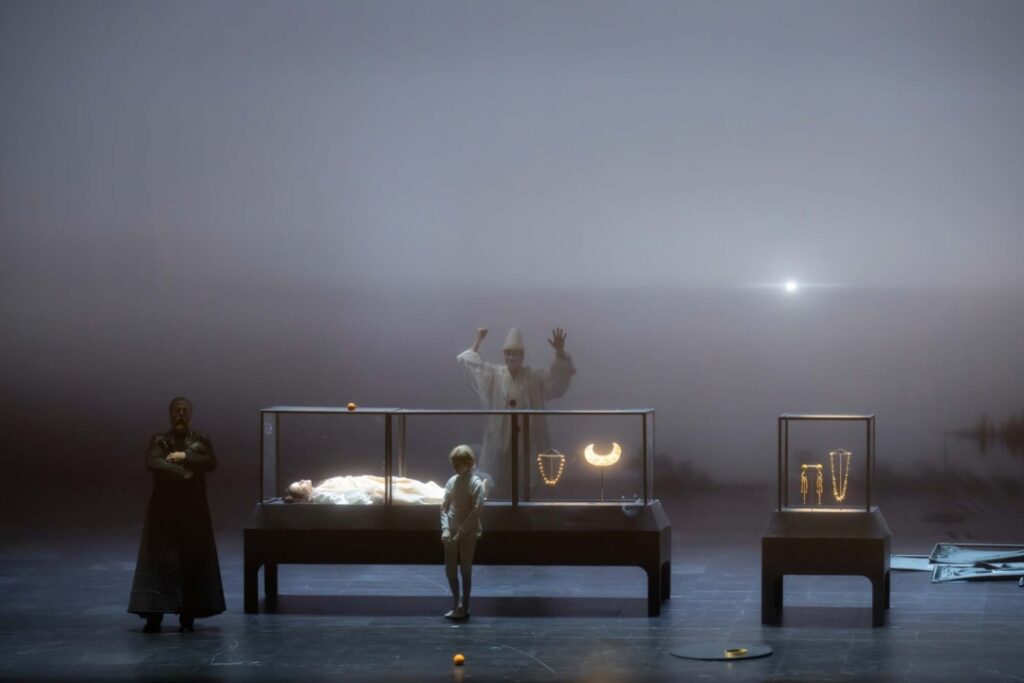
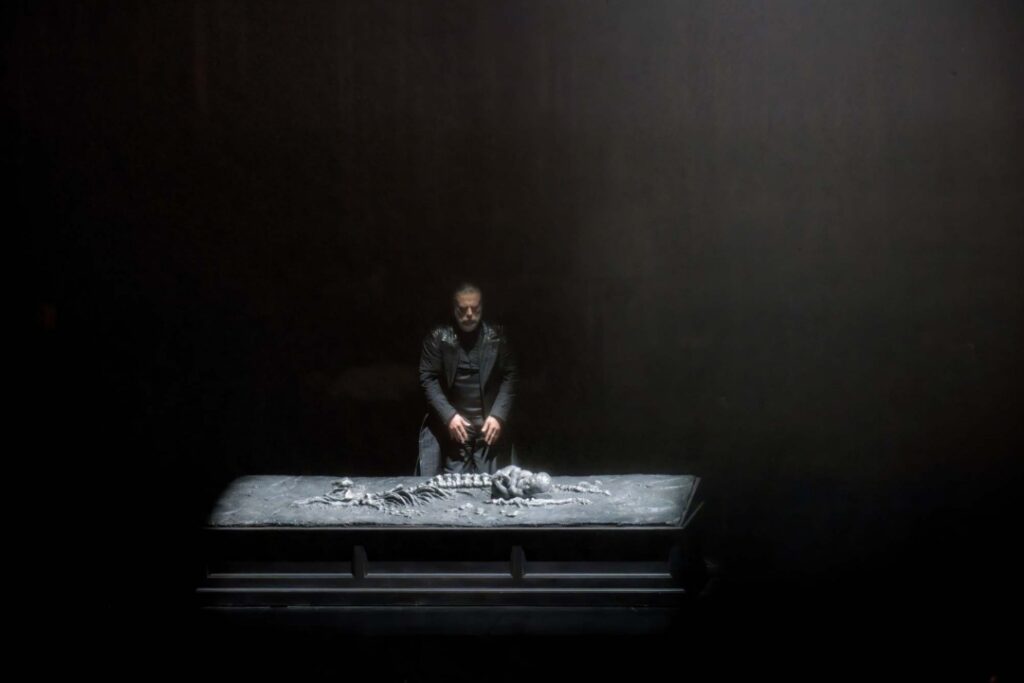
Much of that success lies in the hyper-inventive production signed by Romeo Castellucci, who, in his long-awaited Scala debut, approaches Debussy’s universe with remarkable fidelity. The stage director himself describes the production as “low-temperature theater” where emotions are not absent, but rather veiled. He proposes a dramaturgy rooted in restraint rather than acceleration: a contained force that ultimately erupts through a stage stripped of excess, though every element is charged with meaning. The scenic concept, conceived entirely by Castellucci himself–including sets, costumes, and lighting–places the entire action within a dimension, as though unfolding inside a dream. The visual palette is reduced to its essentials, constantly evoking the sense of coldness to which the director alludes: shades of gray, white, and black dominate the stage, interrupted only by flashes of red and gold, while light shapes the space and creates relationships between the characters beyond their mere physical presence.
Water, both a metaphorical and literal recurring element, permeates the entire production: poured over the lovers in a kind of baptismal ritual, evoked in Mélisande’s hair, suggested as an element of cyclical beginning and end. Symbolic objects are equally present: oranges, circular forms, glass display cases, threads that transform into cards, and structures that constantly change shape and position, exactly as happens in dreams. Castellucci thus succeeds in visually translating Debussy’s music and the opera’s impressionistic, dreamlike, and conceptual universe.
(Photo: Monika Rittershaus / La Scala)
Musical & Cast Highlights
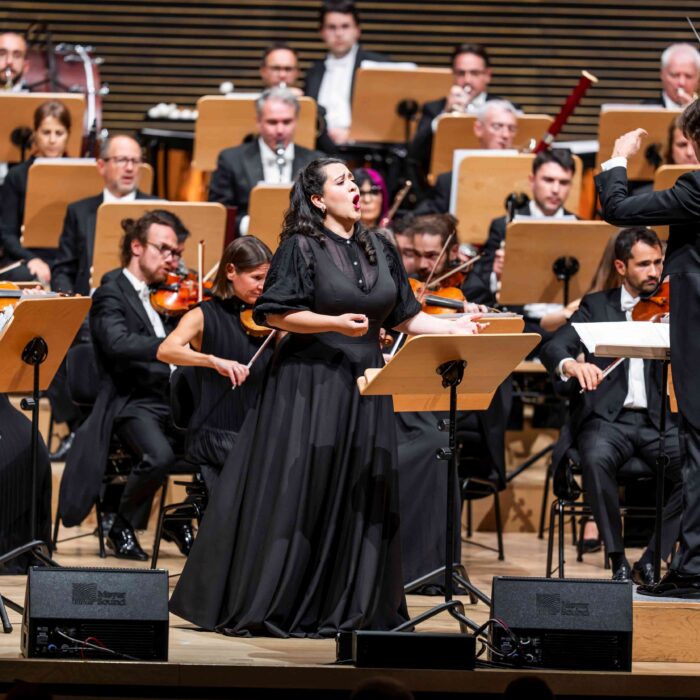
The musical side of the production proved equally fortunate, as Maxime Pascal’s conducting convinces completely. The conductor, a regular guest at La Scala for contemporary repertoire and a recognized specialist in twentieth-century music, approaches the score with rigor and clarity, ensuring a precise and balanced reading that remains constantly attentive to the music’s uninterrupted flow. The Teatro alla Scala Orchestra responded with unquestionable quality, producing a compact and controlled sound in which the transparency of timbre and the subtle nuances so characteristic of Debussy’s language emerged with striking clarity.
The vocal cast, meanwhile, stood as one of the production’s strongest pillars, achieving a convincing balance between technical quality and stylistic appropriateness. Tenor Bernard Richter as Pelléas, distinguished himself through a luminous, well-projected voice endowed with the flexibility required by a role that demands nuance more than sheer volume. The singer’s refined and sensitive phrasing shaped a believable character imbued with melancholy and youthfulness.
Sara Blanch as Mélisande represented one of the production’s highest points. The soprano combined impeccable French diction with a remarkable ability to shape the vocal line with constant expressive richness, bringing to life a fragile, enigmatic, and deeply human figure. Her full-bodied emission and velvety voice adapted intelligently to a particularly complex musical writing, confirming an artistic maturity of the highest level.
Equally outstanding was baritone Simon Keenlyside, who approached Golaud with the authority of a seasoned interpreter, fully conveying the complexity of a character torn between love, jealousy, and violence. The singer’s voice retained its homogeneity, power, and flexibility, along with an appealing dark timbre, while his incisive phrasing lent the character remarkable tragic intensity.
Bass John Relyea as Arkel contributed an imposing stage presence. Thanks to a deep and solid vocality, combined with an impressive lower register–cavernous, dark, and consistently resonant–the character unfolds with complete authority. Contralto Marie-Nicole Lemieux, in the brief role of Geneviève, stood out for the beauty of her timbre and the elegance of her singing, while Alberto Tibaldi, a young member of the theater’s children’s chorus, surprised with his stage confidence and remarkable musicality in the role of Yniold, bringing freshness to a delicately woven musical texture, in addition to displaying impeccable French pronunciation.
The enormous final ovations for the cast sealed the evening’s success and confirmed that this new production of “Pelléas et Mélisande” at La Scala possesses undeniable artistic value and, thanks to an intelligent staging, retains its power to fascinate and unsettle.
(Photo: Monika Rittershaus / La Scala)