Teatro alla Scala 2025-26 Review: Jakub Józef Orliński and Michał Biel’s Recital
By Bernardo Gaitan(Photo: Brescia e Amisano © Teatro alla Scala)
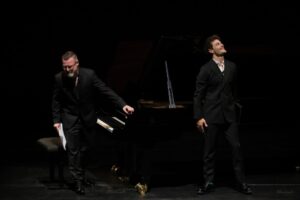
At a historical moment in which Baroque singing has ceased to be a field associated with relatively small circles of enthusiasts and specialists and has instead become a central component of programming in the world’s leading opera houses, few figures embody this transformation more effectively than Jakub Józef Orliński. The Polish artist now occupies a privileged place within this phenomenon. To mark his debut at the ultimate temple of Italian opera, Teatro alla Scala, a production was chosen that embraced an atmosphere far removed from any unnecessary theatrical spectacle. This was not only Orliński’s debut, but also the first piano recital dedicated to a countertenor in the theatre’s history.
Orliński’s career has long transcended the traditional boundaries of the operatic world, not only because of his undeniable talent but also thanks to his overwhelming charisma, his ability to connect with audiences of all ages, and his distinctive way of rejuvenating the Baroque genre. His physical appeal, combined with an aura of a rockstar–or rather, an authentic “Barrock Star”–has contributed to shaping a singular artistic identity. Admired by audiences at the world’s great opera houses and having become a true media phenomenon, the singer has redefined the contemporary image of the Baroque performer. His stage presence breaks with conventional models: athlete, performer, singer, and an artist capable of creating an immediate connection with highly diverse audiences.
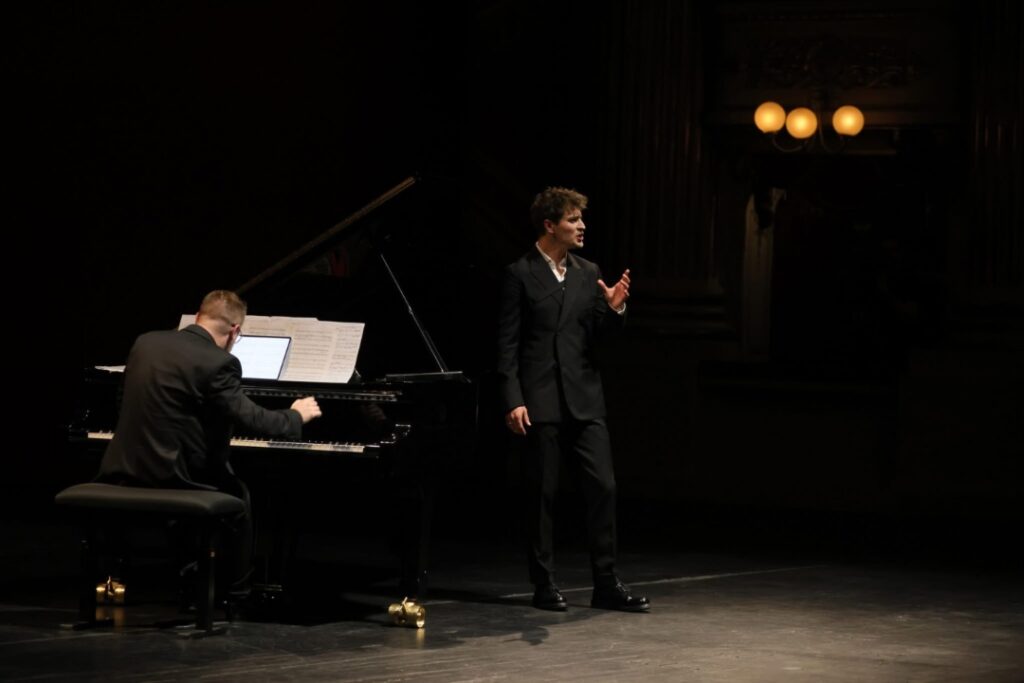
Particularly important and remarkable was the presence of Michał Biel at the piano: fellow countryman, artistic collaborator, and even a close personal friend of the singer for many years. The decision to present the recital with piano rather than a Baroque orchestra proved especially intelligent: the stripped-down format forced attention to focus entirely on the voice, the text, and the expressive construction of the musical discourse.
(Photo: Brescia e Amisano © Teatro alla Scala)
The program itself revealed a deeply personal intention. Far from limiting themselves to a conventional journey through Baroque pages, Orliński and Biel designed an itinerary alternating Handel and Purcell with Polish songs from the twentieth century and late Romanticism, many of them drawn from their most recent recordings. Everything unfolded through an introspective lens and a constant search for expressive delicacy. Naturally, however, the principal interest of the evening lay in Orliński’s singing itself. And it was precisely there that an extraordinarily singular vocal personality emerged within today’s countertenor landscape.
Orliński’s voice is pure, healthy, and appealing; in a certain way, it represents an ideal of what a countertenor voice sounds like. The timbre possesses an immediately recognizable beauty: smooth, seductive, yet at the same time youthful and fresh. There is no constant need to demonstrate vocal virtuosity, something that often ends up becoming little more than an exercise in technical display. Nevertheless, his upper register is strikingly beautiful, the coloratura clean and perfectly placed, while the lower register, which would roughly correspond to the central register of a tenor, possesses an uncommon beauty. His natural voice carries body, masculinity, and elegance: truly impressive.
His intonation proved irreproachable and his musicality reached truly extraordinary levels. Every phrase appeared carefully shaped together with Biel, as that rare complicity so difficult to find in a voice-and-piano partnership was clearly evident: a degree of mutual understanding that both artists achieve admirably. The pianist possesses extraordinary sensitivity in accompaniment; needless to say, he never once covered the singer’s voice. Every melodic line seemed to breathe alongside Orliński with complete naturalness, and the articulation maintained exemplary clarity, particularly in the slower pieces. His pianissimi made a particularly strong impression, always resonant and deeply expressive. Between the two artists there exists an evident artistic chemistry, built over years of shared work.
The Handel selections perhaps offered some of the most representative moments of his interpretative artistry. In “Voi che udite il mio lamento” and “Un zeffiro spirò,” the vocal line unfolded with admirable control, the legato developed with complete elegance. Later, “Coronato il crin d’alloro” and especially “Siam prossimi al porto” once again allowed the audience to appreciate the precision of his coloratura and a vocal agility that always remained clean and never merely exhibitionistic.
Purcell found in the Polish performers particularly inspired interpreters. “Sweeter than Roses” was imbued with extraordinary delicacy, while “What Power Art Thou” allowed darker vocal colors and a more introspective expressive character to emerge. Yet perhaps the greatest surprises came with the Polish songs by Tadeusz Baird and Mieczysław Karłowicz. There, the Baroque interpreter disappeared, giving way to a much more personal, patriotic, and almost intimate dimension. The linguistic and cultural connection seemed to generate an especially intense emotional proximity. In these pages, melancholic shades and a narrative sensitivity emerged that gave the recital an unexpected depth.
(Photo: Brescia e Amisano © Teatro alla Scala)
Before concluding the program with Handel’s anticipated “Furibondo spira il vento” from “Partenope,” inevitably destined to become one of the evening’s most brilliant moments, he addressed the audience, as he had done at different points throughout the recital, always in impeccable Italian. Orliński appeared natural, genuine, and extraordinarily warm towards the Milanese audience: he joked, sent heart gestures with his hands in response to applause, and maintained a spontaneous and affectionate relationship with the hall. During this brief speech, he also revealed a particularly admirable human side in addition to his artistic one, first thanking Teatro alla Scala for the opportunity to make his debut, Rolex for sponsoring the concert and travel bills, his parents, and Solal Del Castillo, his manager. These were expressions of gratitude directed toward people of immense importance who are usually reduced to little more than a mention in the programme booklet, but whom Orliński chose here to bring into the foreground.
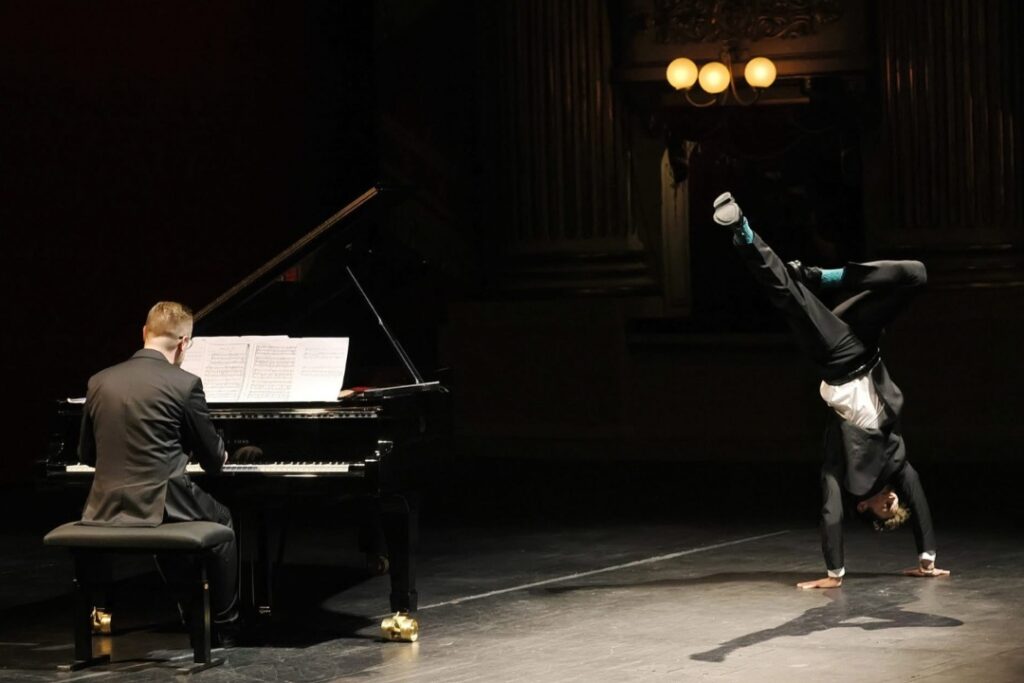
During the encores, all filled with delightful musicality, the ovations continued to grow progressively stronger. But the true moment of apotheosis arrived with Purcell’s “Strike the Viol,” when unexpectedly, as the piano began its energetic introduction, Orliński suddenly dropped to the floor and performed several moves from his familiar breakdance repertoire. Naturally, the audience responded with uncontrollable applause and ovations. After five encores filled with emotion, the long final applause and a standing ovation from the entire theatre brought to a close an electrifying evening that sealed the Polish singer’s Scala debut with resounding success.