Monteverdi Festival Cremona 2026 Review: L’incoronazione di Poppea
Benedetta Torre & Maayan Licht Star in Monteverdi’s Last Surviving Opera
By Jennifer E. Pyron(Photo: Lorenzo Gorini)
Claudio Monteverdi’s “L’incoronazione di Poppea” (first performed in 1643) was the composer’s last opera to have survived into the modern day. His works’ left a lasting impression on the Baroque period that continues to resonate today. Monteverdi’s music in “L’incoronazione di Poppea” is a palette of emotional expression, evolving and expanding into worlds of heightened complexity. Monteverdi makes his opera’s drama uniquely of his own imagination while telling a story from the real world. He meditates on real characters – Nero, the Emperor of Rome, and Poppea, his consort. The opera examines the excruciating moments in one’s life that change the course of one’s destiny. The opera leaves one asking a myriad of questions surrounding the consequences of giving into desire, lust, vengeance, and greed – how far will one go, how much will one sacrifice, for love and power?
(Photo: Lorenzo Gorini)
Production and Musical Details
Monteverdi Festival Cremona pulled out all the stops, making this featured work’s new production a distinguished choice. The June 20th performance included director Roberto Catalano, conductor Paul Agnew, Orchestra Les Arts Florissants, soprano Benedetta Torre (as Poppea), male soprano Maayan Licht (as Nerone), mezzo-soprano Mara Gaudenzi (as Ottavia and Virtù), countertenor Agustín Pennino (as Ottone), bass Federico Domenico Eraldo Sacchi (as Seneca), soprano Lucía Martín-Cartón (as Drusilla), contralto Alessandra Visentin (as Nutrice), tenor Luca Cervoni (as Arnalta and Famigliare), tenor Jorge Navarro Colorado (as Lucano, Soldato I and Famigliare II), tenor Matteo Laconi (as Liberto and Soldato II), baritone Giacomo Nanni (as Mercurio, Littore and Familgliare III), soprano Sarah Fleiss (as Fortuna and Damigella), soprano Sarah Hayashi (as Amore and Valletto), and soprano Silvia Porcellini (as Pallade).
(Photo: Lorenzo Gorini)
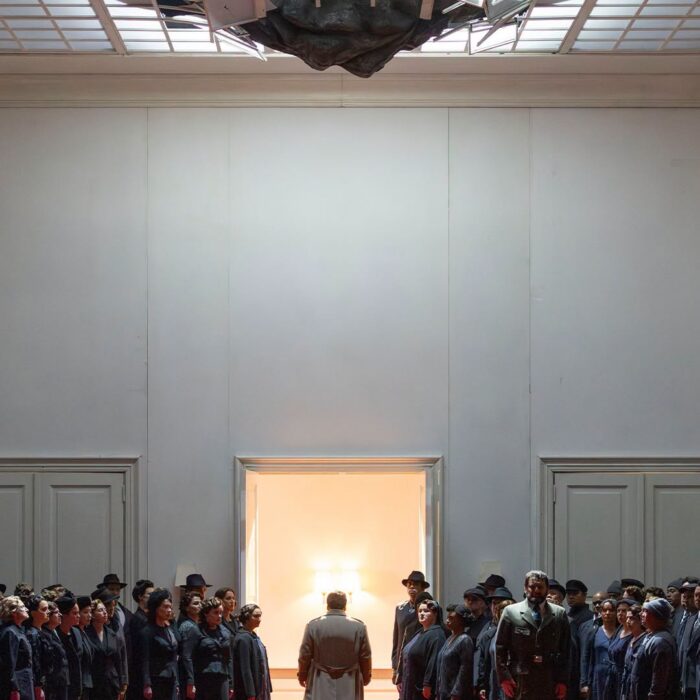
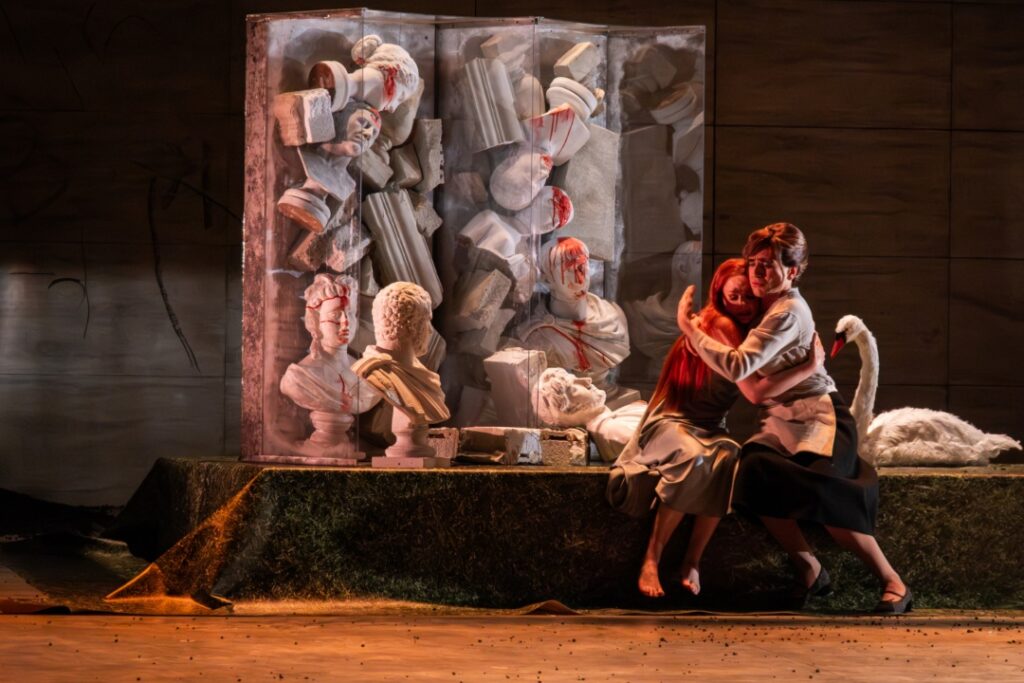
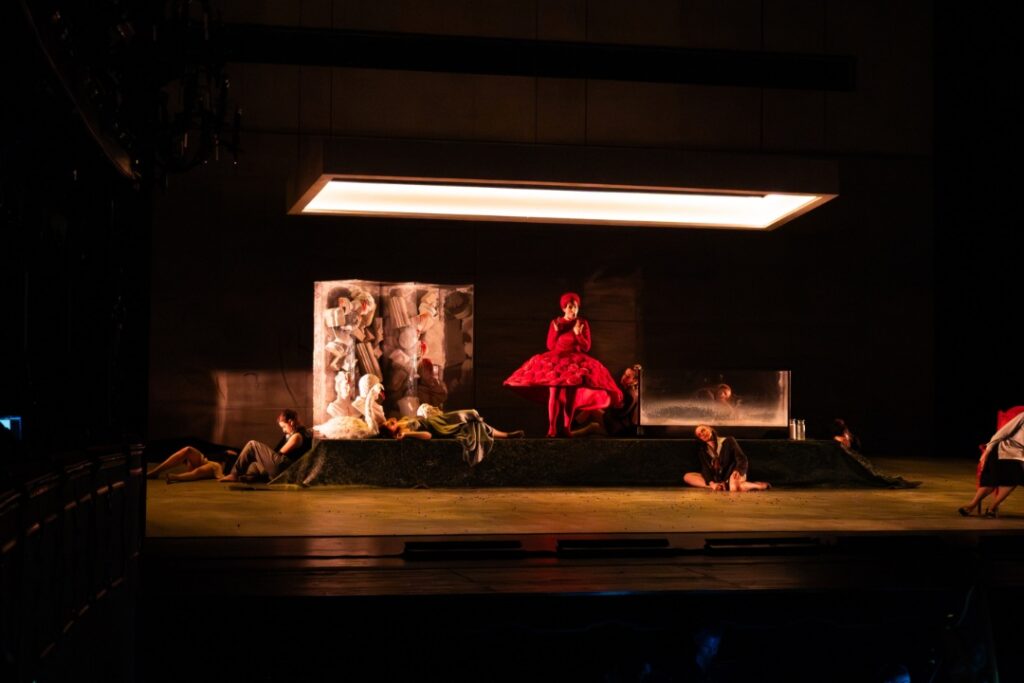
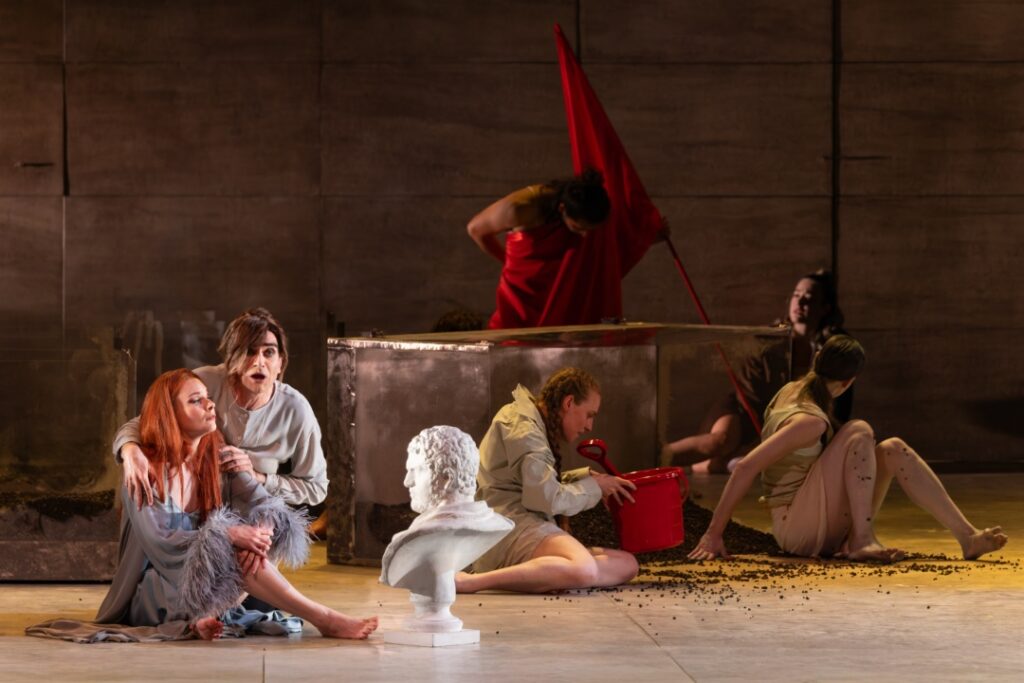
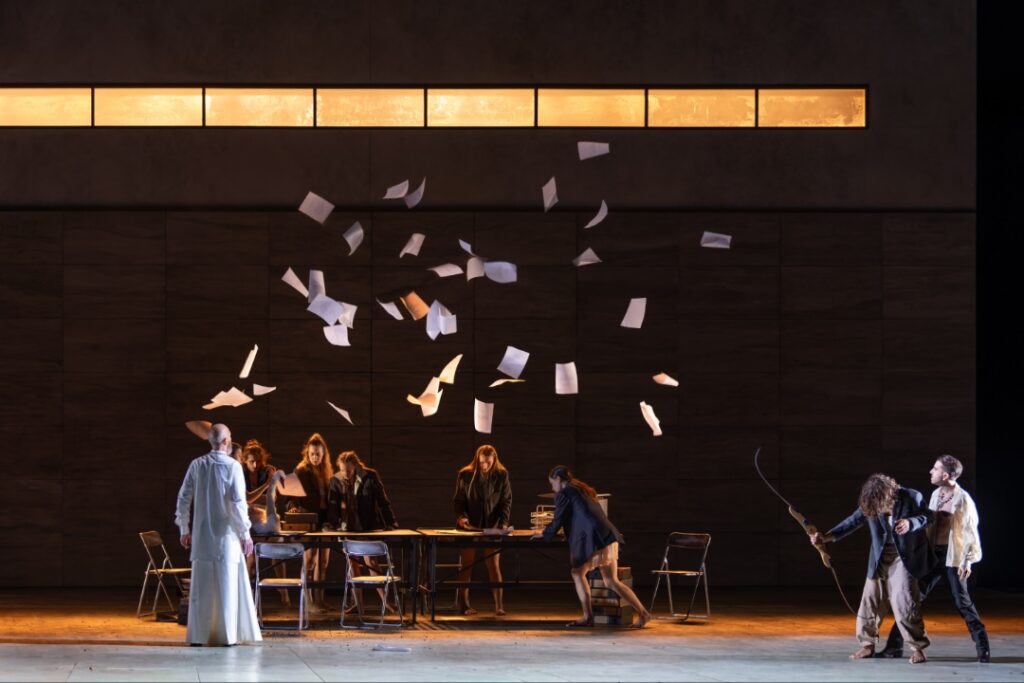
Catalano’s vision was realized as a hyper-focused multitasking of contemporary set designs managed by seven mimes paired with a cast of singers who interplayed through their passions but never grasped the point of Monteverdi’s opera: the music and the libretto. There were countless moments where the audience were expected to follow the story through the choreography, consequently losing their place in the libretto. The most impactful part of “L’incoronazione di Poppea” is the music. There is no need to reinvent the interpretation of it through contemporary symbolism that distracts and disassociates from the libretto. Set designs included glass boxes where the mimes lay, were brought to life, given articles of clothing by dangling wires to dress themselves, and stepped out into their new surroundings. Other moments had them ripping the back wall’s stone tiles out, letting the dirt behind pour onto the stage. While a contemporary lens is important to evolve opera, a compulsion to over-exaggerate often distracts from the music, the libretto, and the singing.
(Photo: Lorenzo Gorini)
Cast Highlights and Lowlights
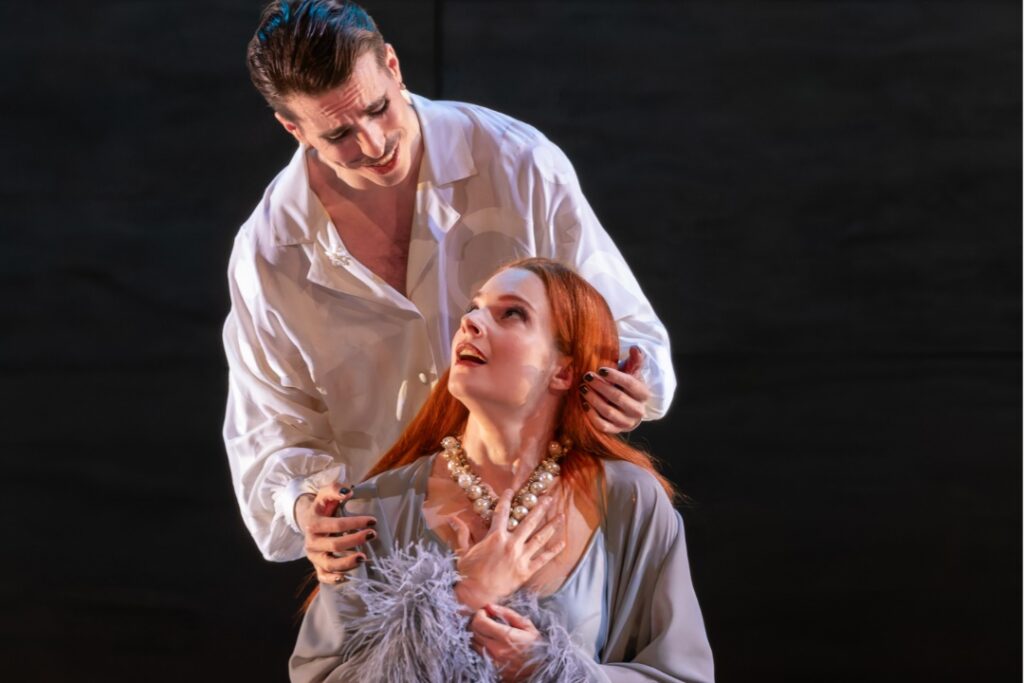
Torre as Poppea led the cast with her excellent vocal performance and acting. Her Poppea was grounded in her vocal technique and never strayed from the music’s precision and the libretto’s high expectations for interpretation. Highlights included her singing “Signor deh non partire,” “Speranza tu mi vai,” “Come dolci signor come soavi,” and most especially “Pur ti miro.” Torre’s vocal palette completely expressed her emotions and her vocal phrasing was balanced with the Orchestra Les Arts Florissants’ tempi and Agnew’s direction. She was the backbone of this production and rose to the occasion of celebrating Monteverdi at this year’s festival through her dedication to his composition.
(Photo: Lorenzo Gorini)
On the other hand, Licht as Nerone had a different style of interpretation that both contributed to the confusing character of the production and distracted the audience with erratic mannerisms and vocalizations. Licht’s Nerone lacked focus. His singing during “Come nube che fugge” was out of balance with the orchestra in both volume and intonation. Licht appeared focused on his own interpretation as a means of showcasing his vocalizations without regarding either the humanity behind the music or the humanity unfolding around him onstage. He portrayed Nerone as a wild and deeply troubled character plagued by an exhausting ego. Even during his duets with Poppea, “Signor deh non partire,” “Come dolci signor come soavi,” and “Pur ti miro,” Licht’s performance was one-sided, without apparent interest in creating emotional chemistry with Poppea beyond writhing on the ground and singing louder than her.
(Photo: Lorenzo Gorini)
Sacchi as Seneca was outstanding. His voice and acting during “Ecco la sconsolata,” “Solitudine amata,” and “Le porpore regali e imperatrici” highlighted Monteverdi’s intentions for this character. Gaudenzi as Ottavia and Virtù also gave a sound interpretation of the score. Gaudenzi’s voice was clear, resonant, and exact in her phrasing and diction. Martín-Cartón as Drusilla also gave great vocal clarity and resonance to her role. Both Gaudenzi and Martín-Cartón were breaths of fresh air onstage, in the face of everything going on around them. Pennino as Ottone was expressive in his role and vocal emotions. Colorado as Lucano, Soldato I, and Famigliare II was memorable in all his roles for his vocal performance and stage presence. Colorado’s duet with Nerone, “Or che Seneca e morto,” was aligned with Monteverdi’s score, being both emotionally and vocally resonant.