Q & A: Tanisha Mitchell on ‘Opera Talks’ & Educating Audiences
By Lisa Winkler(Photo: Nicole Austin)
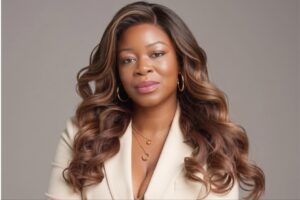
Opera has long carried a reputation for exclusivity, an art form perceived as belonging to concert halls and formal dress rather than community rooms and public library shelves. Tanisha Mitchell has spent years working against that perception, building a platform that treats opera not as a rarefied pursuit but as a living tradition worth sharing anywhere an audience is willing to listen.
As the founder and CEO of Opera Talks (operatalks.com), Mitchell pairs her dual training in classical music with her career as a librarian. A native New Yorker who grew up in Long Island, she has built an arts outreach company that brings opera lectures to audiences using technology, artifacts, and her own singing, turning what could be a dry academic exercise into something immediate and personal.
OperaWire caught up with Tanisha in between her busy presentation schedule.
OperaWire: What is Opera Talks?
Tanisha Mitchell: Opera Talks are educational conversations about opera and classical music to audiences in libraries, community centers and performance spaces. It now offers 27 programs and an additional series called “I Hate Classical Music” which offers six programs that include an animated orchestra for audience interaction.
OW: How did your interest in opera evolve?
TM: When I was about eight years old, my mother introduced me to the incomparable Jessye Norman in an infomercial about classical music CD’s. I was fascinated. Then during a ninth-grade chorus audition, my choral teacher told me I possessed a naturally operatic voice, and introduced me to the artistry of Maria Callas. That spark led to years of dedicated voice lessons, music theory, and choral ensembles throughout high school.
At sixteen, I worked as a library page in my public library, where I found myself surrounded by vast collections and research databases that allowed me to investigate the operatic world on my own terms. This dual passion for performance and research followed me through rigorous vocal performance and music theory training at Queens College.
OW: Yet you still went on to become a librarian?
TM: Yes! I wanted to become a music librarian and archivist, so I pursued a graduate certificate. And that’s where my two passions converged. I landed an internship at the Metropolitan Opera music library, where I began to understand how performances work behind the scenes.
OW: Can you tell us about the history of Opera Talks?
TM: In 2015 I was promoted to hire presenters for the art lectures and classical music series at the Freeport Memorial Library. Although I was already an opera singer with a music degree, I wanted to learn more about the programs. I attended a classical music program about conducting that was presented through videos and a speaker who would comment about the performers. I said to myself: “I can do this with opera.”
After the event, I thought long and hard about the program I just attended at the library and what I could do. I landed an internship at the Metropolitan Opera in the music library and was hired to do special projects. I was at the Metropolitan Opera for five years and learned a lot about behind-the-scenes techniques and other rare knowledge in opera productions. I believed that somehow, I could create programming with not only what I knew as a singer but also what I knew as a music librarian and archivist.
Yet, I was very nervous because I never saw anyone that looked like me present opera lectures. Would I be hired? Would my programming satisfy an audience?
OW: How did you proceed?
TM: My mother and a colleague encouraged me to forge ahead. I created a prototype presentation called “Opera 101” for people who didn’t know about opera. During my work, I realized that I needed to come up with a name and a logo for these presentations. I liked the image of a chandelier as a logo because to me it represents elegance like opera. I didn’t want clichés like curtains or opera glasses. I came up with the name “Opera: Steps to the Stage” because I wanted more than opera stories, and the process in how opera is created. A friend designed my website.
I began with presentations at local libraries in Nassau County, Long Island. These then spread to Suffolk County, New York City, New Jersey, Connecticut, Pennsylvania, and Florida within a span of eight years.
OW: What were some early challenges?
TM: Marketing wasn’t easy. I had no budget and had to research how to market with little money. I created an email list of libraries and postcards announcing the programs. I only had three programs to offer: “Opera 101,” “Opera in Ebony–Tribute to Black Singers” and “Goyescas” by Granados.
OW: The Metropolitan Opera Guild invited you to present “Opera Steps to the Stage” as a part of the 2019-20 Metropolitan Opera season. What was that like?
TM: Fabulous! I gave lectures to guild members before opera performances. I continued to partner with the Metropolitan Opera Guild even during the pandemic after the opera company’s closure for over a year.
OW: How did the pandemic affect your work?
TM: All of my scheduled opera lectures were cancelled in March 2020. However, it proved to be a blessing in disguise. Around the same time, I researched software for webinars and learned about Zoom. Before the software became ubiquitous for remote programming that year, I learned as much as I could to offer opera programming online. That year, my business grew to virtual programming and gained new locations on the East Coast. For the first time, I presented at places I never visited. It was a meaningful experience to connect with people online during a difficult time in the world. I was honored to help people escape through beautiful music and history.
OW: You also created “Opera’s Critical Point.” Can you describe your mission?
TM: Rather than a separate endeavor, I view “Opera’s Critical Point” as the natural, analytical evolution of the Opera Talks lecture series. “Opera’s Critical Point” is the financial and institutional lens. I realized that while audiences loved the performance aspect, they were equally fascinated by the internal mechanics of the industry: the balance sheets, fundraising frameworks, and institutional sustainability. By creating “Opera’s Critical Point” I would give them a 360-degree view of the art form, bridging creative passion with the fiscal reality.
OW: Do you have a favorite opera?
TM: Yes. “Il Tabarro” (1916) by Giacomo Puccini. I love it because it explores the depth of love and rage at the same time.
OW: Any closing thoughts?
TM: Never did I imagine where opera would take me in ten years. It’s a privilege to share my gifts through Opera Talks. I am grateful for the direction that Opera Talks is going and am excited about the future.

Stories you may also like…
Q & A: China Now Music Festival Artistic Director Jindong Cai on Celebrating America’s 250th Anniversary Through Chinese-American Experience
Q & A: Victoria Frances Young on Her Fixed-Media Operatic Work ‘Breaking News’