Q & A: Rachael Wilson on the Role of Fatima in Weber’s ‘Oberon’
By Mike Hardy
Admired for her dramatic intensity and vocal versatility, mezzo-soprano Rachael Wilson is rapidly earning distinction across a wide and varied repertoire. A graduate of The Juilliard School, she was a member of the Opera Studio at Bayerische Staatsoper, later joining their Ensemble between 2015 and 2019. Since 2019, she has been a member of the Ensemble at Staatsoper Stuttgart. She is a recent recipient of the honorary Bavarian Art Prize.
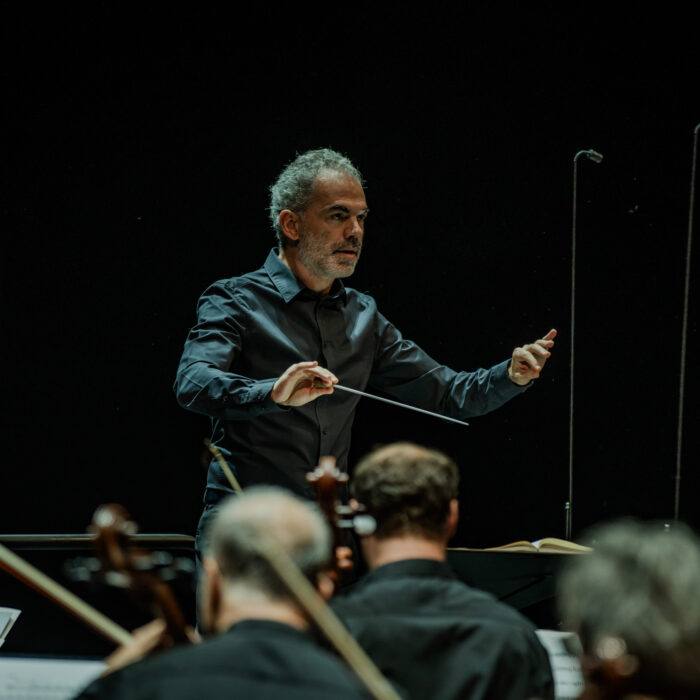
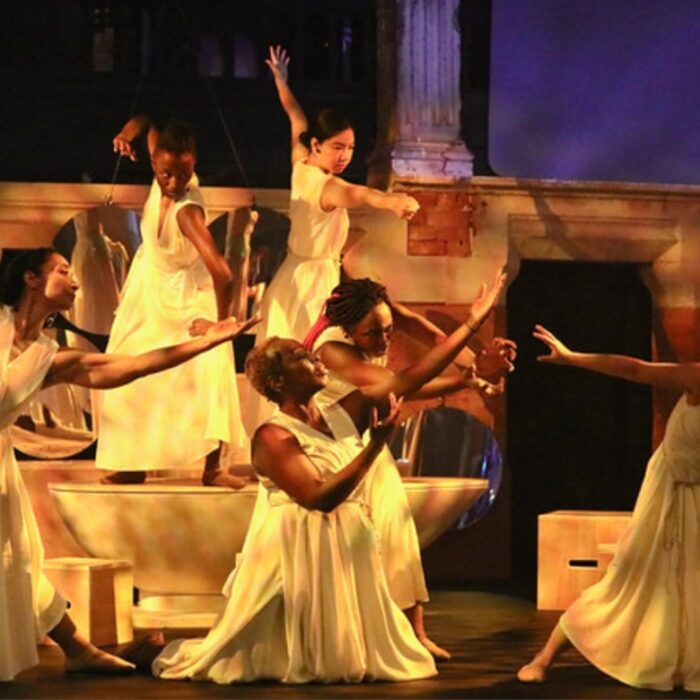
On August 6th, she will sing the role of Fatima in a semi-staged production of Carl Maria von Weber’s “Oberon.” Sir Mark Elder conducts the Orchestre Révolutionnaire et Romantique, Monteverdi Choir and star soloists, with Tamsin Grieg narrating. Described as “one of the most remarkable combinations of fantasy and technical skill in music,” Weber’s final opera – first performed 200 years ago – follows the battle of wills between Fairy King and Queen, Oberon and Titania.
It will be broadcast live on BBC Radio 3 and will be available for 30 days on BBC Sounds.
Rachael spoke with OperaWire from her current home in Berlin.
OperaWire: Congratulations on your upcoming BBC Proms debut. What was your first reaction when you knew you were doing this debut?
Rachael Wilson: I was excited when my manager called me and asked me if I’d be interested in doing the Proms performance. I asked, “Is that even a question?!” (Laughing).
OW: Tell me a little about yourself. Of course, I know you’re American, but I believe your life and career has been centered in Germany?
RW: Yes. I live in Berlin right now, and I’ve lived here for about 15 years, since 2013, when I arrived in Munich to join the opera studio, and I was in the ensemble there for several years. Then around four years after that is when I first did “Oberon.” After that I went to Stuttgart, and now I’m freelancing.
OW: Tell me about your repertoire. Looking at your past and upcoming performances, I see what I would consider to be a fairly niche repertoire, not one that I would expect of most mezzo-sopranos. Would you agree with that?
RW: I think you’re absolutely right. You’ve picked up on something very true, which is that I do not sing or follow any sort of expected trajectory of what a mezzo would sing. I also jump around between voice types; contralto, soprano, mezzo. It’s mostly that I’m really drawn to certain characters. It’s a question of if the character speaks to me. I mean, there’s no universe where I’m going to sing coloraturist soprano repertoire, but somehow, I feel I can will my voice to the repertoire if I really love the character.
I just sang Blanche in “Dialogues des Carmélites” and I just finished a Venus in “Tannhäuser,” and now I’m going back to this beautiful, luscious mezzo Fatima from “Oberon.” The Handel, which I just did in the fall with the English concert, we went on tour, that was actually a totally unexpected gig. I had done “Don Giovanni” in Santa Fe with Harry Bickett. And when we were there, he heard something in the way I was performing Elvira and asked me to sing Armida in “Rinaldo,” which I was delighted to do. I was so excited to work with him, but didn’t really know the part, so when I looked at it I thought, “Oh my gosh! What have I done? What have I agreed to?” This is really hard soprano repertoire. But then I loved the character and he was absolutely right. It suited me so well.
OW: I understand you’re quite recently a mother, also. Did you find that motherhood had any effect on your voice at all? Many sopranos I have spoken with have said that after having a baby, their voice has changed, sometimes for the better, but not always.
RW: I have a one-and-a-half-year-old daughter. I think it can be such a mystery, how your body will react to that. I felt thankfully quite well in my singing after I had her. And it’s hard to say if it’s hormones or just because I’m older now but you also have this totally different life experience that settles you a bit. And I think maybe there’s this certain release of control, because you have to do that with a child, that suddenly allowed me to sing higher repertoire and kind of let the voice go, with regards to high notes. I feel like I was more timid about it before. I think it was always there, but I maybe was a bit afraid of it or something.
OW: So tell me about your upcoming BBC Proms performance, Weber’s “Oberon.” I know it is a role you have performed previously, but I also believe it’s notoriously difficult to produce. How are rehearsals going?
RW: Well, I’m honestly very thrilled to be singing Fatima again. What’s really interesting about doing it again, almost 10 years later, is that when I originally did the piece in Munich, we sang it in German. And I’ll have to admit; I didn’t know at the time that German wasn’t its original language. It was rewritten shortly after its composition, but it premiered in England, in Covent Garden. So, actually, the original language is English. It’s very strange to relearn the role in a new language. It’s difficult trying to figure out now how to sing certain rhythms with the right intonation and things like that. Also, of course, I am an American, so I have to adopt my lovely British accent, (laughing). But thankfully Fatima probably has, when you just look at the page, the simplest music of the piece. And I think that’s really her charm. It’s very lyric, it’s very human and warm and just lovely melodies. They’re almost like a repose in the whole opera.
The two lead lover roles, Huon and Rezia, are extremely hard to cast and they’re very, very difficult roles to sing. I’m really excited about the casting because I think both singers are just remarkable: John Findon and Jennifer Davis. But John’s tenor role, is close to impossible to sing because you need that sort of Mozart quality; a certain flexibility in the voice, but also something close to a heldentenor because it’s very dramatic. It requires weight and longevity. And he’s just going to be wonderful in it.
It’s also similar to the way Rezia is written also. It’s dramatic with coloratura and long. But yes, I get to just enjoy the evening and sing very pretty, lovely music and enjoy the colors and the orchestra. I think it’s great, (laughing).
OW: How do you feel it compares, having to sing it in English, having already sung it in German; a language which I presume you have a good command of? Did you feel a better emotional connection, singing in the composer’s native tongue, and do you feel it loses something, being sung in English?
RW: That’s a really interesting question. When I first looked at it, I thought it was so strange. Just trying to get it in my voice. But the strangeness of it is more that I don’t get the pleasure of singing in English very often. So, as I was singing it more and more, I just thought, “Oh, this is really nice.”
It just opens a whole other level of freedom and improvisation because English is my natural speaking language. I can add maybe some different colors that I maybe wouldn’t otherwise consider because perhaps there is a word in German that I maybe know only one singular translation for that word. But so many words have different meanings depending on how we say them. So, I think it opens up a lot of opportunities in my native language.
OW: So, what’s next after “Oberon” for you? Some Handel, I believe?
RW: Yes, actually, I’ll do some concerts in America with “Alexander’s Feast” and quite a few “Messiahs.” But I’m excited just to be in the States. I don’t get to perform there very often, so it’ll be lovely to just be able to invite family and friends to see some things.
And then I have two things this coming season I’m really looking forward to. Right after the BBC Proms, like the day after, I’m going to New York to this very interesting festival called “Little Island’s.” I’ll be doing two recitals there with Anthony Roth Costanzo. And what I love about it is it’s just such a contrast to the BBC, it’s quite experimental, minimalist music, and that’s really just how I like it. I love that I’m getting to fulfill my classical thing and the next day I get to do something quite strange.
Then I will be debuting the role of Alceste in Vienna at the Theater an der Wien at the Vienna Easter Festival. Then I’ll be singing Maria in “María de Buenos Aires,” which is a very interesting tango opera, a surrealist Spanish opera. I’m giving you some interesting things to investigate, (laughing). I’m experimental, I am, but I kind of like to do almost everything!
OW: Given we’ve agreed you have a niche repertoire, tell me something that you really aspire to do. What role would you love to perform?
RW: Well, to be honest, some of the stuff I’m doing right now is what I really would like to do. I would love to sing Blanche in the “Carmelites” again. I loved singing this role. It was probably my most favorite thing I’ve ever sung.
Charlotte in “Werther.” I really love, that kind of high French repertoire. Alceste, that’s coming up and I’m so looking forward to it. I do have a dream role, which is Marie in “Wozzeck.” I find “Wozzeck” to be an incredible opera. I’m very drawn to the theater of it. And I just think it’s right up my alley. A woman in psychological distress is just what I’m drawn to on stage, (laughing). Like Fatima. I have to admit; she also has a little bit of distress because she’s homesick and she’s longing for things.
OW: Given this experimental facet to your career, who inspired you, and who continues to inspire you?
RW: I remember my voice teacher, my very first voice teacher, gave me this CD recording of Régine Crespin singing “Scheherazade” and Berlioz’s “Les Nuits d’été.” This recording is one of the most remarkable recordings ever made, I think. Just the way she colors the French language and colors the piece. The first time I listened, I got chills all over. And I return to that recording every so often to remind myself that it’s very easy, as a singer, to really want to be loud and big and show everything. And she reminds me of the art of subtlety; drawing a listener in and just having something very sensual. So, I’ve always admired her.
I’ve always loved Janet Baker. I’ve idolized her in her singing, her recordings and her art. She’s similar in that way to Régine Crispin because she’s an artist of word painting. She really shows so much emotion with how she pronounces things. Along with, I would say, also Christa Ludwig. Those are my three top singers. I think all three of those singers are very technically proficient. They can do whatever they want with their voices and they’re very consistent.
Of course, Maria Callas, of course. I mean, there are things I absolutely love about her and there are recordings of hers I do listen to. But I think that the singers I have listed whom I listen to; I feel when I listen to them, they bring me to myself. They inspire me to think of my own ideas. When I listen to Callas, I more so feel like I have to be like her. Like I want to be like her. And it takes me out of who I am a little bit because she’s such an opera idol in a way.