Q & A: Sharon Carty on her Position as Artistic Director of the Sligo Baroque Festival & her Role as Mary in Irish National Opera’s Production of “Testament”
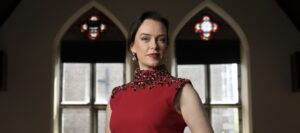
By Alan Neilson(Photo: Frank McGrath/Irish Independent)
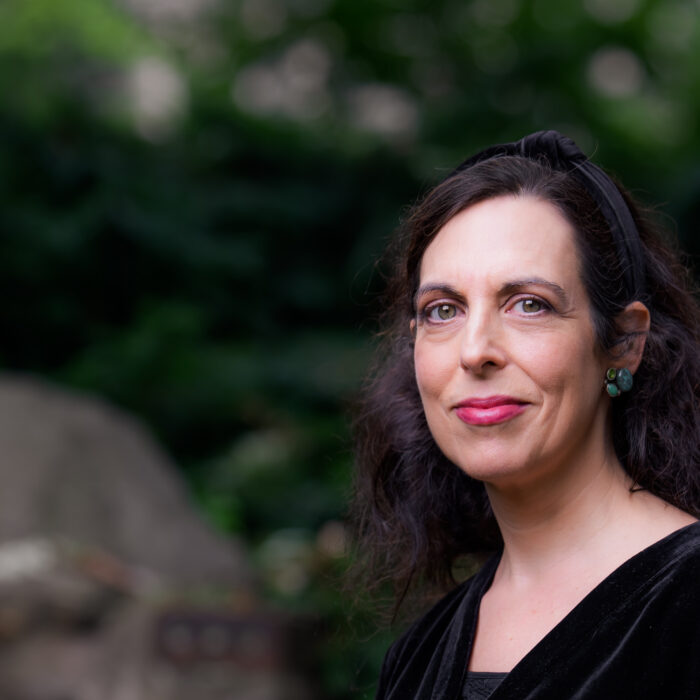
Mezzo-soprano Sharon Carty is a name familiar to anyone with an interest in classical music in Ireland. Known mainly for her many performances in operas and concerts across the country, she also active in other areas associated with the classical musical scene, not least in her role as the recently appointed artistic director of Sligo Baroque Opera, a role she took up less than two years ago.
OperaWire first interviewed her eight years ago, when she was appearing in William Bolcome’s opera “Dinner at Eight” at the 2018 Wexford Festival Opera, since which time her career has moved in an upward direction, although certainly not in a straight line.
It was therefore time for a catch up interview to find out how she views her career, what she is upto in Sligo and her role as Mary in Irish National Opera’s production of Tarik O’Regan and Colm Toíbin’s new opera “Testament,” which relates Mary’s first-hand account of the crucifixion.
OperaWire: Your biography is far from the norm. You are an established and well-known singer appearing in Ireland and Europe, notably in Italy, but you are also the artistic director for the Sligo Baroque Festival and involve yourself in educational activities that promote music. In fact, you never know where your name is going to pop up next. I even came across your name associated with a non-singing performance of Gamelan music. How do you view your career?
Sharon Carty: I feel my career has been a bit of a jigsaw puzzle. I like to react to and take advantage of opportunities that present themselves. I think this is partly owing to the fact that I started my career as a singer at a later stage than most singers, so I always felt I was playing catch up. Some artists like to specialize, but I have been very lucky in that I have a voice that is quite flexible; it is suitable for lieder recitals, oratorios, and operas from a variety of genres, and so I suppose my name becomes associated with many different types of music.
My background is that of a teacher, and it is has been difficult to leave that behind. It also means that I have the skills and experience to work with amateurs, such as choirs and the project with the Gamelan musicians. I also think that it is the responsibility of an artist to share and help others, not just audiences but also performers, whether they are children, adults, or community groups.
I have had to make the different pieces of the jigsaw fit together. I am always working out my schedule and prioritizing, and I suppose this leads to my focus shifting within the broad field of classical music. This has now become completely normal for me.
OW: There is also your position as artistic director of Sligo Baroque Festival. Is this an aspect of your career that you intend to develop?
SC: I certainly wouldn’t rule it out. It is something that I am looking forward to further down the line when my singing career comes to a natural close, maybe in another ten years or so. Like every singer, I am at the mercy of my voice and it is something that I have to bear in mind.
However, my primary focus at this moment is definitely on singing, whether that is in a concert hall, on an opera stage, or in the recording studio. However, I certainly would not rule out being an artistic director or administrator in the future.
I would like to use my role as artistic director as a way to contribute artistically to Baroque music in Ireland. We don’t have a huge amount of provision for artists who specialise in historical performance, especially in the northwest of the country, so being in this role gives me the chance to contribute to that ecosystem
OW: You must have learned a great deal about the role of artistic director over the past year or so?
SC: Absolutely!
I always work well within a team. Sport and music have always been my major interests, and both require that you work well with others. When doing a lieder recital, for example, you have to collaborate and compromise with the pianist and others. Being an artistic director, however, is a leadership position that requires a very different style of teamwork.
There are also a lot more skills involved. Although much of what I do as a freelance artist feeds into the role, such as planning, meetings, budgeting and organising social media, the management of the team and arriving at a consensus, and working within the specific parameters we have at Sligo, such as audience composition, are extra layers that I need to deal with.
OW: Does your work with the Sligo Baroque Festival impact your singing career?
SC: It is something I have to be careful of; I don’t want to give the impression that I am stepping away from singing, as I am definitely not!
In relation to the festival, I am very careful to only sing at one event; otherwise, it could all become a little overwhelming. I just wouldn’t have the head space to do more. As an artistic director there is so much to attend to during the festival, most of which involves looking after other people, such as checking the artists have the necessary information, checking the designer has all they need, and so on.
Also, I learned very quickly to delineate between my festival work from my singing work outside the festival; as a performer you have to be a little bit selfish in order to be able to give the audience your best. I ringfence the necessary time needed to look after my instrument and to prepare and perform properly; I need to be 100% focused!
OW: Looking back at last year’s Sligo Baroque Festival, your first festival as the artistic director, how would you assess its success?
SC: I was very happy with it. The establishment of a festival chorus was a big success; seeing it come together and perform the “Gloria” so well was a great feeling; it eas very important for me. Also, the gala concert was the biggest audience that the festival has ever had, which I was very happy about.
OW: The Sligo Baroque Festival takes place at the end of September. What can we expect this year?
SC: This year we are doing Händel’s “Dixit Dominus,” which will be a big challenge for the chorus. It is far more demanding than last year’s Vivaldi’s “Gloria,” but the chorus is well on track and it should be a great occasion. Also the Sligo Baroque Orchestra, directed by Rod Alston, the festival’s founder 31 years ago, have a fascinating concert that has been designed to fit in with this year’s theme of German Baroque. Our community event will be an open choral rehearsal in which people can come along and join in. It is free and if they just want to listen then that is also great. Among the many other events, there is a Bach masterclass presented by Simon Bode on “St Matthew Passion,” and there will also be a performance of the “Gulliver Suite” by Telemann for two violins. It is quite humorous and children under five will be allowed in free with parents who have bought a ticket.
OW: Community participation appears to be a very important aspect of the festival.
SC: Absolutely, it is. The community is at the heart of our program. It is something we believe is very important, and therefore we have developed collaborations with schools and the artists; for example, the Sligo Baroque Orchestra works with young children up to the early teens, and we will be starting a junior choir for next year’s festival. We were delighted to receive funding from the Carne Group for a pilot program to establish a chorus for young people, who we hope will then feed into the main chorus. This should get under way in October as soon as this year’s festival finishes.
OW: You have just played the role of Mary in Tarik O’Regan and Colm Toibin’s opera “Testament” at the Galway Arts Festival and are about to reprise this October in Dublin. What is the opera about?
SC: In a nutshell, it is Mary’s first-hand fictitious account of the events surrounding the Wedding of Cana and the Crucifixion and its aftermath.
OW: How is the piece presented?
SC: Firstly, I need to explain that there is Mary as represented by Toibin in his book “The Testament of Mary,” in which she recounts her story, and then there is the Mary as portrayed in the opera, in which there is an added chorus and five characters who Mary only talks about in the book but actually appear in the opera. So it is a very different format.
We have set the opera in biblical times. It has not been updated, and the costume and set designs use the colors of the shroud of Turin, and the chorus’ costumes are made from Irish linen. They may not be 100% historically accurate, but they create the aesthetic we associate with biblical times. Mary is dressed in black as she is mourning the death of her son. We estimated Mary’s age to be somewhere in her mid-50s, which for the time is quite old, and is important to how I represent her, particularly with regard to her body language, which will be fairly slow.
There is a sense that Mary is moving through various memories that she mixes with the present, so she is not tied physically to the world of the chorus. She is narrating her story, and the characters appear, in part, as memories.
OW: When I read the book, I had the impression that Mary is somewhat confused, that she is imposing her present thoughts onto her past, and that they are therefore not wholly accurate. Also, she appears somewhat paranoid; she thinks people are out to get her, yet this never materializes. How do you view her character?
SC: I love the fact that, as many philosophers have commented, when art leaves the pen or the brush, then they lose ownership, and the viewer or listener is free to interpret it as they wish. And with all art the interpretation can change not just with whom you are talking to, but also over time; something you read in one way when you were 20 takes on a different meaning later in life.
For me, what really stands out is that the narrative is from a femininst perspective and it is so human. I grew up a Catholic and not once did I think about what Mary actually thought about Jesus and what happened to him. Actually, I also never thought about Joseph. He was dead by the time all this happened.
It is interesting that you see her as paranoid. It is possible she might have been, but it is also possible that people were out to get her. After all, Jesus was sufficiently hated that they crucified him. However, as the performer, I am not there to second-guess her. I have to take her at face value. So I didn’t entertain the idea that she may have been paranoid. For me, whether she was paranoid or not, she believed her life was under threat.
Mary is fairly emotional with an explosive side to her character but not in a hysterical way. Some of the reviewers have talked about her ‘understated power,’ but I was not deliberately trying to achieve this. I was more concerned about embodying the character of Mary and expressing her personality and character, and this is something that could have manifested itself in this way, but it was not deliberate. The conductor and the composer were present, and they made it clear how they wanted her to sound, vocally, and there was a lot of playing with a vibratoless sound which was very interesting and will have impacted on how she is perceived. I think it makes her appear relatively self-contained, but there are aggressive outbursts, for she is aware that her life is in danger. She is not completely free to live as she wants.
These events happened 2000 years ago. When Jesus brought Lazarus back from the grave, his sisters Mary and Martha would have been delighted, but can you imagine the level of suspicion that would surround him? The amount of distrust that it would give rise to is wholly understandable.
When reading “The Testament of Mary,” I loved how quickly you end up inside her head. Often when you read a first-person narrative, you are aware that you are the reader, but I found that barrier dissolved completely, and I don’t think it was because I was going to play her onstage.
OW: Did you like your Mary as a character?
SC: Yes. She is a very sympathetic character, and there is something of the Irish mammy about her. She possesses a very sensible, down-to-earth quality. She is not portrayed as a saint; she is just a normal woman. I like that this aspect of her is explored!
There were people protesting about the work on the opening night, as they were upset that we were putting words in Mary’s mouth. But opera is art; it is a fictional take on her as a person. We wanted to portray a normal woman thrown into this position, and to consider what she might have thought and what she would have said. She is a woman in a very vulnerable position. Remember, she went through an unbelievably horrific event, and I believe it is a worthwhile thing to explore.
OW: How would you describe the music?
SC: The music is written for seven musicians, consisting of a cello, violin, viola, clarinet, flute, mandolin, and accordian players, and they are incorporated into the staging as members of the village. The music possesses quite a lot of variation. One of the things I really loved about the score is the way that the emotions are skilfully written into the vocal line, rhythmically and melodically. There are a lot of quasi-recitatives, and there is some very beautiful concordant choral writing, which becomes very harsh and aggressive during the crucifixion scene. It is a sensitive yet strong score.
OW: What interesting roles do you have coming up in the near future that you are able to confirm?
SC: A role I am particularly looking forward to is my debut as Mistress Page in a new production of “The Merry Wives of Windsor” by Otto Nicolai at Longborough Festival, conducted by Christopher Ward and directed by Anna Morrissey.