Q & A: Brenden Gunnell on the Role of Tristan & New CD Release of ‘The Marshes of Glynn and Song of the Prairies’ by Andrew Downes
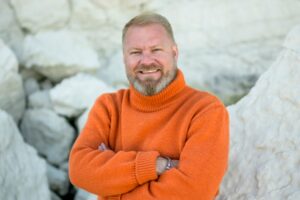
By Jennifer E. Pyron(Photo: Michael Cockerham)
Brenden Gunnell is standing at the threshold of one of opera’s greatest challenges: Wagner’s “Tristan und Isolde.” After building his career through the major heldentenor repertoire, he now sees Tristan not simply as the next role, but as the culmination of years of careful preparation. At the same time, he is championing lesser-known music with the release of a new recording of Andrew Downes’ “The Marshes of Glynn and Song of the Prairies.”
In this conversation with OperaWire, Gunnell discusses the long road to his Tristan debut, the mental demands of Wagner’s masterpiece, the sacrifices required for an international career, and why Downes’ music deserves a wider audience.
OperaWire: You have a new recording featuring Andrew Downes’ “The Marshes of Glynn and Song of the Prairies.” Tell us about the project.
Brenden Gunnell: The recording is part of a three-disc survey of Andrew Downes’ music assembled by his daughter, Paula, following his passing in 2023. Although he’s well known in the UK, his music deserves a much wider audience.
His compositional voice is completely individual. You can hear echoes of other composers, but he always resists easy comparison. It’s unmistakably his own musical language.
David Trippett, Downes’ son-in-law, who conducts all the recordings, invited me to participate. After my first listen through I couldn’t stop grinning, I knew immediately this was exactly the kind of music I wanted to sing. It was an absolute joy to learn and perform, and I hope this release helps introduce more of Downes’ remarkable choral and vocal works to audiences.
OperaWire: Is there a tour planned?
BG: They’re working on that now. I think the program would be a wonderful fit for the BBC Proms.
OperaWire: Tell me about your inspiration when it comes to the role of Tristan and how you knew this was the right time to take it on.
BG: Two years ago, I was offered the opportunity to perform the second act of “Tristan und Isolde” in concert. As a heldentenor who’s sung Parsifal, Lohengrin, and Siegmund, I always knew Tristan was where my career was heading. Those roles prepare you for it.
For singers in this repertoire, the summit is usually Tristan, Siegfried, or Tannhäuser. Most choose one or two of those roles, but very few sing all three. I’d turned down Siegfried several times because it never felt like the right fit, either vocally or dramatically. Tannhäuser wasn’t quite right for me either. But when I worked through Tristan with my teacher, it fit like a glove. It felt completely natural.
I am a big fan of Ludwig Suthaus’ famous recording and realized he was 42 when he debuted the role and 43 when he first recorded it. I began studying Tristan at 41 and will be 43 when I make my stage debut. Somehow that felt reassuring. It feels like the right time in my career to say yes.
Testing the role at a gala concert at Neuschwanstein Castle in Bavaria confirmed that feeling. After finishing the final excerpt, I remember thinking, “I could keep going.” That was the moment I realized this was the next major role for me, my travelling companion for the next chapter of my career. I told my management I wanted to pursue it, and about 18 months later the first offers started coming in.
Someone once pointed out that more people have climbed Mount Everest without oxygen tanks than have sung Tristan since the opera’s premiere. I would call that a very elite club to belong to. That comparison really put the challenge into perspective. You can have the best teacher, the best preparation, and the best team around you—as I do—but ultimately you’re the one who has to climb that last mountain-top.
OperaWire: And you have performances coming up in Belgium?
BG: Actually, my stage debut will come first in a new production Santiago, Chile, at Teatro Municipal de Santiago in April of 2027. The first contract I was offered though, was for a revival in Belgium, Autumn 2028. While that was being finalized, Santiago was already considering me for my debut. Within two days I had two signed Tristan engagements on offer, it was surreal.
I happened to be staying with my friend Jennifer Larmore before heading to Toulon for a concert of “The Flying Dutchman.” I came downstairs shouting that I’d landed Tristan, and we celebrated, popping open a champagne at breakfast. It was one of those unforgettable career milestones.
I don’t know that anyone is ever completely ready for Tristan. At some point you simply know intrinsically whether a role belongs in your voice or not.
OperaWire: What aspects of Tristan have been the most challenging?
BG: Without question, the third act. After you’ve already been singing for hours, you’re suddenly responsible for nearly 50 minutes, uninterrupted onstage, of some of the most taxing vocal lines of the piece. It’s essentially Tristan in conversation with Kurwenal, with one demanding monologue after another, each more difficult than the last, culminating in his final aria and death.
Preparing it is as much mental as vocal. There is so much text to memorize, more than any role to date I have taken on. I’m constantly building a roadmap for how to pace myself, because once you’re onstage there’s no substitute for preparedness. It becomes an extraordinary game of mental chess—me against myself. That’s both exhilarating and terrifying.
OperaWire: How does acting influence the way you approach your performances?
BG: I’ve always considered myself a singing actor first. That philosophy has shaped almost every repertoire decision I’ve made.
I’ve never been drawn to works where vocal beauty is the main focus, the ‘Bel Canto’ school if you will. Instead, I’ve gravitated toward German, Slavic, and English repertoire because the stories and characters are psychologically more complex and ultimately rewarding. I gravitate towards roles that give me something substantial to explore dramatically, something to really chew on and a skin to slip into.
I’ve found a niche in tragic antiheroes—characters you can really inhabit. Those are the roles that excite me most. I have also made it a habit to study great stage and film actors, to learn from them how they inhabit a role, people like Daniel Day Lewis, Anthony Hopkins, Alan Rickman or Peter O’Toole. And the one aspect that comes up repeatedly is preparedness is key!
OperaWire: You performed “Lady Macbeth of Mtsensk” with the Boston Symphony Orchestra, a recording that recently received a Grammy nomination. What stands out about that experience?
BG: It’s a fantastic piece, and the Grammy nomination for that recording was certainly a career highlight.
My character is wonderfully unpleasant—a real bastard—which makes him fun to play. But vocally it’s a relatively mid sized role. The real dramatic center of that opera belongs to Katerina.
That’s one reason I’m especially drawn to characters like Tristan, Peter Grimes or Hermann in “The Queen of Spades.” You spend the entire evening charting a character’s psychological descent, and there’s never a moment when you can switch off. That’s incredibly rewarding as a singing actor.
OperaWire: You’ve lived in seven different countries during your career. How have you managed the constant travel and personal sacrifices?
BG: Being an internationally successful operatic singer demands a level of sacrifice that most people never see or can imagine. It is only really comparable to being an Olympic athlete. I’ve been singing professionally for 20 years and freelancing for 15. Reaching the top 3-5% percent of the profession requires years of sustained sacrifice, with never a guarantee of success. Fortunately, I have a wonderful partner who understands that when the phone rings, everything can change overnight, and I have to jet off for sometimes months on end. I have missed so many holidays, birthdays, funerals. When my grandmother died, I couldn’t return home because I was under contract and in rehearsals, and unable to leave for a week. Those are the very harsh realities of this profession, that you deny yourself a ‘normal’ life, or a traditional family or relationship, because you are in service to a career that guarantees zero return.
Moving from country to country in pursuit of work has also been exhausting. I’m grateful to have finally established a permanent home in the U.K. after becoming a British citizen. Having that home base makes a tremendous difference in terms of emotional stability, a base camp to come home to.
The advantage of reaching this stage of my career is that I can be more selective, and they’re usually the major and title roles which demand much more of me.
OperaWire: What advice would you give young singers beginning their careers?
BG: I recently gave a master class for some Masters students from Indiana University’s Jacobs School of Music, and the students asked exactly that. One student asked when I finally felt I’d “made it.” My answer was “Gosh… I’m still waiting for it!”
There have certainly been unforgettable milestones. Making my Carnegie Hall debut with the Boston Symphony Orchestra was one of them. But I remember walking onto that stage telling myself not to give in to nerves—to just fully enjoy the moment, because you might never have the opportunity again.
That’s the reality of this profession. Every performance has to be treated as though it could be your last, and that mindset reminds you to appreciate every single moment onstage. I made sure to take a mental picture of that one evening at Carnegie. My advice is to be completely, soberly honest with yourself about what this career requires. You have to be willing to make enormous sacrifices, season after season, with absolutely no guarantee that success will come, and still keep believing in it and pursuing it. Because when those moments do come, they are truly unforgettable.