Q & A: Peruvian Tenor Iván Ayón-Rivas on the Duke of Mantua, His Royal Opera House Debut & Continuing to Study
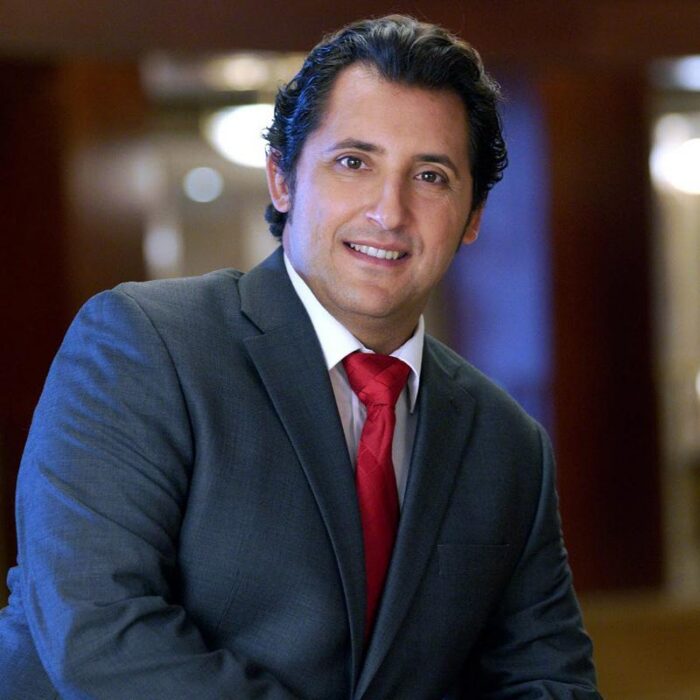
By Mike Hardy(Photo: Tatiana Mazzola)
Iván Ayón-Rivas is an exciting young tenor from Peru. Trained at the Conservatory of Music of Peru, Iván received a solid vocal education under the tutelage of Maria Eloísa Aguirre and continued his studies with renowned teachers and hugely esteemed fellow Peruvian tenors Juan Diego Flórez and Luigi Alva.
He is currently perfecting his technique with legendary baritone Roberto Servile in Italy.
In 2021 he won First Prize in the Don Plácido Domingo Ferrer Prize of Zarzuela and the Rolex Audience Prize at the Operalia Competition.
OperaWire caught up with Iván at the Royal Ballet and Opera where he was rehearsing for his upcoming debut there in the role of the Duke of Mantua in Verdi’s “Rigoletto.”
OperaWire: Hello Iván and thank you for speaking with OperaWire. Huge congratulations on your Royal Opera debut! How does it feel?
Iván Ayón-Rivas: Thank you so much. Yes, of course I am very happy. Actually, I’m very lucky because, you know, I’m from Peru, a little town in the northern part. I’m coming from nothing. And being here, it’s a great thing. It’s, I don’t know, it’s a blessing from heaven. It’s unbelievable.
OW: Your career has kind of really taken off. You’re a very busy man. I know you’ve just flown in from Zurich where you have just finished performing a “Messa da Requiem,” where it is predominantly performed as ballet rather than opera. How did you find that?
IAR: Absolutely beautiful. Very, very good. It was my second Requiem. And only the second time singing everything from memory, without the score. It really is beautiful, in a stage setting without the score and created as a co-production with opera and ballet. Actually, the singers form part of the ensemble of music, and the ballet dancers have the principal roles. It’s beautiful because it’s the first time I’ve made something like this.
OW: So, back to Royal Opera and “Rigoletto.” The Duke is becoming something of a signature role for you, is it not? You’ve sung it quite a few times. How does this production differ from the others you’ve sung?
IAR: It’s different. But, you know, The Duke is not the same here as in the other productions, but it’s always the same ending. He likes a lot of women. He doesn’t care about the feelings of anyone. In other productions, maybe he falls in love with Gilda or Magdalena, but in this staging, his love lasts maybe five minutes.
In this production it’s really near to the book, to Victor Hugo’s work…he never falls in love, it’s just sex. Just…desiderio.
OW: Tell me about growing up in Peru. Of course, I would have to guess you were influenced as a young man, to some degree, by fellow Peruvian Juan Diego Flórez?
IAR: Actually, opera is very popular in Peru. And yes, we have a wonderful tradition of Peruvian tenors. Firstly, Alejandro Granda, and Luigi Alva. Then Ernesto Palacio and of course, Juan Diego. Great tenors in the history of the opera. Of course, like many places, Peru can be a hard life and when a Peruvian starts to make a career or is a star in the world, we are so proud of this.
But yes, Juan Diego, for me until now, is the best tenor. Because he controls his voice with precision. He’s a genius. Actually, he never studied technique. He has his own technique. He was born with this voice, with this technique, with everything. It’s amazing. And he’s still singing so well.
It’s beautiful because now we have a beautiful tradition. Now the theaters in Peru, especially in Lima, start to work a lot for the opera. My dad is a Mexican musician. My mom loves music too. In my house was always, always Mexican music. We had a lot of music in our home. And I started to sing when I was four years old. My first stage experience was when I was four years old, with my dad’s mariachi group, singing Mexican music.
OW: They must be so proud of you.
IAR: Oh Yes. Actually, I took my parents to live with me in Italy. I’m very happy because I really want to give my parents another kind of life, a better life, especially in Europe. Because in Latin America it’s a little complicated, especially in Peru. It’s a beautiful country, but it’s complicated. I really want to give them another kind of life…a better life for my parents.
OW: For a young man of 33, you’ve sung quite a lot of diverse repertoire. Was that planned or is it just the way things went?
IAR: Actually, it’s a plan. With my agent and my teacher, we talk about how to make these kinds of roles, especially a lot of bel canto in this time. Because for singing more Puccini or the old Verdi, I still have a lot of time. Actually, if you study…if you make everything with a given technique, you can sing for a lot of years. Taking care of the voice can make for a long career. Which is why, with Verdi, for example, I recorded “Simon Boccanegra,” but only as a recording, not a performed opera. Another example, I sung in “Macbeth,” but the role of Malcolm at La Scala…the Duke, of course, a lot of Duke of Mantua, “La Traviata.” And from Puccini, “La Bohème” and “Gianni Schicchi.” Also “La Rondine,” because “Rondine” is not too heavy.
OW: Speaking of great voices, you studied under several and are currently being taught by Roberto Seville. What is it like learning from him?
IAR: Ah, amazing. I warm up the voice for all of my performances with him, with FaceTime. Fortunately, FaceTime works very, very well with the microphone and he can feel the voice. And this is important because, for example, the singer is like a car, working, working, working. After time, you have to go to the mechanic to fix something or get a service. It’s the same thing with the voice. You have to go to the teacher to fix something. You sing in a production, then in another…you can get tired and then it’s easy to acquire little bad habits and so you have to return to the teacher to correct something.
Studying with Roberto was a little complicated because he’s such a perfectionist with the technique. And for me it was great because I found this passion with him, but not for the opera, but for the technique, for singing, for this tradition, for this Italian tradition.
And, I don’t know, we worked such a lot. I remember the first years, I started lessons around three o’clock, and I finished at nine in the night! Focusing on technique.
OW: Can you elaborate on this a little, for me? Explain more about this technique and what you mean by “the Italian way.”
IAR: Yeah, he started with Paride Venturi, with this old school technique, tecnica dell’affondo, but I believe this can be a little dangerous when someone teaches this technique because you can run the risk of singing everything heavy. And the vocal cords, unfortunately, after a little time, can break. You know, it is a difficult technique, but when you find a good teacher of it, the heavens can start to open.
OW: Can you explain why the technique is difficult?
IAR: It’s difficult because this technique has difficult exercises. For example, we start with vocalizing the vowel ‘U,’ yeah but this is an exercise okay? It’s an exercise so when you make the vocalizing you sing completely different. With this very light leggiero. But with this freedom of your voice…with this gola libera, larga e aperta. And this is beautiful because the voice starts to have this verticality with the mask, and with the depth of the body. And this is the reason why we feel this from Pavarotti, from Corelli, from Giacomini, this kind of technique. This is the reason why a lot of people may say that you sing like an Italian tenor, an old Italian tenor. It’s because of this technique. I think it’s because of this technique.
Actually, also from other schools, the “Melocchi school” and the school of Garcia. They teach and explain freedom of the voice in different ways, but they are the same thing: the voice has to be in the mask but with freedom in the throat, with the throat open, and with the diaphragm very poggiata.
OW: You’ve won a number of awards but more famously, Operalia in 2021. That must have been a wonderful experience for you. What do you remember of your time there?
IAR: Oh! What a beautiful experience! Not only for the prizes…the first prize, the audience prize and the Zarzuela prize, but especially to be able to work with Domingo. He is, I don’t know, a living legend. A life legend. To be able to talk him, not only about the the competition, but talk with him about the career, about life. This was an amazing, beautiful experience.
But you know, this experience was amazing also because, I don’t know how can I say this in English, you find yourself among singers from all different countries, all different kinds of scenes and circumstances, with different mentalities…completely different, and this was the richest.
You know, the biggest prize is the Mediatic bomb that happens with Operalia, and for me and my career, this was the most important thing. But Placido, his musicianship. He’s a great singer, a great musician. Not only for the opera but also this passion for the Mexican music. Oh, and mariachi too!
OW: So, after “Rigoletto,” what’s next for Iván?
IAR: Dresden. MORE “Rigoletto!” And another in Shanghai.
OW: I told you, the Duke is becoming your signature role! But what would you love to sing in the future?
IAR: “Adriana Lecouvreur.” Definitely “Adriana Lecouvreur.” Maybe in a few years. It’s a little early now, but maybe in a few years.
OW: Why early now? Technically, it’s a demanding role?
IAR: No, actually, it’s not a heavy role, but it’s a little dangerous because it’s true Verismo. It’s not heavy like the older verismo but I think it’s dangerous in the sense that if you enter into that repertoire it can be difficult to get out of. I prefer to sing the kind of roles I’m currently singing. Lecouvreur is so bel-cantistic and you can have a lot of feelings in that role but I think it’s a little dangerous because if people hear you in this kind of role, maybe they start to give you this kind of role!
Categories
Interviews