Q & A: Michele Spotti on ‘Carmen,’ Palau de les Arts, Deutsche Oper Berlin & Italian Repertoire
By Francisco Salazar(Credit: ©Marco Borrelli)
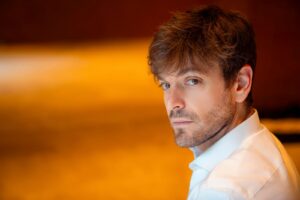
Michele Spotti is a rising star conductor who has slowly held important positions, including becoming the Musical Director of Marseille’s Opera House and Philharmonic Orchestra and was recently appointed the Deutsche Oper Berlin as the Principal Guest Conductor starting.
He has already conducted at the Metropolitan Opera, Grand Théâtre de Genève, Arena Opera Festival, Les Arts in Valencia, Festival Verdi di Parma, Teatro San Carlo in Naples, Teatro dell’Opera di Roma, Wiener Staatsoper, and Semperoper Dresden, among others.
This season, Spotti will conduct a number of Italian operas as well as French and German repertoire. He will also open the Palau de les Arts in a new production of “Carmen.” OperaWire had a chance to speak with the conductor about his repertoire and opening the Palau de les Arts.
OperaWire: As a new Principal Guest Conductor of the Deutsche Oper Berlin, what are you excited to conduct?
Michele Spotti: I am very excited about the breadth of the repertoire I will be able to explore at the Deutsche Oper Berlin. I have recently conducted “Lucia di Lammermoor,” and I will soon be conducting “La traviata” and Don Carlo — three very different works that nevertheless belong to a musical world I know very well.
What interests me most is not simply bringing my experience of Italian repertoire to Berlin, but putting it into dialogue with a great orchestra and with the particular tradition of this house. I have been particularly impressed by the musicians’ extraordinary desire to work, and by the intensity and speed of communication within the orchestra. That gives me an enormous amount of satisfaction as a conductor.
At the same time, I see this new position as an important opportunity to continue expanding my own musical horizons. In recent years I have been increasingly approaching the German repertoire, and I am very keen to develop this side of my work further.
OW: What are your expectations in your new position, and why is this company such a great place to conduct and work in?
MS: For me, one of the most important goals for a conductor is to develop a personal sound, and this is something that can only be built over time, through a long relationship with an orchestra and through different repertoires.
This is what makes the Deutsche Oper such an exciting place for me. Working with the orchestra across Italian repertoire, German repertoire and the symphonic repertoire will allow me to approach the musicians in many different ways and, over time, to develop a more complete and personal sound — something that can become recognisable in my way of conducting.
OW: As the Music Director of Marseille, what are some of the interesting projects you are doing this season?
MS: Marseille is of course a very important part of my musical life. This season we have a very interesting mix of Italian, French and German repertoire, including “Don Carlo” and “Maria Stuarda,” alongside several symphonic projects.
I am particularly happy about the symphonic journey we have built together, from Stravinsky’s “The Rite of Spring“ to several Mahler symphonies, and now beginning a new path with Brahms. These different composers allow me to explore very different sides of the orchestra and to continue expanding my own repertoire.
One of the things that has always been most important to me in my career is to maintain both breadth and depth in the repertoire I conduct, without being limited to a single tradition or style. Marseille gives me a wonderful opportunity to continue doing exactly that.
OW: Since becoming Music Director, how have you seen the orchestra develop, and have you been able to see your vision for the company come to fruition?
MS: The orchestra already had a strong foundation and a high level of cohesion, thanks in large part to the excellent work of the previous music directors. What we have tried to do is build on that foundation and develop something increasingly personal.
We have also invested in bringing in young, very talented musicians, so the experience of players who have been in the orchestra for many years can meet a new and fresh energy. I think this has brought greater technical brilliance and helped raise the overall level of the orchestra, which was already very good.
What I feel we are developing is a more international way of playing, while always trying to push ourselves a little beyond our limits. For me, that is the most important part of the journey: not changing what the orchestra is, but continuing to make it grow.
OW: What are the biggest challenges of being a Music Director of an opera company, and how do you balance your work in Marseille with everything else that you do?
MS: The biggest challenge is probably the amount of responsibility, but above all the amount of preparation that this profession requires. With such a broad and diverse repertoire, I always feel the need to be completely prepared and at my best. Studying occupies a very large part of my life, and I often study wherever I can — in airports, lounges, on planes, or in between performances.
Working across different musical languages and languages themselves — Italian, French, German — makes the preparation even more demanding, but also much richer. I think my love of languages helps me a lot in this respect.
It is certainly tiring, and I need to protect some time between productions and performances simply to study properly. But this is also one of the great privileges of this profession. The variety of what I conduct is demanding, but it is also one of the things I love most about being a conductor.
OW: You’ll open the Palau de les Arts in Valencia. What is special about this theatre and what do you think of the energy of the city and its people?
MS: For me, one of the most special things about Les Arts is its orchestra. It is one of the finest orchestras in the world, and it is always an enormous privilege and pleasure to work with them. Their level of virtuosity is extraordinary, and you can really push them to the extreme, which makes working with them incredibly exciting.
There is also something very special about the atmosphere here. It is joyful and festive, but at the same time extremely serious and professional. I really love that combination.
And then there is Valencia itself. It is one of my favourite cities in the world, if not my favourite. Coming here feels a little bit like coming home — the food, the rhythm of life, the Mediterranean atmosphere. I always feel extremely happy to be here.
OW: This season features a lot of Italian repertoire, but “Carmen” is French. How do you view Bizet’s music in the context of the repertoire that you conduct and do you find any Italianisms in his music?
MS: I think Bizet is an extraordinarily European composer. The way he treats the voice is, in many ways, very Italian, particularly in the attention to the vocal line and to the natural flow of singing. At the same time, his orchestration is deeply French, with an extraordinary richness of colours and timbres, but there is also a kind of puissance — a symphonic power — that I would associate with the German tradition. All these elements come together in a very personal musical language.
This “Carmen” is particularly meaningful to me because it is actually my first time conducting the opera. It was also the first opera I ever heard as a child, and it was the work that made me fall in love with opera. So I feel a very strong personal connection to it.
I want to make this “Carmen” very personal, through my choices of tempo, colour and phrasing, while respecting the extraordinary identity of Bizet’s music. In a way, it is also a very natural opera for me to approach, because my career has always led me to work across different European traditions. Carmen itself is a perfect expression of that European spirit.
OW: What are some of your favorite moments in this opera?
MS: One of the things that fascinates me most in “Carmen” is the opéra-comique tradition from which the work comes, and particularly the extraordinary transitions between spoken dialogue, action and music.
One moment that always gives me chills is the opening number, especially the encounter between Morales and Micaëla and Micaëla’s first appearance. The descending violin triplets are so simple and yet so unmistakably French in their colour and elegance.
Another passage I find extraordinary is the duet between Carmen and Don José, when Carmen begins to dance and Don José hears the retreat in the distance. You have the castanets, just a few simple chords in the orchestra and the two trumpets playing the retreat from afar. It is almost elementary in its musical construction, and yet the effect is incredibly powerful. This is one of the things I find most fascinating about Bizet: his ability to create such a strong dramatic effect with extremely simple musical means.
And finally, I love the end of the third act. In our production, we will restore a few bars from Bizet’s original version, with Escamillo singing the Toreador song offstage while Don José and Micaëla are in a completely different dramatic situation. The contrast is extraordinary: the calm and almost carefree music of Escamillo continues while the drama of the other characters is becoming more intense. For me, it is a brilliant psychological effect and a wonderful example of Bizet’s dramatic intelligence.
OW: Tell me about the cast you’ll be working with, and have you performed with them before? What have you learned from them?
MS: It is a truly stellar cast, and I feel that everything is very well balanced and perfectly suited to the production. The young and very talented artists in the supporting roles also make the whole cast even more special.
I am particularly happy with the four principal singers — Vasilisa Berzhanskaya, Charles Castronovo, Ruth Iniesta and Davide Luciano. I feel a great deal of trust from them in my musical choices and in my tempi, which is something I value enormously. And I have to admit that some of my tempi can be quite demanding to sustain! But they always give me back the same energy, and that creates a wonderful chemistry between the stage and the orchestra.
They are all such complete artists that you can really make music with them: you can play with rubato, create different atmospheres and find the particular flexibility that French music requires. The French language itself has a certain fluidity and mellifluous quality, and it often requires an even greater plasticity in the musical phrasing. Their extraordinary technique and security allow me to explore all of this with great freedom, and that gives me enormous satisfaction.
I have also been particularly impressed by Ted Huffman’s ability as a theatre director to find quick and convincing solutions to every situation. It is a very rare quality, and it has made our collaboration especially fluid and stimulating.
OW: What other repertoire excites you this season?
MS: There is a lot to look forward to. I am very happy to continue exploring Wagner, with “Lohengrin” in Toulouse following “Das Rheingold” in Marseille. “Lohengrin” is a wonderful opportunity for me to continue expanding my repertoire and to express another side of my musical personality, while at the same time remaining very close to the Italian and French repertoire that has always been an important part of my work.
I am equally excited about the symphonic projects ahead: Mahler’s First Symphony in Marseille, working with the Orchestre de Chambre de Paris on Mendelssohn, and exploring Brahms and Richard Strauss. I will also have the opportunity to conduct in Hong Kong and Japan with the NHK Orchestra for the first time.
What excites me most is precisely this variety. Different repertoires, different orchestras and different musical cultures keep me curious, and that is what I find most stimulating about this profession.