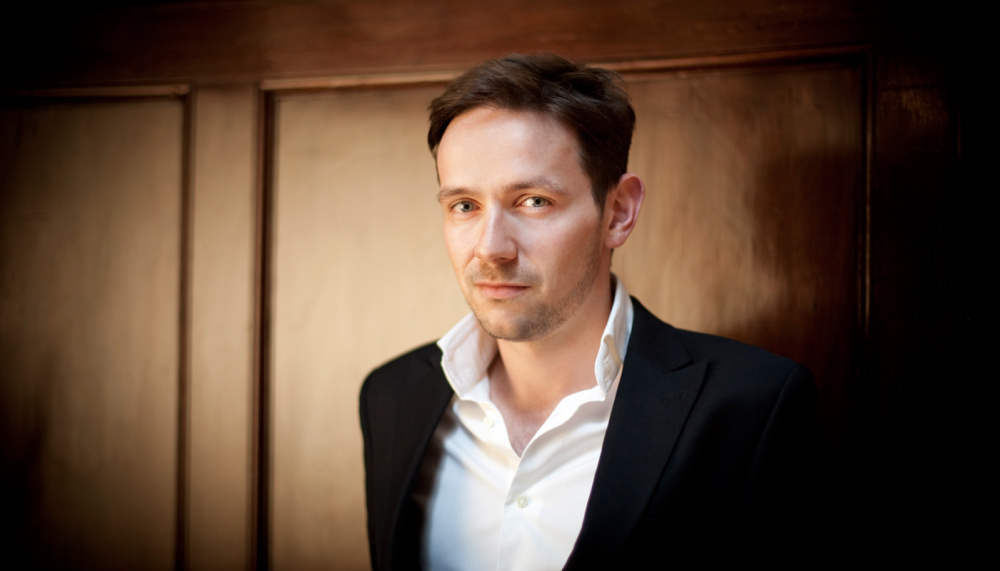
Q & A: Janet Farrell on IN Series Opera & Being a Recipient of a National Opera Trustee Recognition Award
By Arnold SaltzmanJanet Farrell is one of five recipients of the National Opera Trustee Recognition Awards by Opera America.
Farrell, who loves singing, was brought to the IN Series by the dynamic artistic director, Timothy Nelson. With Farrell’s professional business acumen and experience at M&T Bank and her love of opera, she has been able to draw attention and support to IN Series, something that every opera company would love. She sees something in the innovative approach of IN Series that makes opera exciting, accessible, and new, and she is a part of a team that is making headlines, thrilling patrons of opera young and old, expanding the vision of the company, and leading its successes across Washington DC.
OperaWire spoke to Farrell about IN Series Opera, on the National Opera Trustee Recognition, and being part of the administrative process of opera.
OperaWire: What drew you to IN Series Opera?
Janet Farrell: I was first introduced to IN Series through its programming of zarzuelas — Latin American music and poetry — going back to Carla Hübner and the Hand Chapel at Mount Vernon College. I went occasionally over the years. Washington DC is so rich in cultural events, but operas in translation, and those set in different eras to the original, have always especially intrigued me. I previously had a subscription to the Baltimore Opera Company, back in the ’80s when I was living in Baltimore, which typically presented traditional operas in traditional settings.
Once Timothy Nelson came onboard as artistic director and the work evolved to become more innovative, blending dance with very different settings — think “Madama Butterfly” in an insane asylum, or Verdi’s “Requiem” merging with “King Lear”) — I was hooked.
OW: Do you have a background in vocal music?
JF: I sang “I Left my Heart in San Francisco” in a sextet at my 8th grade graduation and played guitar and sang folksongs in high school, but then did not sing for many, many years. In the 2000s I joined my church choir, Our Lady of Victory, in the Palisades, and then began taking voice lessons with Lindsey Paradise. A few years ago I joined the Georgetown Chorale as one of many first sopranos and have sung in three concerts with them. The first featured Mendelssohn’s “Elijah” oratorio, the second featured Fanny Mendelssohn Hensel’s “Oratorium Nach Bildern der Bibel” and Bach’s “Verleih uns Frieden gnädiglich” and “Herz und Mund und Tat und Leben,” and the third was themed around “Hail, Poetry” (a reference to the famous choral passage from the Act One finale of Gilbert and Sullivan’s “The Pirates of Penzance,” and generally taken to be a parody of the prayer scene in Verdi’s “La Forza del Destino” or a Mozartian string quartet). I enjoy the challenge of really getting deep into the longer pieces, as opposed to shorter and generally more familiar hymns for Sunday masses. This season’s May 2nd Georgetown Chorale concert includes Cherubini’s “Requiem” and various “Postcards from Italy” — shorter familiar songs or opera choruses.
So I have something of a background, but not as deep as many people, especially here in DC, where there are so many excellent vocal groups and music companies.
OW: What’s different about IN Series?
JF: The beauty, creativity, and complexity of the IN Series vision. It speaks to social justice and essential human issues, both in our collective past and in the present. The work we present mines the essential themes and problems of human existence and how they are portrayed in opera-theater, and is always relevant to where we are today. You come away from a piece thinking deeply about its impact. Also, I believe the intimacy of the smaller venues where we present, coupled with the high quality of both singing and acting of our artists under the artistic vision of Timothy Nelson and his colleagues, distinguishes our work. You are drawn into the production. Oliver Mercer’s aria in “The Return of Ulysses – Song of my Father” left me breathless. Maribeth Diggle’s lament as Ottavia in “L’Incoronazione di Poppea” had me ready to follow my queen into exile.
OW: How do you assist IN Series? Though it is not a new company it is having a rebirth, which has been very positively received.
JF: The board’s role, in conjunction with staff, is to articulate the organization’s strategic plan. What is our vision for who we want to be? What types of work and where do we want to present? How we will get there? We worked with Michael Kaiser at the DeVos Institute of Arts and Nonprofit Management to craft a new five-year strategic plan, which the board has just adopted. The board is always in a fiduciary role, ensuring that the organization can match the artistic vision with adequate resources from grants, fundraising, and ticket sales, and that our resources are managed well. On a practical level we also ensure that the organization has the infrastructure needed to be sustainable over the long term: systems and policies around finances, human resources, governance, and the like. We recently brought on our first executive director, David Mack, to take on management of the operations side of the organization, freeing Timothy to focus on the artistic side.
OW: When a banking organization offers assistance to nonprofits and educational institutions, what is the expectation and why support cultural institutions?
JF: In my role at M&T Bank and local predecessors, I created and led a group dedicated to providing banking services, loans, and tax credit investments to nonprofit entities, including schools, colleges, theaters and arts organizations, healthcare clinics, homeless shelters, and other nonprofits. This grew to encompass the bank’s footprint from Richmond to Buffalo to Boston, with teams focused on this sector in every major market. Every organization needs banking services.
M&T as a Bank is very focused on strengthening the communities where its employees and clients live and work, so it has regional charitable committees that decide which requests for support should be funded, and which organizations to partner with in serving the community. Often this outreach is on a volunteer basis, whether by serving on a board or by volunteering for a particular day of service or event. So bank employees are encouraged and even given a block of paid time off to volunteer or serve on boards.
Yes, there is a business model for serving nonprofits’ banking needs. But there is also a goal to strengthen communities and enrich their cultural life through supporting nonprofits. And if the bank can get a bit of recognition for that work, that is good as well. The Bank has always valued cultural institutions for their important role in making towns and cities places where people want to work and live and thrive.
OW: I noticed that you majored in Spanish. What is your connection to Spanish culture, music, and language?
JF: The small town where I grew up, Morris Plains, New Jersey, hired a Castilian to teach Spanish. Starting in third grade I had 30-45 minutes of Spanish every day, the classes taught entirely in Spanish. I simply loved the language and the culture. I majored in Spanish at Goucher College in Baltimore, studying literature and history. When I came to DC, the bank made an investment in the newly-formed Latino Economic Development Corp (after the disturbances in Columbia Heights) and asked me, as the head of our small operation here at that time, and as the only person on our 10-15-person staff who spoke Spanish, to get involved. That lead to becoming very involved in the Latino community in DC, including not only LEDC, but also GALA Hispanic Theatre, the Hispanic College Fund, and banking relationships with organizations such as Mary’s Center in Adams Morgan, and Latin American Youth Center in Columbia Heights.
OW: How were you nominated for the National Opera Trustee Recognition Award?
JF: Opera America has an open call for nominations each year. Unbeknownst to me, Timothy Nelson wrote what must have been a very good nomination, as I was selected by an Opera America committee. I was very surprised when I received their phone call informing me that I had won, especially as our former board president, John Fitzgerald López, had won the same award only two years prior.
OW: Opera at the large scale seems to be looking for a new foundation of repertoire. How does IN Series fulfill that current search?
JF: While traditional, large scale opera will always have a place — Timothée Chalamet is off base, in my honest opinion — many audiences are hungry for works that might be more accessible. This includes libretti or new adaptations in English of traditional works or completely new pieces. IN Series does a superb job with both types of work. When approaching the classical repertoire, Timothy peels them back to their essence and then reimagines settings or treatments which draw us in. Witness Stradella’s “St. John the Baptist” set in mid-’70s New Jersey, with a new English text by Bari Biern — a production acclaimed by some as one the best productions of 2025 in DC. We have also produced new pieces such as “Zavala-Zavala” and “Las Misticas de México” by librettist and poet Anna Deeny Morales (adjunct professor at Georgetown University and also on the IN Series board). These treat very contemporary issues, such as the separation of families at the border or the disappearances of students in Mexico. Our staging of “I Was Looking at the Ceiling and then I saw the Sky,” was welcomed as a 20th-century piece that is relevant and beautiful, but perhaps not as often produced as other repertoire. I think newer and also younger audiences find these sorts of productions to be a more accessible entry point to opera. We also expand the definition of our repertoire to include opera theater or theater from music, such as setting June Jordan’s poetry to music by her artistic collaborator Adrienne Torf.
OW: What is your favorite part of your service as Board President of In Series?
JF: I feel that my most significant contribution is working with our very engaged and supportive board of directors and dedicated staff to ensure that IN Series has the foundation, financial and otherwise, to sustain and grow our vision for “Opera that Speaks, Theater that Sings.” That gives me great pleasure. That and going to the performances and introducing IN Series to new people in DC and Baltimore.
OW: In Series has recently made a move to a more permanent location. What determined the move and the location? What are the next steps?
JF: We have been largely itinerant since our founding, although often with a dominant theater space that we used for a particular season or seasons. While uniting certain spaces with certain shows can form a marvelous connection (such as presenting “Orfeo ed Euridice” in the Dupont Underground), there are also downsides to having to locate and scope out three or four different venues each season. There are costs to building out different sets when we move a show from one location to another, sometimes with the added risk of different acoustics or facilities in certain venues (more or less easily accessed, for example). And DC has an abundance of theater and music companies and a dearth of available spaces, so scheduling can also prove difficult.
Often the first question I am asked by folks who are not familiar with IN Series is, “Where do you perform?” While our previously itinerant nature had the potential to delight folks and bring them to new locations, we are looking forward to having a more permanent home, one that people will come to identify us with and one where we can become more deeply embedded within the community, while remaining accessible to the broader audience (so parking and metro accessibility are a factor). We believe that a shared arts space will provide all its members with benefits and advantages from collaboration as well as shared personnel and the potential for related programming.
We are currently finalizing our agreements for this type of space and look forward to a more formal announcement soon. However, we do plan to present at least one production each season in a different site-specific location, as well as a weekend of performances from each of our productions in Baltimore. As we continue to grow our Baltimore presence, we are finding a strong audience appetite for the work that we do. We have added three members from Baltimore to the board in the past three years and look forward to building a more robust presence there.
OW: Do board members have any input regarding the repertoire and productions presented by the IN Series, or is that entirely up to the artistic director?
JF: The repertoire is entirely up to the artistic director. He conceives the season theme and chooses the works and the vision for each, including choosing directors or directing himself, and casting performers and musicians. He presents the season to the board in February, in conjunction with the budget (as the board has the responsibility to approve the funding plan for the season). While sometimes his description of a production strikes me as pistachio ice cream with sriracha sauce (a Japanese Noh actor chanting as the Sun God Apollo in “Orfeo”), we have trust that when the production arrives, it will be as radiant as that Japanese Noh master, resplendent in his golden mask and robes. That same comment has been echoed to me by patrons — that they are never sure what they will get, but that they trust that they will be dazzled by the vision and the artistic talent and performances, and will be intellectually challenged and stimulated by it. That theme of trust speaks to our growing and loyal audiences and supporters.
OW: Many arts organizations run deficits and then raise funds to cover deficits. What is your approach?
JF: Virtually every arts institution, whether performing arts or museums or historical sites, and even most private schools and colleges, relies on a funding model where contributions and grant funding are primary revenue sources and ticket or admissions fees are insufficient to cover costs. When we craft each year’s budget, we carefully and realistically assess likely subscription and ticket revenues and then likely grant and contribution funding. With regard to grants, we do have a professional grants writer who researches prospective funders, cultivates relationships, and writes and reports back to them on grant funded initiatives. For contributions, we cultivate meaningful relationships with our key donors and have various fundraising events and appeals over the year. This includes our season opening event and our annual awards gala, as well as smaller events and our holiday and year-end appeals. We also carefully manage the budget on a real time basis, so that expense adjustments can be made if the originally projected revenue sources do not materialize.
OW: Lastly, Do you have a favorite opera that IN Series has performed?
JF: I have so many favorites, including the traditional but reimagined repertoire (including our “Carmen,” “Boheme in the Heights,” “Rigoletto,” “St. John the Baptist,” and Monteverdi pieces) to the newer works (“Zavala-Zavala,” “I Was Looking at the Ceiling and then I saw the Sky,” and “The Ordering of Moses”). So, I’ll just say that the last one I saw is usually my favorite until the next one arrives.

Stories you may also like…
Q & A: Peruvian Tenor Iván Ayón-Rivas on the Duke of Mantua, His Royal Opera House Debut & Continuing to Study
Q & A: Serge Dorny on Taking Presidency of Opera Europa, The Future of Opera & Anna Netrebko’s Return to Bayerische Staatsoper