Q & A: Elizabeth Askren on Growing MaestraMagic! & Opera as a Comic Book
By Afton Markay(Photo credit: J. Kraemer)
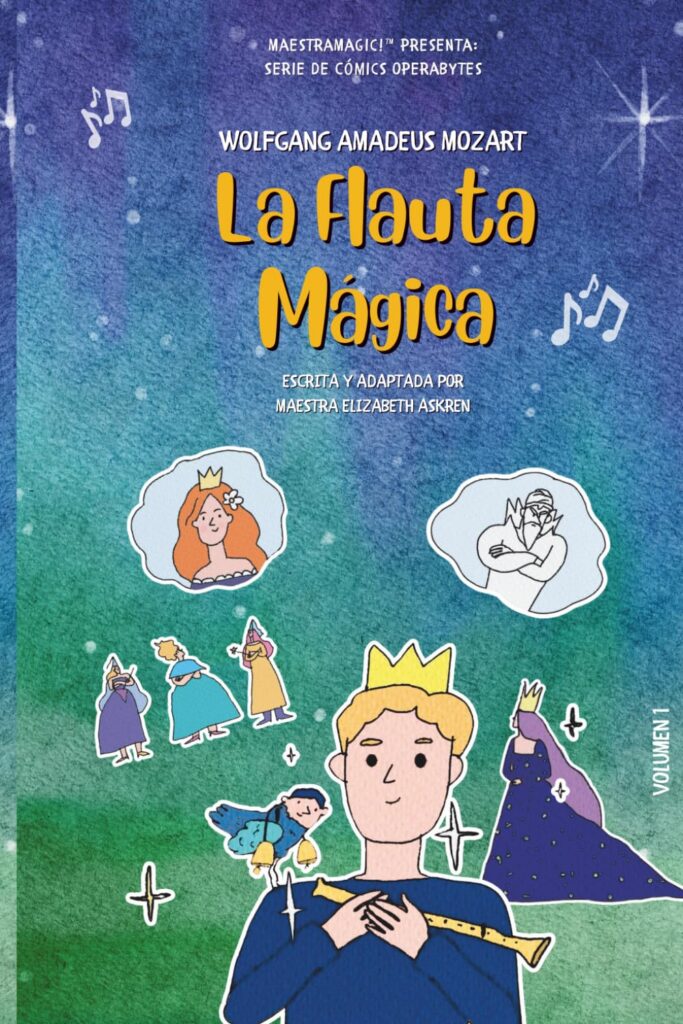
Following the release of the Spanish edition of MaestraMagic!’s comic book, “La Flauta Mágica,” Dr. Elizabeth Askren sat down with OperaWire to discuss this creative journey.
The project started as part of Askren’s mixed-media edutainment show that she created with her daughter Lily during the lockdown in 2020. The English version and first edition of the comic was published in Dec. 2024, with the second edition released a year later. Creatives behind “La Flauta Mágica” also include Daryna Kudenko, Anca Stefania Robu, Alba Luna Feijóo, and Lulu Alcocer Guzman.
Below is the OperaWire’s conversation with Dr. Askren.
OW: Tell me about creating the Spanish version of “The Magic Flute” comic.
Elizabeth Askren: Creating the Spanish version of “The Magic Flute” comic book felt completely natural to me. As a native New Yorker, Spanish has always been an important language in the city’s cultural patchwork – you hear it in the streets, in stores, in its music, and in every facet of everyday life.
Another personal motivation was David Lomeli, an opera powerhouse and the first Latino in U.S. history to hold a top artistic position at a Level one opera company. David was one of the very first people to truly believe in MaestraMagic! and its vision. I wanted him to be able to share his passion for opera with his son, Tomas, through this comic.
OW: Did you originally plan to publish the comic in different languages? If so, how did you decide on the languages and why?
EA: Yes, absolutely. From the very beginning, the idea behind the MaestraMagic! comic series was to make opera accessible and fun for children around the world. This vision comes directly from my passion for community-centered projects, which I’ve led for over 20 years in Europe and the U.S., both as a performing artist and as a creator and director.
In addition to Spanish, we currently have French, German, and Romanian editions in development for a 2026 release. These translations were completed with love and care by amazing friends and volunteers from our international community. One of my dreams is to even have a Japanese version, as an homage to Japan’s extraordinary manga tradition – perhaps in 2027. Stay tuned!
OW: Have you considered a Braille version?
EA: I think that would be incredible! We also have an audio version, narrated by my daughter, Lily Askren-Brie, which is scheduled for release in 2026. The audiobook can serve the needs of blind and low-vision communities, as well as those who want enhanced aural support while reading.
We are very open to collaborations, and would warmly welcome conversations with organizations or individuals interested in helping us explore a Braille edition in the future.
OW: What sort of audiences have engaged with the comic the most?
EA: One of the most rewarding aspects has been the diversity of the audience. Children carry the comic in their backpacks or pockets to read and color on the road; parents read it at bedtime or during homeschooling; music teachers incorporate it into their singing lessons and workshops; and opera companies purchase copies in bulk for their education and outreach programs.
As a mother who has homeschooled her daughter, an artist with extensive experience in performance and educational programming, and a professor deeply committed to sharing the beauty of music with the next generation, this response has been incredibly fulfilling.
OW: What has surprised you about the reception of the comic?
EA: What surprised me most is that everyone seems to have a different favorite part of the book. Characters like “Prince Tomato” and Papagena are especially popular, but readers also love the bonus section with games and coloring pages, as well as the QR codes that allow them to hear musical excerpts while reading the story.
OW: What is your biggest hope for the comic?
EA: My biggest hope is that MaestraMagic! becomes a meaningful tool for connection, joy, and discovery. Opera houses, orchestras, and cultural centers can incorporate it into their educational programming; libraries can host interactive story times and art sessions; and homeschooling families can use it to explore reading, arts and crafts, and classical music together.
The comic book can be so useful to so many different publics with different needs and priorities. I hope everyone will have fun enjoying it!
OW: Can we expect more opera comics in the future?
EA: I certainly hope so! I’ve already collected a “top ten” list of opera requests, and I’m always open to more ideas. Anyone who would like to share a suggestion is warmly invited to get in touch with us at MaestraMagic!
Version 1.0.0

Stories you may also like…

Q & A: Artistic Director Christoph von Bernuth on the Multi-Faceted Identity of the Karlsruhe Handel Festival
Q & A: Joshua Conyers on His Life Story & ‘IN PLAIN SIGHT: The Black Anthology’