Q & A: Joshua Conyers on His Life Story & ‘IN PLAIN SIGHT: The Black Anthology’
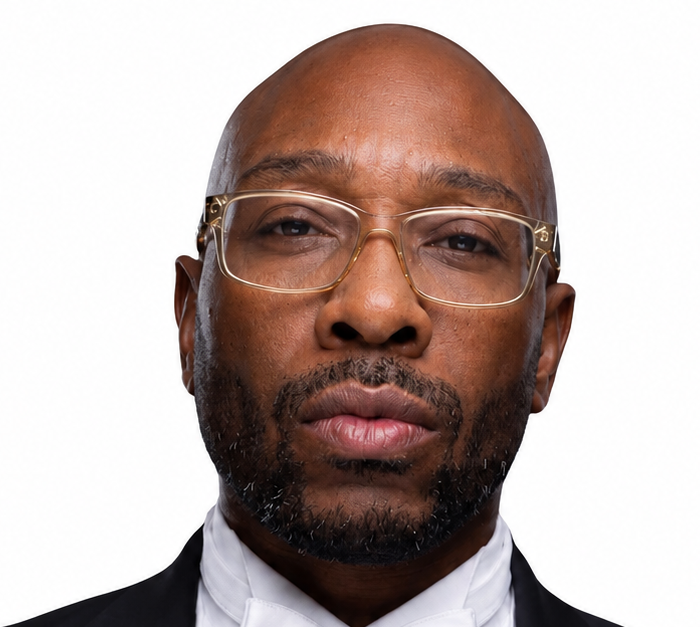
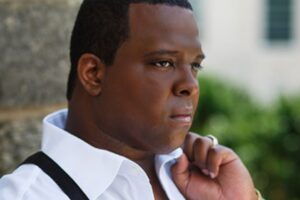
By Mike HardyJoshua Conyers is recognized as one of the leading dramatic baritones of today. Described by the New York Times as having a “sonorous baritone that wheedled and seduced” and by the Washington Post as having a “show stealing performance;” his is a remarkable story that starts in abject poverty, from the shelters, drug abuse, and violence of his childhood home to the heady heights of Assistant Professor of Voice at the Eastman School of Music where he now, proudly, calls himself a father, husband, performer, and educator.
OperaWire visits more with Conyers for this exclusive interview.
OperaWire: Hello Joshua and thank you for speaking with OperaWire! How would you describe your repertoire, which I interpret as being fairly broad?
JC: You know, I made my career doing new music, right? I really leaned on my musicianship, learning how to do these difficult pieces, new things, like really digging in and diving into stuff that’s never been done before.
I think that’s really how I got my start and my go. Now I’m starting to delve more into some variety and just bigger repertoire. I just did a “Rigoletto,” did a “Tosca,” and so just continuing on that journey.
OW: You’ve sung Scarpia? How did you find that?
JC: I have, and it’s so exciting. You know, it’s a dream come true for any baritone to be able to get their hands on that. It’s very exciting. You get to test your limits, what you can and what you really can’t do on stage. It’s an exciting piece to delve into.
Rigoletto is even more of a challenge. He’s on stage all night and the tessitura just sits really high. So that’s just a test to technique and how to manage yourself on stage. It’s very physical. So, all of the demands of an opera singer are right there inside of that role. To have the opportunity to do that and do it with some kind of success is pretty good.
OW: I know you grew up in the Bronx. I think to many who don’t come from the United States, the Bronx is kind of like this mythical, mystical, dark side of New York that frequently gets bad publicity. What was it like growing up there?
JC: So, you know, what you’re saying about the dark side of New York City, this unknown land? That’s how I always felt about the Bronx. I didn’t like the way I grew up. My parents are victims of the crack epidemic and so they weren’t able to provide for us in the way that was needed. So, we were bouncing around from shelter to shelter. We had a lot of support from my grandmothers who would help, particularly my mom’s mom who would try to help out, give us food and stuff like that. And since I have four siblings, there were five of us, it was difficult for the city to find us a place to be.
I was surrounded by gangs and drug abuse in the home. Trying to find my way through that was really difficult. And so, when I was a youth I hated my time there.
It was a struggle. My earliest memories are of my dad overdosing and losing his mind, and us being in danger, drug dealers in the home, shootouts, all of those things that I had to grow up with. In 1999 me and my oldest brother moved to Virginia with my paternal grandmother. Then we got into the shelter system in Virginia and then in a house, and then the cycle continued.
We had two shoot-outs in front of the house–drug dealers coming into the house all the time and my parents, they struggled with that, but to commend them, they kept us out of the streets. They knew what it was like, and they really tried hard to keep us out of the streets. They did understand the value of schooling, and both of them really wanted all of us to go to college, and all of us did. So, you know, as much as they struggled with their addiction, they did the best that they could to make sure that none of us did what they did.
There was, and is always this appreciation I have for them, even though there’s a lot of resentment that built up over the years. But yeah, the Bronx was always a scary place to me. I went to Manhattan for the first time, to the Lincoln Center, when I was 15 years old. I immediately knew this was not the place I was from. I said to myself: “This is not what I know New York City to be.”
And so it what it felt like to me, with regards to my childhood at least, was that there’s these two different worlds: these fancy people here in Manhattan and on the other side, 30 minutes away, is where they kind of dump people in these shelter houses, where people are scratching and clawing to survive. That was my childhood, but I found music through all that, you know?
OW: That sounds really harrowing. Thank you for sharing that with me. Are your parents still alive?
JC: Yes. They’re still alive. They’re still together. They still struggle with their addiction, but they’re better. They’re better.
OW: I’m guessing from that, finding music as you say, proved to be a pivotal means of shaping who you became. I imagine, then, that it was an easy step for you to go into the Monroe County Jail to perform there for the prisoners. Clearly, you saw something in music that you felt you could bring to other people perhaps who had fallen on the wrong side of life. Would I be right in saying that?
JC: Absolutely. When I saw the organization that was having Rock City Music and that they were going out, doing outreach, it’s just always been a huge part of my mission. Music saved ME. I started off in a boy band, around sixth grade when I was about 11 or 12, all the way until about ninth grade. And then I discovered opera as a sophomore in high school from a friend who was in that boy band.
At that time, I was struggling. I was skipping school. I was, like, stealing food. We had a ‘Kmart’ that was close to my school and I was stealing things from there every day, going and then only going to choir and selling food and snacks like this so I could eat and live and have some money and do some things, right? And that’s just kind of how I went about it at that time. But music and singing were always my outlet. Even when I was playing sports, it was music. I always knew music was my calling. Then, when I started singing opera, and all of the teachers showed how supportive they were, and the challenges that that brought forth, learning languages, theory, and all of these things, it made me realize that I needed to dedicate myself to a craft. Because at that point in time, I just was kind of going through the world a little bit aimlessly.
Yes, I was singing, but I didn’t know what direction I wanted to go. And opera made me realize, maybe I can go to college, maybe I can do other things. Maybe I can have a career in something, just things I had never thought about until I started singing opera. And once I started singing, it was always a mission for me to give back, like all of my teachers had given to me.
My dad has been in and out of the prison system, most of his life. I know what prison does to people. I’ve seen it. And music saved me. And I know that lifting music just lifts the spirits. It’s universal; no matter what kind of music it is, we feel something, we hear something. And to sing for these men who happen to be incarcerated, to hear my colleagues play instruments for them and see the excitement in their eyes and the way that they ask questions, you know a lot of times we dehumanize people who are in jail for their mistakes that they made, and we tend to forget that they are human, and intrinsically they love all the same things that we love, too. And it was a joy to be able to do that, to talk with them, to hang with them, to perform with them.
OW: That’s a wonderful thing. You mention teaching there, I assume that’s a big part of your role as the Assistant Professor of Voice at the Eastman School?
JC: Oh yeah, so I’ve had the distinct pleasure of being a faculty member these past three years at the Eastman School of Music, University of Rochester here in Rochester, New York. One of the best, if I can say so myself! But honestly, it’s just one of the most well-known institutions in the world. And I’ve been really fortunate to be amongst such amazing colleagues.
To these students coming at such a high level, it’s really kind of ridiculous and kind of funny how we help them along their journey, but they come to us with knowledge and they work so hard. I always feel honored to give them the knowledge that I have to try to help them with what they want to do with their journeys. And, you know, I’m not just teaching people who want to just be singers or do what I do. Some of them want to be teachers. Some of them want to be musicologists. Others want to go into the music business and do different things like that. I’m just preparing all of them to be great musicians and also give them perspective, to let them know kind of what the world is like out there now for musicians and for people and show them a little bit of humanity–show them some grace and let them know that it’s a long journey and you gotta run the marathon, right? It’s not a sprint.
OW: Tell me about your project “Morgiane,” the revival of a lost work which I believe was the first known work by a black composer?
JC: Ah, “Morgiane.” Yeah, It’s French. This was a super special project that was in conjunction with an opera company called OperaCréole. who discovered the work and Opera Lafayette, who come together to put it on. So, you have one company that’s in New Orleans and another company that’s based in DC. This became something of a mission for the people at OperaCréole because, you know, opera started in America in New Orleans. That was where the very first opera company started and they were major players in opera from the beginning.
What I didn’t know was that New Orleans was very split when it came to slavery. And so, there is a whole cohort of black people who were free in New Orleans during slavery. One of those men was Edmond Dédé.
And OperaCréole, one of their missions is to find a lot of those New Orleans composers, get their music, and discover it and do it. And they have been doing some of his other works. They had discovered some of his other works, and then they were looking in his archive and they discovered this opera, based on Ali Baba. They got together with Opera Lafayette and they called me up.
I had already worked with Opera Lafayette during the pandemic. It was one of those things where we took a show that we were doing called “The Blacksmith,” and we took it to Mancos, Colorado where it was a little bubble of where there was no COVID happening on this farm and we just did shows for months out there in the middle of nowhere, in farm territory, and they just remembered me from that time and when they had this opportunity they called me and asked me to be a part of this.
Immediately, I was like, yes! I want to be a part of this history, because it’s now considered the first Black American opera to be ever written. And so, it’s just an honor to be a part of that and to record it, have the album come out, and be a part of that history. And so, it’s stapled and it’s on all streaming platforms.
OW: I have to confess to not having yet listened to the whole opera. How do you feel that it compares to works from that era, the true romantic or verismo period?
JC: You know, I was curious about what it was going to be like. And it is French grand opera. Right? If you brought it to someone and said “This is a lost work by Massenet,” you wouldn’t know. I mean, it is that intrinsic in the very small style, in the romantic style with beautiful flourishing lines and legato. The part that I’m singing, Hagi Hassan, he’s singing a baritone part, but it’s very much French baritone, so with soaring high notes.
It just has every characteristic of a French grand opera. It’s really incredible, tons of ensembles, tons of arias. I think in there I had like three or four arias. You know, there’s five or six ensembles, duets, trios, quartets, just everything in there. And it’s based on a great Arabian story. It’s really amazing.
OW: It’s a tragedy that the segregation that existed in the US at the time potentially prevented it from being a greater success at an earlier stage. I have spoken with black artists previously who have intimated to me that there is still an element of prejudice and discrimination in the opera industry. Have you ever experienced anything of that nature in your own career?
JC: Oh yeah, well, you know, I don’t mind you publishing this, but let’s talk about it. Absolutely. Right now, I and the whole voice faculty, or most of us, the voice faculty and the students are doing an album together. The Eastman School of Music, the Voice Program, are doing an album based on the book: “IN PLAIN SIGHT: The Black Anthology.” We are planning to release this album in June 2026. And this incredible work that the school has backed–this music by these black composers is for everyone, you know? And in doing this work, it caused me to really look back at why I didn’t know most of this music, and why I never decided to do more black music or explore those parts of myself and explore these composers. And this book has been around since the 80s, I believe, the 1980s.
And part of that reason, as I started to rack my brain, was that I didn’t feel like I could. And I’ll tell you why. When I got to college, I think I was the only black person there, right? And the only black thing I really knew was “Porgy and Bess” and particularly at that time in the early 2000’s, maybe there were like one or two black men who were doing opera that I had seen, I’m sure there were a ton, but I just personally hadn’t seen them. I’d seen black women in the art but not many men.
And I saw this “Porgy and Bess” as this trap that only black people do. And nobody ever said this to me, but this is what it felt like, you know? So, I felt that I was the only black man here and no-one else was singing anything by any black composers, right? I had to prove that I can sing this music, by these Italians and Germans and French people, just as well as everybody else, right? And I can’t focus on this because nobody’s doing it. I don’t want to be trapped in “Porgy and Bess.”
I had a white teacher who was phenomenal, and she would ask me, “Do you want to do this spiritual thing,” or “do you want to do this thing?” And I would just go, “No. I can’t do that. I can’t. I have to prove to you that I can sing.”
I had to show that I can do this extremely well and I can do this better than any of the white students, you know? And that carried me for a long time. That stayed with me for a really, really long time. And then I finally got this opportunity. You know, I was struggling as an artist and I wasn’t, at that time, I wasn’t getting a lot of stuff and things started to pick up slowly. And Glimmerglass Festival had asked me to cover “Porgy and Bess,” in 2017, sing in the chorus, and do that. And I think maybe that was it. But I knew they were doing another Donizetti thing in tune. I told him, I said: “I’m not coming to just do ‘Porgy.’ I need to cover the lead baritone in this ‘L’assedio di Calais’ or I’m not coming.”
And they said, “Okay, sure, you can do them both.”
And so, I set out to do it and the first time I sat in that rehearsal in “Porgy and Bess,” I looked around…I’d never seen that many black people in my life on the opera stage.
You know of course I grew up with black people, and Hispanic people and people of color for most of my life. But once I became an adult they were non-existent in my world. And so, seeing this many black people who were engaged in opera, I was shocked. And then, when they started singing, I was thinking: “Who is this person? Why are they not the most famous person in the world? Who are these people? They’re absolutely phenomenal and the business is completely ignoring them. Why are they ignoring us? What is going on? What is happening?”
And so, at that moment, I said: “I have to change. My mindset has to change.”
I knew that I couldn’t just be an opera singer anymore. Yes, I’m an opera singer who happens to be black but, just in our society, we can’t just forget about all of the other things, right?
That comes with being a black. As much as we all would love to, right? It would just be really nice if I could just be an opera singer that happens to be black, but that’s just not how society was set up for us.
So, I said: “Okay, I need to be an advocate. I need to get more opportunities, I need to start programming things by black composers, doing more stuff with black opera singers. We need to be exposed.”
And then 2020 happened. The pandemic, right? And my career was starting going really, really well. I’d made some debuts at Washington National Opera. The Met was asking me to audition at this point. George Floyd happens and now people are asking me to sit on panels to talk about how we can make opera better. You know, and I decided from there, now is the time to go full force, 100%, tell everyone how I feel. And I did, and my career took off. You know, there was this period where the arts decided that it was time for black people not to just do just black stuff, but to do more than just that. And letting us come to the forefront and show that we belong here too. And it was a great revelation.
And so, I had a great period, still now a great period, of just performing and doing that. But it took, even for the people who are progressive, George Floyd to open a lot of people’s eyes to actually say: “Okay, I want to listen to you and hear you. Let’s talk about it. How are you really feeling?”
And it took that. And then you see now this movement of new black composers writing operas and getting them premiered. And you’re seeing more and more black artists and people of color inside of these much bigger venues and spaces, right? And it’s needed.
There’s still more work to be done. But yeah, I felt it throughout my whole career.
OW: What do you see in the future in regards to your singing roles? What do you aspire to sing, and what do you want to further achieve in the faculty at Eastman?
JC: Looking ahead, I am deeply interested in the creation of new work. While I remain passionate about the established canon, I feel increasingly called toward developing new roles, collaborating with living composers, and helping to shape the operatic and vocal literature of our time. There is something profoundly meaningful about originating a role — building a character from its very first musical breath and contributing to the expansion of the art form in real time.
I am particularly committed to commissioning and premiering works that broaden the spectrum of stories told on the operatic stage. Continuing to create albums dedicated to diverse repertoire is central to my artistic mission. Projects like “IN PLAIN SIGHT: The Black Anthology” reflect my belief that great music has often existed just beyond the margins of visibility. I see recording not just as documentation, but as advocacy — a way of preserving, elevating, and amplifying voices that deserve to be heard globally.
As a professor at the Eastman School of Music, my aspiration is deeply connected to this artistic vision. I strive to cultivate not only stronger singers, but complete musicians and thoughtful human beings. Technical excellence is essential, but artistry must be rooted in curiosity, empathy, and integrity.
I aim to foster an environment where every student feels seen, valued, and empowered to thrive. My role is not to dictate a singular path, but to walk beside my students as they blaze their own — equipping them with the tools, discipline, and confidence to define success on their terms. In doing so, I hope to help shape a generation of artists who are not only vocally compelling, but courageous, collaborative, and socially aware.