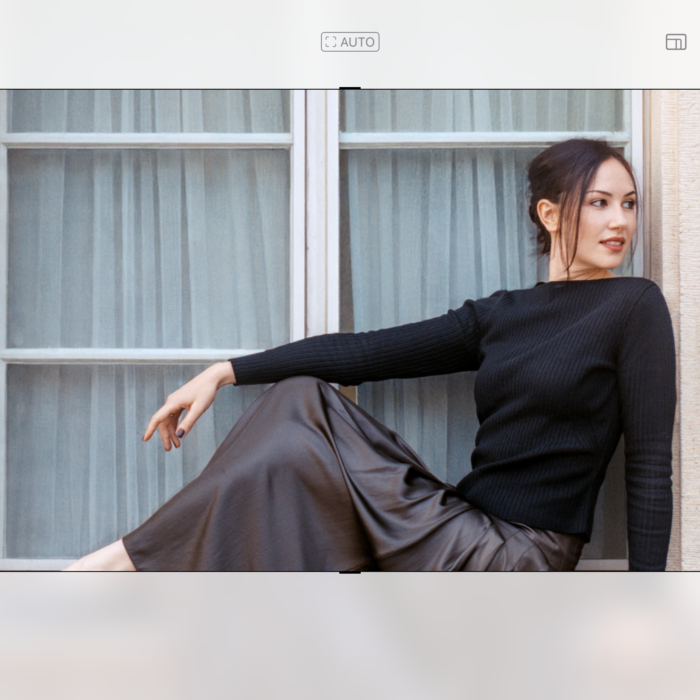
Q & A: Alvise Casellati on Leading Teatro Massimo di Palermo & Opera’s Social Power
By Mike HardyAlvise Casellati was born in Padua, Italy, to a Venetian musical family with important ties to the top classical music composers of the 19th and 20th centuries, including Rossini, Wagner, and Boito, among others. He is the founder and Music Director of Opera Italiana is in the Air (OIA), created in 2017 to bring opera concerts with with superstar singers and young talents to iconic locations, such as Central Park (New York), Lincoln Memorial (Washington DC), Villa Borghese Piazza di Siena (Rome), as well as Naples, Milan, Miami, and more.
Well versed in opera and symphonic repertoire, he has conducted across the globe. He is currently serving as Artistic Director of the Teatro Massimo of Palermo in Sicily, one of the most prestigious opera and dance theaters in Italy — and the world.
OperaWire: Maestro, thank you for inviting me out here to this beautiful theater. Can you explain a little about your role here in Teatro Massimo di Palermo and your involvement in the development of this season?
Alvise Casellati: I joined the theater as Artistic Director in May 2025, a few months before presenting the current season. I had the possibility to “play four hands” with the General Manager and former Artistic Director, Maestro Marco Betta, and shape the whole 2025/26 Season with him. We decided to engage in a new production of “Cavalleria Rusticana” with the idea of creating a “Sicilian experience” for our public, especially for the people visiting Sicily. The beauty of Palermo, and of Sicily in general, is something difficult to match and I have requested to capture this unique beauty in the scenes [that will] be created for this production. The inauguration of the Symphonic Season was the projection of the iconic movie “Il Gattopardo” by Luchino Visconti where our orchestra played the music live, in sync with the movie. Netflix has recently revived this title with a new series [amplifying global] interest for this region… It has been [very emotional] watching the public looking at the beauty of their land and at the elegance of their ancestors through the eyes of Visconti.
I founded Opera Italiana is in the Air in 2017 with the idea of bringing opera to iconic locations, such as Central Park in New York and Lincoln Memorial in Washington DC, with particular attention to promoting young talent as well as attracting the young public to our beautiful musical world. I was very impressed to learn [upon] my arrival in Palermo that the theater is so… invested in [appealing to] a large, young community.
OW: Tell me about the large youth community here at Teatro Massimo.
AC: It is of the utmost importance to pay attention to and invest in the younger generations. Teatro Massimo takes this task very seriously. We have a Kids Orchestra formed of 120 young children (age 7-17), a Youth Orchestra formed of 80 children (age 16-26), a Cantoria formed of 38 children (age 16-26) and White Voice Chorus formed of 38 children (age 7-16). It is a statement of the commitment of this theater [to the younger] generations and [consequently] to the future of classical music and opera. Furthermore, this is quite unique for the whole of Italy. Apart from the Academy of Santa Cecilia in Rome, I’m not aware of any other lyrical institution cultivating so much talent. The [skill] of these children is so high that when they are included in adult productions — i.e. “Tosca” or “La Bohème” — conductors, stage directors, and the public are very much impressed with them and their artistic results.
OW: Tell me about your experiences working with Maestro Marco Betta.
AC: Maestro Betta is our General Manager, former Artistic Director, and a very well-known composer. It is very important for the General Manager to understand the complexity of an opera theater and its core business, its artistic machine… It is a privilege to have a General Manager that has a musical knowledge of such depth. The communication and work between the Artistic Department and the General Manager… becomes completely harmonic. What makes Maestro Betta very special is the human component that characterizes him in exercising his power. He is also someone who attributes great value and fosters the creative work of the artistic department. Let me also tell you that the future of our world lies not only in the investment in the young generation but also in discovering contemporary composers. These are the two necessary ingredients for our opera world to continue. [For an institution to be relatable, it is also crucial that it] address today’s problems.
OW: Which brings us to this current production, which focuses on violence against women. It must have been a difficult task to prepare and present such a topic as femicide?
AC: As I mentioned, it is immensely valuable to represent the big problems of today’s society. While our society [has] evolved through technology and social awareness/human rights, the main feelings and traits of human beings — love, friendship, passion, loyalty, courage, cruelty, violence, and so-on — were the same thousands of years ago as they are today. When we read about femicide in the newspapers, indignation and sorrow are certainly our first feelings. But when we see this violence portrayed onstage, through scenes, singing and acting, our reaction is far stronger — and so too is our judgment and condemnation. This year the message was represented very effectively: the opera opened with a woman being stabbed 75 times with a knife, equal to the number of stabs received by Ms. Cecchettin in 2023: the decision of this case came out in April 2025, creating much debate… It was shocking and moving to see and feel how long and brutal this femicide was. Then, during a change of scene, we listed all the names of women who have been killed in Italy since January 2025. There was a standing ovation with a few minutes of applause [and] with people crying… Something that I have never [seen] myself in a theater before. Silvia Paoli, our stage director, was clearly able to convey this message in a powerful way. When you think of our evolution: only in the last 100 years could women vote. But you don’t have to go [that far into] the past [to reach] 1981. In Italy we had what we called the “Delitto d’Onore” (the Crime of Honor), where a man could receive a reduced penalty — 7 years maximum, as opposed to 21 years minimum in prison — for killing his wife, his daughter, or his sister at the moment of discovering adultery. That [was the same] year the “rehabilitating marriage” was abolished. This law [had] allowed a rapist to have the charge removed if he married the woman he had raped. So, we may think we are very evolved, yet we continue to discover how long of a path ahead we still have.
These laws were based on the assumption that the woman was property belonging to the man. And there are still men today, notwithstanding our laws, [believing their] significant other is a possession, property, an object that belongs to the man. By [staging] the operas “Aleko” and “Pagliacci” together, Teatro Massimo intended to denounce such conduct. In fact, statistics suggest that more than 90 percent of the cases where a woman is killed by a man, the woman turns out to be his ex or the current partner of the killer.
These two operas, “Aleko” and “Pagliacci,” brutally show you femicide — the murder of women — under two different styles of writing by Rachmaninoff and Leoncavallo. It is interesting to understand how two different composers address femicide through music. First of all, “Aleko” is an opera that Rachmaninoff composed in only a few days, for his composition diploma in conservatory, when he was just 18 years old. And there is this fugue that he uses during the femicide, which gives the feeling of something very carefully planned by a very organized… and at the same time detached [mind]. And then, as the music fades away, this community of Gypsies, that lives without laws, exiles the killer. They elect to not respond with violence, nor seek revenge, which is incredible. These “unsophisticated” people, with unsophisticated rules in their society, ended this cycle by not responding to violence with violence; they simply outcast him to a life of solitude. And here, the music becomes thinner and thinner until it closes with the pizzicato and the timpani. Very powerful… The writing of Leoncavallo during the femicide is instead much more passionate, bloody, and ‘Latin.’
OW: I’ve never seen or even read of an entire theater audience standing, mid-performance, to applaud such a powerful symbol as when the spirit of Zemfira from “Aleko” walks onstage to join the still “living” Nedda during “Pagliacci.”
AC: That’s exactly what we had hoped to obtain. Compel people to take a stand against violence. When you speak loudly, it can make a difference. Everyone should be a policeman protecting the women that are victims of these situations. I also saw the conductor crying and wondered if I would have reacted in the same way. This is when the theater’s job is achieved: when you stage an opera to present emotions to the people, to send a particular message, and that message was carried through very well. Throughout the seasons we will have a lot of women heroes: “Dido and Aeneas” and “Semiramide” are two operas we added since I joined the theater to complete our vision for this season.
OW: What is your future vision and aspirations for the Teatro Massimo?
AC: The other important mission of an institution like ours is, of course, education. Here we perform operas for schools and… children of any age. We have thousands of students every year coming to see these operas. We will have a mini version of “Aida” starting end of January 2026 for the schools.
Another important part [is] communication. Today, thanks to social media, we can show young people details about the life of a theater that before was not possible to convey: what’s happening before a performance, how exciting and electrifying this profession is… So taking advantage of all technological tools to communicate but also to bring in young professionals who can use this technology effectively.
Finally, my vision of Teatro Massimo is that of a very respected theater internationally, which also requires the theater to travel beyond Sicily and to develop connections all over the world, as an ambassador of Italian culture.
Stories you may also like…
Q & A: Flora McIntosh, CEO and Artistic Director of OperaUpClose, on ‘Flotsam’ & Conductorless Performances
Q & A: Phil Hagen Jungschlaeger on Digital Art & Creative Technology for Bayreuth Festival’s ‘Ring 10010110’