Q & A: Alexander Marev on Performing at the Opéra de Liège, the Challenges of Being a Young Artists & Dream Roles
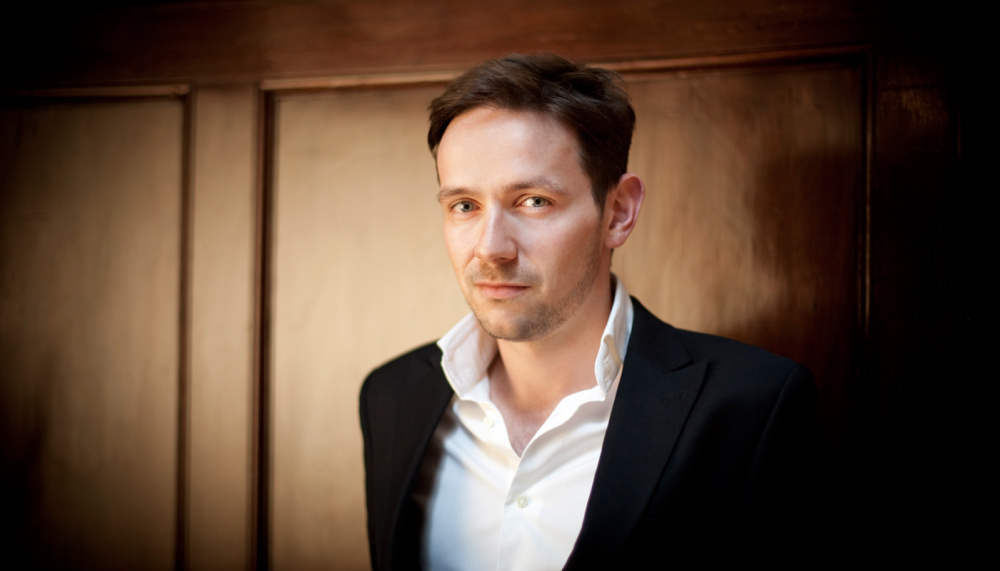
By Francisco SalazarBulgarian tenor Alexander Marev is one of the rising stars of the opera world who has won numerous national singing competitions in his native Poland.
He has also been a young talent program of the Opera La Monnaie/De Munt in Brussels and made his stage debut in March 2022 in a production of “Rigoletto.” Since then he has appeared at the Opera Royal de Wallonie Liege, Teatro Regio di Torino, and Opera de Toulon.
OperaWire: Tell me about performing this piece at the Opéra de Liège. What does this theatre mean to you?
Alexander Marev: The Opéra de Liège is the theatre where my first real experiences and roles were given to me. I was only 20 years old when I auditioned there and received my first engagement, a small role in “Alzira” by Verdi under the baton of the late Maestro Gelmetti. Shortly after that came the COVID pandemic, and all productions were postponed. This eventually led to my debut as Borsa in “Rigoletto,” under the baton of Maestro Daniel Oren, in a production by John Turturro.
From that moment on, we began a very fruitful collaboration with the new management, who believed in me and gave me many opportunities. So when, after “Tristan und Isolde” (2025), in which I debuted the role of Melot, Maestro Bisanti invited me to be the soloist in Faust Symphony by Franz Liszt, it felt completely organic and natural. Each return to Opéra Royal de Wallonie-Liège feels like coming back to my artistic home — a house with a strong vocal tradition and an audience that truly listens.
OW: Tell me about this piece and its challenges.
AM: This piece is very special. It was premiered in Weimar in 1857, although its first version was written by Liszt in 1854. Some critics felt that the original ending lacked the true spirit of Faust, which is why, three years later, Liszt added the Chorus mysticus — a theological and spiritual conclusion following the three parts: Faust, Gretchen, and Mephistopheles.
In essence, these parts function as symphonic poems with their own psychological forces. Faust is striving, restless, and conflicted. Gretchen is innocent, suffering, and pure — “Das Ewig-Weibliche.” Mephistopheles is ironic, acerbic, and demonic. The tenor solo, together with the male chorus, acts almost like a commentary from above, similar to a Greek chorus in ancient drama.
This is where the interpretative challenge lies. The tenor soloist is not Faust. He represents a soul that has suffered and now stands between earth and eternity. For this reason, it should not be sung in a “human” operatic way, as one might sing Faust or Parsifal, but rather as a voice from above — calm, wise, and detached. This is difficult because the music is so beautiful and the orchestral colors so rich that one is tempted to be carried away and sing it like a Romantic tenor role. But that would be a misunderstanding of Liszt’s intention.
OW: How does performing a concert work differ from opera, and where do you feel more comfortable?
AM: The main difference is the absence of staging. In opera, we have a concept, costumes, sets, and a director who provides a visual framework. In a concert performance, the picture is painted entirely through sound — through the orchestra and the voice.
Understanding the piece becomes absolutely crucial. I have recently realized that I am much more reactive to sound than to image. That is why, when I visit art galleries, I often listen to music — it awakens my imagination and allows me to see more. Recently, I visited an exhibition of Gerhard Richter at the Louis Vuitton Foundation in Paris, and throughout the entire visit I listened to the third act of “Tristan und Isolde” and Mahler’s Fifth Symphony. The experience was overwhelming.
Concert performance offers a special freedom. Soloists can create their own inner imagery through sound alone. We can focus entirely on balance, color, and musical meaning, without worrying about stage positions, sets affecting acoustics, or singing while suspended on a rope. I feel comfortable in both worlds. Opera productions require time to absorb the director’s concept and weeks of staged rehearsals. Concert pieces, on the other hand, allow music to dominate completely — interpretation and sound are everything.
OW: You were part of the Young Artist Programme at La Monnaie. How was that experience?
AM: I was very fortunate to go straight on stage during my time in the Young Artist Programme at La Monnaie. My first project was a concert version of “Parsifal,” and that was when my love for the music of Richard Wagner truly began.
For a young artist, regular contact with the stage is essential — it is the best teacher and the most honest measure of where you stand. I attended every production, carefully observing my more experienced colleagues: how they warmed up, how they prepared, what their routines were. Peter de Caluwe, the former general manager, always looked for young artists to give them opportunities to shine, which is a remarkable quality.
The programme allowed me to work with outstanding artists such as Alain Altinoglu–music director of the house, and stage directors like Olivier Py. It also included numerous masterclasses with guest soloists, coaching sessions with the Head of Music Ouri Bronchti, and with Angélique Noldus, the vocal coach of the program.
OW: What did this experience teach you about the opera world and your current career?
AM: Young Artist Programs offer a glimpse into what it means to be a full-time soloist. They teach discipline, preparation, self-reflection, and constant development. They form a bridge between being a student and becoming a professional, while also answering a crucial question: Is this profession truly for me, and am I willing to make the sacrifices it requires?
They also provide invaluable networking opportunities — speaking with casting managers, directors, and artistic staff. I was never shy, so I used every opportunity to ask questions, exchange ideas, and seek auditions.
I must also mention my early experience at the Chapelle Musicale Reine Elisabeth, in the vocal department of José van Dam, who gave me my first real opportunity when I was 16. There I received language coaching in German, Italian, French, and Russian, and sang my first major concerts, including a Christmas concert for the Belgian Royal Family broadcast worldwide — one of the most stressful and formative experiences of my life at the age of 18.
OW: What are the biggest challenges for young artists today?
AM: Financial pressure is certainly one of the biggest challenges. Auditions require travel, and it takes time before a stable income develops. Without scholarships, foundations, or family support, the beginning can be difficult.
Another crucial challenge in this profession is finding the right management. A good management does not simply secure engagements, but helps an artist to be noticed, to build a clear and authentic personal brand, and to choose repertoire wisely and responsibly. This guidance allows a singer to grow organically, protecting the voice and artistic identity while opening the right doors at the right time. When this structure is in place, the artist can focus fully on the creative process rather than on constant strategic survival.
Choosing the right teacher is also crucial. Many voices are damaged by poor guidance disguised as charismatic “guru” authority. Recording oneself, listening honestly, and comparing different singers and interpretations is essential. Conductors appreciate singers who arrive prepared, with a clear musical concept.
Finally, there is the psychological and physical aspect. Singers are athletes of the voice, yet often neglect mental and physical care. Tension in the body or mind directly affects sound. The goal should never be to sing higher or louder, but freer and more beautifully.
OW: What are some of your dream roles?
AM: After singing roles appropriate for me now — such as Lensky, Tebaldo, Alfredo, or Narraboth — I dream of moving toward lirico-spinto repertoire. These roles are fascinating both vocally and psychologically. Des Grieux in “Manon Lescaut,” Dick Johnson in “La fanciulla del West,” Eleazar in “La Juive,” Werther, and especially Faust in “Mefistofele” are among my dreams.
One day, I would love to sing Parsifal and Lohengrin, but only later. I am 25 now, so there is plenty of time — and dreaming requires patience.
OW: When did you realize you wanted to be an opera singer? Was music part of your childhood?
AM: I come from a non-musical family, but music was always present in my life. My mother took me to the Teatr Wielki – Opera Narodowa in Warsaw, and my late grandfather, who studied in Budapest, attended opera or ballet performances almost every week.
There is a family story: during national mourning after the death of the daughter of Todor Zhivkov, loud music was forbidden. My grandfather and his friends were listening to Verdi’s “Rigoletto” at full volume when the militia knocked on the door, demanding silence. My grandfather replied, “It’s Comrade Rigoletto,” to which they answered, “Ask Comrade Rigoletto to be quiet.” Clearly, they were opera lovers too.
The first time I imagined myself as a singer was in primary school, when our teacher asked us to draw our dream job. I drew a pilot — and Luciano Pavarotti. Interestingly, many tenors, like Mike Fabiano or Klaus Florian Vogt, are also pilots. So perhaps both dreams can coexist.

Stories you may also like…
Q & A: Peruvian Tenor Iván Ayón-Rivas on the Duke of Mantua, His Royal Opera House Debut & Continuing to Study
Q & A: Serge Dorny on Taking Presidency of Opera Europa, The Future of Opera & Anna Netrebko’s Return to Bayerische Staatsoper