Opernhaus Zürich 2025-26 Review: La Damnation de Faust
By Laura Servidei
First performed in 1846, “La Damnation de Faust” remains one of Hector Berlioz’s most audacious and elusive works: neither fully opera nor oratorio, but a hybrid “dramatic legend” that defies conventional staging and genre. Drawing on Goehte’s “Faust” while filtering the story through Berlioz’s intensely Romantic imagination, the piece moves with feverish speed from pastoral lyricism to infernal spectacle, demanding considerable forces and emotional range from performers and conductor alike. Any production of “La Damnation de Faust” must therefore negotiate not only the work’s technical and musical challenges, but also its shifting philosophical atmosphere—by turns ecstatic, ironic, intimate, and apocalyptic.
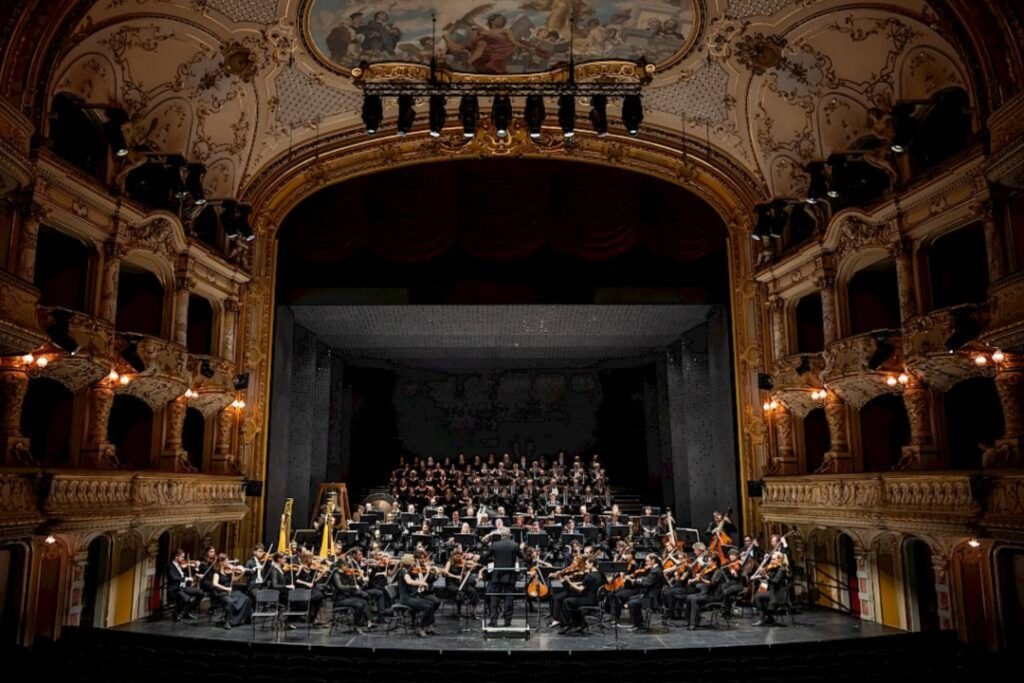
A Concert Performance of Great Commitment
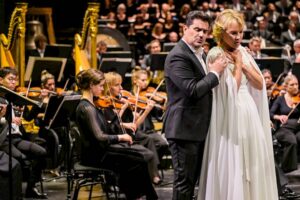
In its current season, the Zurich Opera House presents “La Damnation de Faust” in concert form, an approach that strips away theatrical distraction and places the focus squarely on Berlioz’s extraordinary musical imagination. Heard without staging, the score reveals itself as a vast Romantic soundscape in which Goethe’s “Faust” becomes inseparable from Berlioz’s own experiences and obsessions: memories of journeys across Europe, evocations of forests and mountain paths, rustic celebrations, military marches, and sudden eruptions of visionary grandeur all flow freely through the work. Musical ideas seem to arise from countless sources and landscapes, accumulating in a form that is deliberately episodic yet emotionally coherent. Berlioz was ultimately less concerned with strict fidelity to Faust than with expressing a broader Romantic yearning, and in doing so he captures not the letter of Goethe’s text, but its restless, searching spirit with remarkable precision.
Yves Abel led the Zurich Opera Orchestra in an exciting and deeply committed reading of “La Damnation de Faust,” with the woodwinds and brass especially prominent in shaping the vivid landscapes and shifting atmospheres of Berlioz’s score. The orchestra responded with passion and energy, vividly conveying the work’s contrasts between pastoral reverie, martial brilliance, and infernal horror. Abel’s interpretation perhaps sacrificed a degree of specifically French refinement and transparency, as climactic passages occasionally became louder and more bombastic than evocative or intimate. Yet the performance never lacked conviction, and the orchestra produced a consistently beautiful sound, embracing the score’s sprawling Romantic imagination with admirable dedication and intensity.
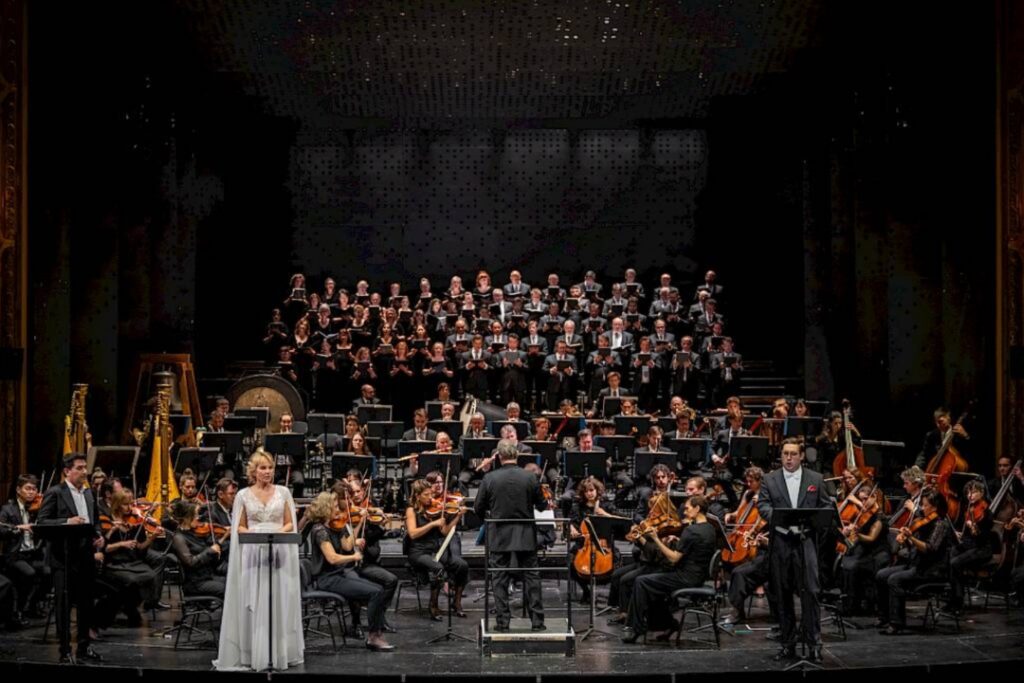
Chorus as Dramatic Force
The chorus plays a central and multifaceted role in this opera, transforming itself throughout the work into groups of carefree students, swaggering soldiers glorifying martial honor, pious congregations absorbed in prayer, and finally the terrifying demonic voices of the abyss singing in strange, invented tongues. In this performance, the Zurich Opera Chorus, prepared by Klaas-Jan de Groot, rose impressively to these varied demands with precision, clarity, and keenly judged dynamics. Whether in moments of exuberant brilliance or hushed devotional atmosphere, the chorus sang with discipline and dramatic intelligence, making a decisive contribution to the overall success of the performance.
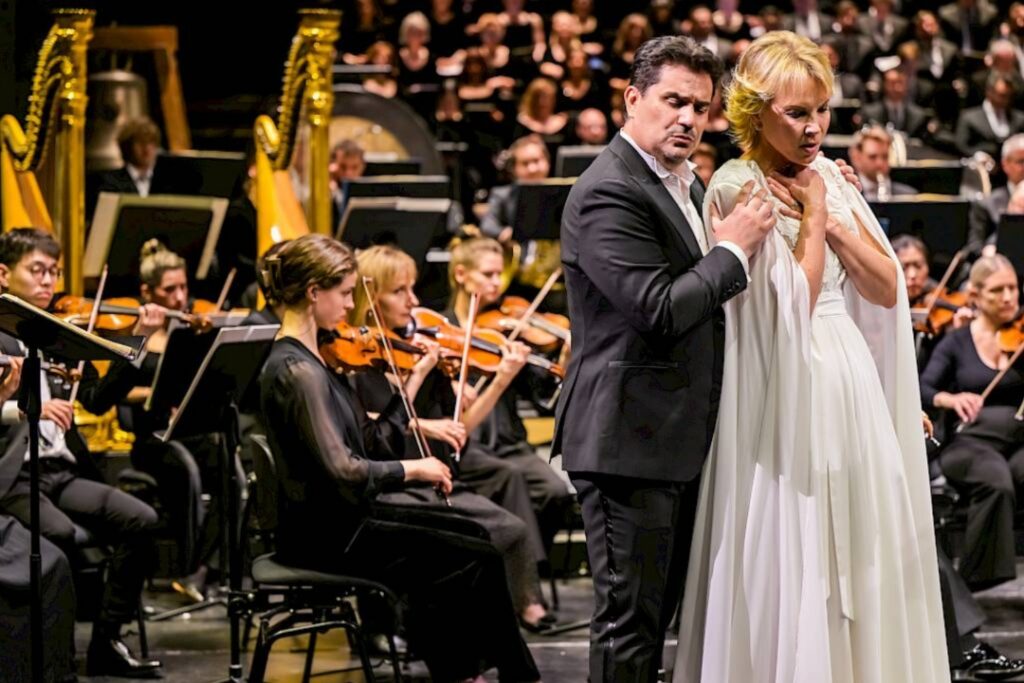
Pirgu’s Heroic Faust
Saimir Pirgu sang the title role with a muscular and incisive tenor, his brilliant and focused high notes drawing enthusiastic appreciation from the audience. He navigated the formidable demands of Berlioz’s writing with assurance, even employing an almost falsetto-like timbre for the highest phrases of the love duet with Marguerite. At times, however, the voice seemed somewhat too dramatic and forceful for the introspective nature of the role, and his attempts at mezza voce did not always achieve the desired refinement or ease. Nevertheless, Pirgu succeeded in tracing Faust’s psychological journey with conviction, conveying the weary ennui of the aging scholar in the opening scenes, his sudden and fragile passion for Marguerite, and finally the terror and despair of his descent into hell.
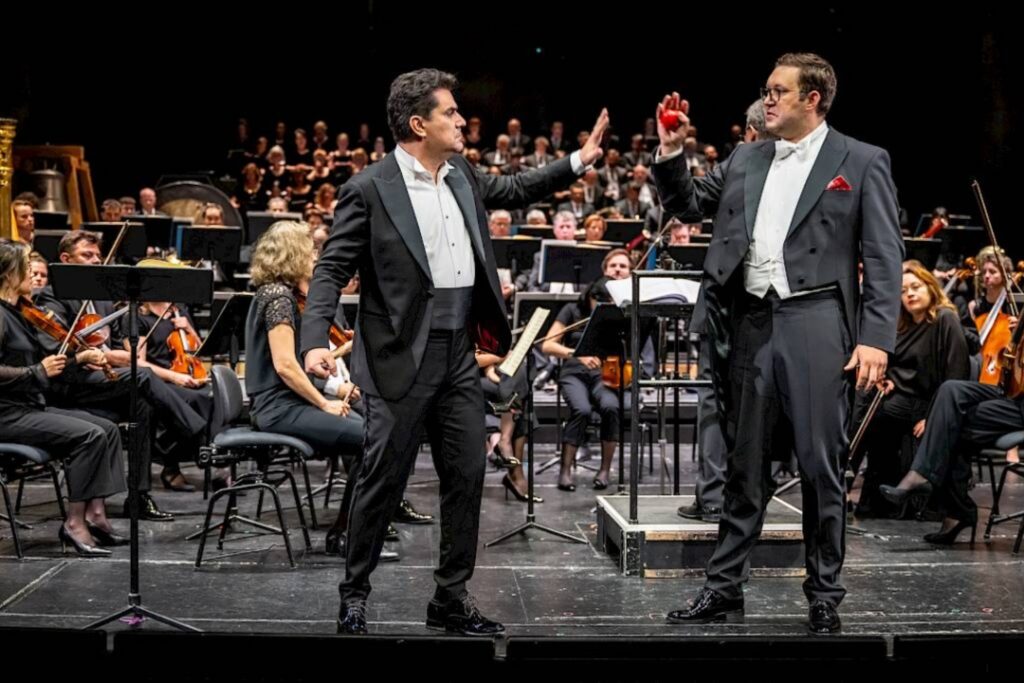
Vorobyov’s Magnetic Méphistophélès
The role of Méphistophélès—the devil who seduces and ultimately destroys Faust—is arguably the dramatic and musical center of “La Damnation de Faust.” At once manipulative tempter, cynical observer, and commanding theatrical presence, the character requires extraordinary vocal versatility and charisma. Stanislav Vorobyov proved a genuine triumph in the role, capturing all the shifting facets of Méphistophélès with remarkable assurance. His smooth and superbly projected bass displayed exceptional technical control and striking uniformity across the entire range: the upper notes emerged beautifully covered and secure, while the lower register resonated with an appropriately dark and menacing weight. Méphistophélès is a perpetually transforming figure, by turns sarcastic toward Faust’s shallow nostalgia for lost faith, irresistibly seductive in his presentation of worldly pleasures, and chillingly arrogant in his manipulation of events. Vorobyov moved through these contrasts seamlessly, never sacrificing vocal beauty or dramatic focus. Whether delivering the vulgar tavern song “Une puce gentille” with biting theatricality and agile attack, or lulling Faust into enchanted sleep in “Voici des roses” with remarkable legato and sweetness of tone, he maintained complete command of the role. The result was a thoroughly compelling performance.
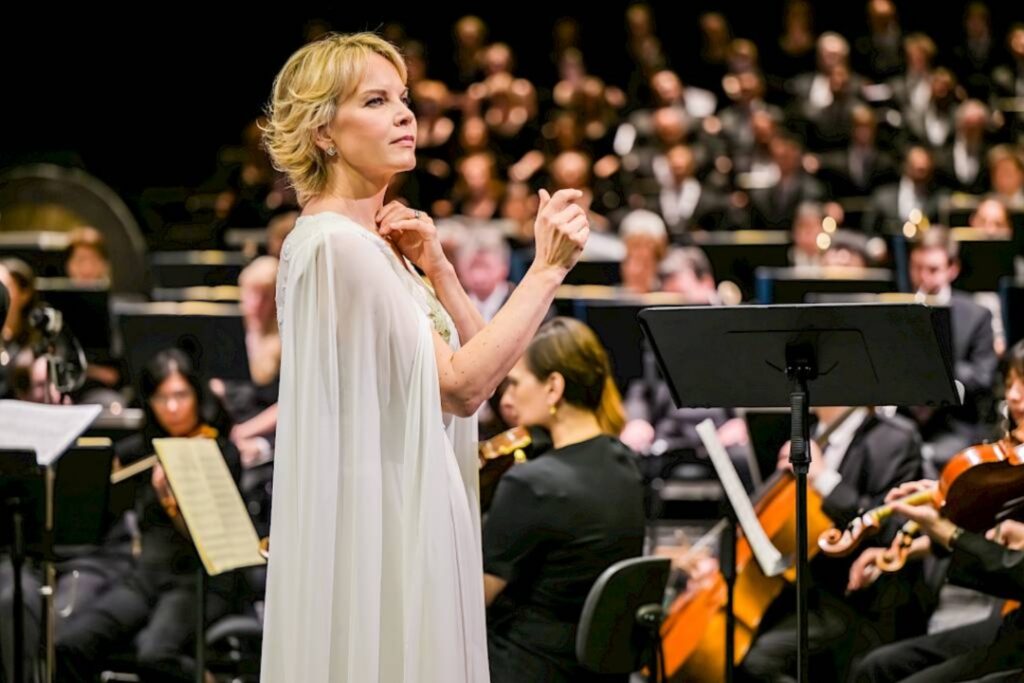
Garanča’s Ardent Marguerite
Elīna Garanča’s Marguerite proved one of the great pleasures of the evening. Her honey-hued mezzo-soprano, rich in bronze colors and supported by a superb technical foundation, unfolded with remarkable ease and refinement throughout the performance. She displayed perfectly focused high notes, impeccable musicality, and consistently intelligent phrasing, shaping Berlioz’s long melodic lines with elegance and control. Vocally, Garanča possesses an aristocratic and somewhat aloof timbre that does not immediately evoke the image of the demure and innocent young maiden traditionally associated with Marguerite; yet she nevertheless brought genuine passion and dramatic intensity to the role, particularly in her great aria, “D’amour l’ardente flamme,” which became one of the undeniable highlights of the evening. Her duet scene with Saimir Pirgu was equally moving, sung with heartfelt emotion and a palpable sense of lyrical intimacy.
The cast was aptly completed by Amin Ahangaran as Brander, who delivered the tavern song “Certain rat, dans une cuisine” with considerable spirit, sharp theatrical instinct, and a warm, attractive bass. His lively contribution added further color to the convivial tavern scene and rounded a strong ensemble cast.