Metropolitan Opera 2026-27 Review: La Bohème
By Jennifer E. Pyron(Photo: Karen Almond © Met Opera)
Conductor Ramón Tebar made his Metropolitan Opera debut for this season’s opening night of Puccini’s “La Bohème.” The cast included a surprising addition as well—tenor Freddie De Tommaso as Rodolfo, who is also performing as Macduff in “Macbeth” this season.
Altogether soprano Juliana Grigoryan as Mimì, soprano Rosa Feola as Musetta, baritone Hansung Yoo as Marcello, bass-baritone Le Bu as Colline, baritone Gihoon Kim as Schaunard, baritone Donald Maxwell as Benoit/Alcindoro rounded out this stellar cast of performers for the Met’s 1,431st “La Bohème.”
A Thousand Parisian Chimneys
Franco Zeffirelli’s traditional staging of “La Bohème” is the perfect backdrop for one to experience the trials and tribulations of love, loss and coming of age. The Paris skyline circa 1830, captivated by grey skies and simple rays of light, frames the dilapidated flat in which young French artists come to grips with the French revolution and war. Their resistance to the external chaos is to love more and lean on each other. This is an honest glimpse through the lens of everyday life.
(Photo: Karen Almond © Met Opera)
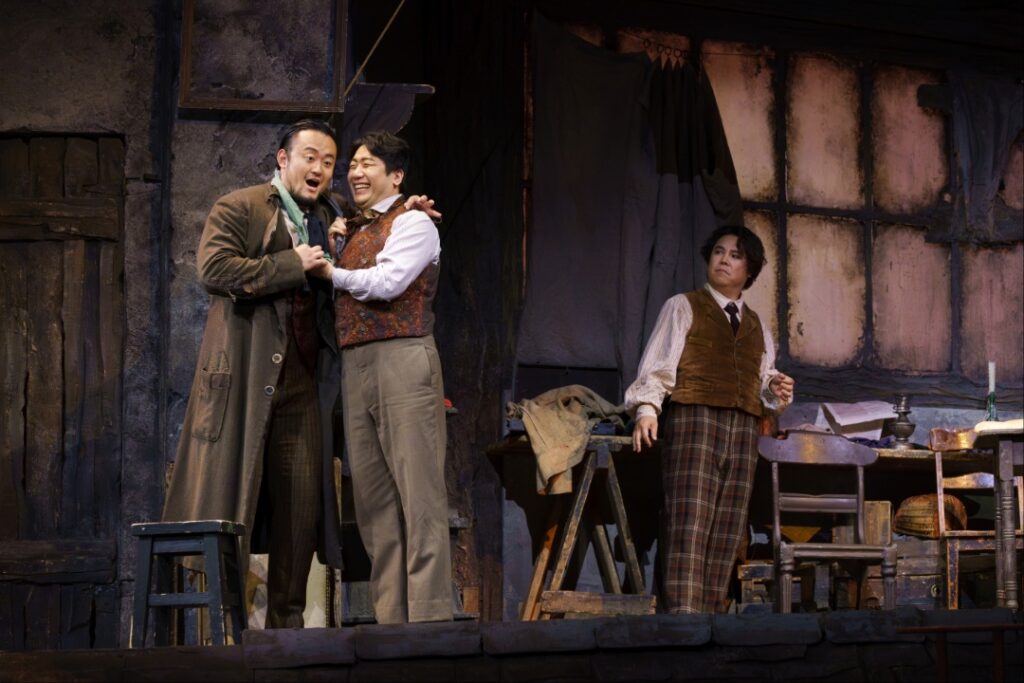
“Questo Mar Rosso” is the opening aria in which the audience first gets introduced to Marcello (painter), Rodolfo (poet), and Colline (philosopher). The three share moments of banter in their garret with a partially curtained window overlooking the snowy Parisian rooftops and charcoaled chimney stokes.
Freddie De Tommaso, Hansung Yoo, and Le Bu were an organic combination of well-trained voices and character portrayals from the beginning that only developed further as the night went on. Yoo as Marcello was jovial and well-poised. His voice displayed a palette of beautiful colors.
(Photo: Karen Almond © Met Opera)
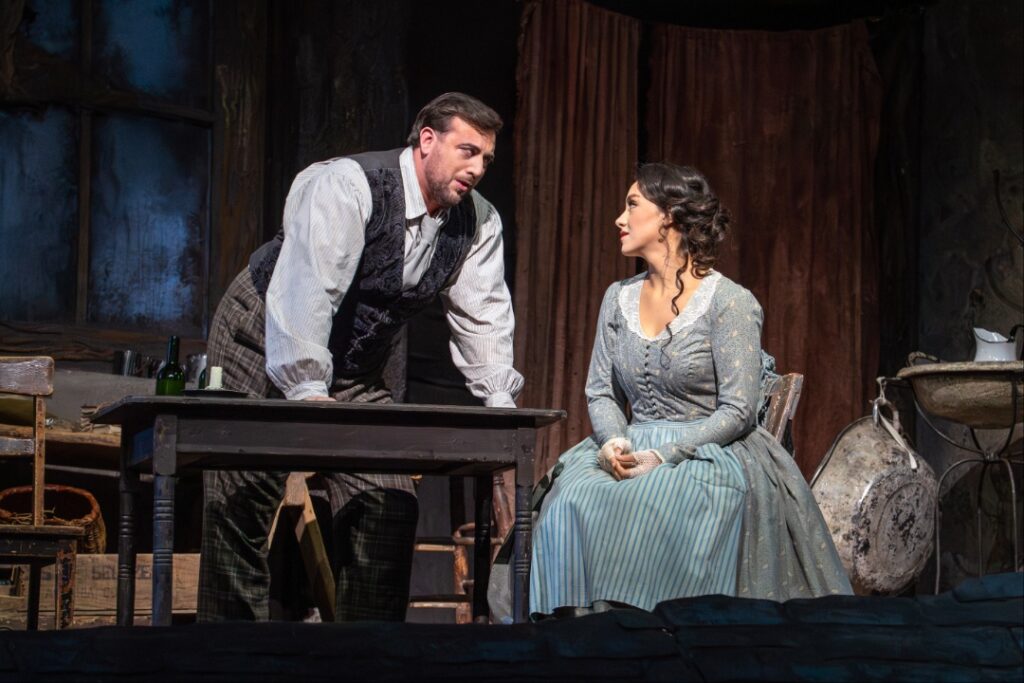
Freddie De Tommaso as Rodolfo was the defining factor of the night that took this opera to its next level. His stage presence was like a bright ray of sunshine and his eyes sparkled with joy. I had yet to experience De Tommaso live and discovering that he would be performing on this night was an exciting surprise. His vocal phrasing and legato were consistently on point and memorable.
De Tommaso’s aria “Che gelida manina” was a revelation. His Italian diction and vocal dynamics were excellent. The secret to his sauce though was the pure joy he exuded when singing. His heart was in the right place and Puccini’s music absolutely requires this first and foremost. Without this point of reference, one will fall flat, no matter how great they think they sound.
A Rose Blossoms in My Vase
Juliana Grigoryan as Mimì was De Tommaso’s match made in heaven. Her voice evolved in its delivery. “Sì. Mi chiamano Mimì” fueled the idea of Mimì’s feeble qualities, shyness and (tragically) her developing illness.
“O soave fanciulla” showcased Grigoryan and De Tommaso’s budding chemistry. Their voices interweaving together created a tapestry of complex emotions on the brink of lust brimming over into feelings. Here, Grigoryan stretched her upper range and accessed a sweet spot where she would return to later in Act three. The audience roared with applause after this duet.
(Photo: Jennifer Taylor © Met Opera)
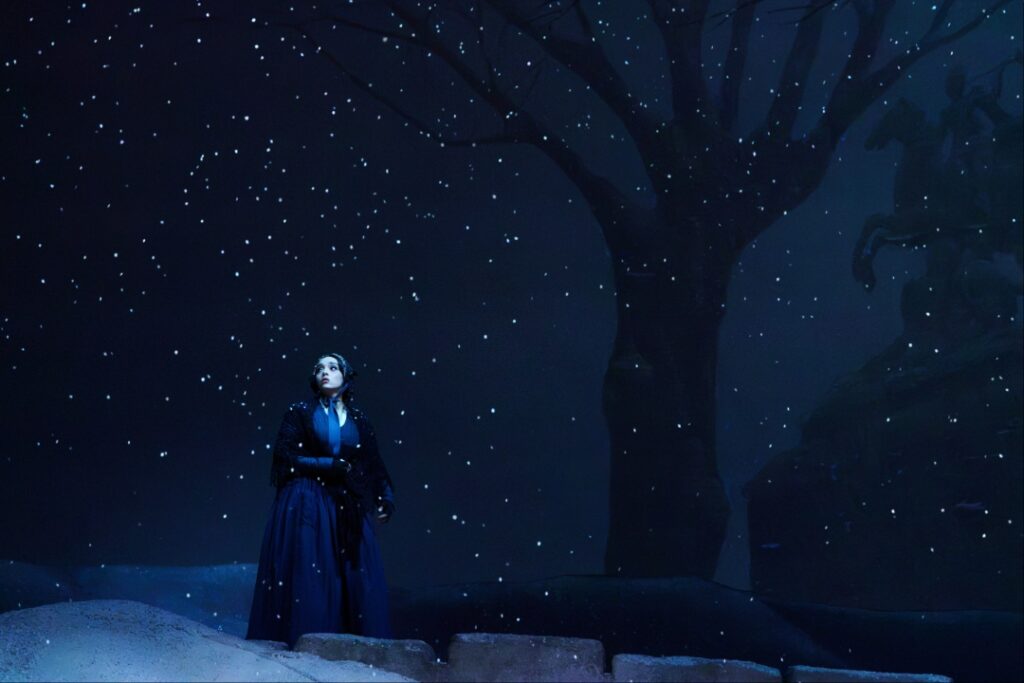
It wasn’t until her Act three aria, “Donde lieta uscì,” when Grigoryan let her voice unfurl completely and unabashedly. This moment was a fissure in the lover’s happiness now fading into the past and entering the stage of trust meets one’s own mortality. Mimì’s health is declining and Rodolfo’s patience is dwindling. A dark storm brews beneath the surface as a quiet snow falls.
Grigoryan’s presence changed in this moment. Her vocal qualities and facial expressions were stoic and steadfast in confidence. Was this her last grasp of life and ultimately her last request to be loved? Usually this role is straight forward in its appearance, however Grigoryan made it her own and one could only imagine what was going through her tormented mind. I’m still thinking about it. Brava!
I Savor the Subtle Desire
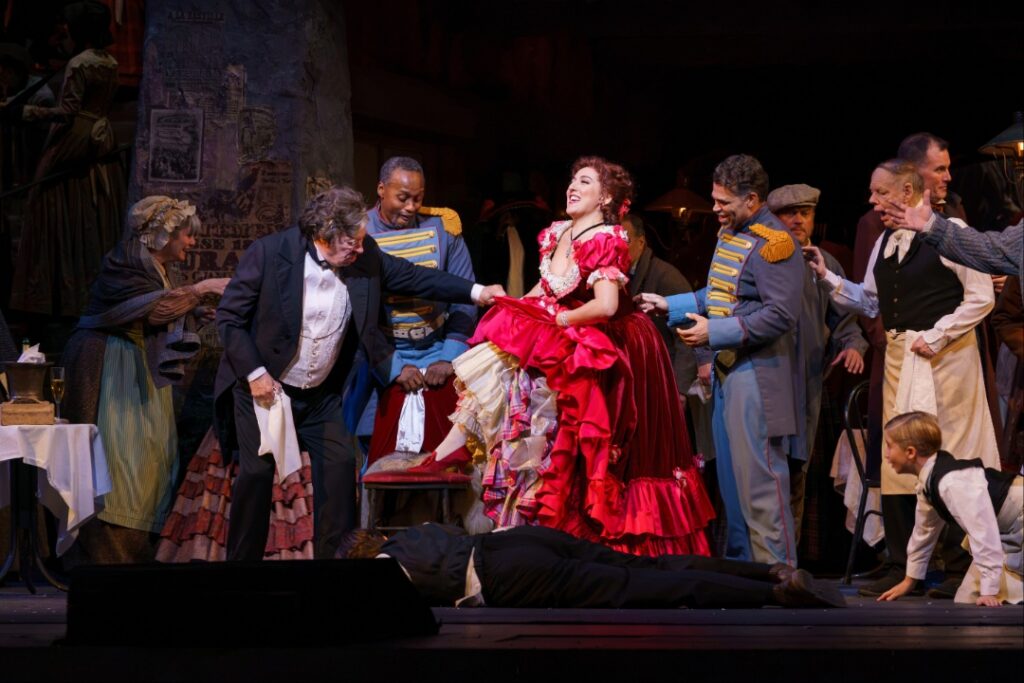
Rosa Feola as Musetta was the center of attention especially during “Quando m’en vo” (Musetta’s Waltz). Her acting and flirtatiousness was perfectly over the top. Donald Maxwell as her wealthy older suitor added to the dramatic scene as she broke plates, danced on tables, and threw her skirt up while the waiters dove in a furry to get a closer look. The audience was amazed at the grand spectacle.
(Photo: Jennifer Taylor © Met Opera)
One cannot forget to mention the Dancing Bear at the opening of Act two and the toy vendor, Parpignol (complete with a donkey). The Met Chorus and children gave a lively performance of this favorite moment in time always worth savoring. The amount of activity on stage was mind blowing and very well timed. Everything was in its right place.
You Have Sheltered in Your Pockets Like Peaceful Caves
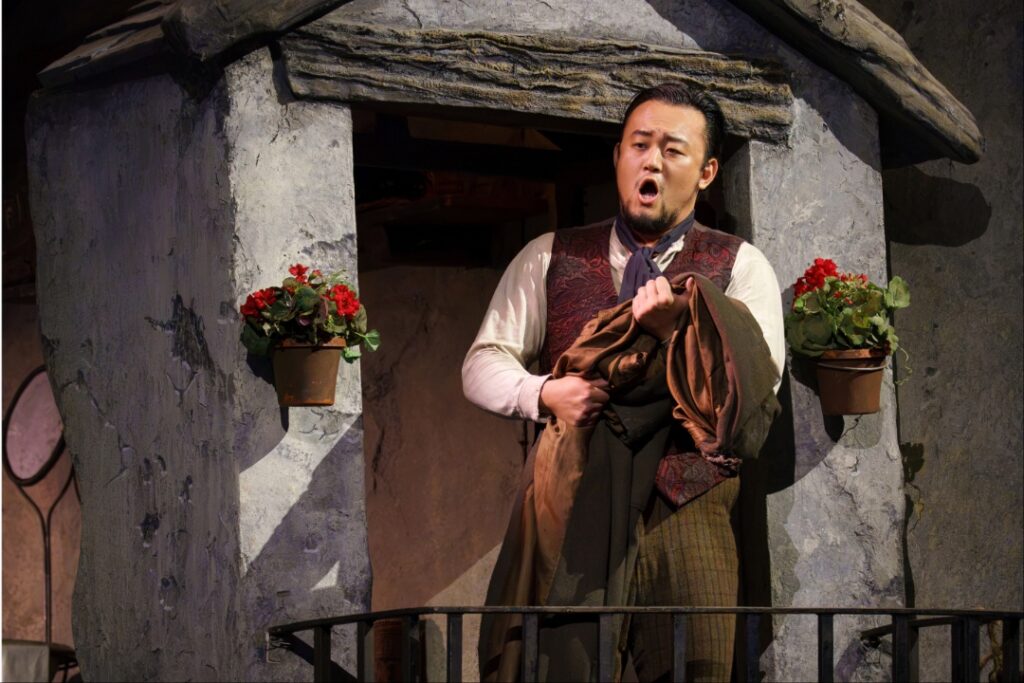
Le Bu as Colline performed “Vecchia zimarra, senti” with a rare combination of tenderness and turmoil. His voice swelled with a deep understanding surrounding loss and one’s own mortality. I want to hear more of his work in the future. He is absolutely a star on the rise.
(Photo: Jennifer Taylor © Met Opera)
Mimì and Rodolfo’s duet, “Sono andati? Fingevo di dormire,” was devastatingly tragic. Here was love’s flame rekindled only to be lost in the silence of death’s still knowing. Grigoryan and De Tommaso’s final embracing left no dry eye in the audience. His soulful cries for her etched into one’s memory.
All of this was channeled by the acute awareness of conductor Ramón Tebar and this proved to be a most historical “La Bohème” to behold.