Metropolitan Opera 2025-26 Review: El Último Sueño de Frida y Diego
Isabel Leonard, Carlos Álvarez & Gabriella Reyes are Spectacular in Gabriela Lena Frank’s Opera
By Francisco Salazar(Photo: Marty Sohl / Met Opera)
On May 14, the Metropolitan Opera showcased the New York premiere of “El Último Sueño de Frida y Diego” by Gabriela Lena Frank and Nilo Cruz. The opera, which had its world premiere in 2022 at the San Diego Opera, has been a staple at many U.S. company’s over the past years including LA, San Francisco and Chicago.
Now it was time for the Met to show the third Spanish-language opera in Peter Gelb’s tenure, and like the other two, “Florencia en el Amazonas” and “Ainadamar,” this one proved to be another essential win for the company.
Mystical Music
Frank and Cruz’s opera isn’t a true biopic nor is it concerned with telling a run of the mill A to B plot. Instead it conjures a fantastical story that is reminiscent of the legends of “Faust” and “Orpheus and Euridice,” in which Frida leaves the underworld on the Day of the Dead to reunite with her husband Diego Rivera and bring him back with her. And that is a huge strength as the opera is able to seamlessly flow without ever feeling like there are too many scenes or too much action. It is a work that truly understands the concept that opera is about emotions and more stream-lined narratives go farther. Cruz is able to infuse a libretto that is emotional, philosophical and at the same time comic in many moments. Meanwhile, Frank brings many textures to the score with an array of instruments like the marimba and vibraphone blending naturally with the woodwinds and the strings to create an original color palette. She fuses the folkloric sounds of Mexican culture and the elements of Mariachi music in the second act while also keeping to a more modern soundscape that sees dissonance combined with eerie dark sounds that bring out the otherworldliness of the opera. Perhaps the melodies are not as memorable as you would want, but the weight of the score, especially during the closing choral pieces of both acts, leave an impact.
The only real downside to the score that I found was the repetitiveness in Frida and Diego’s music as it is mostly adagio and long legato lines that tend to blend into one another and feel overly similar. I felt that perhaps a different rhythm or beat could have been used to convey their emotions instead of the repetitive tremolo accompaniment. The other issue I had was the length of the first act, as it seemingly stretches out Frida’s decision to leaving the underworld, making for an uneven structure, especially given that second act is filled with more interesting action.
But even with these small issues, it was an illuminating work.
Visually Stunning
For the Met’s premiere, the company decided to create a new staging by Deborah Colker, who made her Met debut last season with “Aindamar.” The decision is questionable given the Met opera’s constant complaints about finances. Since the premiere of the opera, each company presenting the work has revived the same production, sharing the costs of a co-production. While the Met’s ambitions of bringing something new is commendable, I hope that the company will revive this staging in the near future and not keep it in storage like it does many new productions that are never revived.
That becomes all the more important considering that Colker’s vision for the opera is visually compelling. Inspired by Frida’a self-portrait “The Love Embrace of the Universe, the Earth (Mexico), Myself, Diego and Señor Xólotl,” large cracks with red lights reminiscent of volcanic ash figure into the production and blue curtains surround it throughout the evening. There is also a red tree that is seen throughout the production, evoking that magical realism of the piece and connecting it to the opera’s themes of life, growth, strength, and connection. It is visually spectacular to look at from the orchestra level and based on the videos, perhaps even more epic from the higher levels of the Met. The dance choreography that is showcased throughout particularly the skeletons are impressive and immersive especially with how culturally detailed each movement is.
The costumes by Jon Bausor and Wilberth Gonzalez are also spectacular as they bring to life Frida’s iconic wardrobe with meticulous specificity. And the use of colors evokes the festiveness of the Day of the Dead and the traditional folkloric colors of the Latin culture. Also commendable is La Catrina’s make-up, which covers Gabriella Reyes’ entire face in skeletal features that are so vivid and which blend beautifully into her wardrobe.
Perhaps my only qualm with the production was the clutter of Act two in which Frida and Diego move from a scaffold into a park/mercado setting and then to the house where the constant shifts from scene to scene were a bit distracting with chorus members and supers taking chairs and other items off the stage while the leads were singing. Also problematic was the use of space for such an immense theater like the Met’s; it seemed that the staging restricted itself causing that feeling of clutter in Act two.
Three Show-stopping Leads
In the role of Frida Kahlo, Isabel Leonard brought her plush lyric mezzo to the fore, displaying gorgeous legato lines in her duet with Carlos Álvarez’s Diego Rivera and rhythmic coloratura in her opening aria and in her encounters with Gabriella Reyes’ Catrina. She also showcased fiery and resonant chest sounds, especially in Act two, and radiant high notes during the climatic moments of the music. In the ensembles she also rose over the choral moments even if the orchestra threatened to derail her performance (more on that later). Leonard also embodied the desperation of Frida in the first act and in the final moments of the second act as well as tenderness and playfulness of her character in the aforementioned second act duet with her physical transformation coupled with her vocal textures singing with caressing pianissimos and lush fortes.
Leonard was physically immersed, her emotions expressed through the subtly of her facial expressions. One stand out moment came in Act two, after Frida decides to embrace Diego breaking the rules of la Catrina. Leonard’s movements suddenly mirrored those of one of the skeletons on stage showcasing Frida’s entranced state. Leonard’s movements were jagged and choreographed like that of a dancer, creating a haunting scene.
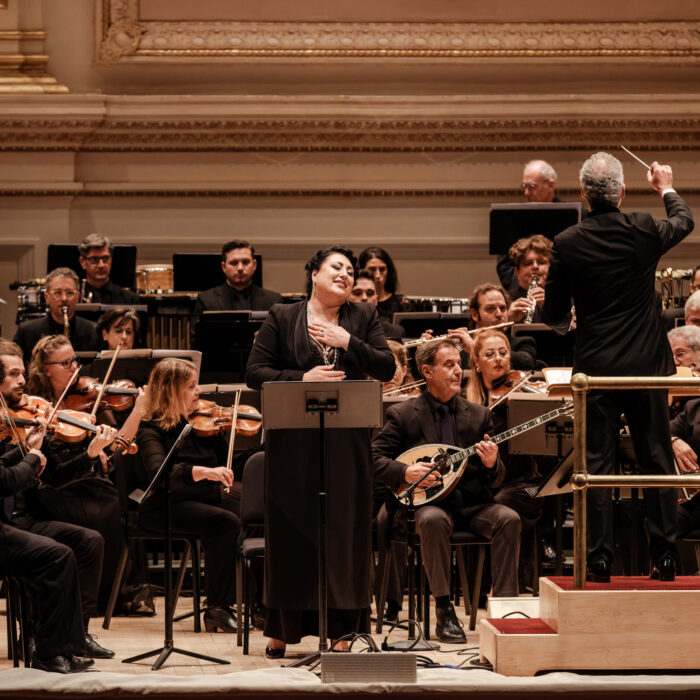
As Diego Rivera, Carlos Álvarez returned to the Met for the first time since 2009, when he performed the title role of “Macbeth.” Now in a later stage of his career, the baritone still maintains a vocal and stage presence that is incomparable. As Diego Rivera, he embodied the character with tremendous force, showcasing Rivera’s suffering and tenderness and his final scene as he died in Leonard’s arms was heartbreaking. His voice was also expressive, showcasing elegance and desperation in his opening aria and warmth and passion during his extended duet with Leonard’s Frida. The long legato lines were seamless and his high notes were resonant and affecting. His final scene was also a standout moment as he sang with a shimmering piano sound that brought you in and slowly died down. But perhaps what makes Álvarez so compelling is his way with the text as his diction is clear and how to merge that with his legato to give it the proper cadence, something so few are able to do.
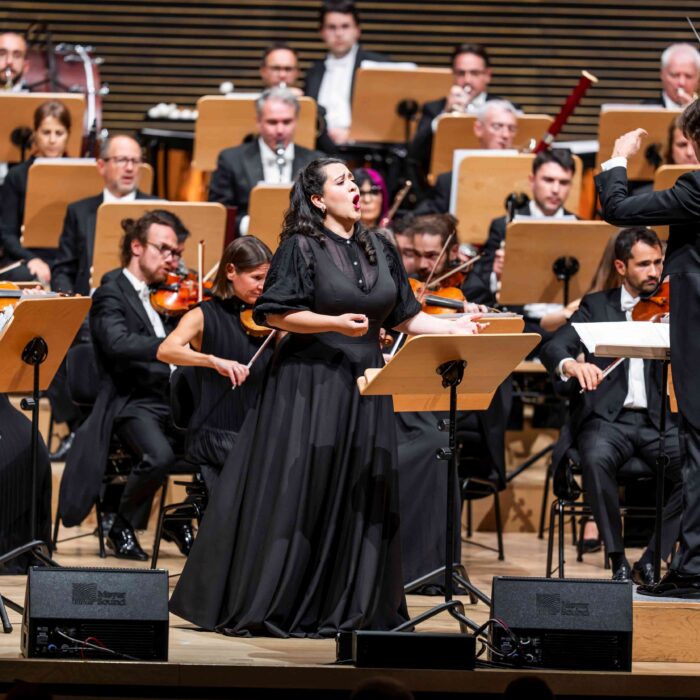
As La Catrina, the keeper of the dead, Gabriella Reyes was a real standout, singing with a gorgeous bright lyric voice that resonated with ease into the Met’s auditorium. The role is demanding in that the soprano must sing from extreme highs to extreme lows. And in that same vein, she must sing florid coloratura and create the effects of laughter all while moving about the stage with agility. Reyes was up to the task, singing with vibrant high notes and impeccable coloratura that showcased her agile vocal quality. The chromatic triplets were also clear and her laughter-like cadences were demonic. In her Act two trio, she blended gorgeously with Leonard’s and Álvarez’s voices, also toning down her sound to give center stage to her colleagues. Scenically it was clear that she was having fun moving about the stage with gusto and stepping over the stage’s cracks with ease almost like a dancer.
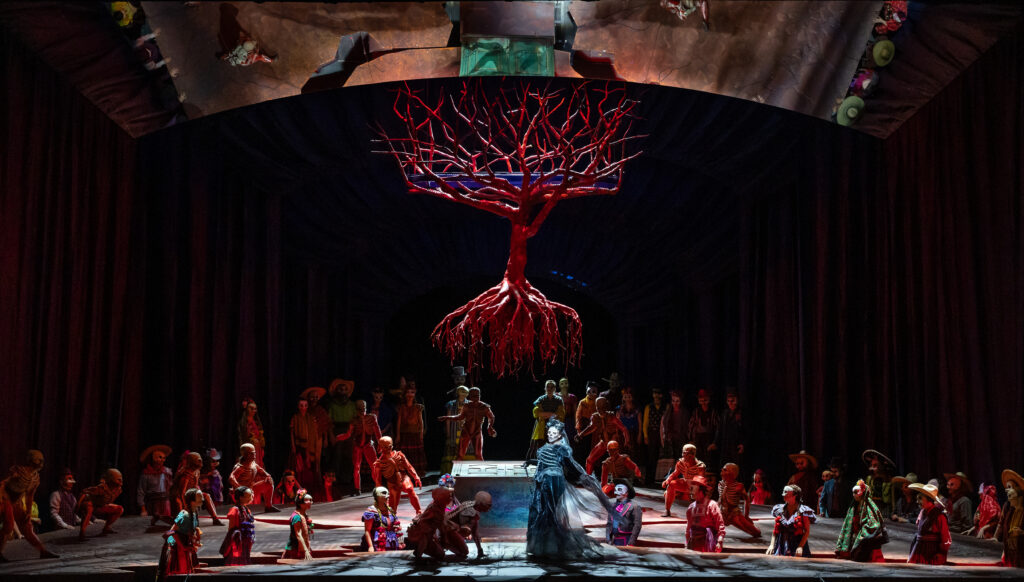
Photo: Marty Sohl / Met Opera
Fantastic Support
Nils Wanderer made his Met debut as Leonardo, a young actor who desires to return from the dead as Garbo to please a fan, helping Frida decide to return to the living. Wanderer showcased a deep countertenor voice with exquisite legato lines that flowed with beauty from his higher register into his unusually deep low notes. His turn into Garbo in Act two exuded elegance and glamour.
As Frida’s Images, Kresley Figueroa, Mary Beth Nelson Zaros and Cecilia McKinley made their debuts singing their ensemble part with gorgeously blended voices. However, it was Figueroa who stood out in the ensemble with her smoky lyric soprano that resonated over the ensemble with strikingly diction.
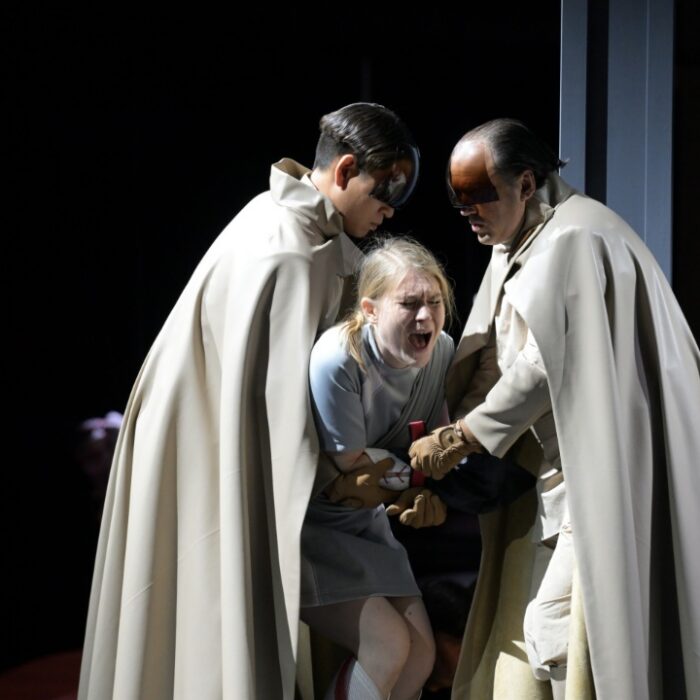
The villagers performed by Paul Corona, Angel Raii Gomez, who was also the young man, and Scott Connor were also in good voice. However, Corona and Connor’s diction suffered, sounding a bit too accented.
Props to the chorus under the leadership Tilman Michael, who accompanied the giant ensembles with precision and depth while also displaying an understanding of the Spanish text and bringing clarity to the diction.
An Avalanche of Unwanted Sound
The biggest disappointment of the evening was in the pit. Conductor Yannick Nézet-Séguin is known for bringing out new colors in his orchestral readings and attempting to try to infuse fresh sounds into each score he conducts. But many times this approach comes at the expense of his singers. He lacks nuance that bel canto music teaches the best conductors as most of the time he runs the orchestra roughshod over the singers and overpowers them in an attempt to emphasize some orchestral phrase. Opera is a fusion of both voice and orchestra and in this evening, Nézet-Séguin seemed too concerned with his colors and less with his singers. This was best illustrated at the beginning with Álvarez’s first aria when the larger ensemble pounded the fortes over the baritone’s voice. In the entire second act, you could hear similar orchestral tidal waves during the opening duet between Leonard and Álvarez. Both voices were drowned out by the huge crescendos in the orchestra and wind section. Even the piano sections were marred by the overemphasis in the strings and the tremolos. The trio at the end of that act also saw Reyes, Álvarez, and Leonard overpowered by Nézet-Séguin’s emphasis on the winds. It sometimes seemed like the conductor only had two dynamics, piano or forte, and even those dynamics lacked any true variation.
And then there were the rhythmic sections in the score that brought out the Mexican colors, like a mariachi section in the second act or the use of the hypnotic marimba. Nézet-Séguin lacked the rhythmic fire or precision of the Latin-fused music. His trumpets sounded messy and forced and his rhythmic sections sounded almost too clean to inspire any type of Latin passion. Perhaps Lena Frank’s music can sound mystical and at times repetitive but a conductor who understands the cultural colors would have made a difference.
As the final new production of the Metropolitan Opera’s 2025-26 season, this is a must-see show that should inspire not just Latin Americans but audiences around the world.