How Motherhood, Career Gaps & Stage IV Cancer Led Toni Marie Palmertree to Her Met Opera Debut
By Xochitl Hernández(Photo:
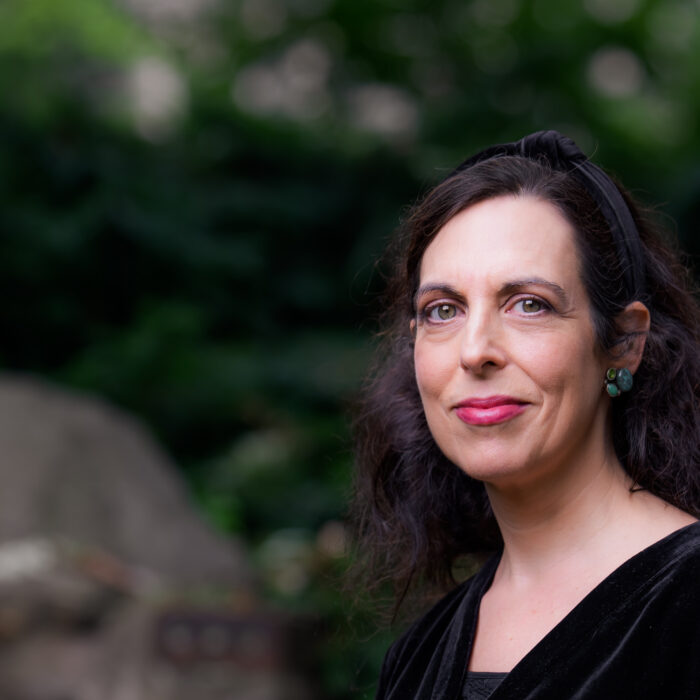
A soprano known for her “tender and expressive voice” (SF Examiner) Toni Marie Palmertree is described as giving “riveting” performances of Tosca, Donna Elvira, and Nedda across America. She makes her principal role debut March 28th at the Metropolitan Opera as Cio-Cio-San in Puccini’s “Madama Butterfly.”
A graduate of the Peabody Conservatory, Toni Marie Palmertree shares with OperaWire how her path to singing was neither the traditional nor straight path.
“There’s just so many parallels with ‘Madame Butterfly’ – her story of waiting just seems to echo itself in my own life and career path,” says Palmertree.
After graduating, Palmertree got married and soon after, gave birth to a son, taking a break from the career for most of her 20s.
“I stopped singing. If I did anything, it was like I would sing in church, but I really wasn’t out there trying to pursue a career,” she says.
Palmertree worked a few other careers during this time including as a registrar for an online school and working at a manufacturing plant in Gilbertsville, Pennsylvania.
“I was managing a team who was building turbine engines for seamen’s power generation. I took that job to file papers after my son was born and the head of engineering was like, ‘you’re smart’ and taught me how to read drawings, doing quality control, procurement and stuff like that.”
But this job was what made her yearning for music too much to bear, enough that she decided to take a leap of faith back into music.
“No offense to my wonderful boss, but that was the job that really made me want to do something different. I thought ‘I cannot get out of bed in the morning. I cannot picture myself doing this for the rest of my life.’ I could have been making six-figures doing that job since it’s high-level. But I told a colleague ‘If I make that money. I’ll never leave and I cannot stay here.’”
Palmertree believed taking a job as a children’s chorus director would fulfill her need for music, but the yearning only grew.
“I just cried every single time those kids sang. And I realized that I was crying because I wasn’t the one singing.”
Seven years after graduating college, the soprano would pick up her singing career again. At 29, Toni Marie Palmertree entered into the Metropolitan Opera Laffont competition. The soprano would then win her district, a sign that was enough for her to reignite her pursuit of singing.
However, the road back to an opera career was met with waiting and rejection but also people who came alongside Palmertree and believed in her.
“Trying to re-enter at that point was pretty difficult because I hadn’t sung anywhere and no one knew me. When I was applying to young artist programs, no one would hear me because I didn’t have anything on my resume.”
A voice teacher recommended Palmertree do the program Cooperative through Westminster. There she was able to network with conductors and coaches that she credits as mentors who went out of their way to advocate for her. Palmertree auditioned for Merola and got accepted after the second try.
“It was in that audition that Sheri Greenawald pointed at me and said ‘you will be the next great Butterfly,” Palmertree reminisces.
After Merola, the soprano received a coveted Adler Fellowship with San Francisco Opera and was assigned to cover Cio-Cio-San. At this point, Palmertree was 34 years old, describing she was much older than most of her fellow young artist colleagues. The soprano made her San Francisco mainstage debut as Butterfly, a performance that would launch her career after the original artist singing Cio-Cio-San fell ill. But a grave hindrance would threaten to take her rising success all away: stage IV uterine cancer.
Palmertree had been going to doctors for a while, suspecting something was wrong.
“They were just blowing me off saying things like ‘Oh, well you’re a woman. Oh, well you’re overweight. Oh, well your career is stressful.’”
In the same way Palmertree fought for her career in the opera industry, she fought for her health in the doctor’s office, eventually meeting the surgeon who would find the cancer.
Stage IV cancer was not her only obstacle, but also being a newly single mother and having no home for her and her son.
“We moved across the country when he was seven so I could do the Adler Fellowship,” says Palmertree. “I was so grateful but it was extremely tough to do a program like that as a single mom. I’m managing rehearsals while also raising my son, getting him to school, finding the right babysitters, homework, the trauma of moving and separating from his dad, and then we couldn’t even find a place to live for six months.”
The singer worked multiple jobs to save up before going to Merola and moving for the Adler Fellowship.
“I basically created this fund for myself because I knew I’d need it to pay for babysitting as a young artist and on that salary.”
Palmertree and her son spent those six long months sleeping on people’s spare couches and bedrooms, facing financial hardship and discrimination from the housing market.
“I couldn’t tell them I had a kid because I wouldn’t even be considered. Plus, since so many people were looking for apartments, all they had to do was look for a person willing to pay six months in advance at an open house. I thought ‘how am I going to do this and on this salary?’”
Palmertree’s last resort was going to City Hall to be placed on a lottery, in the hopes she’d be moved to the front of the list as a mother facing homelessness.
“All the while my son can’t know ‘oh my mom is also actually dying.’”
It was thanks to her colleagues and mentors who helped her when she was truly in need. Palmertree says not only were they an extraordinary class of singers but also an extraordinary class of people. Through her coach at the time, Alessandra Catani, she finally found a home, renting from Catani and her husband at a rate she could afford.
“Also, the guys would play basketball with my son and take him to baseball games. Pene Patti (tenor) took Cole to NBA games. Donors would ask me if I needed a ride somewhere or how they could help me.”
Palmertree says her village saved her as she fought cancer and had a radical hysterectomy. Fearing chemo would harm her voice, she advocated for a different approach.
“My doctor pulled from a worldwide forum of doctors to see if anyone had a similar kind of cancer to mine (which apparently was quite rare) to see if there was any way to avoid chemo or radiation. I told them how long and how hard I fought to get to this point in my career. So, they had found a few cases where they tried Tamoxafan and my doctor said we would try this but if we didn’t see improvements that we would have to do chemo. But when I came back, she was totally astounded because the cancer not only improved– it was gone.”
The medication would be the soprano’s ally for years, an experience she details as helping cure her while simultaneously having painful side effects–painful enough to keep her from staging and doing her job at times. Nonetheless, Palmertree says San Francisco Opera never canceled her shows, saying “If it’s a problem then, we’ll deal with it then. But it’s not a problem now, so instead of focusing on what could go wrong, let’s focus on what if it goes very well.”
A new mindset of turning hardship into positives that would propel her forward into survival.
“I had music to learn from my chair while I was healing.” Palmertree described music as something that saved her; something to look forward to. “It made me have hope for the future because I knew I had roles coming up.”
Eventually, the soprano’s doctor confessed to her a surprise: she was a season subscriber to the San Francisco Opera, with tickets to the show Palmertree was set to sing in.
“My doctor told me ‘I just kept looking at you thinking, I can’t do this to her. I cannot give her radiation and possibly harm her voice without trying something else.’ And I just thought, wow, if fate isn’t at work here, like, what a blessing.”
Palmertree has been cancer free since 2017.
After her Adler Fellowship, Palmertree landed an agent and started getting work covering roles in houses across the country and in Europe. It was years of her working and memorizing behind the curtain that halted once again with the COVID-19 pandemic.
“That was so hard. If it was not for the intervention of people, I wouldn’t be where I am. So many people stepped in and would tell me ‘please don’t quit.’”
Without any work, Palmertree’s same gumption of hustle resulting from when she was a young artist returned. Between applying for grants, unemployment, teaching voice lessons, and making opportunities for herself, the soprano was working to make ends meet.
As theaters opened up again, Palmertree returned to covering major roles in several A houses, but cautions singers to also advocate for oneself to not get stuck in covering.
“I’m very grateful for it. Of course great lessons and work come out of covering and it pays the bills which is important, but I also needed to stay consistent, prepared and patient for someone to open a door for me.”
Regardless, the soprano shares that everything she endured and achieved up until this point finally led her to an open door singing for The Metropolitan Opera. On Saturday, March 28, Palmertree will make her Met debut starring in “Madame Butterfly” at 44 years old.
“There’s always another pinnacle that you have to reach beyond the one you just climbed. But I want young singers to get excited about that and enjoy the journey,” says Palmertree. “In many ways, my naivete helped because I didn’t know the hardships ahead and that allowed me to keep going, to not get scared of what was ahead, because otherwise that is something we can let get in the way of a great path.”
Palmertree says what one would think are problems to avoid in the industry: admitting illness, being a mother, or even having seasons of different career paths, in actuality are all strengths that led her to the success she has today.
According to the soprano, it was through nearly being homeless that she and her son met a village of people who are still in her life today. It was through surviving stage IV cancer that Palmertree became so in tune with her body that it made her a stronger and healthier singer. And it was through years of waiting, fighting, and staying the course that brought her to the Met’s stage.
“I love this career because people come and hear a performance for a reason. We love music for a reason. We talk about having an authentic voice and every note that I sing comes from a place of triumph over everything I’ve endured. I hope that’s what keeps audiences coming back to listen.”
The soprano adds it also takes a village of friends, colleagues and mentors who support you.
“My career is a reflection of those who helped me and believed in me,” says Palmertree, encouraging singers that roadblocks or detours–even into different career paths whether temporarily or permanently–should be welcomed rather than avoided.
“There are other ways to break through in a career. Believing that if you don’t follow the same path as everyone else, you’re not going to make it—is just very untrue. Your path will take you on a very curvy ride and it’s all going to lead to the outcome you want.” The soprano citing that her different careers before and in between her singing career made her that much better of an artist. “If you have something else to do in the meantime, that’s a great thing. It helps you learn about hardships you have to go through for this job.”
Also adding that artistry comes in a multitude of different paths.
“That belief of ‘unless you’re on the biggest stages you’re not an artist,’ is so untrue. Everyone in a theater has a job as an artist that means something. We all need to be doing different things to make art come alive.”
The soprano encourages artists both young and old to continue to listen to the calling on one’s life; what excites the artist, what brought the artist to music in the first place, and to have the audacity to keep trying.
“Half of this battle is staying around long enough that they can’t ignore you. It’s truly a game of tenacity as well as finding the people who are willing to take a chance on you.”
As for what is next for Palmertree, she knows the journey does not climax here.
“I’m very aware that even after this performance at the Met, things are not going to be easy all of a sudden. There’s still going to be trials and tribulations, doors I will need to kick down.”
However, she will approach her career in the ways her life has already been teaching her, to look at obstacles as invitations to greater growth, greater humility, and greater lessons that prepare us for the future ahead.