Heidelberger Frühling Liedfestival 2026 Review: Il Giustino
By Mengguang Huang(Photo: studio visuell)
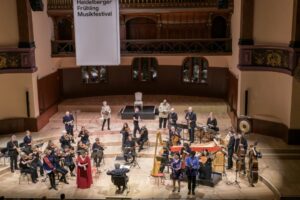
At 80-years-old, René Jacobs shows no signs of relinquishing his throne as the high priest of Baroque opera—a profound blessing for early music devotees. Following his acclaimed 2022 staged production with the Berlin Staatsoper Unter den Linden and Akamus, Jacobs has returned to “Il Giustino” (1724) for a European concert tour, this time partnering with the Freiburger Barockorchester. In the historic, red sandstone elegance of Heidelberg’s Konzerthaus Stadthalle, Jacobs delivered a performance so sublime it left the audience grappling with the limitations of language to describe it.
Dramaturgy: A Lesson in Clarity and Wit
A complete performance of “Il Giustino” would easily exceed five hours. Jacobs, possessing a classic philologist’s depth and an opera connoisseur’s taste for libretto quality, exercised his characteristic editorial blade. While some might feel Robin Johannsen’s Leocasta was cut a bit too thin, the pruning resulted in a vivid, exceptionally clear presentation of this labyrinthine Byzantine plot.
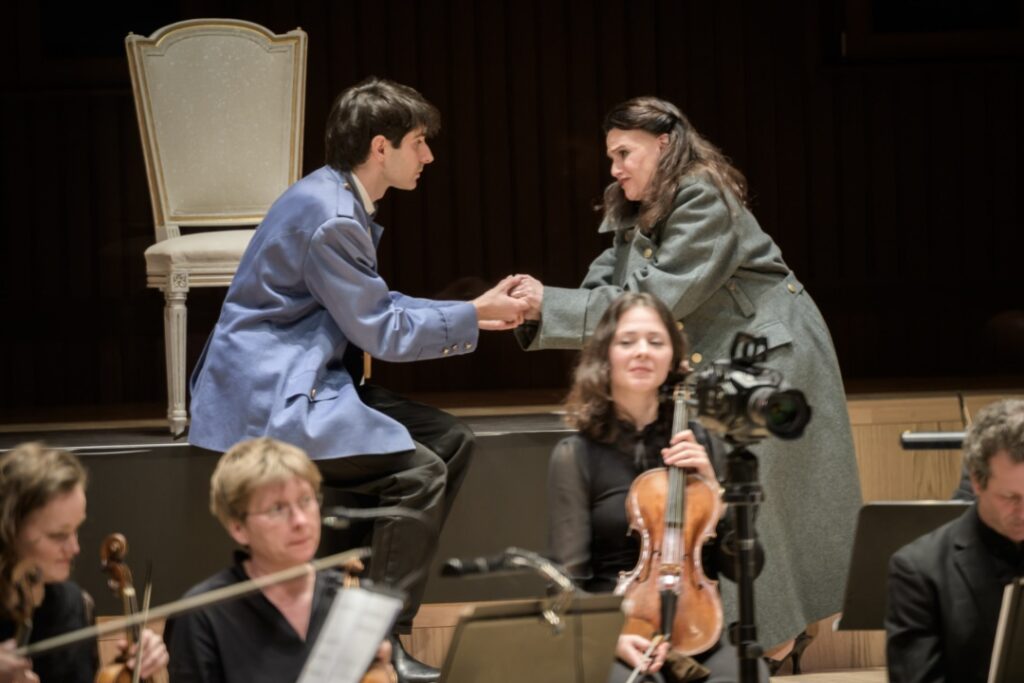
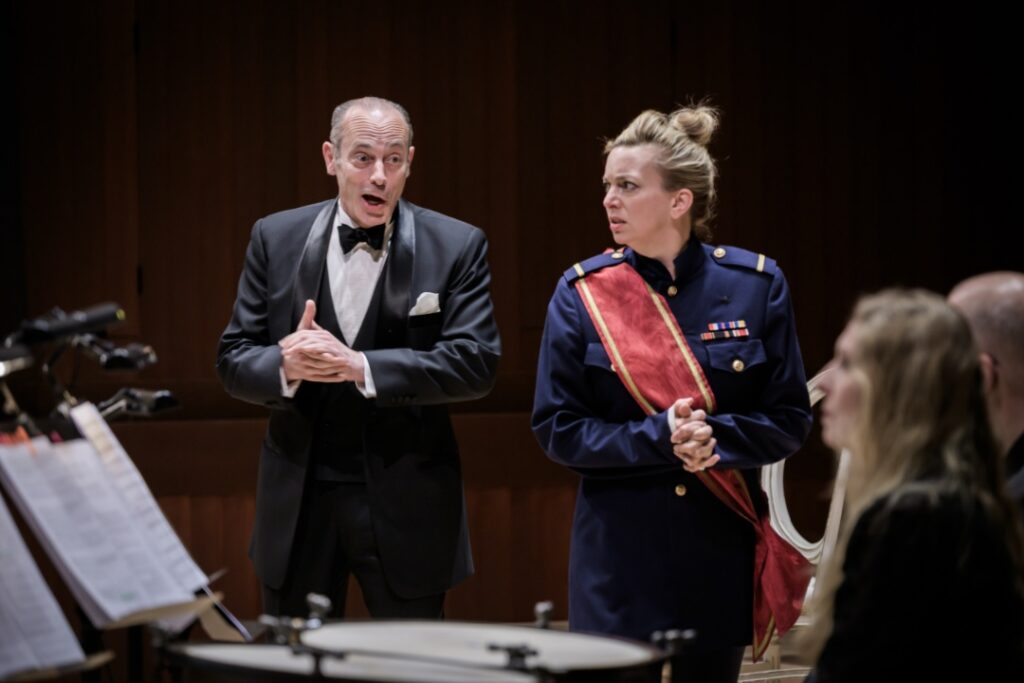
Even within a concertante setting, Jacobs provided a masterclass in dramaturgy. With minimal props and clever sartorial shifts, the “rise and fall” themes of the opera were rendered with immediate, often humorous clarity. We saw Arianna and Vitaliano trade royal finery for the plain clothings of captives; Giustino transitioned from a simple straw hat to a blue uniform adorned with a Christian cross; and the villainous Amanzio swapped his courtly evening wear for a stiff military uniform upon seizing power. Bathed in the effective lighting of the Wolfgang-Marguerre-Saal, these visual cues mirrored the fickle wheel of La Fortuna.
(Photo: studio visuell)
A Byzantine Tapestry: The Vocal Ensemble and Character Dramaturgy
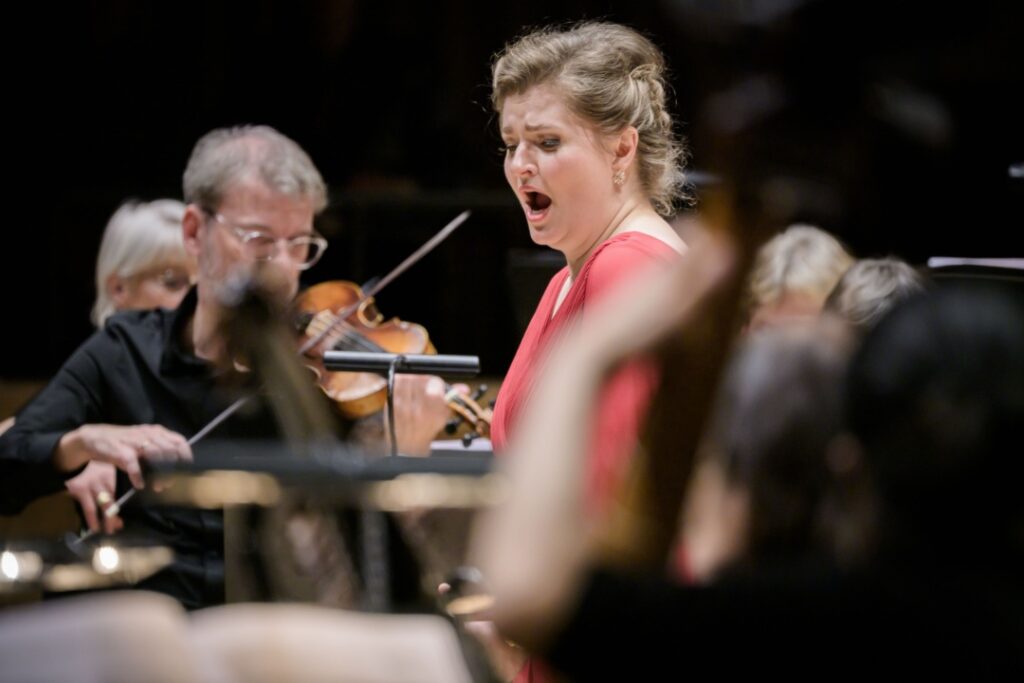
Stepping in for Christophe Dumaux, Rémy Brès-Feuillet—whose meteoric rise began with his victory at the Farinelli Competition in Karlsruhe—was deeply convincing. He captured Giustino’s evolution from a rustic, almost naive plowman to a steadfast warrior with touching sincerity. His vocalism possessed a structural integrity and maturity far beyond his years, making his unwavering loyalty to his love amidst courtly corruption entirely believable. Opposite him, Robin Johannsen brought a youthful, coloratura-rich energy to his lover Leocasta. Despite her reduced stage time, her flawless breath control and firm characterization during the empire’s darkest moments provided the necessary spark for Giustino’s eventual victory.
(Photo: studio visuell)
The two Jacobs regulars, Olivia Vermeulen (Anastasio) and Kateryna Kasper (Arianna/La Fortuna), reminded us why they are the conductor’s preferred muses. Vermeulen’s voice, characterized by a settled, warm, and grounded timbre, lent her Anastasio a calculated regal dignity. This vocal stability made her eventual pivot into the raw, human jealousy of a husband manipulated by lies all the more jarring and effective. In contrast, Kasper as Arianna was a beacon of luminous vocalism and emotional steadfastness. Their voices intertwined in Vivaldi’s captivating duets with an artistic brilliance that felt like a vocal feast. Kasper’s signature arias, in particular, allowed her radiant upper register to soar. Indeed, Jacobs’ decision to end the first half with Arianna’s famous aria, “Per noi soave e bella,” served as the ultimate tribute to Kasper’s incomparable vocal gifts.
(Photo: studio visuell)
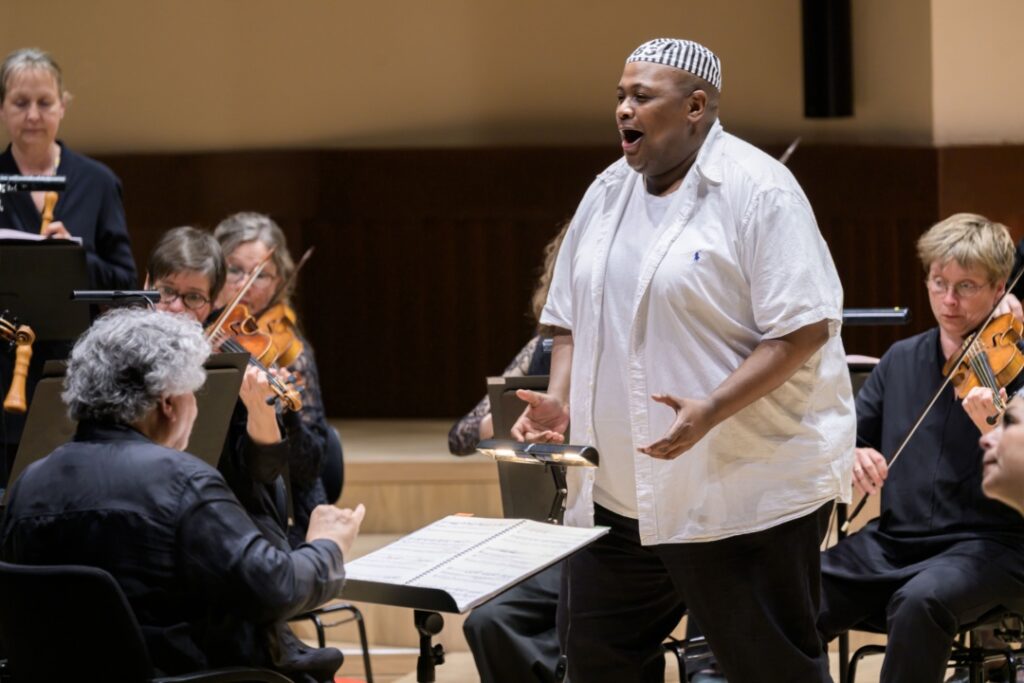
As the antagonist Vitaliano, Siyabonga Maqungo commanded the stage with a formidable & chiselled vocal presence. He expertly balanced the cruelty of his character—evident in his chilling treatment of Arianna—with a final, dignified recognition of his kinship to Giustino. Meanwhile, Mark Milhofer as Amanzio was a theatrical tour de force. His journey from cautious maneuvering to the twisted euphoria of a successful coup, ending in a despondent fall from grace, was utterly magnetic. For his coronation scene, Jacobs granted Milhofer an extensive expressive space to revel in his character’s treachery; then, at the musical climax, the lights of the entire Konzerthaus suddenly dimmed to a somber gloom—a brilliantly dramatic stroke that visually underscored the illegitimacy of his reign.
(Photo: studio visuell)
The legendary Sonia Prina used her distinctive, masculine-timbred contralto to great effect as Andronico (a man disguised as a woman). Entrusted with much of the opera’s comic relief, her veteran stagecraft was once again validated. Francesc Ortega Martí rounded out the cast, turning the minor role of Polidarte into a sharp, memorable portrait of a loyal henchman. Ultimately, every singer was perfectly cast in their respective roles, and with a performance that left nothing more to be desired, the brief, joyous lieto fine chorus felt like the most fitting of conclusions.
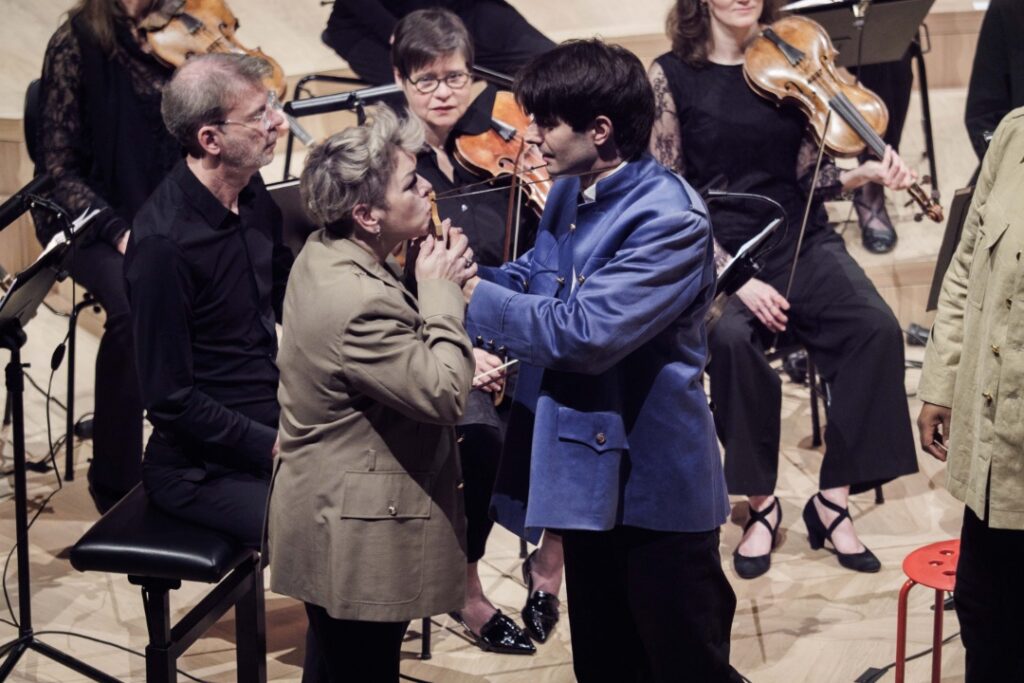
(Photo: studio visuell)
The Freiburger Soundscape
Jacobs’ wicked eye for talent extends to his instrumental partners. The Freiburger Barockorchester responded with unparalleled sensitivity, from the colorful commentary of the basso continuo to the atmospheric shifts of the instrumental sinfonie. Within this vivid texture, the various woodwinds and brass instruments were given ample space for expression, their distinct timbres heightening the martial and pastoral colors of Vivaldi’s world. While the famous psaltery-accompanied Giustino aria was performed here on the harp—a practical but convincing substitution—the effect remained otherworldly. Jacobs’ decision to replace Vivaldi’s original overture with one by Caldara was a bold choice, yet it successfully established the Royal atmosphere required for the opening scenes.
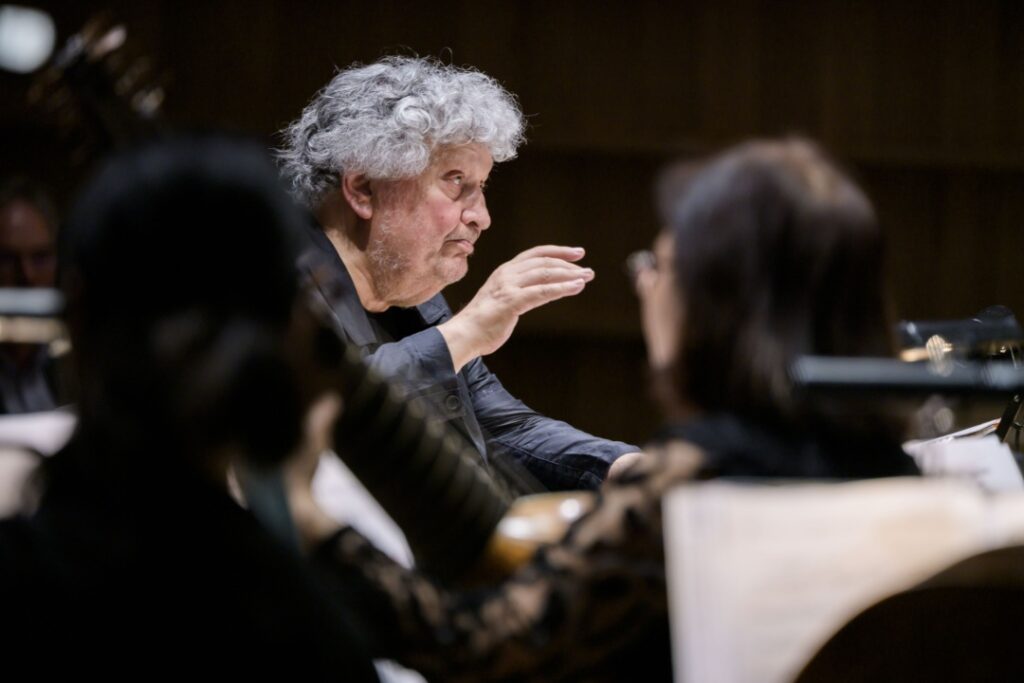
(Photo: studio visuell)
Even by the high standards René Jacobs has set for himself, this over-three-hour performance was an extraordinary achievement. It was a night where every element—music, drama, and architecture—aligned, proving that in the hands of a master, Vivaldi’s operas deserve a much larger share of the modern Baroque performance landscape.