Händel-Festspiele Halle 2026 Review: Aci, Galatea e Polifemo
By Mengguang Huang(Photo Credit: Philippe Matsas)
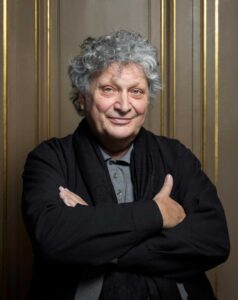
The presentation of the 2026 Handel Prize to René Jacobs was a profound validation of historical inquiry made flesh, rendered all the more poignant by the maestro’s heartening return to health. Celebrated for his intellectual rigor and uncanny dramatic instinct, Jacobs marked the ceremony with a concert program that epitomized his lifelong artistic vision and relentless pursuit of musical drama.
At the helm of the Kammerorchester Basel, he opened the evening with a fiery reading of the Agrippina overture, a choice that served as a direct stylistic and thematic bridge to the Handel’s 1708 Neapolitan serenata “Aci, Galatea e Polifemo.” By highlighting the extensive shared material and links between these two closely related works from Handel’s Italian years, Jacobs transformed the evening into a unified theatrical ecosystem. The sharp forte-piano contrasts electrified the hall, underscored by the visceral punch of the baroque drum and a series of breath-holding breaks where the solo oboe hung in suspended animation. This hyper-dramatic approach to instrumental narrative perfectly mirrored the radical musical solutions Jacobs would deploy later in the serenata.
Written hastily during Handel’s sojourn in Naples under the patronage of Duchess Aurora Sanseverino for a prominent wedding, the piece occupies a radical dramatic space far beyond a polite pastoral vignette. Jacobs emphasized the work’s inherent psychological instability, treating Nicola Giuvo’s libretto—deeply rooted in Ovid’s Metamorphoses—as a canvas of extreme emotional friction.
As Aci, soprano Kateryna Kasper brought a clear, resilient strength to a role that is often performed with simple innocence. She focused deeply on the character’s vulnerability, navigating Handel’s difficult high tessitura with great precision. In “Dell’aquila l’artigli,” her voice became a source of bright, radiant light, supported by a continuo combination of cello, harp, and organ that played a gentle, wave-like swing in triple meter. In “Qui l’augel da pianta in pianta,” Kasper’s singing took on a warm, golden quality while the violin and oboe imitated bird song, supported by rich harp textures. In those pastoral movements, her phrasing felt wonderfully expansive, capturing an image of flowering landscape before the inevitable intrusion of danger.
Her rendering of the heart-rending death scene, “Verso già l’alma col sangue,” was the emotional axis of the night. Accompanied by a minimum, skeletal instrumental texture, Kasper’s sustained tones hung suspended over the Kammerorchester Basel’s muted strings, her voice taking on a physical trembling by the Da Capo repeat. Wandering on the stage, she transformed Aci’s physical dissolution into a supreme moment of tragic transcendence.
As Galatea, mezzo-soprano Sophie Harmsen offered an ideal psychological foil, utilizing a rounded voice with rich fullness. In the opening pastoral duet with Aci, their voices moved closely together, capturing a flowering landscape. In “Sforzano a piangere,” her circular phrasing coupled beautifully with the echoing oboe and cello with subtle melancholy, while the following recitative vividly signaled danger alongside a strong cello accompaniment. She brought a firm determination to her character, showing clear disdain for the monster Polifemo in their early recitative exchanges.
Her standout musical moment arrived in “S’agita in mezzo all’onde,” where she held a long, continuous vocal line over a quiet string ripple, beautifully evoking images of shifting waves and ships. Following Aci’s death, Harmsen shifted seamlessly into a simple recitative style. Here, she showed exceptional dramatic skill by changing her vocal color—moving between warm, deep grief for her fallen lover and an icy, distant tone when confronting the giant. In the finale, “Del mar fra l’onde,” her singing became truly flamboyant, brilliantly describing nature in the middle section and capturing a powerful sense of liberation as Aci is transformed.
As Polifemo, Christian Senn provided the evening’s essential dramatic tension with astonishing vocal power, refusing to portray the giant as a simple grotesque figure and instead presenting a deeply complex human being driven by real, conflicting emotions. He made a thunderous entrance in “Sibilar gli angui d’Aletto,” hitting a remarkable low C supported by the aggressive pairing of trumpet and bassoon. He remained a constant threat throughout the drama, continually breaking into the lovers’ elegant duets during the Terzetto “dolce amico amplesso”. The artistic peak of his performance came in the famous aria “Fra l’ombre e gl’orrori.” Here, the singer executed Handel’s extraordinary two-and-a-half-octave jumps with great control. Instead of emphasizing simple monstrosity, the deep and somber voice beautifully exposed Polifemo’s desperate, incapable attempt to express love, moving the audience to feel a deep sense of sympathy for the lonely giant.
The evening culminated in a moving ceremony. The acclaimed Handel scholar Silke Leopold delivered a laudatory speech steeped in warmth and reminiscence. Upon accepting the honors from the Handel House Foundation, René Jacobs received the official diploma alongside a whimsical, custom-made Playmobil Handel figurine with an infectious, child-like delight.