Händel-Festspiele Halle 2026: Radamisto
By Mengguang Huang(Credit: Thomas Ziegler)
The true gauge of a festival’s artistic mettle is probably how it tackles a crisis. Faced with the sudden morning-of illness of star countertenor Max Emanuel Cenčić, the Halle Handel Festival managed to rescue a non-standard Handel opera like “Radamisto.”
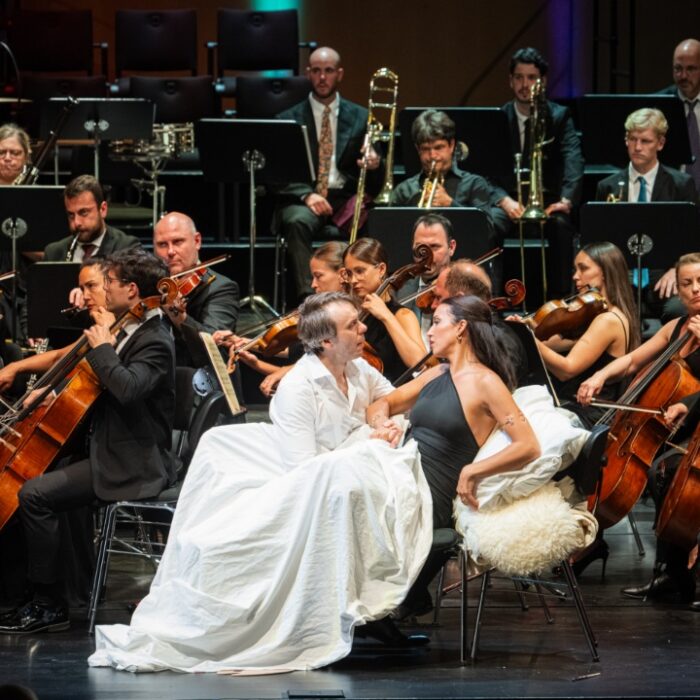
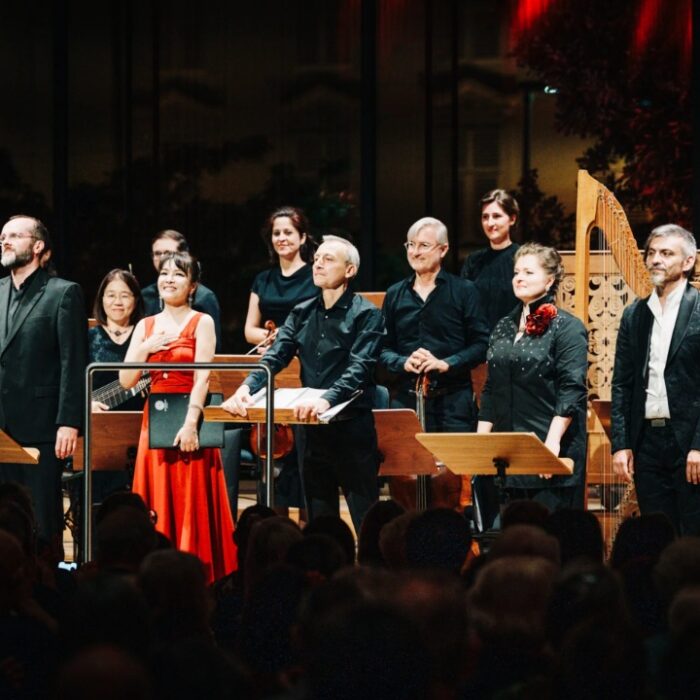
With a mere four hours to prepare, conductor Benjamin Bayl and the Wrocław Baroque Orchestra worked tightly with three brave young countertenors—Yongbeom Kwon, Jaro Kirchgessner and Tobias Hechler—to pass the heroic mantle of the title role like a theatrical relay race.
To make this performance viable under such extreme pressure, structural trimming was brutal. The performance ruthlessly excised the vast majority of the Radamisto-relevant recitatives—most notably in Act two, Scene one, which bypassed the narrative setup entirely to jump straight into Zenobia’s sublime aria, a fate shared by the Act three conclusion duet between Zenobia and Radamisto. As a result, one found his eyes desperately glued to the libretto, struggling to figure out exactly where we were in the score (thankfully, the plot remained relatively predictable). The overall experience was quite frustrating, leaving one with no choice but to self-deprecatingly joke that we were merely listening to a recently rediscovered opera’s fragments.
The singers in general delivered convincing performance, though on micro level there are unevenness. As the first entry, Kangmin Justin Kim’s Fraarte opened vocally erratic, plagued by an unsettling flutter and tonal instability. However, the vocal tide turned in Act two, Scene three, where Kim overcame his technical struggles, shedding these tremors to deliver a well-projected, beautifully controlled account. Dennis Orellana’s Tigrane exhibited flawless technique and a highly attractive tonal shimmer. However, his performance felt curiously detached, marred by a persistent emotional indifference. This lack of narrative empathy ultimately prevented him from rising to his crucial, redemptive role in the crisis of the whole plot.
Zachary Wilson’s Tiridate brought an imposing presence, his solid, robust voice projecting an unshakeable cruelty. Wilson showed absolute ruthlessness, showing no mercy even when confronting his own father-in-law. Most memorable was his appearance in Act three, Scene six; accompanied by a fierce horn section, his singing captured a chilling, triumphant swagger, conveying a cold sense of a tyrant completely in control.
The true dramatic anchor of this fragmented evening was Katrīna Paula Felsberga’s Polissena, who delivered the night’s most unforgettable performance. Felsberga skillfully mapped her character’s complete emotional arc: from the weeping, short phrases of a betrayed woman in Act one—delivered with a remarkably soft, flexible high register—to her finely controlled resignation in Act two, and finally to her explosive fury in Act three. Her profound dramatic commitment provided the vital structural backbone that held the entire production together.
Fanny Lustaud’s Zenobia followed a compelling trajectory of dramatic growth. In Act one, her singing felt unsettled and overly driven by the racing strings. However, she found her footing in Act two’s oboe-led aria, culminating in a peak in Act three, Scene seven. Supported by cello solo and bass continuo, her performance of “Deggio dunque” achieved a breathtaking intensity.
The heavy burden of rescuing Radamisto required no less than three salvagers, even if the character’s dramatic portrait ultimately remained blurred and fragmented. Yongbeom Kwon took on Radamisto’s initial, tender duties. Accompanied only by the basso continuo in Act one Scene four, Kwon’s clean, pure voice offered a safe, warm depiction of love. Kwon would return in Act two to deliver a successful reading of the central lament “Ombra cara,” over the orchestra’s complex chromatic accompaniment. Although his voice was slightly unstable, he nevertheless delivered this simple but sublime aria with a deeply heartfelt maturity, beautifully resonating with the audience. Stepping in for Scene six of the Act one, Jaro Kirchgessner electrified the hall with a rich coloratura and a fiercely driven rhythmic engine. In Act three, Scene three, Kirchgessner navigated an elegant dialogue with the solo oboe, delivering a smart and controlled performance, without taking unnecessary risks. Only one Radamisto aria “Vile,se mi dai vita” was assigned to Tobias Hechler, who stormed the stage in Act three to unleash Radamisto’s formidable wrath. Hechler navigated its violent, expansive register jumps with thrilling, visceral abandon.
There is no denying that Cenčić’s sudden absence forced the listeners to settle for a mere structural skeletal framework of the opera. While the sheer administrative grit of the evening commands immense respect, it remains deeply regrettable that the audience could only walk away with a fragmented, rough impression of the work.