Händel-Festspiele Halle 2026: Bajazet, Der gebrochene Held
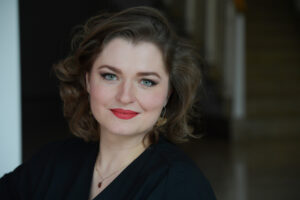
By Mengguang Huang(Photo: © Barbara Anmüller)
The curatorial blueprint for “Bajazet: Der gebrochene Held” was exceptionally well-considered, seamlessly weaving the shared Bajazet/Tamerlano themes of Händel, Gasparini, and Vivaldi into the overarching narrative of the 2026 Halle Handel Festival.
Under Michael Schneider, La Stagione Frankfurt joined forces with tenor Samuel Boden and soprano Kateryna Kasper. However, as the live performance unfolded, the evening evolved into a rather divided and uneven dual study of vocal execution and dramatic projection.
The program rested on an explicit comparison of Händel’s 1724 settings from “Tamerlano” and Gasparini’s 1719 original settings from “Il Bajazet.” This historical intersection was crystallized in the back-to-back comparison of “Bajazet’s” Act one opening aria, “Forte e lieto a morte andrei.” Yet, where Händel’s setting introduces an unforgiving, march-like rhythmic gravity, Boden’s interpretation felt noticeably underpowered, lacking the necessary imperial determination. His vocal quality proved fundamentally more lyrical than dramatic. In Händel’s furious Aria three, “Ciel e terra armi di sdegno,” where the captive Sultan should unleash torrents of vocal fire, Boden’s delivery was severely hampered by Schneider’s choice of conservative tempo. This dragging pace rendered the performance far too slow and structurally weak, missing the magnetic presence required to anchor Händel’s fierce writing. Gasparini’s version of the aria shared the same fate; here, the orchestral pace somewhat stagnated, arresting the momentum of the vocal line.
The aesthetic balance of the evening’s vocal duel was decisively held by soprano Kateryna Kasper. Portraying Asteria, Kasper delivered a performance defined by fine technical control, clean sustained projection, and profound psychological insight. Her reading of Händel’s “S’ei non mi vuol amar” was masterfully captured through a beautifully swinging lilt, where her ornamentation remained in impeccable taste. Kasper managed to convey a sense of sincere mental struggle and emotional vulnerability without ever sacrificing royal dignity and modesty.
In her first Gasparini aria, accompanied by a superb cello solo, Kasper’s bright voice carved out a grand dramatic contour, which seemed to finally galvanize Boden. In their subsequent recitative and aria, the performance achieved a gripping, tense theatricality. Supported by violent basslines and a tense orchestral rhythm from the ensemble, Boden finally found his dramatic footing, delivering an intensive, breathtaking portrayal of the Sultan’s agonizing expiration. This newfound lyrical strength carried over beautifully into Grimoaldo’s sleep-aria, “Pastorello d’un povero armento” from “Rodelinda.” Here, navigating the gentle Sicily rhythm, Boden’s voice was perfectly aligned with the hypnotic “sleep” imagery, offering a deeply affecting portrait of a broken man collapsing under guilt.
The instrumental contributions provided necessary breathing room for the singers. Schneider’s reading of Händel’s Concerto grosso Op. 3/3 was beautifully layered, boasting a round-toned solo violin and excellent woodwind playing. Meanwhile, the other instrumental interludes, including a fiery Vivaldi Sinfonia packed with strong Venetian idioms and emotional contrasts, successfully maintained the evening’s historical tension.
The ultimate resolution arrived in the final, harrowing sequences of Händel’s Act three. Returning to the core text, Boden handled the agonizing descent of “Fremi, minaccia” and the tender arioso “Figlia mia, non pianger, no” with intensive focus. His final, breathless duet and recitative with Kasper’s Asteria—whose sincere, heartbreaking laments never lost their noble dignity—concluded the evening on a note of profound humanity and shattered majesty.