Gran Teatre del Liceu 2025-26 Review: Le Nozze di Figaro
By Galina Altman(Credit: David Ruano)
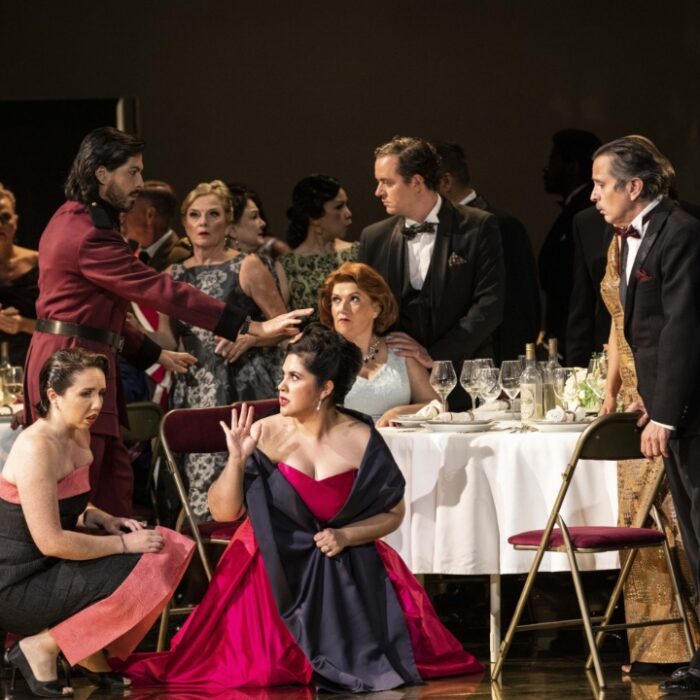
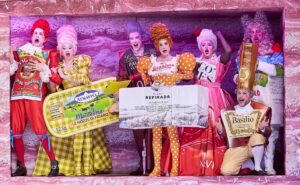
In a production built around camp, color, and a towering wedding cake, Marta Pazos has uncovered what has always been hidden in plain sight within Mozart’s comedy of desire, class, and performance. Mozart can survive everything: new translations, radical reinterpretations, and directorial manifestos the size of doctoral dissertations. He survives because his scores always contain more than audiences have become accustomed to hearing for the past two centuries. In her new production of “Le Nozze di Figaro” for Barcelona’s Gran Teatre del Liceu, Pazos does not attempt to reinvent Mozart. Instead, she illuminates what has always been there. The production’s central image is a gigantic wedding cake. At once an architecture of power, a display case of desire, and a map of social hierarchy, its towering layers assign every character a place within a carefully constructed world. Movement is driven by choreography that draws equally from vogue ballroom culture and the dance floor, while color becomes a dramatic force of its own, so saturated and unapologetic that the audience seems to find itself trapped inside the window display rather than merely observing it.
The effect is immediate. Is this display case a reflection of our own lives? Are we ingredients, or are we exhibits? This is “camp” in Susan Sontag’s precise sense of the word: seriousness presented through excess and, as a result, made even more truthful. Theatricality, gender performance, disguise, and desire as the engine of both plot and social order were already embedded in Da Ponte’s libretto and Mozart’s score. Pazos adds remarkably little. Instead, she magnifies these elements until they become impossible to ignore.
The production’s greatest paradox lies elsewhere: the louder and brighter the stage becomes, the more delicate and precise the music sounds. As a conductor, Giovanni Antonini never attempts to inflate Mozart. He does not search for weight that is not there, nor does he stretch phrases toward a drama they do not require. His Mozart is not an 18th-century monument cast in bronze but a living conversation, woven from quick reactions, fleeting emotions, and sudden changes of mood. This was particularly evident in the ensembles. Not in the major arias, where audiences instinctively prepare to applaud, but in the moments where Mozart’s dramatic architecture either collapses under its own complexity or takes flight. Under Antonini it flew.
As Count Almaviva, baritone André Schuen offered one of the evening’s most nuanced performances. His Count was neither villain nor buffoon but a man of intelligence, privilege, charm, and contradiction. The role’s authority emerged not through force but through psychological detail.
Soprano Adriana González delivered the evening’s most elegant singing. Her Countess was built not on vocal display but on the architecture of the phrase itself. Controlled, poised, and quietly mesmerizing, she shaped each line with exceptional refinement.
Soprano Sara Blanch’s Susanna marked a brilliant role debut. Irony, anger, seduction, and wit coexisted naturally in both her vocalism and stage presence. Every gesture seemed connected to a musical impulse; every phrase carried dramatic purpose.
Perhaps the most unexpected casting decision was soprano Julia Lezhneva’s Cherubino. Traditionally entrusted to a mezzo-soprano, the role gained a different dimension here. Rather than a comic machine powered by adolescent hormones, Lezhneva’s page became the embodiment of a moment many people recognize: the instant when the world suddenly refuses to consist solely of objects of desire.
Special praise must also go to costume designer Agustín Petronio. Expanding Pazos’ central metaphor, Petronio transformed the characters into the ingredients of the wedding cake itself, wrapped in the bright visual language of supermarket packaging. Count Almaviva appeared as dark chocolate, gradually reaching one hundred percent bitterness. Susanna became sugar and cream. Barbarina was honey. Cherubino was caramel. Don Basilio appeared as cognac, capable of intoxicating anyone who came too close. Bartolo and Marcellina emerged as cocoa and butter. Even the Countess participated in this gastronomic dramaturgy, moving between luxurious confectionery boxes and Ferrero Rocher imagery. Elevated above the others by rank, she remained emotionally fragile beneath the glittering surface.
At this point, the wedding cake began functioning as a genuine machine for producing meaning. Are we the display case, or do we all rebuild our identities every day from a collection of ready-made ingredients? The production’s answer was surprisingly generous: not an “or” but an “and.” That is not a tragedy — it is a celebration. In the visual and musical recipe assembled at the Liceu there was plenty of sugary eroticism and not a gram of vulgarity, plenty of self-awareness and not a trace of cynicism, plenty of genuine theater and not a moment of self-congratulation. It was stylish, intimate, and beautiful, with not a single dull minute in more than three hours.
The cake rose perfectly.