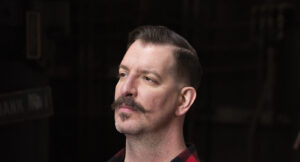
Why I’m Retiring from Staged Opera at 43
An Open Letter to Opera, from a Bass in His Prime
By OperaWire StaffI am 43-years-old. My voice – a true bass, the kind this art form waits decades to mature – is at its peak. The instrument I spent my life building is finally, fully mine. Low notes that took years to settle and high notes that took a decade to secure. A career that carried me to national stages, and to the Metropolitan Opera.
And I am retiring from staged opera.
Not because the voice failed. Not because the love failed. Because the industry failed – and I want to tell you how, with absolute clarity, honesty, and with affection, before I go. Consider this both a farewell and an alarm.
The math has never worked
Here is the truth every working American singer knows and almost no audience member does: the fees we are paid have barely moved in a generation.
The contracts I signed in my 40s were, dollar for dollar, often less than many of the contracts my teachers described from the 1980s. And a 1980s dollar is not a 2026 dollar. Inflation has tripled the cost of everything a singer must buy – flights, coachings, lessons, health insurance, housing in the cities where opera lives – while the fee at the top of the contract sat still and even shrank, decade after decade.
And out of that frozen fee, we pay for the privilege of working. Our own travel, in many houses. Our own housing, often for five and six weeks of rehearsal before a single performance fee is earned. Our own managers’ commissions, our own taxes in every state we sing in, our own preparation. Trade organizations have documented what singers call “very expensive money” – the reality that a soloist’s fee is gross revenue for a small, unprofitable business, not a paycheck.
I did that math every year for 16 years, hoping it would change. It never did.
What it actually costs
It costs Thanksgiving. It costs Christmas morning. It costs watching your children grow up over FaceTime from a sublet you are paying for out of your own pocket, in a city you cannot afford, so that you can stand on a stage for the honor of it.
Last year, I tried the other way.
Coming back from back surgery, my first contract was a cover at the Met – Timur in “Turandot.” My son had asked if I was willing to have him spend his gap year with me, so I did the thing this industry quietly punishes: I kept my family beside me. We arrived in New York to discover our rental had been a scam. And because the Met requires its singers to fund their own housing, the scramble that followed was ours alone – last-minute hotels (one left us with bedbug bites and another midnight move), short-term rentals, whatever the city had left. By the end of the contract, emergency housing had consumed most of my fee, and New York’s food and transportation took the rest. I sang at the Metropolitan Opera and came home with nothing.
I chose my family. All year. There were nights when ramen was the best we could do, and I would not trade the memories we made for anything. But the lesson was unmistakable: in this industry, a singer can have his career or his family at the dinner table – not both. Leave them home, and you raise your children through a computer screen. Bring them along, and the season swallows the fee. That is not a choice. That is a trap with two doors.
And it is not a story about one bad rental. It is the structure.
This fall, the largest opera house in the world offered me my mainstage debut – on the condition, standard for its artists, that I once again fund my own housing in New York City, this time across Thanksgiving, Christmas, and New Year’s, away from my family. That is the offer. That is the honor. And this is not one bass’s grievance.
Jonas Kaufmann – one of the defining tenors of our age – announced this winter that he will not return to the Met or to Covent Garden: the Met, he said, for how its chorus and orchestra were treated during the pandemic, when unpaid musicians had to leave New York altogether; and London because the fees no longer survive contact with the cost of housing.
“In London it’s a project where you have to bring the money,” he said.
When one of the biggest stars in the business is saying, out loud, that he has to pay to work at the world’s flagship houses – believe him. The rest of us have been bringing the money for years.
I want to be careful here, because I am not writing to wound one institution. I am writing because the institution’s own condition proves my point. This past spring, Moody’s cut the Met’s credit rating deeper into junk territory, citing a pronounced structural deficit and more than a hundred million dollars drawn from its endowment in three years. Weeks later, even Saudi Arabia – a government that spends billions to buy cultural legitimacy – walked away from its funding deal, leaving a 30-million-dollar hole. When the wealthiest opera company on the planet is selling naming rights and weighing the Chagalls off its own walls, and its answer to crisis is still to push costs downward onto the artists who fill its stage – that is not a budget problem. That is a values problem.
And it is not only the Met. American opera has been shedding itself for 20 years. Companies in New York, Boston, Baltimore, San Antonio, Cleveland, and beyond have folded***. Mainstage performances across the country have fallen by a fifth in two decades, with the steepest losses at the largest houses – the very houses that employ the most singers. The industry’s response, again and again, has been to balance its books on the people with the least power in the room: the artists.
We are told this is the price of a calling. I no longer believe that. A calling is not a discount. Devotion is not collateral. The chorister, the comprimario, the young artist making apprentice wages below the legal minimum, the principal funding her own housing – we did not fail opera. Opera has been failing us, politely, for 40 years, and calling it tradition.
What I found on those stages
Here is what makes this letter hard to write: I loved it. All of it.
I found deep purpose in this work – real purpose, the kind you can feel in your chest. Standing in the dark before an entrance, hearing an orchestra breathe, and knowing that for the next three hours my whole job was to bring love and light to a few thousand strangers in the dark. To make a room full of people feel something together. There is no cynicism that survives contact with that. Opera gave me that gift for sixteen years, and I will die grateful for it.
That purpose is not gone. It has changed address.
I am taking the same purpose – the same need to give people something essential, something that sustains them – and I am putting it into food. My company is trying to solve an environmental crisis by building greenhouses on the waste heat of data centers instead of the heat polluting the earth. That means growing fresh food for the communities that host them. I used to feed audiences around this country one way. Now I will feed them another. It is, I promise you, the same work: light, warmth, and care, delivered to people who need it. I did not leave my purpose behind at the stage door. I carried it out with me.
The wake-up call
But I am one bass. The question is what the industry does about the thousands still inside.
So, to the companies I love, a short list, offered in love:
Pay artists in this century’s dollars. Cover housing and travel for every contract – no singer should subsidize your season from a sublet. Schedule like human beings with families exist. Stop treating prestige as compensation; prestige does not pay a mortgage or hold a child when they’ve broken up with their first boyfriend. And when the crisis comes – and it has come – do not reach first for the artists’ line of the budget. Reach for the courage to rebuild the model instead.
Opera is not dying of irrelevance. The art is as alive as it was the night Verdi finished it. Opera is dying of self-harm – of an economic model that consumes its own artists and wonders why the pipeline thins. Every singer who quietly leaves for a job that lets them see their kids is a verdict. I am simply saying mine out loud.
Do better. Not for me – I’ll be at home. For the 25-year-old in a practice room right now, who has the voice, and the calling, and deserves an industry worthy of both.
With love, and with hope for what you could still become,
Andrew Potter Bass
Lynchburg, Virginia
***EDITOR’S NOTE: The companies referred to included the San Antonio Opera (NOT Opera San Antonio) and Alamo City Opera, New York City Opera, Opera Boston, Baltimore Opera Company, and Opera Cleveland.
Categories
Editorials