Tippet Rise Art Center 2026 Review: American Songbook
By Jennifer E. PyronTippet Rise Art Center fuses music and art with a 12,500-acre working ranch in Fishtail, Montana. What began as a pipe dream for visionary pioneers Cathy and Peter Halstead — artists themselves — has become a place cultivated by dreamers who dare to use their wildest imaginations to curate the land. The Halsteads are founders of the Adrian Brinkerhoff Poetry Foundation and Cathy is on the boards of Rockefeller Philanthropy Advisors and Storm King Art Center, where the inspiration for Tippet Rise began.
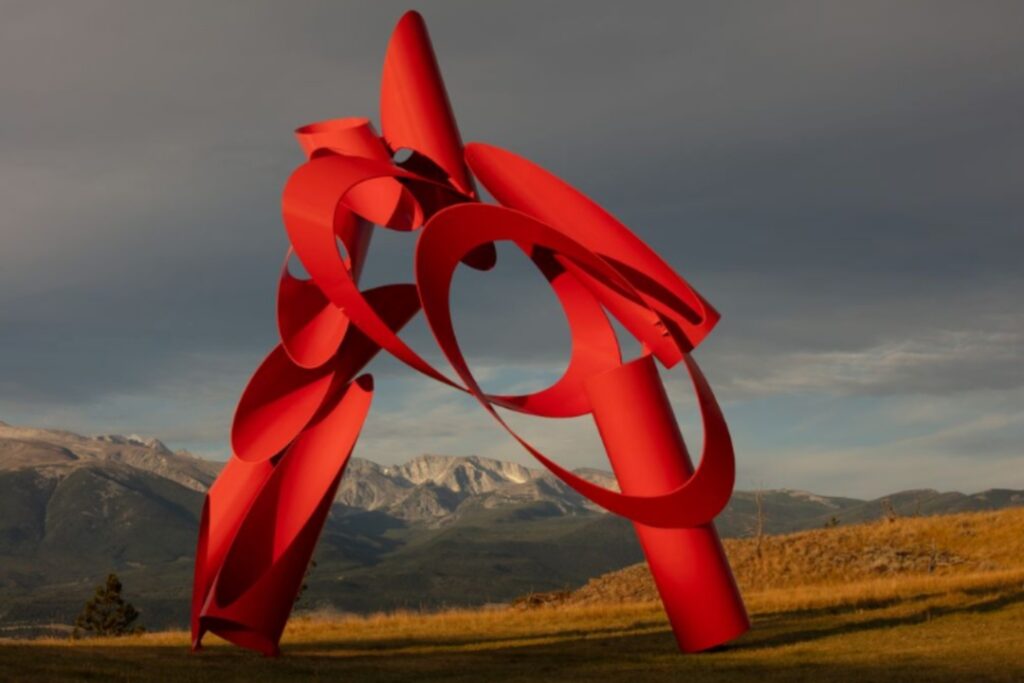
The ranch itself is a canvas, with the jagged Beartooth Mountains rising in the background. It includes contemporary outdoor sculptures varied in size by artists like Ai Weiwei, Alexander Calder, Mark di Suvero, Richard Serra, and Wendy Red Star, among others.
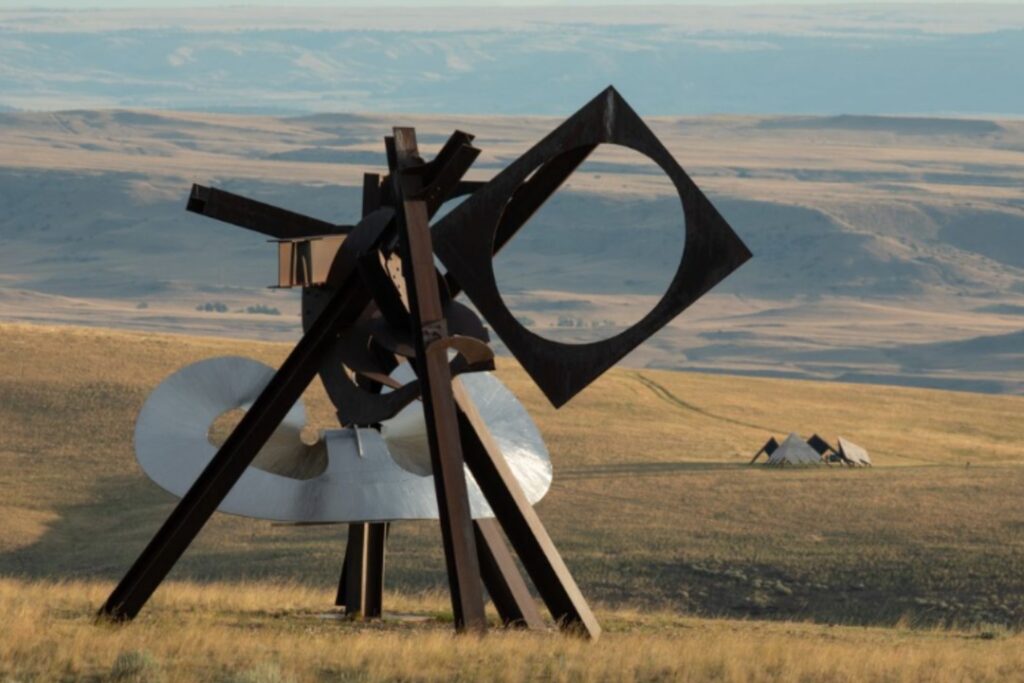
(Photo: Kevin Kinzley © Tippet Rise Art Center)
Installing the works requires special care and thoughtful planning which can take months, depending on weather constraints. The large-scale, site-specific sculptures commissioned by Tippet Rise from Ensamble Studio create their own story in the vast landscape. Visitors can hike, bike, or ride to see more of Ensamble Studio’s works, including “The Beartooth Portal” (2015; 26’5.5” tall), the “Inverted Portal” (2016; 22′ 5.5” tall), and the “Domo” (2016; 98 ‘5 ” long), which serves as an outdoor performance venue complete with contemporary art furniture, the “Folds” (2022) — a series of 16 concrete seats cast from draped canvas seats.
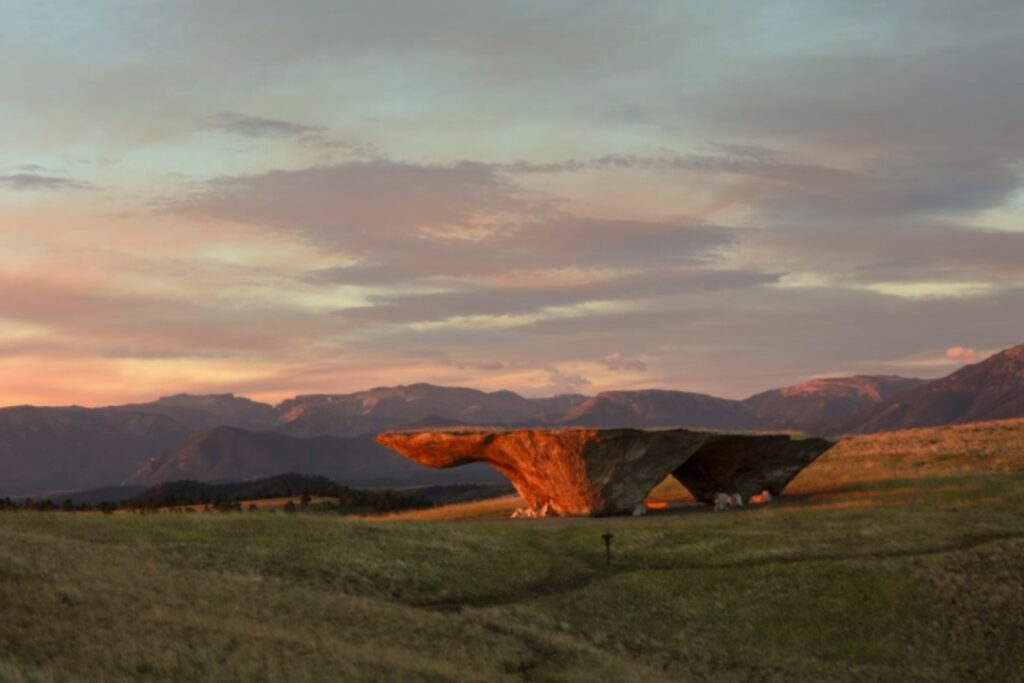
(Photo: Kevin Kinzley © Tippet Rise Art Center)
The Halsteads envision the landscape as a host to the many artists who come through and want to feel a deeper connection. “The threads of it started long ago,” said Peter Halstead, “It started with experiences that Cathy and I had, that other people had created so that we could have those experiences. We have a lot of joy and we get to bring all our joy to Tippet Rise in a whole different way. It is that sense of wanting our visitors at Tippet Rise to have that feeling that evolves us. The sense of joy that inspires an artist.”
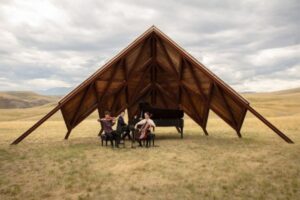
This rich landscape also features an annual five-week concert season of music performances in site-specific spaces including The Olivier Music Barn, Will’s Shed, The Geode (led by Arup’s Willem Boning), and The Tiara Acoustic Shell (co-designed by Boning and Alban Bassuet).
(Photo: Kevin Kinzley © Tippet Rise Art Center)
Artistic Advisor Pedja Mužijević leads the concert program. He plans with the intention of keeping audience members engaged while trusting in their own instincts. Concerts last around 45 minutes and begin at a reasonable time for one to make the drive to and from Tippet Rise, making live performances more accessible. “We have to talk more about why one needs the arts,” said Mužijević, “How often do we ask ourselves what we can do to become more relevant? This is something I’ve been very passionate about, including simple things like the length of the concert.”
Concert tickets are granted based on a lottery system where winners are able to purchase up to four tickets at only $10-per-ticket, with tickets free to anyone 21 and under. Some wait years to win.
OperaWire spoke with the audience members in attendance during Week Two (August 21-23) and several were excited to share how they look forward to visiting Tippet Rise and hope to win a lottery ticket to a concert every year. In addition to living in nearby areas such as Bozeman, Billings, and Red Lodge, some traveled from outside of Montana to hike Tippet Rise and explore nearby Yellowstone National Park.
The sense of community was ever present, and striking up conversation with others felt natural. In small, simple moments like these, Tippet Rise makes its case for why connecting with others and curating the land matter most.
(Photo: Kevin Kinzley © Tippet Rise Art Center)
American Songbook
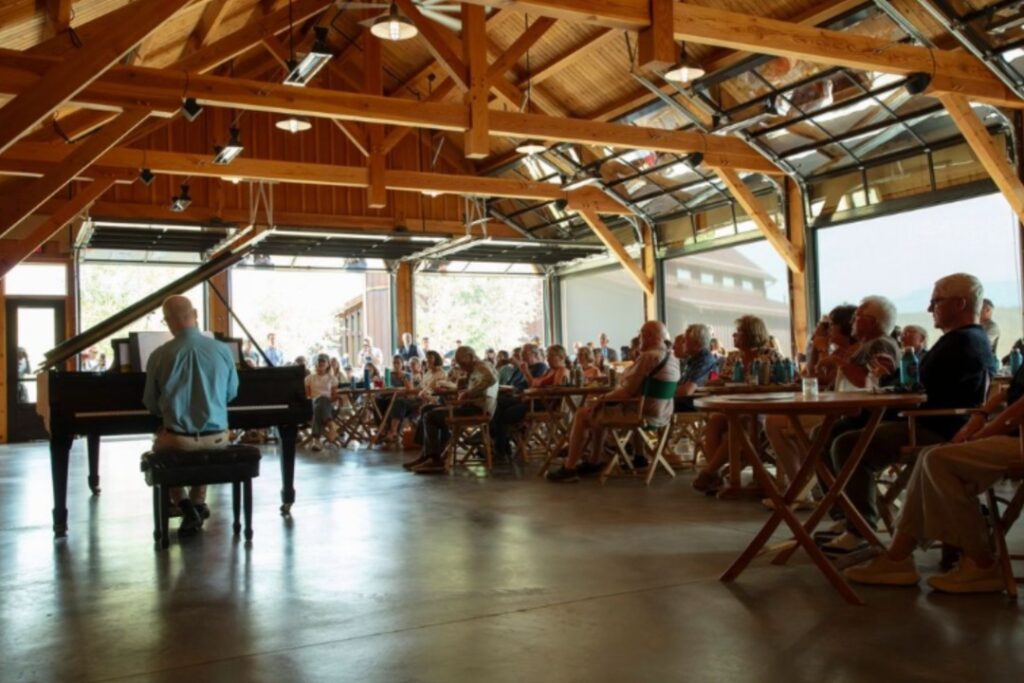
Friday evening’s open-air performance setting was just the backdrop one might imagine for a concert titled “American Songbook.” Will’s Shed is a communal gathering space where guests get to enjoy being outside with just the right amount of shelter, provided by its classic barn form, timber-framed out of Douglas fir. The wood-rich surroundings, with their clean architectural lines, reflect a careful balance of design and craftsmanship.
Audience members relaxed in comfortable chairs, with round wooden table tops interspersed throughout, giving the space the familiar feeling of home — or one’s own front porch. The Beartooth Mountains were visible in the distance, and around sunset the ranch’s turkeys made their way to their nests in the treetops.
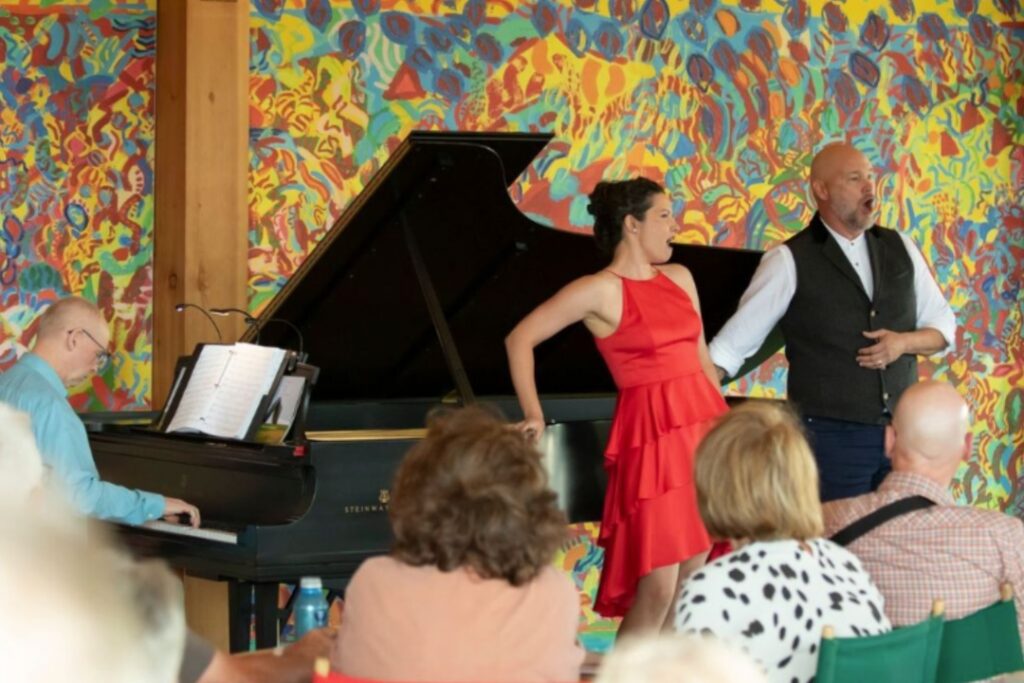
The main serving area of Will’s Shed featured a specially made canvas reproduction of one of Cathy Halstead’s brilliantly colorful paintings, filled with dancing shapes in yellow, orange, red, and blue. Its vibrant colors created a striking contrast against the natural wood and the crisp black Steinway & Sons piano. This really set the tone for an entertaining evening of song and sunset.
Composer, pianist, librettist, and lyricist Richard Pearson Thomas — a Montana local — arranged a selection of works by George Gershwin, Cole Porter, Kurt Weill, and others for singers soprano Mireille Asselin and baritone Tyler Duncan. Asselin noted that Thomas composed approximately 90 percent of the evening’s arrangements himself.
(Photo: Kevin Kinzley © Tippet Rise Art Center)
The “American Songbook” theme was full of musical favorites while the stage setting invited listeners from near and far to partake in the experience. A high table was set up beside the piano for the singers, who used it to create their own interpersonal world of emotions throughout the performance. The attention to detail made these moments feel organic and true to life, and the audience laughed as the “couple” went back and forth in their dramatic musings.
The selections were categorized in the program under clever titles such as, “Good Evening, Montana,” “A Gershwin Affair,” “It’s Complicated,” “Fatal Attractions,” and “In Summer-y.” This structure created an intriguing sense of buildup, almost like a mini-series. Dividing the concert into these distinct segments made the 45-minute program more digestible while opening up the experience for the audience to simply enjoy a good time.
Asselin and Duncan (the latter stepping in for Jesse Blumberg) were the ideal pairing for Thomas’s poetic piano playing, which framed their voices while bringing its own expressive character to the arrangements. Asselin sang Irving Berlin’s “Blue Skies” just as the sun lowered outside. Duncan followed up with a jolly performance of Porter’s “Don’t Fence Me In.” The two songs mixed together for a special opening where “boy meets girl” and then went from there.
The short piano interlude of “I’ve Got Rhythm” during “A Gershwin Affair” showcased Thomas’ technical skills as a pianist as well as his sheer joy in playing. The moment came across beautifully, earning appreciative applause from the audience. This concert also demonstrated the positive impact that a trio — two singers and a pianist — can have in a smaller concert setting.
“It’s Complicated” was an introspective moment in the program where Asselin and Duncan alternated solos, including Porter’s “In the Still of the Night,” Marc Blitzstein’s “I Wish It So,” and Rodgers and Hart’s “I Didn’t Know What Time it Was,” ending comically with the Gershwin’s “Let’s Call the Whole Thing Off.”
“Fatal Attractions” proved an audience favorite, particularly when Asselin and Duncan acted out their “it’s complicated” motif, accompanied by the “Mack the Knife” theme by Weill. Duncan’s solo, Tom Lehrer’s “Poisoning Pigeons in the Park,” also elicited plenty of laughter.
As the final notes of the concert resonated, it was clear that “American Songbook” had been more than the music itself. The combination of Thomas’ thoughtful arrangements, Asselin and Duncan’s entertaining chemistry, and the open-air setting of Will’s Shed created a unique experience that felt both intimate and expansive.
More Music Highlights
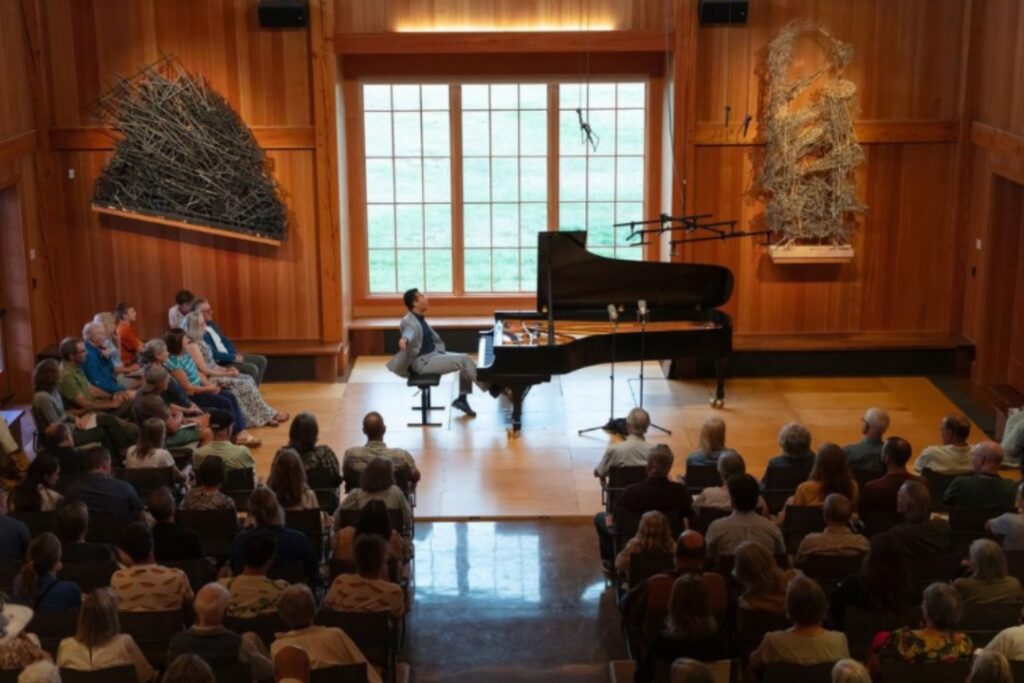
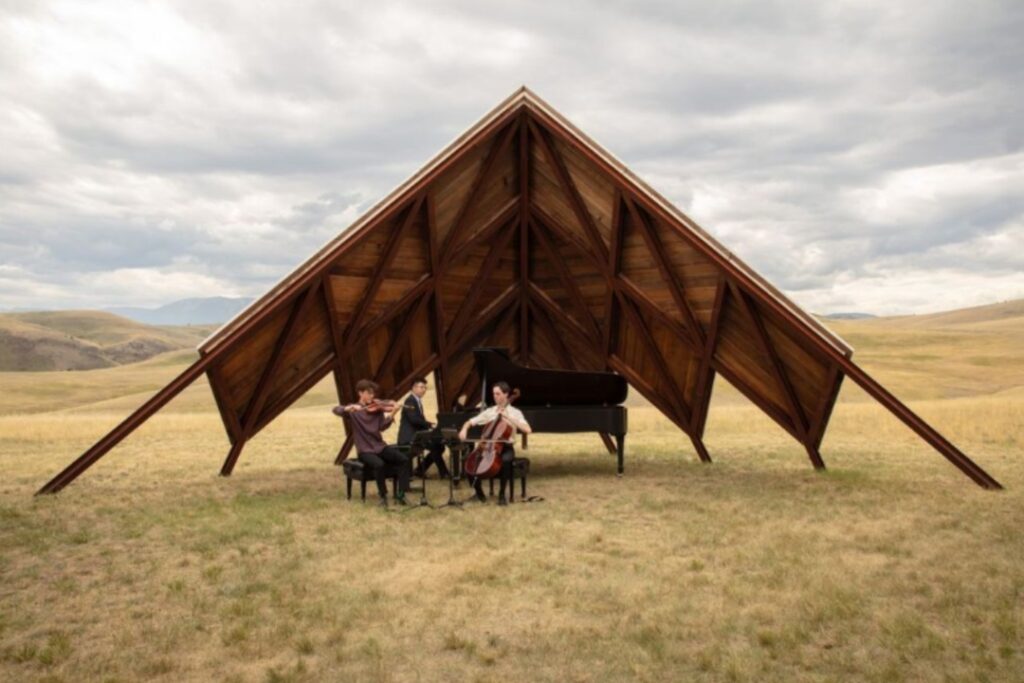
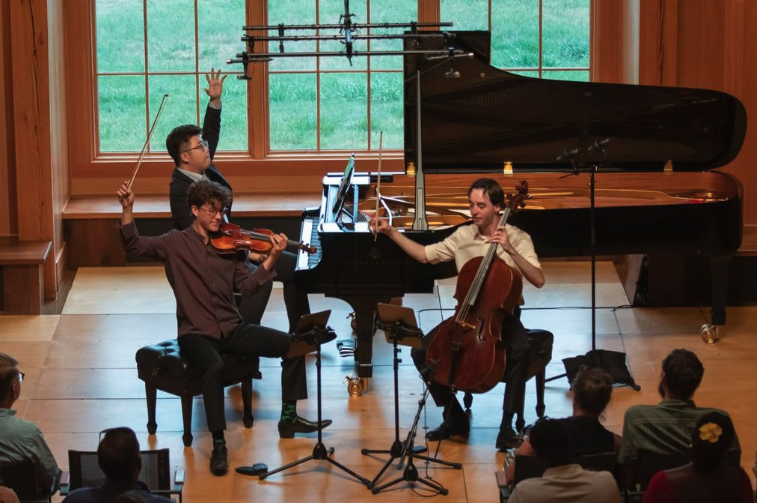
OperaWire also attended pianist Clayton Stephenson’s performance at The Olivier Music Barn, and a special trio performance including Duncan McDougall (violin), Elliot Sloss (cello) and Yanfeng (Tony) Bai (piano) at both The Geode and The Olivier Music Barn.
(Photo: Kevin Kinzley © Tippet Rise Art Center)
The programs proved well-suited to their venues, particularly Stephenson’s contemplative combination of Bach/Busoni’s “Chaconne in D Minor,” Leszek Możdżer’s “Ballad for Bernt,” Duke Ellington’s “Take the ‘A’ Train” (arranged by O. Peterson), Bill Evans’ “Peace Piece,” and Prokofiev’s “Sonata No. 7 in B-flat Major.” Stephenson spoke about his selections during the program, explaining why he chose each piece and drawing listeners further into the music while providing valuable context. This was an intelligent and enlightening Saturday morning concert.
The view from the concert hall invited audience members to gaze upon a trail winding through the ranch, leading cyclists and hikers along their paths. The Beartooth Mountains were familiar friends at this point, while the blanket of clouds in the sky suggested that a storm might develop later in the day. The ever-changing landscape remains one of Tippet Rise’s most spectacular features.
(Photo: Kevin Kinzley © Tippet Rise Art Center)
The afternoon concert, featuring McDougall, Sloss, and Bai began at The Geode. This venue is absolutely astonishing. It is acoustically accurate in its projection and one can hear the instruments, without amplification, as though they were right next to you. OperaWire sat next to Willem Boning, who led the project’s development and reflected on the choice of wood used for it. According to the project’s formal description, “The Geode is crafted from weathering steel and vertical grain, Douglas fir wood, which has been burned and brushed using a traditional Japanese yakisugi technique.”
The trio opened with Rachmaninoff’s “Trio élégiaque No. 1 in G Minor.” The performance was incredibly moving, especially as rising winds rolled in from the storm just beyond the tops of the Beartooth Mountains. Towards the end of the piece the clouds shifted and cascaded above The Geode. Luckily, the rain held off until the performance was over, at which point the trio packed up and we all headed back to The Olivier Music Barn. This was one of the most inspiring moments of my experience at Tippet Rise. I felt the power of nature and music simultaneously. I have always loved storms, and although such conditions are certainly not recommended for musical instruments, the convergence of the music, wind, clouds, and approaching rain created an unforgettable moment in time.
(Photo: Kevin Kinzley © Tippet Rise Art Center)
Performance and Recording Facilities
The Olivier Music Barn is inspired by the Esterhazy Music Room, while The Geode is directly inspired by Cathy and Peter Halstead’s experience of hearing music in an intimate outdoor setting.
“When we went to the Caramoor Center for Music and the Arts, where they have outdoor venues right outside of New York,” said Peter Halstead, “We were sitting in the Venetian Theater, which at that time wasn’t covered, and it started to rain. The Croatian pianist, Ivo Pogorelić, invited the 30 of us who were left to come onstage. It was a gentle rain and then it started pouring and he said, come and stand around the piano and I’ll just continue playing. And so it was in that moment, being right next to him for this outdoor concert, when we knew that if we ever did something like this we would want it to be like this. We would want outdoor art the way we have seen it and we would want outdoor music, because there is this kind of deep, almost physical, sensation from seeing this kind of art outdoors.”
In addition to the remarkable performance facilities at Tippet Rise, the center’s recording capabilities are, in my opinion, its secret sauce. The Olivier Music Barn has a production studio upstairs where live audio and video recordings take place under the direction of Audio and Technology Systems Manager Monte Nickles and Assistant Audio Engineer and Technical Systems Engineer Jim Ruberto. The facility features DXD and immersive formats and 4K video production capabilities. The building and its systems have been awarded LEED Gold certification.
The nearby Cirrus building, opened in 2024, contains workspaces, a specially curated library, and a post-production facility including video and audio editing suites and a mastering studio designed in partnership with Arup. This mastering studio absolutely blew me away. It features Genelec reference monitors in a 7.1.4 immersive layout with Dolby Atmos capabilities. Like The Geode, its thoughtful design incorporates natural tones and wooden panels, making it something of an audio and technology engineer’s dream.
Since its founding, Tippet Rise has recorded more than 150 performances, with more than 10 released as albums through its in-house label, also called Tippet Rise, and in partnership with leading classical music labels including Pentatone, Oberlin Music, and Aeras Music Group.
At its core, Tippet Rise Art Center is a place where art and nature are never separate experiences, but rather one continuous conversation — whether that is the quiet hush before a storm, the warmth of voices singing freely in Will’s Shed, or the astonishing acoustics of a venue shaped by Douglas fir. With a new recording label now underway, that conversation is poised to reach far beyond the ranch’s 12,500 acres. It really speaks to what the Halsteads set out to build in the first place. For anyone thinking about planning a visit — make it happen.