Carnegie Hall Review: Les Nuits d’été
Benjamin Bernheim Delivers a Masterful Performance of Berlioz’s Song Cycle
By Matt CostelloI have been a committed Berliozian from my earliest days. A few factors played into this. Naturally, there is Hector Berlioz’s music itself: innovative, experimental, powerful, and often sounding a world apart from the mainstream of 19th century music. From the very beginning, Berlioz appears to have taken inspiration from the lightning bolt that was Beethoven’s “Symphony No. 9,” which launched a revolution in both music and art. Berlioz would build upon this legacy, coming to epitomize the Romantic era, and his symphonies were never just simply numbered.
His groundbreaking “Symphonie fantastique” was just that — fantastic in its tonal images and its adherence to dramatic storytelling through music. It would serve as the beginning of Berlioz’s pursuit of works that would not be easily pigeon-holed. From “La Damnation de Faust” – his so-called “legénde dramatique” – to the “symphonie dramatique” that is “Roméo et Juliette,” Berlioz produced unique works that stood as powerful hybrids of symphony, opera, and, on occasion, narrative acting. He wrote soundscapes for these works that matched the romantic tales and gave them the power to deliver. One need only look at all his major compositions to see that the clear, unifying thread between them all is that each is its own world, eschewing the careful naming and numbering of the Classical era.
Another factor in my passion for Berlioz was the discovery of Jacques Barzun’s two-volume biography of the man, “Berlioz and the Romantic Century.” In those volumes I saw a struggling artist who lived a life that, in my mind, epitomized the Romantic era he helped shape. Like many other visionaries, he was often misunderstood. Yet his battles were not just with the critics, nor the rigid society of operatic and classical music. Berlioz embodied the very nature of the passionate romantic hero, with all the yearnings, struggles, losses, and defeats. Above all he held an archetypal perception of romantic love. For the composer, two incredible passions fired his mind and artistry – Shakespeare and an idealized vision of love that seemed, at times, all consuming. I do not believe anyone who has read Barzun’s books, or the more recent and wonderful two-volume biography by David Cairns, could fail to be moved when the aged Berlioz was finally able to engage with his lifelong muse and childhood love, Estelle Fornier. When she reminded him that she was now an old woman, it did not matter. She had lived in the composer’s heart for so long that his love for her had transcended the years. What a perfect story from such a remarkable period!
While we may be more familiar with some of Berlioz’s “architectural” pieces, like the thrilling “Requiem” or massive “Te Deum,” his work over the years is also marked by pieces that are filled with a gentle, ever-changing beauty that seems simply sui generis and stunningly beautiful. This was certainly the case in the recent Carnegie Hall performance of his song cycle “Les Nuits dété.” First published in 1841, it was masterfully orchestrated by him in 1856. This cycle set to six poems by Berlioz’s friend, poet and dramatist Theóphile Gautier, is simply entitled “summer nights.” Yet the poems and music explore a full range of losses, passions, and desires. In the hands of an excellent soloist – it was written either for a tenor or mezzo-soprano – it can, even on a chilly Fall night, carry one away to a moving evening in the heat of the year.
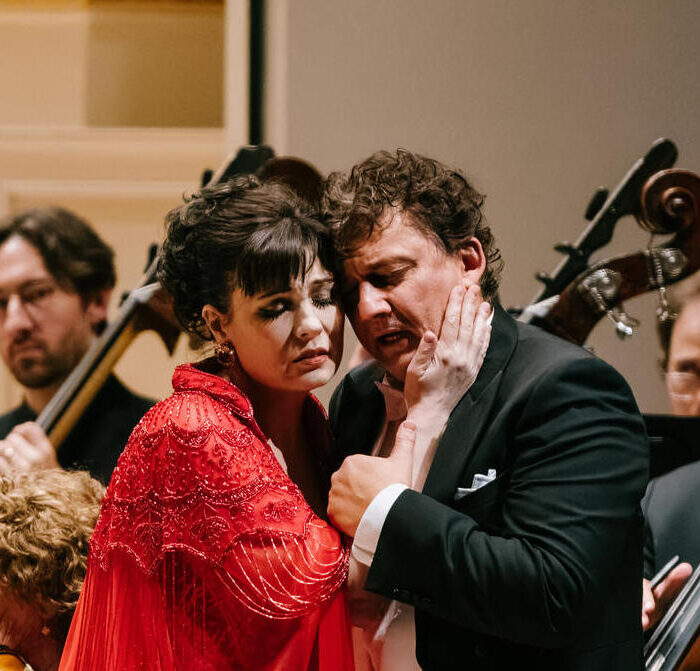
At the always remarkable Carnegie Hall the performance was perfect. The Orchestra of St Luke’s was led by the confident conducting of Louis Langrée, director of the Théatre National de l’Opéra Comique. With Langrée carefully matching the orchestra’s tone to the mood and shape of each song, through those six songs, we were taken on a tour of Berlioz’s ever-remarkable composing palette. After a rousing opening with the early overture of his never-produced opera “Les francs-juges,” Langrée was joined by the tenor Benjamin Bernheim. The challenge of the six songs is that they are, within the space of around 30 minutes, an extraordinary journey that evoke a complex range of emotions. Bernheim quickly showed that all in attendance that a masterclass was in session. The cycle is laced with subtle hints, reminders, and foreshadowing to many of Berlioz’s masterpieces. Bernheim made those moments stand out. In one moment, for example, one could hear his powerful voice perfectly befitting Aeneas in Berlioz’s magnum opus, “Les Troyens.” The shifting moods of the songs – from the gentle “Villanelle” to the poignant “Le spectre de la Rose” with its hints of “Roméo & Juliette – allowed the full range of Berlioz’s work to shine. They also allowed Bernheim to demonstrate his moving ability to navigate the subtle shifts between the songs. Gentleness in one piece could suddenly demand a vocal power and passion that was thrilling to hear in the acoustic palace of Carnegie Hall. Bernheim especially demonstrated this dramatic range in “Sur les lagunes,” where the solemnity of a song about a deceased love rose into ferocity, conveying his rage against what bitter fate can deliver.
As the song cycle progressed, the orchestra was in constant dialogue with the impressive singer, providing emotional echoes and near-commentary that wove in and out of each piece. Langrée displayed both the passion needed for such music and a keen control that sharpened the raw power of Berlioz’s composition.
Many in the sold-out house felt it was all over far too soon. Prompted to return for an encore, Bernheim sang “Pourquoi me réveiller” from Massenet’s “Werther.” As if we needed any more evidence of the tenor’s power and tonal beauty! Hearing this showstopper was thrilling. With a new recording from Deutsche Grammophon of “Werther,” featuring Bernheim in the titular role, due this month, I am sure many in Carnegie Hall took note to pick up a copy as soon as it appears. The audience were on their feet and were once again reluctant for the moment to end.
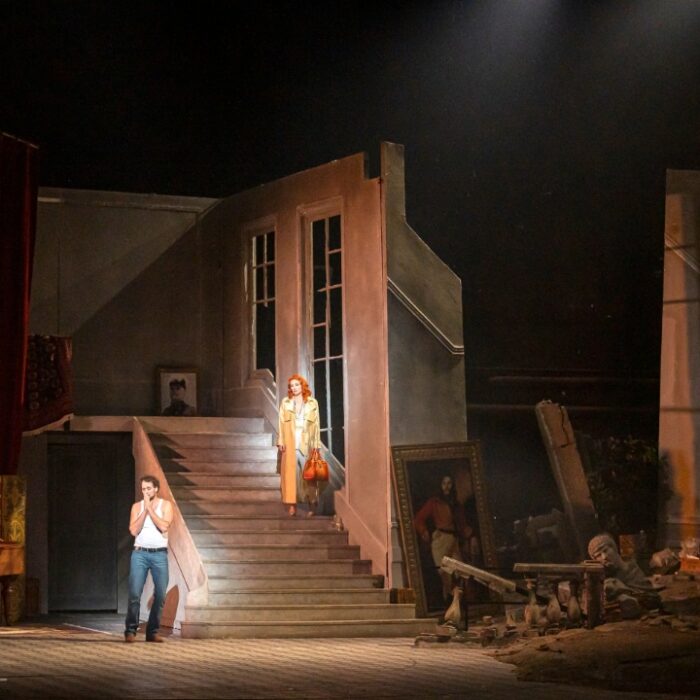
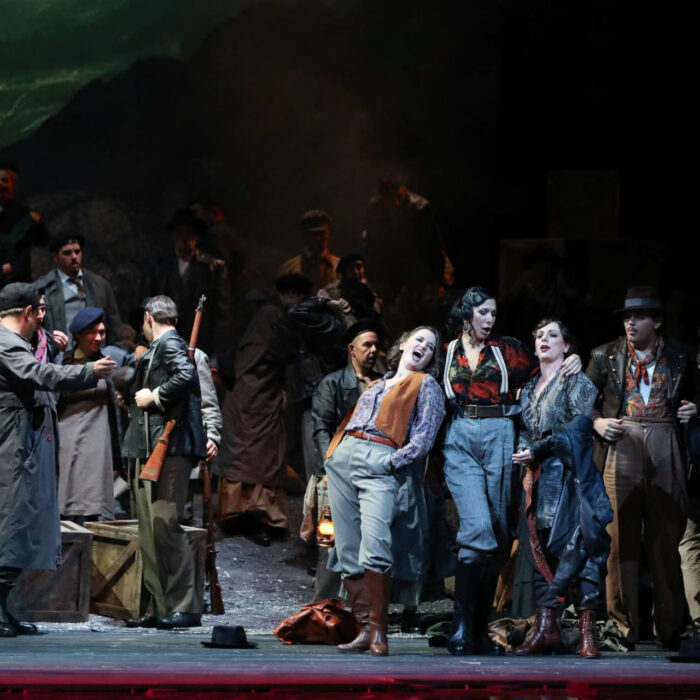
Bernheim has a full schedule ahead, tackling the repertoire’s most demanding roles: from Cavaradossi in “Tosca” to the doomed Don José in “Carmen.” I am in no doubt that all will be worth making the effort to hear.
While I have heard the Orchestra of St Luke’s before, it seemed that on this all-Berlioz night, under the leadership of Langrée, the orchestra rose wonderfully to the demands of this music from that most-romantic of 19th-century composers. The ensemble played with an elegance, precision, and responsiveness that marked them, once again, as a treasure of New York.
I look forward to more programming like this, led by such remarkable conductors, especially with such soloists as Bernheim, whom I am sure the audience will be seeking in engagements to come.