A Little Opera Reappraisal, Pt.1: Miguel Jiménez’s ‘Tata Vasco’
By John VandevertIn this new four-part series, we’ll be taking a look at four significant, and greatly underperformed, operas within opera history from early-mid 20th century but outside America and Central Europe. The normal Opera Film reader may be acquainted with a breadth of opera’s expressive diversity. From Cage’s ‘Europera V’ and Stockhausen’s ‘Dienstag aus Licht’ (1991) to Shirokov’s ‘Marevo’ and Vustin’s ‘The Devil in Love’ (2019), to Glass’ ‘The Perfect American’ (2013), and Rolf’s ‘Beatrice Chanci’ (1998) and many other similarly-themed operas, a huge amount of ground has been covered.
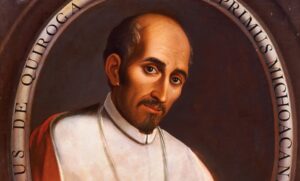
What’s not been yet covered, however, are operas lying outside the European and American bubble. We have covered opera houses throughout the world, from India to Ecuador and beyond. But what about operas which lie beyond the illusionary Western horizon? As some readers may also know, opera is not one genre but an umbrella term for a huge panoply of eclectic takes on what opera is, and ought to, be. From regional subgenres like zarzuela and the spiel opera, to more contemporary forms like the CNN opera, to more conventional types of opera seria, the opera is but a form which can take many, many, many, forms. Themes for operas can also cover a huge range, and in part one, we’ll take a closer look at Mexican composer Miguel Bernal Jiménez‘s only opera, ‘Tata Vasco‘ (1941). With a story inspired by bishop Vasco de Quiroga, the opera is quite troubling as it combines Spanish colonialism, and Catholic conversion following the Mexican Inquisition. But one cannot look past the quagmire that is Quiroga and his beliefs.
The opera unfolds in five acts, and is set in Michoacán ca. 1537. It’s noteworthy to remember that the Spanish formation of New Spain (1521-1821), had begun quite a few years earlier, but more important than that was the religious evangelizing which began around the 1520s led by the first bishop of Mexico, Juan de Zumárraga. The 1530s were a time of irascible delirium fueled by colonial ideations, religious or otherwise. On the other side of the growing atrocities committed by the Spanish crown at this time were those like de Quiroga who, while he himself benefited from the colonial system, was working towards undoing its brutal practices, one such being the enslavement of the Nahua peoples. But even here, his deified role was not as their advocate but as their colonial protector, seeing their rebellious refusals towards colonial subjugation best quelled through collective worship in the Catholic style, but a Spanish way of life. Despite his celebrated stature by the indigenous locals of Michoacán, it cannot be stated that this love was natural, nor that the locals had a choice. The notion of choice is crucial if we see Quiroga as a humanist.
Understanding this opera means understanding the complex relationships at the heart of the colonial system of 16th-19th century Europe including, but not limited to, the Spanish empire, itself but a satellite of the far larger Habsburg system. This was a time of religious conflict, the Protestants against the Catholics, but likewise was the moment indigenous sovereignty reached one of its lowest points in human history, and marked the birth of European colonial legacies the world round. While de Qurioga was, and is still, seen as a paternal figure by the peoples of Michoacán, it cannot be forgotten that his view of them was as sheep, children, secondary peoples to be (lovingly) controlled, guided, and spiritually led, as if they could not, or would not, lead themselves. He justified his colonial vision through the satirical fiction of Thomas More’s ‘Utopia‘ (1516), a troubling work as the line between intellectual critique and intellectual support is blurry, if not entirely ambiguous. Others have pointed out that Quiroga’s work was also a form of protocapitalism, as he set up regional productions of select goods, with these systems still operating to this day.
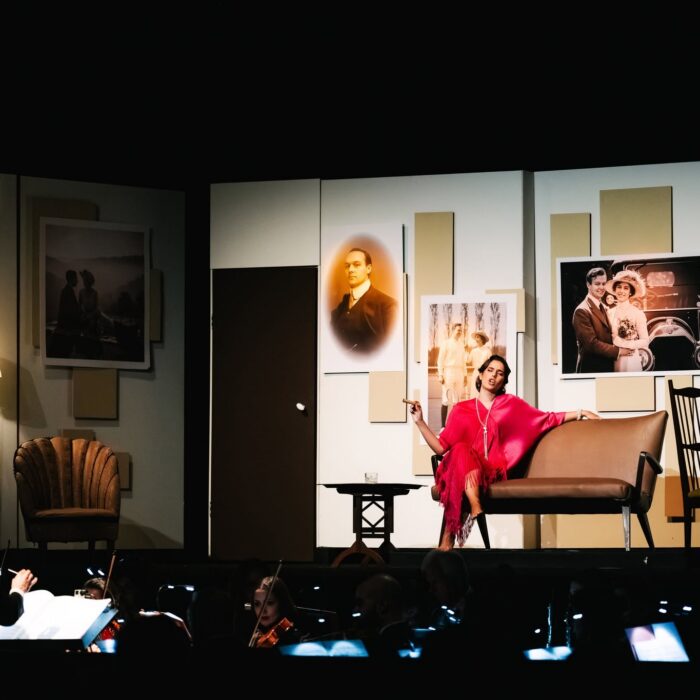
If anything, this opera does very little to show the complexities of Quiroga’s character, beliefs, and the times he lived within, but it’s a beautiful demonstration of mid-20th century nationalist operas dealing with historical topics of extreme multiplicities. It seems unlikely the opera will reach European audiences for a revival of sorts, much less American opera houses. However, it’s been performed as recently as 2020 by the Orquesta Sinfónica de Xalapa, and in 2026 as part of the 2nd Festival of Composers, Conductors, Musicians, and Performers in Mexico City.
Watch
Categories
Special Features