Music At Paxton 2026 Review: Roderick Williams Recital
Williams Takes the Audience on a Poetical Musical Journey
By Alan NeilsonJust a short drive from the border town of Berwick-upon-Tweed, situated on the banks of the River Tweed, lies the beautiful stately home of Paxton House in its 80 acres of parkland. Built between 1758 and 1766 by the Home family, it remained in the family’s hands until 1988, when the last laird, John Home Robertson, placed the house and its grounds into the Paxton House Historic Building Preservation Trust, so opening it up to the visiting public.
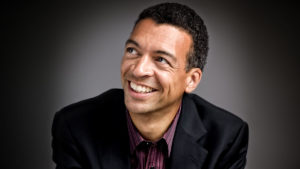
Each year, during the month of July, it is host to the ‘Music at Paxton’ festival dedicated to solo recitals and small ensembles performing classical music, although it also includes performers from other musical traditions. However, if you ask the average opera-goer or classical music enthusiast about the festival, you will be likely met with a blank face. It must be one of the United Kingdom’s least known music festivals, yet a brief look at this year’s program would convince many of its worth. Of particular interest was a recital, entitled “From the Forest of Dean to the Appalachians” by the popular baritone Roderick Williams, accompanied on the piano by Iain Burnside.
A Musical Journey Starting in the Village of Dymock
Williams takes us on a musical journey, taking in art songs from the 20th century by British and Irish composers with texts by British and American poets. His starting point was a group known as the ‘Dymock Poets,’ whose poems inspired many composers to set their texts. The group lived and worked for a few brief years prior to the outbreak of World War One in the small village of Dymock, located in the Forest of Dean, close to the Cotswold Hills. Its idyllic setting, in one of England’s most beautiful areas, encouraged reflection and inspired their poetry, which is saturated with images of the natural world illustrated by Williams’ first song, “The Mill Water” by the Irish composer Ina Boyle (1889 – 1967 ) written in 1966.
The text, written by the still popular poet Edward Thomas (1878 – 1917), reflects on the sound of the trickling water at a delapidated water mill, overgrown by nettles, and compared it to the roar in its heyday. No one works there anymore. Its days are over; even the wheel has gone. Williams’ warm timbre and sensitive phrasing beautifully captured the sense of loss; of a time and way of life that had disappeared. You could hear the sadness and nostalgic longing in the voice against the sound of the water so clearly captured by the piano.
It was a theme that was to be replayed again and again as the poets paraded the beauty of nature, which was beautifully illustrated in two songs by Douglas Wieland (1955 – ): “The Nightingale,” to a text by Lascelles Abercrombie (1881 – 1938), and “Thaw,” to a text by Edward Thomas. Williams’ sensitive interpretations opened up the range and depth of feelings that the music and texts can precipitate in a responsive listener, whether it be by the musings of the nightingale or a picture of a cold day in the English countryside during a thaw.
The Great War obliterated a generation, and two of the Dymock poets, Edward Thomas and Rupert Brooke, were to die in the carnage. It was therefore not a surprise that the war was to feature in a number of their works. Wilfred Wilson Gibson’s (1878 – 1972) poem “Black Stitchel” captures the sense of forboding: a young man, lying on the Northumbrian hill of Black Stitchel, happily recalls his time in the company of his true love, only for his mood to turn as he casts his mind to “countries black with wrath,” while in the final verse “he could think no more for pity, of man and beast.” It was set to music by Ivor Gurney (1890 – 1937). Williams’ presentation brilliantly captured the young man’s rapid change of mood. In the first two verses, he sang with a light, almost carefree lilt, beautifully playing with the words to depict the sound of a light breeze. In the third verse, his singing became anxious and unsettled, tinted an undercurrent of violence, and the wind grew strong before relenting in the fourth verse, to which he responded by quieting his voice to reflect his heavy heart. It was a rendition that not only captured the young man’s sensitivities but also showed off Williams’ skill in word painting.
Obviously, Rupert Brooke’s famous poem “The Soldier” made an appearance in a setting by Weiland, for which Williams produced a measured reading that captured a complex range of emotions, without turning it into a superficial patriotic cliché, which would have been an easy mistake to make.
A particularly pleasing inclusion was Michael Head’s (1900 – 1976) setting of John Drinkwater’s (1882 – 1937) poem “A Vagabond Song,” in which a Cotswold man of the road reflects on his life and the pleasures that it has given him. Williams’ positive response to the song was an absolute joy to behold. You could hear the vagabond’s pride in his voice and the genuine joy he has from being free and of having a life spent in the company of nature. Yes, there was a degree of sentimentality in his singing, but how could it be otherwise, given its subject matter?
Of the 12 songs that made up the first half of the program, it was the final piece, “Adlestrop,” once again by Thomas and set by Anthony Payne (1936 – 2021), that was the most gratifying. It retells a simple incident in Thomas’ life, in which an express train on which he was travelling made an unscheduled stop at the deserted station of Adlestrop. The text contains descriptions of the ‘hissing steam’ and the ‘bare platform,’ which lie in stark contrast to the “willows, willow-herb and grass, and meadowsweet and haycocks dry” of the surrounding countryside, and that stretched out further across England. It is a poem that encapsulates so many themes of the Dymock poets, particularly the centrality of nature and the threat of the modern world, which was to be realized in the Great War that was to sweep old England aside. Does the poem also foresee Thomas’ own death, which happened just two years after it was written, when Thomas was killed at the Battle of Arras in 1917? Certainly the musical contrasts that Weiland, Williams and Burnside managed to bring to their interpretations suggested that this was a possibility.
Williams Continues his Journey to America
The second part of the recital took Williams further afield, across the Atlantic, to America. The Dymock poets included among their members the US poet Robert Frost, and this encouraged Williams to follow him back to his homeland, at least musically, to explore US poets that have had their work set by English and Irish composers.
His first piece was a poem by Walt Whitman (1819 – 1892) entitled “Nocturne,” set to music by Ralph Vaughan-Williams in 1925. It is a contemplative piece set after the sun has set, and the mind is free to commune with mysteries of the night, of death and the existence of souls. Burnside’s slow, plodding piano conjured up a mysterious atmosphere upon which Williams’ voice wove a haunting, almost disembodied, melody that opened the door onto the impenetrable mystery of existence.
“Joy, shipmate, joy” was a very different type of song. The poem, which was also written by Whitman, was put to music by C.V.Stanford, (1852 – 1924), whose love for all things nautical inspired many of his choices when selecting texts for his songs, and it certainly showed. Williams and Burnside produced a spirited, uplifting rendition that captured the joy of one of the crew as the ship left the harbor on the start of a new voyage.
The theme of nature was present again in some of the selected songs. Edna St Vincent Millay’s (1892 – 1950) “Gone, gone again is Summer the lovely” and set to music by Arhur Bliss, (1891 – 1965) allowed Williams to bemoan the passing of summer for another year, while Elinor Wylie’s (1885 – 1928) use of flora and fauna throughout her poem “Little Elergy” to illustrate the sense of loss she feels on the passing of a loved received a suitably poignant setting, also by Bliss, for which Williams produced a moving, elegant reading that captured her grief.
On to the Appalachians!
Following on from his program of seven US poets, Williams’ journey took him to the Appalachians to meet up with a musical tradition that had been brought with emigrants from Britain and Ireland. He sang two songs arranged by Vaughan-Williams, but with a radical twist.
One of the aspects of a Roderick Williams recital that makes it so successful is his easygoing manner. He chats confidently yet informally about the songs he is about to sing to build a strong, intimate relationship with his audience. Of course, he never takes this too far; he knows where to draw the line; his art is paramount and he takes it very seriously. For the final two Vaughan-Williams songs, however, he went a step, or maybe two or even three, further by encouraging the audience to participate. For “The Tree in the Woods” he had the audience singing alternative lines of the chorus, which grew after each short verse, in a similar ways to “The Twelve Days of Christmas,” which was then followed by “The Twelve Apostles” where audience members were asked to choose from a selection of words in the text and then put up their hands every time it was mentioned while he sang. It was great fun, and the audienced roared their approval, which made him continue his journey a little further.
Down to the Deep South for an Encore
For his encore, he sang three traditional negro spiritual songs, which had arranged himself. First up was “Deep River,” followed by “Nobody Knows the Trouble I’ve Seen” and then ended with “Amazing Grace,” in which he deliberately set out to test the tensile strength of the melody, and he managed to take it a long way, such is the melody’s strength. And he really enjoyed it! He just cannot hide the joy he gets from music and engaging with audiences.
Overall, Williams took the audience on a wonderful journey that straddled the Atlantic for what was a well-balanced and very entertaining concert.