Teatro Nuovo 2026 Review: Il Don Giovanni
By David Salazar(Credit: Steven Pisano)
It takes a ton of courage to present one of the staples of the opera repertoire and offer a unique take on it, especially when that work is “Don Giovanni.”
Mozart and Da Ponte’s dramma giocosa is an emblem of the art form, one of the great operas that has been dissected, reimagined, and directed to death since its premiere in 1797 in Prague. Mozart himself revised the work, incorporating new arias and when it came to New York, it was Da Ponte’s turn to streamline the libretto to give it a bit more momentum and zip.
It’s not unusual to see “Don Giovanni” get some dramatic overhauls, whether it be via the stage direction or by excising some arias. But what often doesn’t get touched is the notes themselves. There might be some ornamentation here, but it’s usually very slight so as to avoid changing too much of Mozart’s score, which is so close to biblical that when Tchaikovsky went to Paris to see the manuscript in 1886, then in possession of Pauline Viardot Garcia (more later), he claimed that he was “in the presence of divinity.”
Most recordings hue closely to the notes written by Mozart with unique interpretation coming from the vocal approach and tempi, but nary any actual additions or ornaments. With historically accurate performance practice at the fore of many approaches, it is rare to see few major opera companies actually questioning this religiosity of the “come scritto” approach when there was always room for interpolation and improvisation of music during Mozart’s time.
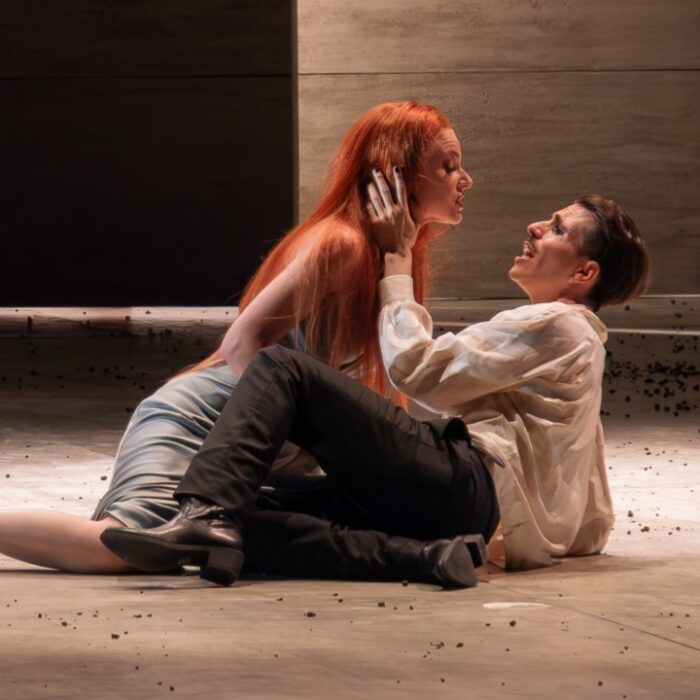
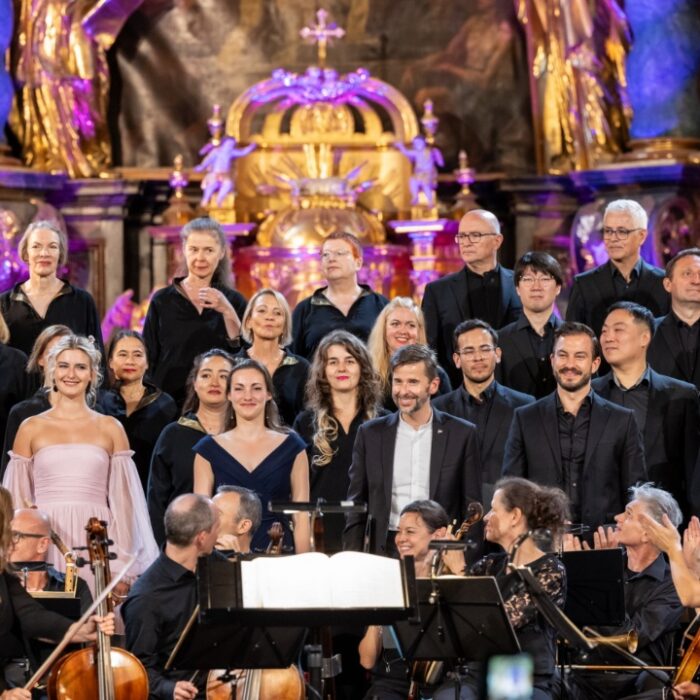
This is precisely the approach that Teatro Nuovo has taken with its recent run of performances of “Il Don Giovanni.” The program makes note of the fact that the musical direction is approaching the work as a bel canto opera. The primary source of inspiration is the New York debut of the opera in 1826 led by Manuel Garcia Sr. (father of the aforementioned Pauline Viardot Garcia) and his troupe of singers, which, per the program, would have featured this approach.
Expect the Unexpected
Each season, Teatro Nuovo has made a habit of reinterpreting a repertory staple through a unique lens. Whether it be performing a work in its original key (“La Sonnambula”) or early version version (“Macbeth”), the approach allows for versatility with a sure-fire hit. And so it is with “Don Giovanni” as a bel canto opera approach. “Expect the unexpected” was the tagline for the show, adding anticipation to what exactly would be happening with this operatic fixture.
Ornaments abounded with repeated sections sounding not only completely different, but almost unrecognizable from the original music. This was particularly the case in such arias as “Il mio tesoro” or “Deh! vieni a la finestra.” While I think it benefitted the dramatic weight of the former, allowing tenor Martin Luther Clark to dig into Ottavio’s more aggressive side, the latter aria’s added ornaments detracted from the elegant simplicity of Mozart’s original music. Personally, this was one of the few moments where I felt that subtle ornaments would have sufficed rather than attempt to rewrite the entire melody through ornamentation.
This was more frustrating when some arias did in fact feature more subtle ornaments (“Or sai chi l’onore” and “Madamina! Il catalogo è questo”) while ensembles generally got touched up the least.
But most frustrating was that most of the time, the ornamentation itself didn’t add much dramatic weight to the proceedings, thus making it more about the singing rather than striking a balance between the music and the drama (obviously, considering this was “semi-staged” the singing was at the forefront of the experiment).
However, there were some instances where the ornamentation did strike that balance. The most successful of these was during “Là ci darem la mano” where Don Giovanni’s lines remained relatively untouched while Zerlina’s ornamentations added to her feeling of instability.
Fermatas were expanded (especially on recitatives leading up to certain arias) and rubati were inserted (not always successfully; more later). Then there were major structural changes. Masetto’s aria was omitted. “Dalla sua pace,” gone. Don Giovanni and Leporello’s expository arias in Act two, also excised. Masetto’s omission cuts down on his character drastically to the point that he doesn’t really register much in the overall opera. The Don Giovanni and Leporello arias are fun pieces, but aren’t sorely missed. “Dalla sua pace” is a gorgeous piece of music and it’s loss is felt; however, dramatically it doesn’t add much and cutting it in favor of a brief recitative keeps the epic Act one drama from slowing down.
Then there’s the choice to swap Donna Elvira arias with “Ah! fuggi il traditor” completely by her Act two “Mi tradi.” On one hand, putting “Mi tradi” here avoids the Act two lag that tends to happen where only the glorious sextet manages to cut into an extended lineup of arias. Cutting three arias from that lineup (Don Giovanni, Leporello, and Donna Elvira) is the definition of addition by subtraction, but “Ah! fuggi il traditor!” is such a ferocious and sarcastic piece of music that losing it is unfortunate. That said, “Mi tradi” here adds depth to Donna Elvira in a moment where she’s being repeatedly ridiculed and flows seamlessly into the quartet.
Finally, the opera ends where it did for years – right after the titular character’s death. No joyful code where characters spell out the theme and their futures. It ends where it starts. In D minor. While one might miss knowing where the other characters are headed after their lengthy travails, this ending feels right.
Leading the musical forces was Geoffrey Loff who did a solid job at the podium and behind the continuo. The famed overture had a punchiness to it, particularly in the Allegro section where the low instruments were allowed major preponderance on accents and dissonances, adding tremendous contrast and darkness to this lighter section of the overture. Also notable was the choice to not overextend the lower notes of the opening chords, as is often done in standard performance practice. This choice added to the silence in the space, making the phrases feel more like questions rather than imposing statements, thus creating anticipation and a desire for more.
With a reduced orchestra, there was some re-orchestration. First off, a solo cello accompanied the continuo on the recitatives, which added texture and fullness to those sections. The absence of a mandolin allowed for a solo violin to flourish during “Deh! vieni alla finestra!” On the whole, the choices here worked quite well.
What didn’t always work was the balance. Singers were often overpowered in certain arias, with the most notable example being “Fin ch’han dal vino” wherein baritone Ricardo José Rivera was pushed to his limit at the climax of the aria as the orchestra blasted at maximum capacity. Meanwhile, some rubati, most notably in “Batti batti” didn’t feel natural for singer or ensemble.
Ultimately, the experiment on display here provides a new lens through which one can examine and question a notable musical text like “Don Giovanni.”
In the title role, baritone Riccardo José Rivera displayed a resonant and elegant voice. Rivera, who recently debuted at the Metropolitan Opera in “I Puritani,” sang with luxurious legato, particularly on “Deh! vieni alla finestra” and “Là ci darem la mano.” As noted, the orchestra pushed him to his limits on “Fin ch’han dal vino,” but his baritone resonated forcefully nonetheless. His upper range was particularly noticeable with the baritone interpolating several high notes in the arias but also more dramatic moments. His performance in the opening Act three trio was particularly notable for not only his physical gesturing, but how the ornamentation added to Don Giovanni’s exaggerated wooing of Elvira. If not for the already mentioned ornaments in “Deh! vieni alla finestra,” the contrast between these and the more simple approach of the aria would have been a perfect contrast.
As Leporello, Kevin Spooner’s bass-baritone was agile and potent in equal measure. The catalogue aria’s ornaments were few, but most noticeable was the extended fermatas to connect the disparate sections. Whereas most performances feature pauses before the shift, Spooner’s elegant sound would hold the note and then pick up into the next section, giving the aria a seamless feel. This was one of the major musical changes that, in my view, while not “improving” the piece, certainly added a subtle but brilliant new feel to it. The result was that Spooner’s conniving nature felt more fluid and pre-meditated. Throughout the rest of the performance, he played off Rivera brilliantly, especially during the confrontations with the Commendatore.
Speaking of the Commendatore, Daniel Mobbs sang with stentorian tone and strong diction in his encounters with Rivera’s Don Giovanni.
Martin Luther Clark’s interpretation of Don Ottavio favored potency of sound to emphasize the character’s growing frustration with his beloved. Repetitions of “Lo giuro” during their open duet crescendoed, each one more accented than the last with the final one held out for added emphasis. He didn’t seem fully comfortable with the role’s tessitura, the higher notes in the range often muddy in their intonation. There was space for more gentle singing at the start of the trio, but the tenor didn’t always sound as comfortable singing piano, particularly during the trio during the Act one finale. “Il mio tesoro” was solidly delivered though the tenor pushed his voice to its limits, giving the piece an overly aggressive quality. However, the ornamentations played well into this approach, with the latter half of the aria full of flourishes and higher notes. His final full scene with Anna featured Clark at his most aggressive, the tenor’s singing accented and fortissimo. It definitely intuited the violent dynamic between these two “lovers” and spotlighted the opera’s overall theme of toxic relationships.
Which is why the exclusion of Masetto’s aria was disappointing. Masetto’s jealousy gets spotlighted at the start of the Act one finale, but the aria gives him a chance at more depth. Without it, Masetto’s role, already supporting, is lessened further. Noah B. Rogers did his utmost with the time provided him, his baritone melding well with Simona Genga’s throughout their scenes together.
The standout performance of the night belonged to Elizabeth Novella as Donna Anna. From her opening lines, her voice penetrated the hall with tremendous intensity. Her Anna was a force to be reckoned with. You could feel the struggle in the duet with Luther’s Ottavio as she demanded he swear to vengeance. Her crescendoing lines were brilliant due to her ability to manage her voice at dynamic extremes, shifting from gorgeously hushed to voluminous. The recitative before “Or sai” was devastating in how she used this contrast, the voice melting into glorious piano sounds before exploding into vicious fortissimo sounds, each one more charged than the next. The aria itself was everything you would wish for – articulate, pointed, and technical secure. The interpolated high note near the ended was the chef’s kiss on a dramatically potent moment. She shone in ensembles as well, the voice floating gloriously in the quartet and then Act one final trio. Her final scena “Crudele? Ah! non mio bene… Non mi dir bell’idol mio” saw the soprano at her most delicate and refined with select moments of forceful accents to show her anger toward the thankless Ottavio. The coloratura was spellbinding and the ornaments added felt perfectly in line with the overall style and structure of the aria.
Also fantastic was Sedona Libero as Donna Elvira. While her voice was a bit overpowered in her opening “Ah! chi mi dice mai,” her singing retained elegance throughout the aria. As she grew into the night, she delivered several notable moments, including a beautiful rendition of “Mi tradi quell’alma ingrata,” the singing fluid, the ornaments added to her depth of pain and disappointment. She matched up well vocally with Novella in the trio and delivered some of her most visceral forte singing as she pleaded with Don Giovanni at the close of the opera.
Simona Genga delivered a strong Zerlina. While “Batti batti” featured two strange rubati in the middle of the piece and it was clear that Genga and Loff weren’t fully on the same page in those moments, the soprano’s cadenza and interpolated high notes in this aria were beautifully employed. Same for her ornamentation on “Vedrai carino,” where her singing was gentle and playful in equal measure. The soprano’s polished legato was also fully on display throughout “Là ci darem la mano.”
In all this was a vocal feast for those who wanted a unique vocal approach to a well-known masterpiece. More importantly, it reopens the age-old question about interpretation. In a world where opera directors are given the liberty to do as they please with the libretto and staging, should music directors also get a chance to re-evaluate the score and how it is interpreted? If yes, as is the case with the libretto, then how far can we go? And if no, then is the score and by extension the music, truly the most essential part of what gives an opera its identity?