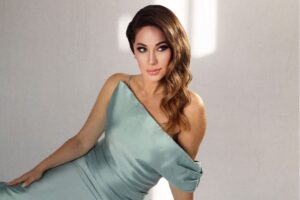
Q & A: Alessandra di Giorgio on the Importance of Drawing From Personal Experiences That Give Depth to Her Work
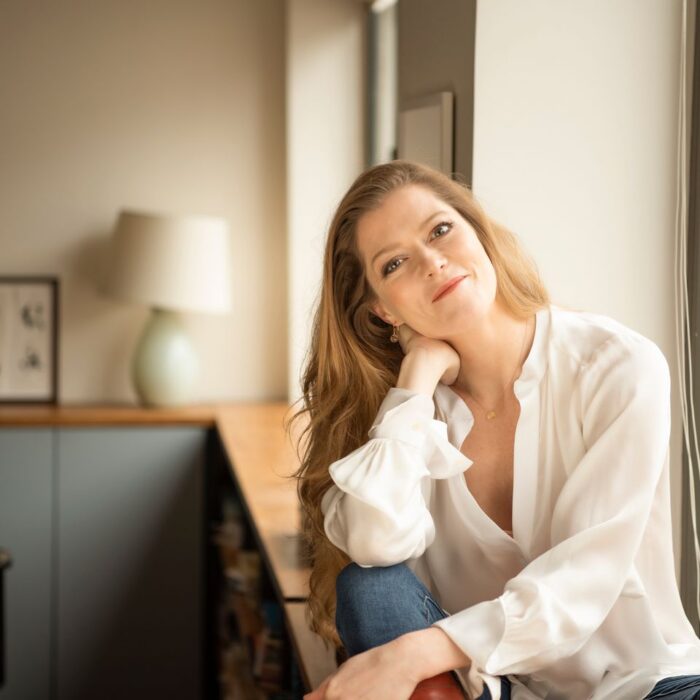
By Mike HardyAlessandra di Giorgio is a critically acclaimed soprano spinto whose rich vocal timbre and dramatic intensity have already earned her a place on some of the world’s most prestigious stages. Her repertoire spans some of the most demanding soprano roles in the operatic canon, including Amelia (“Un Ballo in Maschera”), Giulietta (“Les Contes d’Hoffmann”), Manon (“Manon Lescaut”), Brünnhilde (“Siegfried”), Lady Macbeth (“Macbeth”), Tosca, Giorgetta (“Il Tabarro”), Lina (“Stiffelio”), Maddalena (“Andrea Chénier”), Cio-Cio-San (“Madama Butterfly”), Leonora (“La Forza del Destino”), “Adriana Lecouvreur,” “Aida,” “La Gioconda,” Desdemona (“Otello”), Santuzza (“Cavalleria Rusticana”), and Elisabeth (“Tannhäuser”), among others.
She grew up in Croatia and in Serbia during periods of the former Yugoslavia conflicts, which affected her immensely, yet which she allowed to shape her, artistically.
She spoke to OperaWire from her home in Rome.
OperaWire: You’ve just performed as Turandot for Opera Naples, your debut in the United States. How did it go?
Alessandra di Giorgio: It was wonderful! We had an extraordinary audience and there was a remarkable energy in the theatre. It’s difficult to describe precisely, but the overall experience was simply exceptional.
OW: I’m going to respectfully suggest that Turandot is often more associated with more mature sopranos, being such a demanding and taxing role, something that isn’t normally undertaken until later in a soprano’s career.
ADG: That is certainly true, but I believe I possess the right voice for this repertoire. Even at a younger age, I was already performing roles such as Lady Macbeth, and from the moment I began exploring heavier repertoire, I found it deeply natural and fulfilling. I never experienced any technical strain or discomfort—on the contrary, I felt completely at ease, which confirmed to me that I was on the right path.
I began my studies as a mezzo-soprano, primarily because of the natural richness and extension of my lower register. When one hears that depth, it is easy to assume the voice belongs to a mezzo. However, that is not the case. Mine is a genuine dramatic soprano voice, and I feel entirely comfortable within this repertoire—if I may say so, without any sense of arrogance.
OW: I’ve seen you described as both a “dramatic soprano” and a “spinto soprano.” Which do you prefer, and how do you differentiate between the two?
ADG: I believe the difference between a spinto and a dramatic soprano is not as substantial as it is often presented; ultimately, it is a question of vocal color and how that color reaches and affects the audience. It is not about producing an “angelic” sound, but rather about the weight, depth, and character of the voice.
In my view, there are three principal categories: the dramatic soprano, the true dramatic voice; the large lyric soprano, and finally, the lighter soprano, including coloratura voices.
For me, these represent the three fundamental soprano Fachs, and I would say quite clearly that I belong to the dramatic soprano category.
OW: Is Turandot your most difficult role, or do you find it easier to sing that role than perhaps other roles in that repertoire?
ADG: I would not consider Turandot to be the most difficult role for a soprano. In my opinion, one of the most demanding roles in the repertoire is Madama Butterfly. Turandot, in contrast, is a relatively shorter role. It requires secure high notes, and if those can be produced freely, without forcing, the role can feel quite natural.
With Madama Butterfly, however, the demands are of a different nature. It is a significantly longer role; you remain on stage for nearly three hours and carry almost the entire performance. The role requires not only stamina but also a wide expressive range.
The first act begins in a very lyrical, delicate, almost airy manner, while the second and third acts gradually become more intense and dramatically charged. This progression requires a voice capable of both lyricism and considerable dramatic expansion.
I have performed this role many times, including in a production originally from La Scala as debut, which was presented at Teatro Lirico di Cagliari as a televised streaming during the COVID period.
I also performed Madama Butterfly about a year ago in a highly celebrated and well-known production by Anthony Minghella, which was a particularly special experience.
OW: May I touch on some potentially sensitive issues? I know you come from Serbia, so I am assuming you grew up there during the wars?
ADG: In fact, my background is somewhat more complex. I grew up both in Croatia and in Serbia, as I come from a mixed family of Italian origin.
During my studies, I won a prize at an international competition in Italy.
Shortly after, I was given the opportunity to continue my studies in Germany, and I later pursued further training in Italy where I later got married and that further shaped my personal and cultural identity.
Growing up in the war time, it’s certainly something very difficult but I must also say that something meaningful came from it. It taught me a profound sense of gratitude—gratitude for life itself, for peace, for everything one has. No matter how difficult that period was, I believe a part of me transformed that experience into something valuable, into something creative.
These are experiences that can mark you for life. But I believe that, especially as an artist, you are faced with a choice. You can become bitter, or you can choose to embrace life more fully.
As an artist, you can truly feel it when you sing—you can shape it into something meaningful and share it with others. In doing so, you can create something that resonates deeply with the audience. I believe that is something profoundly beautiful.
OW: I think from my own personal experience, when it comes to demons and I believe we all have them, I think sometimes they just don’t go away. You simply learn how to deal with them.
ADG: Exactly. You have to take them, almost hand in hand, and acknowledge them—“This is your place, and this is mine.”
You move forward with that awareness. You remain flexible, open, even prepared to be surprised by them.
In a way, you learn how to dance with them.
OW: How to dance with them… that’s a wonderful quote. I love that. Let’s leave those darker themes behind for a moment. Music has clearly been a central part of your life since childhood. Who inspired you? Who did you listen to and think, “This is how I want to sing?”
ADG: Rosa Ponselle comes immediately to my mind. She was extraordinary! I have always been deeply fascinated by her voice—it is simply beautiful.
For me, different sopranos represent different ideals within different repertoires. For example, when it comes to Desdemona, for me there is no one like Renata Tebaldi.
That pure, almost angelic quality of sound is something truly unique—something that cannot be imitated.
At the same time, I do not believe there is a single soprano who embodies everything. Every great soprano has certain roles that are uniquely theirs—roles in which they are truly perfect.
OW: And I believe you met the great Joan Sutherland?
ADG: Yes, I did. I was participating in a competition in Italy where she heard me sing, and she was actually the one who awarded me the prize. It was a truly wonderful experience.
We had the opportunity to speak at length, and she showed great enthusiasm for my voice. She told me that I had a very special voice and that I would become a great dramatic soprano—even though at that time I was still singing as a mezzo-soprano.
I still remember her words very clearly: “Ah, my love, you are a dramatic soprano.”
That moment had a significant impact on my artistic direction. Shortly after, I began transitioning, and my first role as a dramatic soprano was Lady Macbeth, which I performed at a very young age. From that point on, it became clear that continuing as a mezzo-soprano was no longer the right path for me.
OW: So, you have two performances of “Aida” in fairly close succession in the near future, is that correct?
ADG: Yes, I will be singing Aida at the Arena di Verona and in Teatro Massimo in Palermo—one production following the other. This is actually a very positive situation, as it allows me to remain fully within the vocal and stylistic framework of the role.
It is a great advantage when the voice can stay in one repertoire for a certain period, rather than constantly shifting between different styles, which is not always something one can control.
OW: And what would you like to sing in the future?
ADG: I would very much like to sing Isolde. I have already performed some Wagner and I loved it!
However, to truly approach the core Wagnerian repertoire, and especially a role like Isolde, on stage—that is something I would deeply love to do.
OW: I once read that you said that when you are on stage, you are not really acting—you are simply being yourself. Is that still the case? And when you look back at the hardships and pain in your life, do you feel that music has played a major role in your healing?
ADG: What happens on stage is deeply connected to what I have lived. When you suffer on stage, you are not imitating someone else’s suffering—you are expressing your own. It is always personal.
You draw from your own experiences in order to communicate something real to the audience. That is, at least, how I approach it. And I believe that is what gives truth and depth to what we do.