Wiener Staatsoper 2025-26 Review: Elektra
By Laura Servidei(Photo: Ashley Taylor)
Richard Strauss’s one-act opera “Elektra” (1909), with a searing libretto by Hugo von Hofmannsthal, stands as a monumental achievement in 20th-century music drama. A radical adaptation of Sophocles’ tragedy, it plunges the listener into the tormented psyche of Elektra, obsessed with avenging her father Agamemnon’s murder by her mother, Klytämnestra, with the help of her lover Aegisth. Strauss’s score is an orchestral tour de force of unprecedented density and dissonance, employing a large orchestra to create a soundscape of violence, despair, and ecstatic, if horrifying, triumph. More than just a shockingly modern retelling of myth, “Elektra” is a profound exploration of obsession, trauma, and the consuming, ultimately self-destructive nature of revenge, marking the zenith of Strauss’s early modernist style.
Kupfer’s Iconic Vision and Soddy’s Commanding Sound
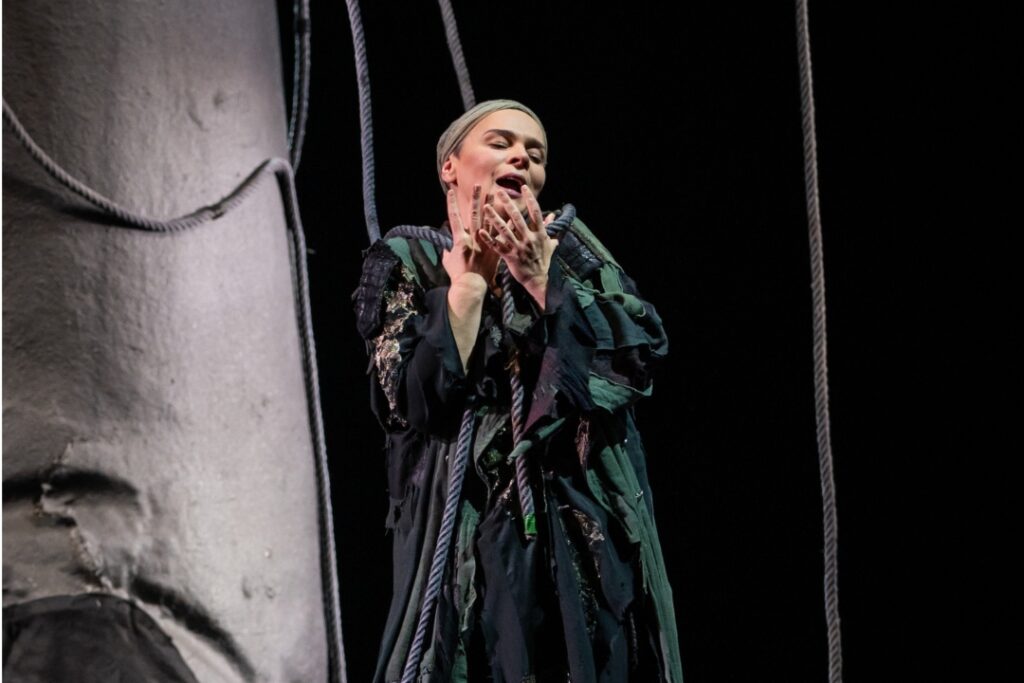
The Wiener Staatsoper presents a revival of Harry Kupfer’s iconic 1989 production, a staging that continues to stand the test of time with remarkable resilience. The stage is a void of black, dominated by the colossal, fragmented statue of Agamemnon; only its lower portion remains visible, partially toppled yet still imposing under Mycenae’s new regime. This creates a fittingly somber atmosphere, with lighting employed with great skill to shift the mood with subtle precision. From the first bars, conductor Alexander Soddy established an atmosphere of unrelenting tension, to which the Vienna State Opera Orchestra responded with magnificent, luxurious sound. The sensuously shimmering strings, brilliantly precise woodwinds, and crisply clean brass coalesced into violent outbursts of fury, as well as meditative, lyrical passages where the texture opened into transparent clouds of sound.
(Photo: Ashley Taylor)
Ausrine Stundyte as Elektra: The Consuming Vortex
Hofmannsthal structures the drama solely around the monumental, all-consuming presence of Elektra, who remains on stage for the entire opera. She exists in a series of intense, isolated dialogues—with her mother Klytämnestra, her sister Chrysothemis, and finally, her long-lost brother Orest—intercut with harrowing soliloquies. This relentless focus enables a profoundly disturbing descent into the abyss of her fractured psyche. The vocal writing is commensurately and brutally demanding, requiring a dramatic soprano of immense power and stamina to embody a character utterly disintegrating under the weight of grief and pathological fury. Ausrine Stundyte delivered an intensely emotional interpretation, displaying remarkable dramatic commitment and acting prowess. Her soprano, however, possesses a fundamentally lyrical core that at times seemed at odds with the role’s raw, elemental force. While her middle register was both beautiful and powerful, her highest notes could turn shrill under pressure, lacking the crushing, “wall-of-sound” impact one expects, a shortfall made particularly evident in her scenes alongside the other two formidable female protagonists.
(Photo: Ashley Taylor)
Nina Stemme as Klytämnestra: The Gilt-Edged Prison of Guilt
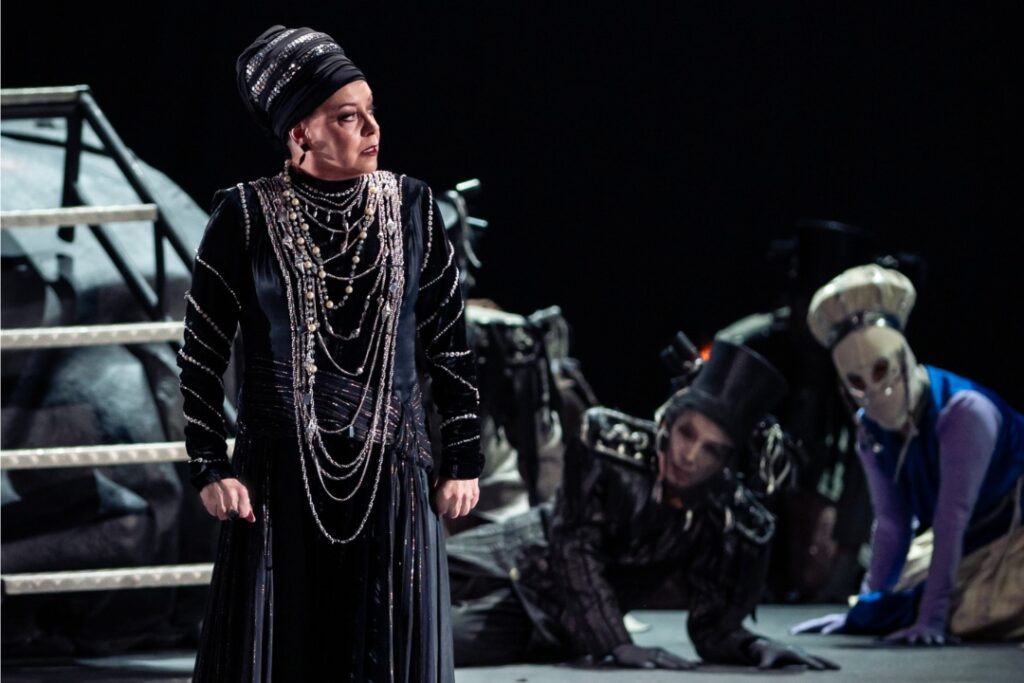
The legendary Nina Stemme, a definitive Elektra of the past decade, made a spectacular role debut this season as Klytämnestra. If the vocal demands of the role are perhaps less brutally athletic, its dramatic complexity is profound. Hofmannsthal and Strauss craft no mere villain; though the text leaves her motive untold—Agamemnon’s sacrifice of their daughter, Iphigenia—the music and characterization speak volumes. This is a woman distraught, isolated, and consumed by guilt, yet desperate to rebuild a connection with her children. Stemme masterfully conveyed every facet, modulating her powerful, splendid soprano to reveal both a vulnerably broken woman and a domineering queen. Her unforgettable entrance, adorned like a queen bee in overflowing jewels and an immense, train-like cape around which her entourage swarmed like insects, was a chilling visual and dramatic triumph.
(Photo: Ashley Taylor)
Camilla Nylund as Chrysothemis: A Powerfully Vulnerable Voice
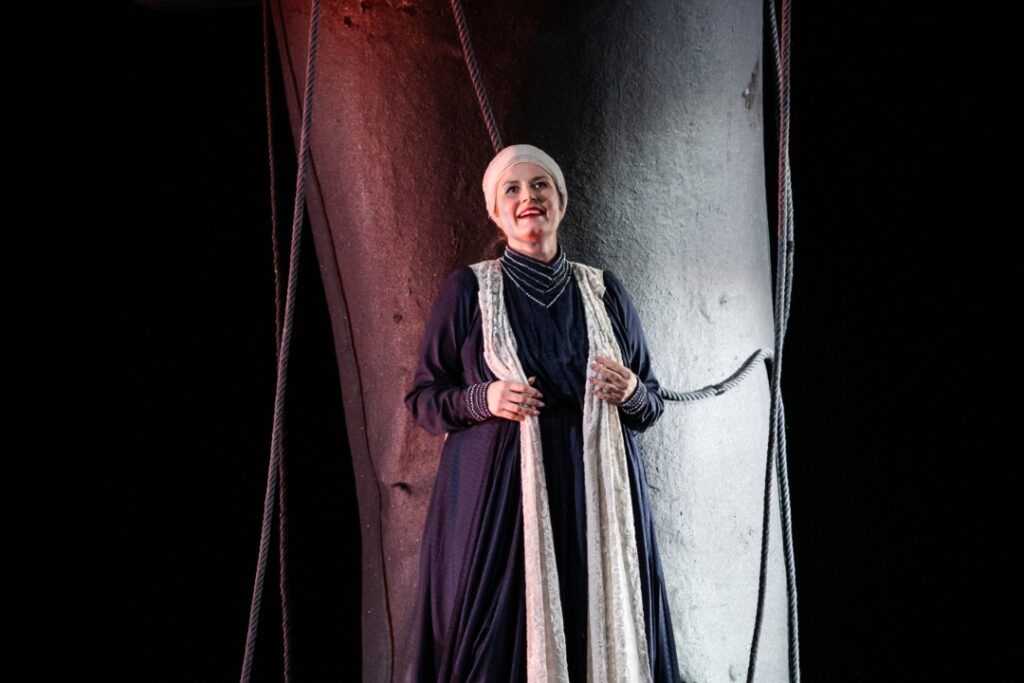
Camilla Nylund, in the role of Chrysothemis, presented Elektra’s younger sister not as a mere bystander, but as a horrified witness to her sister’s descent into a maelstrom of vengeful rage. Chrysothemis refuses to be consumed by it, longing only to flee the palace madness and reclaim a normal life—a wish Elektra brutally mocks, dismissing her sister as a feeble-minded unworthy of their lineage. As the opera’s vital voice of reason, life, and common sense, Chrysothemis found perfect expression in Nylund’s radiant, powerful soprano, which here took on a wonderfully sweet, feminine quality. For those accustomed to her fierce Brünnhilde, it was a revelatory pleasure to hear how convincingly she could channel vocal submissiveness and vulnerability, while retaining her signature presence, impeccable projection, and innate elegance.
(Photo: Ashley Taylor)
Derek Welton & Supporting Cast: The Catalyst and the Chorus
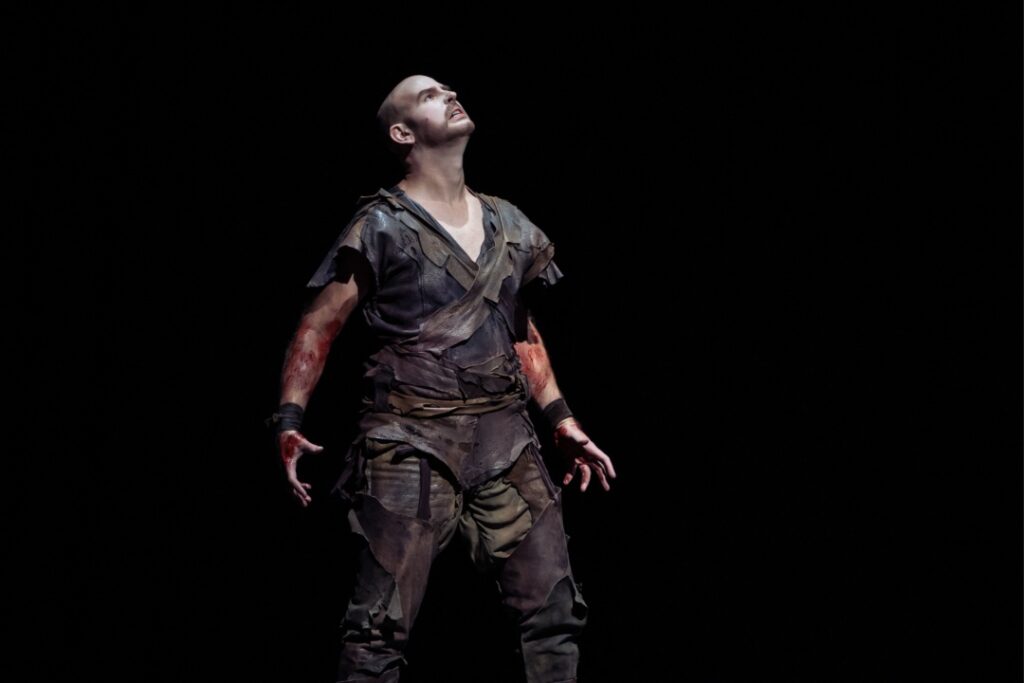
Derek Welton was Orest, the lost brother who comes back and avenges their father by killing Klytämnestra, Aegisth, and all their followers. Welton’s deep, strong bass-baritone was another one in the roster of splendid voices of the evening: he showcased great phrasing, smooth high notes, and his countenance exuded authority. The reunion between him and Elektra was one of the highlights of the evening: Soddy highlighted all the musical subtleties of the tender reunion between siblings, with Elektra’s frenzy in the background, as she sees her revenge getting closer.
The opera features a wealth of “minor” characters—maids, servants, and an old nurse—all competently sung, who contributed significantly to the evening’s success. A special mention must go to the Fifth Maid, sung by Jenni Hietala, who impressed with a sweet, golden soprano that moved easily through the high notes, supported by a strong technical foundation.
The opera’s finale, like everything before it, is filtered through Elektra’s perspective: Orest’s revenge and the ensuing bloodbath occur offstage, narrated by Chrysothemis and others, while Elektra loses herself in her ecstatic Todestanz. In this production, her frenzied dance ends in death, as she becomes entangled in the ropes dangling from her father’s statue. The evening was, by every measure, a resounding success.