Teatro Mayor Julio Mario Santo Domingo 2026 Review: The Flying Dutchman
By Zenaida des Aubris(Photo: Juan Diego Castillo / Teatro Mayor Julio Mario Santo Domingo)
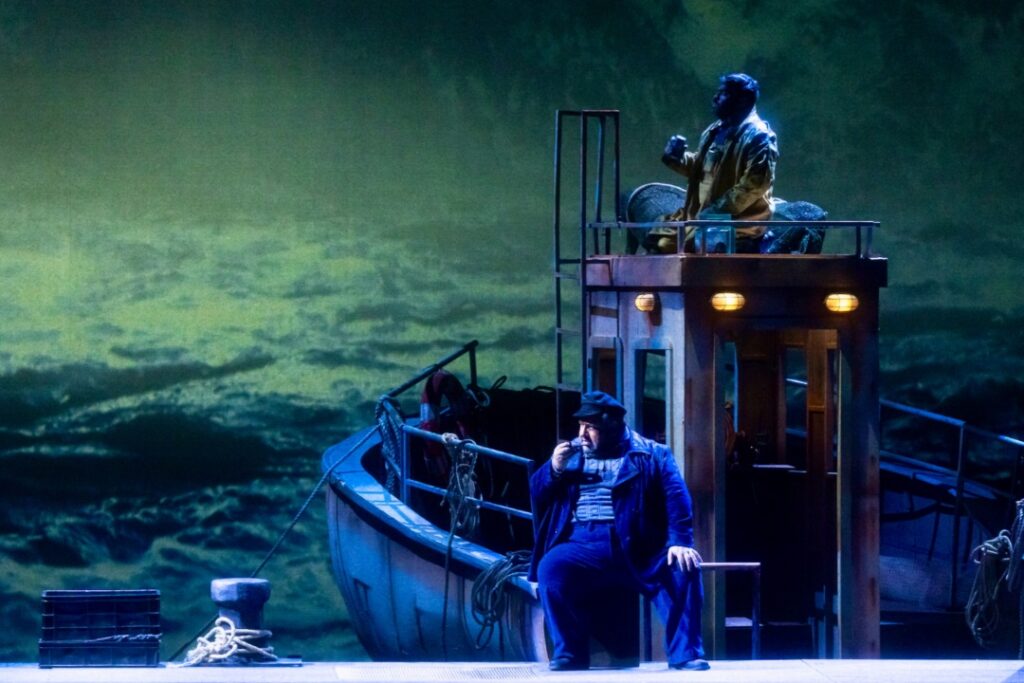
When Richard Wagner completed “Der fliegende Holländer” almost two centuries ago, he stood at a threshold in his artistic life. Within its turbulent orchestral sea there is already the sense of the psychological obsessions that would later culminate in “Tristan” and “The Ring.” The work’s themes —eternal wandering, obsessive love, redemption imagined or denied — are unusually adaptable to modern staging, and the first Colombian presentation of the opera at the Teatro Mayor Julio Mario Santo Domingo in Bogotá offered a striking example of how these mythic materials can be reframed through a contemporary psychological lens. The present day costumes by Luciana Gutman in the realistic stage settings by Noelia González Svoboda serve to underline this take.
Production Details
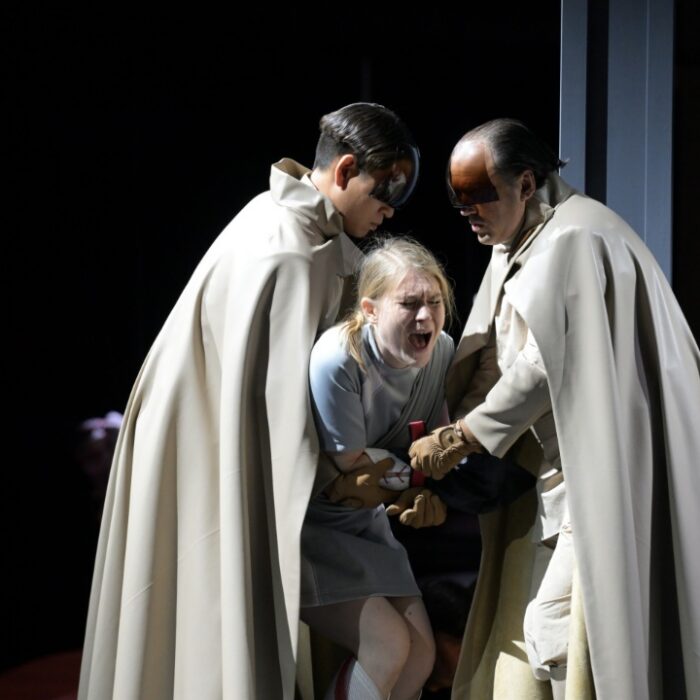
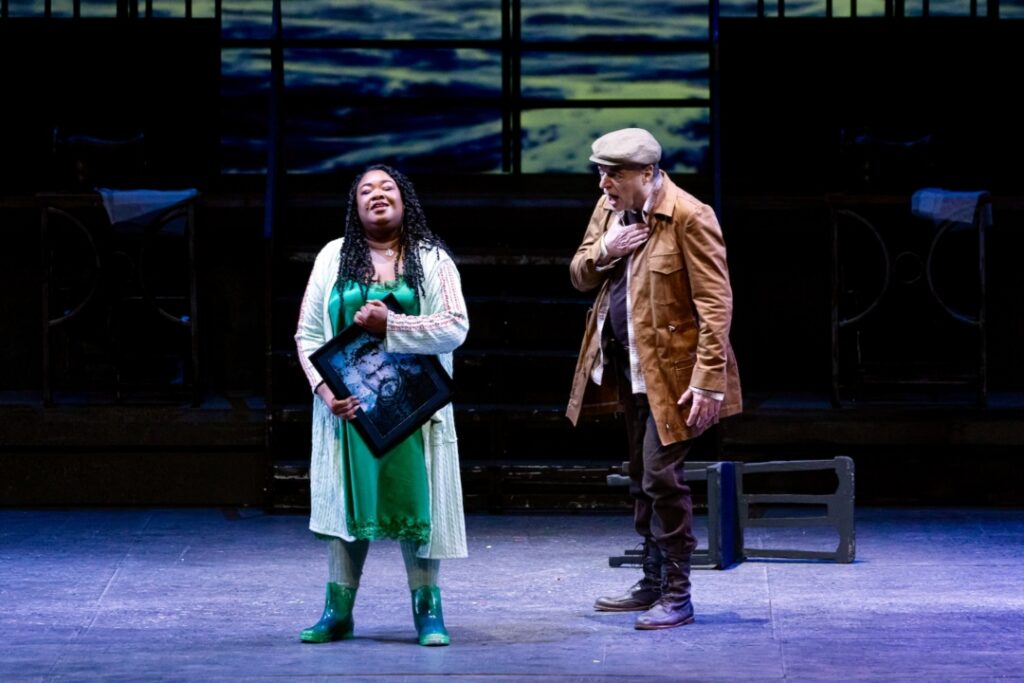
For this landmark occasion, Argentine stage director Marcelo Lombardero approached the drama not as a supernatural legend but as a subjective narrative unfolding inside Senta’s troubled inner world. She is at the center of the opera’s emotional geometry, transforming the surrounding characters—Daland, Erik, and the Dutchman—into figures orbiting her psychological reality. The staging thus becomes less a tale of a cursed sea captain and more an exploration of the emotional landscape of a young woman searching desperately for escape. The concept reveals itself already during the overture with a domestic tableau: Senta as a child listening to the story of the Flying Dutchman told by her mother. But the fairy-tale aura quickly darkens. Daland returns home, and the family reveals itself as profoundly dysfunctional. His authoritarian presence dominates the space. In a disturbing sequence, he strikes Senta’s mother and drags her offstage, suggesting violence chillingly implied. Little Senta witnesses the episode silently, clutching the Dutchman storybook as if it were both shield and prophecy.
From that moment, Lombardero establishes the psychological logic that will guide the entire evening. Senta grows up alienated, retreating into a dream world shaped by the legend she has internalized since childhood. The Dutchman becomes less a literal stranger than the embodiment of her longing for liberation from a suffocating environment. When Daland eventually returns from his voyages and effectively trades his daughter’s future for the promise of wealth, Senta projects the image of the mythic wanderer onto the mysterious visitor who arrives with him.
In this reading, the opera’s male figures assume sharply defined psychological roles. The Dutchman becomes a charismatic but self-absorbed figure seeking redemption for his own torment, while Erik — traditionally the opera’s sympathetic rival—is portrayed here as a considerably older suitor whose possessive temperament echoes the toxic dynamic Senta has witnessed between her parents. Faced with these alternatives, Senta’s fascination with the Dutchman begins to resemble an act of desperate imagination rather than romantic destiny. When the illusion collapses, the tragic conclusion appears almost inevitable: the dream that promised escape proves illusory, leaving Senta with only the most drastic form of liberation.
(Photo: Juan Diego Castillo / Teatro Mayor Julio Mario Santo Domingo)
Cast Highlights
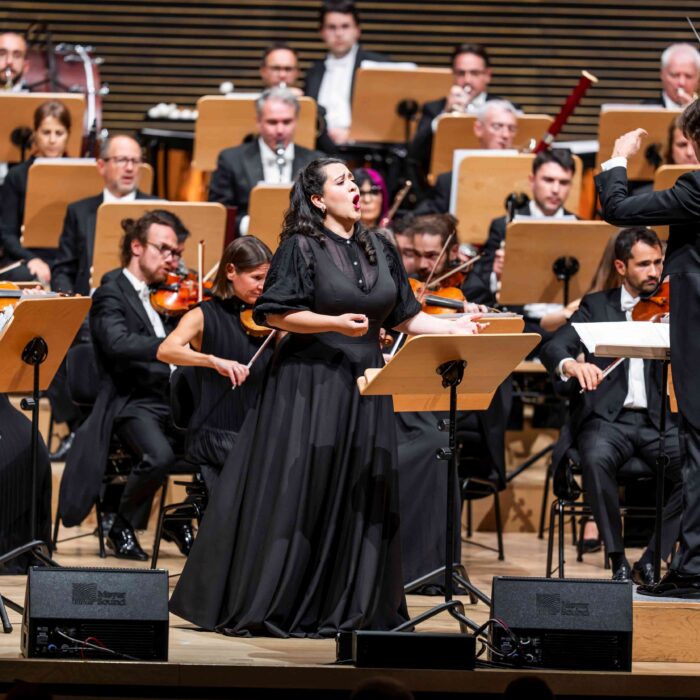
Lombardero’s staging unfolds with clarity and psychological coherence, supported by a cast of considerable commitment. Soprano Betty Garcés, making her debut as Senta, proved a compelling focal point for the evening. Her voice— warm, rich and expansive, yet capable of sudden flashes of steel—captured the character’s volatile emotional landscape. In the famous Ballad she colored the phrases with a storyteller’s sense of drama, shifting seamlessly from dreamlike reverie to urgent declamation. At climactic moments her tone opened into radiant power without losing the lyric warmth that makes the character sympathetic rather than merely obsessive.
The Dutchman was sung by bass-baritone Hernán Iturralde, who brought an imposing stage presence and a dark-grained vocal authority to the role–a figure driven by narcissistic longing for redemption. Iturralde’s voice, resonant and steady across the range, projected the character’s weary grandeur without resorting to caricature.
Valeriano Lanchas as Daland offered a finely drawn portrayal and he used his rich bass with a shrewd sense of characterization as a man whose affection for his daughter is overshadowed by his appetite for wealth.
Tenor Gustavo López Manzitti presented Erik as a figure already marked by emotional and vocal fatigue. Lombardero’s decision to portray him as considerably older than Senta lends the character a melancholy weight, though vocally the role did not always achieve the lyrical ardor Wagner imagined. By contrast, tenor Hans Ever Mogollón delivered a bright-voiced and articulate Steersman, his ringing timbre cutting cleanly through the orchestral textures. Mezzo-soprano Ana Mora sang Mary with firm tonal focus and a moral severity that suited her role as guardian of village propriety.
(Photo: Juan Diego Castillo / Teatro Mayor Julio Mario Santo Domingo)
Illuminating Music
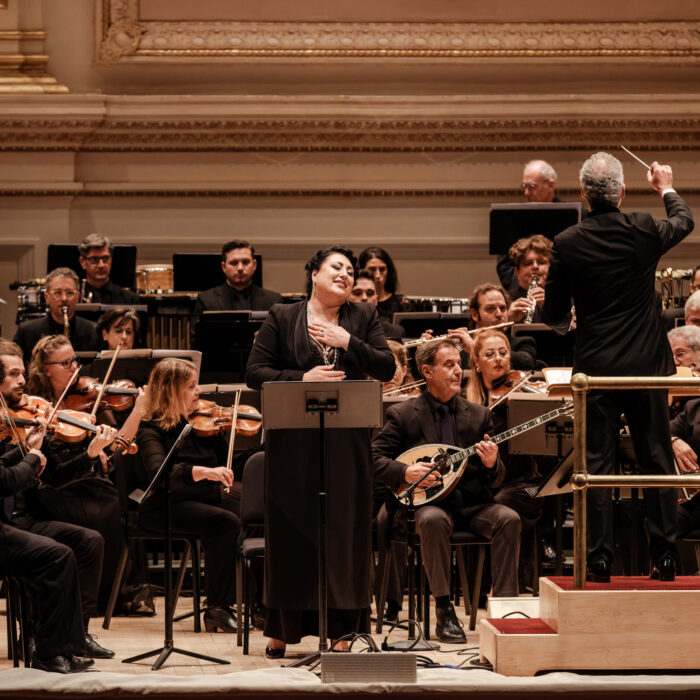
For devoted Wagnerians, however, the ultimate test of any performance lies in the pit. Here the evening achieved its most impressive triumph. Conductor Stefan Lano—a veteran interpreter of Wagner’s music dramas—led the Orquesta Filarmónica de Bogotá in a reading full of vitality and nuance. From the opening bars of the overture, Lano shaped the music with an architectural sense of sweep. The storm music surged forward in restless waves, brass and timpani carving out the opera’s elemental energy while the strings maintained a tense, propulsive undercurrent. Yet the performance never succumbed to mere volume: Lano drew a striking transparency from the orchestra, allowing inner voices—particularly in the woodwinds—to emerge with almost chamber-like clarity. The Orquesta Filarmónica de Bogotá responded with playing of impressive discipline and musical imagination. The strings produced a luminous sheen in Senta’s more introspective passages, their phrasing was supple and expressive. The brass section—so crucial in Wagner’s orchestral palette—sounded both heroic and finely balanced, providing weight without heaviness. Particularly notable was the orchestra’s ability to navigate Lano’s often brisk tempi while maintaining cohesion and dramatic focus. Here was an ensemble fully engaged with the drama, responding alertly to the conductor’s shaping of Wagner’s long musical arcs. In many respects the orchestra became the evening’s central storyteller, its surging lines embodying the psychological turbulence at the heart of Lombardero’s interpretation.
The Coro Nacional de Colombia also contributed significantly to the dramatic impact. Wagner’s score divides the chorus into sharply contrasted groups, and the ensemble relished the opportunity. The sailors’ chorus possessed a robust, unified sonority that suggested the camaraderie of life at sea, while the women’s spinning chorus introduced a lighter, almost playful tone. When the villagers attempt to provoke a response from the silent crew of the Dutchman’s ship, the choral writing acquires an eerie theatrical tension—one that the Bogotá chorus realized with admirable precision.
Judging by the warm applause from the audience, this first Wagner opera will not be the last on the stage of the beautiful Teatro Mayor, with all three performances sold out. One hopes that this production may serve as the opening chapter in a broader Colombian engagement with Wagner’s vast and compelling theatrical universe.

(Photo: Juan Diego Castillo / Teatro Mayor Julio Mario Santo Domingo)