Teatro alla Scala 2025-2026 Review: Lucia di Lammermoor
By Bernardo Gaitan“Lucia di Lammermoor” remains one of the supreme achievements of Romantic opera, capable of transforming inner conflict into pure musical expression. Premiered at the Teatro di San Carlo in Naples in 1835, Gaetano Donizetti’s masterpiece transcends the conventional sentimental tragedy to offer one of the most complex female psychological portraits of the nineteenth century. Based on Walter Scott’s The Bride of Lammermoor (1819), the opera elevates this tragedy to an unprecedented psychological dimension, eventually becoming one of the most frequently performed works in the international repertoire and one of the cornerstones of the history of Teatro alla Scala. Since its Milan premiere in 1839, the Piermarini stage has hosted more than three hundred performances of the opera and welcomed some of the greatest interpreters of the title role, from Giuseppina Strepponi in the nineteenth century to Maria Callas in the 1950s, followed by Joan Sutherland, Renata Scotto, Anna Moffo, Luciana Serra, Edita Gruberová, Mariella Devia, and, more recently, Diana Damrau, Jessica Pratt, and Lisette Oropesa.
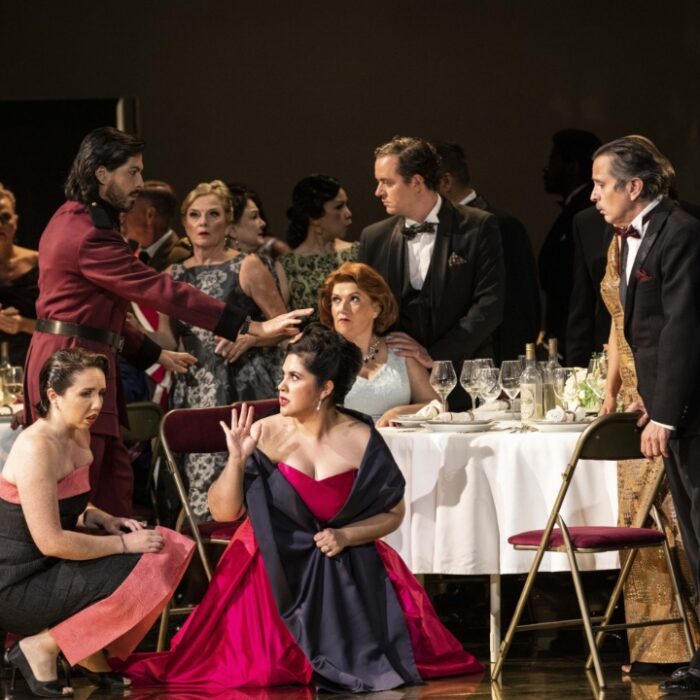
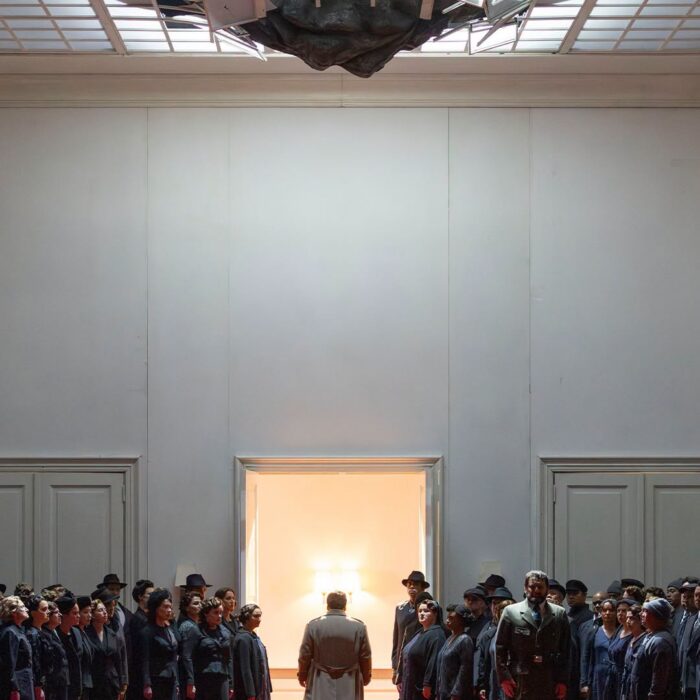
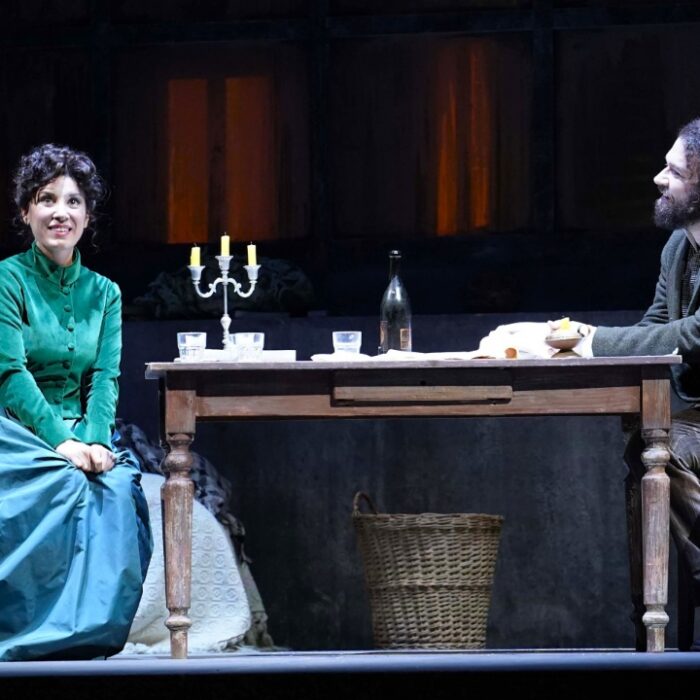
For the 2026 season, Teatro alla Scala revived Yannis Kokkos’ production, first presented in 2023. The staging abandons the picturesque vision of traditional Romantic Scotland, with its Gothic castles, mist, and gloomy landscapes, to focus instead on the psychological dimension of the drama. Kokkos, who also designed the sets and costumes, transforms the story into a suspended universe, ideally placing it within the bourgeois atmosphere of the 1920s, where the Ashton family emerges as a closed social organism dominated by unresolved tensions. The production’s central concept is introduced from the opening forest scene, which establishes a highly symbolic atmosphere: Lucia appears as prey destined to succumb in a psychological hunt. Scenic elements such as hunting dog statues, trophies, and weapons become metaphors for the protagonists’ inevitable fate. The visual world is further enhanced by Vinicio Cheli’s lighting and Éric Duranteau’s video projections, which shape the empty stage into psychological rather than realistic spaces, each environment reflecting the emotional state of the characters. The costumes likewise reinforce this timeless reading: Lucia wears elegant garments inspired by 1920s fashion, while the rest of the characters seem immersed in a grayer, more funereal world. The staging deliberately avoids any emphasis on traditional Romantic aesthetics.
Returning to the podium of the Orchestra of Teatro alla Scala was Speranza Scappucci, the first woman ever to conduct an opera at the theatre, with “I Capuleti e i Montecchi” in 2022. Her interpretation emphasized theatricality and the psychological tension surrounding Lucia, although this approach sacrificed part of the bel canto purity and lyrical elegance that characterize Donizetti’s score. Some excessively slow tempi and unnecessary pauses diminished the musical flow, particularly in such iconic pages as the famous sextet “Chi mi frena in tal momento?.” Her finest results emerged in the score’s most dramatic passages, especially the overture, where she offered a reading closer to contemporary sensibilities. The orchestra responded with precision and professionalism, with the brass and woodwinds standing out in the darker moments, while the strings provided the flexibility required by Donizetti’s broad melodic lines. Scappucci also conducted the critical edition prepared by Gabriele Dotto and Roger Parker. Equally impressive was the Chorus of Teatro alla Scala, prepared by Alberto Malazzi, whose precision, cohesion, and remarkable ability to integrate seamlessly into the production’s dramatic framework proved exemplary.
The undeniable center of the performance was Rosa Feola, who offered a deeply personal Lucia, far removed from traditional stereotypes. Possessing an even, beautiful, and technically impeccable voice, the Italian soprano created a heroine of profound psychological fragility, prioritizing dramatic truth over mere vocal display. The demanding coloratura and crystalline embellishments emerged naturally as part of Lucia’s emotional development, reaching their fullest expression in the Mad Scene, where Feola transformed the celebrated sequence into an intense portrait of a mind slowly disintegrating. The restoration of the glass harmonica, whose ethereal sonority heightened the hallucinatory atmosphere of this climactic moment, proved an invaluable addition. Equally admirable were her impeccable breath control, the purity of her vocal production, and her unfailing technical security, all of which confirmed the soprano’s artistic maturity and earned her one of the evening’s most enthusiastic ovations.
Piero Pretti delivered an Edgardo of solid vocal authority and convincing stage presence, his bright, virile timbre favoring dramatic intensity over more contemplative lyricism. His voice projects effortlessly in the upper register, maintaining both stability and power. His Edgardo emerges as a man consumed by passion, despair, and anger rather than quiet melancholy. Pretti’s extensive experience with the role was evident throughout the performance in the assurance and command he displayed on stage. After an excellent rendition of the duet “Verranno a te sull’aure,” he reached his artistic peak in the final scene, where “Fra poco a me ricovero” and “Tu che a Dio spiegasti l’ali” were delivered with deeply moving expressiveness.
Boris Pinkhasovich, for his part, portrayed an Enrico Ashton of commanding stage presence and attractively dark vocal color. The Russian-Austrian baritone moved away from the conventional villain, embracing instead Kokkos’ psychological reading of the character as a man trapped by the weight of his family name and the need to maintain control. His burnished timbre suits the character’s authority perfectly, while his principal scenes reveal considerable dramatic power. In “Cruda, funesta smania” he displayed strength and determination, and throughout the ensembles he maintained a consistently solid theatrical presence.
Michele Pertusi once again confirmed his mastery of the Italian repertoire with a Raimondo of remarkable authority, refinement, and profound understanding of Donizetti’s style. His interpretation, consistently rich in expressive nuance, remained vocally secure in the middle and lower registers, despite slight difficulties in the upper range. One of the evening’s most moving moments came in “Dalle stanze ove Lucia,” where he endowed the character with an intriguing moral ambiguity. His instrument still retains its noble dark color and remarkable flexibility, allowing him to portray Raimondo as far more than a simple religious mediator.
Leonardo Cortellazzi approached the brief yet significant role of Arturo Bucklaw with great professionalism. His voice is pleasant, bright, and well projected, and each of his interventions was carefully phrased. Although the character spends relatively little time on stage, Cortellazzi successfully conveyed the innocence of a man who becomes an unwilling victim of the conflict between the Ashton and Ravenswood families. His contribution to the Act two concertato proved especially effective. Recognition is also due to Paolo Antognetti as Normanno, a key figure in setting the drama into motion, and Hyeonsol Park as Alisa, Lucia’s confidante, both of whom integrated seamlessly into an exceptionally balanced ensemble.
At the conclusion of the performance, the audience rewarded Rosa Feola, together with the rest of the cast, with warm and thoroughly deserved ovations. It was nevertheless striking that the theatre was not completely sold out, something rather unusual for a title that normally fills every seat. Perhaps the intense summer heat discouraged part of Milan’s regular opera-going audience, only partially replaced by the many tourists visiting the city.